2,079 words 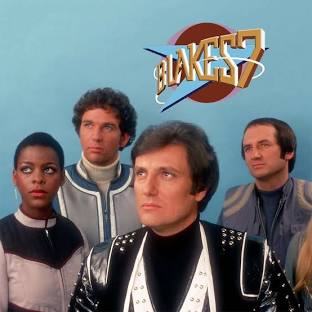
It was a chilly October day in London, and the year was 1975. A television writer approaching the offices of the British Broadcasting Corporation (BBC) walked at a brisk pace to his appointment. He had come to pitch an idea to the production moguls of what is now termed Britain’s “state broadcaster”. The man was there to see the men who had the money to make a TV series happen. It was a science-fiction series, an answer to the industry’s cry for a British competitor to Star Trek. At least, the writer hoped so. He rehearsed his pitch for the show; “Robin Hood in Space”. But he was confident in his stride, as he had excellent references, a CV in the world of televised science-fiction in Britain which set him apart from the pack. The money-men would certainly pay attention to him and his pitch as one of his TV creations had become a household name. His name was Terry Nation, and he invented the Daleks.
The yearning that the British TV industry had for a home-grown Star Trek was palpable. Just as The Monkees were assembled in kit form to be the American Beatles, so now the British wanted to borrow back, a cultural form of lease-and-lend. We boomer kids in the UK all grew up on American sci-fi series the BBC had bought in from the US: Time Tunnel, Land of the Giants, Lost in Space. It was much cheaper to import the product ready-made than assemble it from scratch at home. This is just basic economics, like buying in Japanese gadgets.
But the success of Dr. Who had put the British sci-fi scene on the interstellar map, and Blake’s 7 (bizarrely, there was never an apostrophe in the series’ logo) was the outcome. Its first episode ran the same week as Star Wars was released in the UK (I saw both), and the show would go on to run for 52 episodes in four series between 1978 and 1981. Ratings-wise, it was an instant hit, attracting up to 10 million viewers per episode in a country with a population of 56 million. The BBC regularly received letters of complaint from viewers, both about the show’s violence and its dark moral tone. The final scene of the last episode is like a combination of Hamlet and Sam Peckinpah, and as it aired on Christmas Eve, the producers – and the BBC – were accused of ruining the festive season. The series became known affectionately for its cheap and unreliable special effects – often unintentionally hilarious – but what made it such a success were the psychological plotlines. The personalities of the leading characters in Blake’s 7, their endless plots against one another, became the show’s unique selling point, not its low-budget special effects. With the characters aboard the Starship Enterprise, there was a feeling that if you scratched the surface, you would just get more surface. Blake’s 7 had intrigue between the crew members, conflicting loyalties, ruthlessness, selfishness, a callous disregard for life, very limited empathy between the characters, and even some rather sinister love interest.
Something was very different about Blake’s 7 from the first episode. The population of the West has been reduced to living in huge bunker-cities, separated from nature and paralyzed by state-provided narcotics, as in Huxley’s Brave New World. Soma is even the name of a sedative cocktail in Blake’s 7. The zombified populace shuffle around in corridors, slaves of the ruthless Terran Federation. But, as in Star Wars, there is a resistance force.
Roj Blake was the resistance leader, but after the Federation killed his family, his memories have been wiped and replaced, Bladerunner-style. After witnessing a massacre at a resistance meeting, he is framed by the Federation. Much of the first episode is Blake’s trial, in which he is found guilty by a “Judgment Machine” which behaves very much like AI. Blake’s fabricated crimes all involve pedophilia, an interesting plot-point in an age in which the subject was rarely mentioned. Perhaps, given the pedophiles active in the BBC at the time Blake’s 7 was being made, the state broadcaster should have paid more attention.
Sentenced to a penal colony on a distant planet, Blake falls in with other prisoners: a thief, a computer hacker, and a smuggler become the core of Blake’s guerilla fighters. One of the writers on the series said it had changed from a Western in space to Che Guevara in space. Their chance to escape comes when an abandoned spacecraft, the Liberator, comes under the control of Blake and what is now his crew, eventually seven in all, including the hyper-advanced ship’s computer, Zen.
And that’s the set-up. Blake’s 7 become guerilla fighters in the galaxy’s most advanced spaceship, tearing around various solar systems trying to inflict wounds on the Federation. This is a lot easier than it sounds as the Federation’s paramilitary police force are not very good at fighting. Sometimes the fights look like Japanese Noh theater, with its small symbolic gestures. Actually, some of the sets in Blake’s 7 look like Japanese Noh theater. The Federation’s enforcers are scarier-looking than the stormtroopers of Star Wars, a sort of cross between Antifa foot-soldiers and The Gimp from Pulp Fiction. But you only really have to touch them on the neck to make them collapse. It’s a very English way of fighting, visually speaking. But while the crew of the Enterprise beamed down to alien planets (often with an actor you had never seen before, and so was clearly marked for death) to spread some ideal of interstellar brotherhood, the rogues aboard the Liberator are out for what they can get, from idealistic revenge to money to power. The guns in Star Trek can be famously set to “stun”. No such setting exists on a Blake’s 7 gun. The crew of the Liberator shoot to kill.
The Liberator is a beautiful piece of design, and apparently based on a piece of costume jewelry spotted by a BBC designer. Finding it conveniently hanging around in space like the Marie Celeste is the equivalent to a car-thief finding an unattended Ferrari with the doors unlocked and the keys in the ignition, and the Federation soon show an interest in the craft. It makes the USS Enterprise look like a flying dinner-plate, which makes it all the stranger that the writers blew it up halfway through the series. This is an oddity of the arc of development in Blake’s 7. Blake’s piratical crew go from the Liberator, coveted by the Federation, to the beaten-up freighter Scorpio, an equivalent to switching from the Ferrari to driving an Audi held together with duct tape. They also drop computer capacity with the ship’s computer, Slave. That name wouldn’t go down well now.
The crew have also acquired another computer, ORAC, which looks like a plastic beer-crate filled with Christmas-tree lights. It also happens to be the most powerful computer in the universe, and is definitely a fictional prediction of the rise of AI. It can read all other computers, and gives its data in an impatient, irritated tone of voice. Those who are already fans of Blake’s 7 will know that an elderly actor named Peter Tuddenham voiced the three computers, Zen, Orac, and Slave. But have you heard Mr. Tuddenham recording his answerphone message at his home in Worthing, Sussex, in 1995, in the voices of the three computers? It’s a joy if you know the series. One of the contestants on BBC’s Mastermind quiz program in 2020 chose Blake’s 7 as his specialist subject. He scored 8 from 10, where I managed just four, despite binge-watching it a few years ago. B7 fans – let’s call ourselves “Blakeys”, like “Swifties” – are welcome to gauge their knowledge.
Part of the reason for the show’s success was the strength of the acting, given the genre. I put that down to the same reason that made I, Claudius so convincing. I wrote about that series and its sources here at Counter-Currents, and the directorial art of blocking (the positioning of actors onstage) and the voice training so apparent in the cast’s delivery are the result of a peculiarly English school of acting. There is, or was, an apprenticeship for British actors which may have fallen out of commission. Most of the cast would have done Shakespeare in Rep (Repertory Theater), and perhaps even acted with the famous RSC (Royal Shakespeare Company). Gareth Thomas, who played Blake, was an RSC man, and went straight back there when he left Blake’s 7 after the second series to work with Trevor Nunn, one of the most famous English Shakespearean directors. Thomas was becoming frustrated by the plots and direction the show was taking, which he felt was veering away from science fiction and towards science fantasy. And so, for its third series, Blake’s 7 continued without Blake.
Its popularity was not affected by the departure of the show’s namesake. Audiences had taken to Blake’s 7 from the start, and remained loyal. Critics, on the other hand, mostly hated it, The Guardian calling it “a pantomime in space.” The budget was shoestring. Each episode was made for around £40,000, less than the cost of a single costume for a Star Wars stormtrooper. Each 50-minute episode was shot in a day and a half, with scripts often turning up late and being written on the hoof. Eagle-eyed Dr. Who fans will spot many creatures and devices from the series turning up in Blake’s 7.
There were some special-effects innovations in the show, such as CSO, or Color Separation Overlay, which allowed space effects and the creation of alien landscapes from the quarries and industrial installations where the extraterrestrial scenes were shot. Location-finding could present problems, as when a director on the set of Blake’s 7 in a stone quarry somewhere in Kent sent a runner to see who was making a racket on the other side of a hill. The boy breathlessly returned and explained that it was another film crew making all the noise. “It’s Dr. Who,” he explained. It’s a pity they couldn’t have put together a crossover episode.
After Thomas left, and so Blake went missing in the series, the character of Kerr Avon stepped to the fore. Avon is a ruthless computer-hacker, utterly devoted to his own interests, and cynically opposed to Blake’s revolutionary zeal. Darrow said of Avon, “He is a man who would rather kill you than shake your hand. But he still might shake your hand.” His performance as Avon was, he claimed, based on Clint Eastwood, but there is some Laurence Olivier as Richard III in there as well, in the narrowed eyes and cold delivery. If you have never seen any Blake’s 7 at all, this compilation of Avon’s wit and wisdom is actually a good trailer.
Vila Restal is the comic relief. A petty thief, a compulsive liar, and an inveterate coward, he approaches situations from which he cannot escape with sardonic observations. “I’ve had my head adjusted by some of the best in the business,” he laments, “but it just won’t stay adjusted.” But every good gang needs a guy who can get you inside.
The Supreme Commander of the Federation is Servalan, played by an extremely attractive and overtly sexual, crop-haired woman. Pitched somewhere between Cleopatra and Lady Macbeth, Servalan is at once the most absurd and the most compelling character in the series. The actress playing this intergalactic dominatrix, Jacqueline Pearce, said of her screen creation that she was “just like the girl next door, depending on where you lived”. Pearce was also somewhat thrilled to find that she had provided “the masturbatory fantasies for a generation of 15-year-old boys”. Servalan would regularly beam down to some blasted quarry doubling as an alien landscape wearing full evening dress. The costumes in Star Trek were military in their conformity. By comparison, the wardrobe department on Blake’s 7 produced something positively burlesque.
If I were new to Blake’s 7, I would avoid the trailers and the commentary and the nostalgia pieces and start with Seek, Locate, Destroy, an episode from the first series. It was written by Nation himself, and gives an exemplary flavor of Blake’s 7. The last time I checked, all 52 episodes were available on YouTube.
A soap opera in space starring Shakespearean actors, a science-fiction series whose special effects were often made from cardboard, and a Federation whose commander is an interstellar Lucretia Borgia, but whose stormtroopers fight like girls. Blake’s 7 is an anomaly, both amateurish and thought-provoking, like watching kids performing a school play but choosing Beckett as the text. It could only have been made in England.
12 comments
It sounds fascinating, and right up my alley, potentially, but at risk of seeming boorish, what’s the deal with the black woman? She’s apparently not front and center like she would be these days, but it’s still like a fly in the ointment. I know I’ve become oversensitized to these things, but seeing so many now out of doors has diminished my desire to see any indoors as well.
All that said, you sold it really well – so well that I fear I might be disappointed by the real McCoy.
It was still the days of the token black. Ads, TV shows, newscasters. Not like now, where you get a token white who is morally stained. She was actually quite a good actress, that black girl, in the sort of limited thespian space I went on about in the piece.
”…real McCoy.” Is that clever innuendo to Dr. McCoy on Star Trek? 🙃
Innuendo, yes. Clever, no.
Unfortunately trying to find this for download turns up a tremendous amount of porn, and somehow I doubt adding “BBC” to the search terms is going to help me…
I did find it, eventually, though I have no idea where I could find the time to watch.
This is getting increasingly mysterious. When I link, it is from Costa Rica. But several people have said they can’t get it in the UK. I don’t know where you are, but apprently there are service providers in the UK now blocking CC.
I’m surprised Counter-Currents isn’t blocked more than it is. I guess that’s a testament to our obscurity, relatively speaking anyway, in the “thought crime” and “hate” genres, which is a shame since many of the authors here are thought criminals and “haters” on par with the best, I think.
But to be clear, I was referring to downloading episodes of Blake’s 7. I see that you linked to one on YouTube, so presumably some episodes can be found there. The channel you linked to has exactly one episode on it. I did ultimately find a source for the full series, though.
It’s a wonderful programme, even if some episodes (in seasons 3 and 4) are dreadful. Great storylines, great characters, crackling dialogue. One of my very favourites!
Okay Mark, I am sold. I am going to give this one a chance.
Speaking of that black actress Josette Simon, please check out a 1992 3-episode BBC comedy-drama called Nice Town starring Paul McGann in which she played his wife. Maybe it’s on Woes radar.
From IMDB: “Joe Thompson offers to father a child for his infertile brother Paul, with disastrous effects for his own family life.”
It was d-e-e-p-l-y subversive – C-C would have an absolute f’in field day reviewing it. All episodes on dailymotion.
Thank you, I’ll take a peek. Dailymotion and Internet Archive are just treasure trove.
This amazing and mostly forgotten series is amazing in its 20th Century dystopic vision–especially the first 3 episodes. The effects are no worse than Dr. Who, which had the same production crew and writers. In essence, this isn’t so much Star Trek, but dark Dr. Who. The universe seems set in the same place.
All episodes free on Daily Motion and the Archive.
One point missed here: the effect of commercial media in the USA. TV did not have to be an entertainment commercial enterprise. The BBC was a venerated educational and cultural. The J00, free-market control of TV is a poison all across the world now with streaming services. But in those days, only the Anglosphere was primarily affected.
Comments are closed.
If you have a Subscriber access,
simply login first to see your comment auto-approved.
Note on comments privacy & moderation
Your email is never published nor shared.
Comments are moderated. If you don't see your comment, please be patient. If approved, it will appear here soon. Do not post your comment a second time.