1,786 words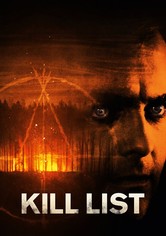
Now that Counter-Currents is well advanced into adolescence, I am reminded of being 15 years old myself, in 1976. That’s when I first began to form a great love for cinema, and that same affection is one of the things that first drew me to Counter-Currents. Cinema is part of culture, and white cinema is an important part of white culture. I believe it is as important to understand movies, and to see where they take their place in culture, as it is to enjoy them. In fact, the two things go together like Bogart and Bacall, right? When I discovered Counter-Currents, I quickly took to a magazine that didn’t demote cinema to some arts section, but gave it the same cultural credence as it afforded pieces on Plato, Scandinavian death-metal bands, and shootings in Chicago.
I had reviewed films, part-time, for a few magazines in the 1990s, and older British readers may remember such titles as Vox, Neon, and Empire, all of whom I wrote for. But no one on the staff wrote whole books about cinema, as one finds here at Counter-Currents. Only people who worked for the rather snobbish (but nevertheless admirably academic) film magazine, Sight and Sound – published by the BFI (British Film Institute) since the 1950s – did things like that. I had a sense that most of my colleagues on movie magazines were in love with the razzmatazz of the film business, even on the periphery as they were, rather than film as culture. It was all about how cool a movie was rather than any deeper meaning it might have. I don’t mean that it’s necessary to discourse all evening in a Parisian café about Bergman and Antonioni, but these guys tended to laud films such as Trainspotting and Lock, Stock, and Two Smoking Barrels. Not bad movies in context, but unless I actually want to watch something light and laddish, I have always preferred movies that go a bit deeper.
One interesting aspect of cinema is genre. We all know the basic categories, we know if we are watching a Western, a horror movie, a romance, or whatever. Some movies subvert genres and some cross over between them, but the basics are familiar to any film-watcher. One genre seems a relatively recent arrival, however, and is perhaps more properly called a sub-genre of the horror film. I recently saw three separate reviews of movies described as “folk-horror” and, as I was familiar with two of them and had wanted to see the third for some time, I thought a comparison might show a Venn-type overlap between them, and so give an idea of what folk-horror is in essence. The three films are: The Wicker Man (1973), Kill List (2011), and Midsommar (2019).
There will be some spoilers here, so be advised. These were verboten on magazines, for obvious reasons. Someone watching The Sixth Sense, Manon des Sources, or Planet of the Apes for the first time would not take kindly to knowing in advance the twists in those particular tales. I almost had to be air-lifted out of the cinema simply from grief after watching Manon des Sources, with its extraordinary final revelation. This did not impress my first-date girlfriend, and there was no second date. But I imagine most readers will know The Wicker Man and Midsommar, although perhaps not Kill List. All three films have grisly dénouements which are constructed in different but similarly structured ways, and they are all thoroughly pagan.
The plotlines are certainly very different. The Wicker Man concerns a Scottish policeman in the late 1960s visiting a remote Hebridean island to search for a missing girl. Kill List is a hit-man movie you have to watch at least twice to understand. Midsommar features a group of American students who visit Sweden for that country’s annual Midsummer festivities. But all three share an initial common theme, that of the cult.
The Wicker Man is set on the island of Summerisle, which actually exists and whose real-life Laird, the Earl of Summerisle, is memorably played here by Sir Christopher Lee. His is the most famous thespian name appearing across the three films, and although Lee was better known for his various vampiric roles in Hammer Horror flicks, he was a very talented Shakespearean actor with a wonderful basso profundo voice. His hairstyle in this movie – and it is a hairstyle, not a haircut – is surely one of cinema’s finest.
Edward Woodward plays the policeman, Sergeant Howie, and was familiar to British audiences who had watched him in the detective series, Callan. He was a no-nonsense, everyman-type actor perfectly cast in The Wicker Man. From Howie’s arrival on the island, he is not as aware as the viewer is that he has walked into a very sinister fertility cult. Howie is a devoutly religious man – probably raised Scottish Presbyterian – but naïve, an innocent abroad. The sight of young girls in a classroom lesson happily discussing phallic symbolism shocks him. Anyone familiar with Gordon Brown, Britain’s last Labour Prime Minister before Keir Starmer, may know that he was from Scottish Presbyterian stock, for whom the word “dour” was presumably invented.
The film patiently builds its sense of unease, as Howie watches a strange maypole dance, glimpses children in animal masks, and is told by the islanders that they don’t know the girl he is looking for. Her name is Rowan, and all the females on the island have flower or tree names. Everything is rite and ritual, another trait the three movies share. Britt Ekland puts in an appearance as a barmaid who attracts the otherwise sexless and stony Howie. Ekland was a Swedish actress otherwise known for marrying Peter Sellers, not marrying Rod Stewart, and being a Bond girl. She makes a surprisingly good job of a Scottish accent, never an easy one.
Midsommar also centers on a solar fertility cult. The students vacation there after the family of one of them, Dani, is murdered. I don’t wish to sound avuncular, but possibly the first thing the sensible traveler might do on arriving in a strange country and an even stranger village would not be to ingest a vast quantity of hallucinogens with the natives, but that’s millennials for you.
The cult in Kill List seems to appear only at the end, but a second watch of the film reveals that it was there all along. This is the film of the three considered which uses foreshadowing to most effect.

You can order The Best of Trevor Lynch here
Jay and Gal are two British mates who work together, apparently as businessmen. When we discover that their business deals in rubbing people out, they are given a “kill list” of victims. The first to get a bullet in the head is a priest, and says “thank you” to the pair just before he dies. When the terrible two discover that the list contains pedophiles, after breaking into a lock-up and watching a film that visibly distresses Jay, he begins to crack, and the next hit is unbelievably violent. Having beaten the librarian of this den of horror to a bloody pulp with a claw-hammer, the dying man also thanks Jay. Referring to Gal, who is upstairs emptying the man’s safe, the librarian asks him a simple question, but one which unsettles both the hitman and the viewer: “Does he know who you are? He doesn’t, does he?”
It is a scary line, on second viewing. It soon becomes obvious that Jay doesn’t know who he is either, and there are many of these moments of foreshadowing which emerge from the film on a second watch. It is interesting to see a carved, runic symbol appear in Kill List exactly as it does in Midsommar. They are both films full of predictive symbolism.
In The Wicker Man, Howie’s moral rectitude becomes his nemesis. Howie could have saved himself by sleeping with Willow (Ekland), because he would have lost his virginity and so be ineligible for sacrifice. What he thought was his moral strength condemned him. Similarly, the students in Midsommar had been pre-selected by the cult, but partly for reasons of refreshing the genetic pool. As for Kill List, it is more difficult to gauge because the cult is not a fertility cult, being more akin to Satanists or occultists. But foreshadowing is a cinematic element these movies share.
Everything, in all three films, is progressing horribly to its inevitable end, and involves two other elements shared by all three: ritual and sacrifice. Of the eight major protagonists across the three films, six are ritually sacrificed. The only survivors are Jay in Kill List, who becomes King of the Wood, and Danny in Midsommar, crowned Queen of the May. A fearful symmetry, but there is your folk-horror in essence. Modern film-makers using pagan and atavistic sensibilities to produce very frightening films. It may be something in the white gene that pulls on our collective coat and makes us so uneasy. We don’t just have a past, we have a deep past. The ghost of Evola may watch over these films…
All three are very good movies in their own right. Director Ari Aster might have been a little over the top in claiming that “Midsommar is The Wizard of Oz for perverts”, but it is a very beautiful horror film. In an interview, the affable Christopher Lee caviled slightly at the suggestion that The Wicker Man be dubbed “the Citizen Kane of horror movies”, but I think it’s in with a shout. It does seem to offer a template for the folk-horror genre. As for Kill List it is so claustrophobically shot, and with such kitchen-sink dialogue blended with edgy cinematography, the viewer can’t help but be reminded, respectively, of the films of Mike Leigh and Alan Clarke, the latter of whose work I reviewed for Counter-Currents., and who director Ben Wheatley name-checks in an interview.
Raymond Chandler, in one of the Marlowe novels, has the great gumshoe detective say: “The world is a perfectly functioning trap”. This could be the epigraph for all three of the movies considered. All of the main characters do not understand what they are caught up in, and do not understand what it means to be trapped in their respective snares until the finale of each movie. Well, perhaps Dani does in Midsommar.
There is, apparently, quite a recent archive of films classed as folk-horror, and I am rubbing my hands with glee in anticipation. Any recommendations are warmly welcomed. There are very many frightening films which feature external agencies. Ghosts, zombies, ghouls, and serial killers are all well-known cinema boogeymen. But the fear that comes from knowing you are frightened not by cheap visuals, but at a deep, genetic level, may scare you more.
14 comments
Two of my favorite folk-horror programs are:
Robin Redbreast, BBC, 1970, about a sophisticated woman from London who goes to live alone in the country, and becomes friendly with a simple, likeable man there. Some locals are involved in old pagan rituals, for which they attempt to make use of this couple…. https://www.youtube.com/watch?v=OvU2zHMFlfU
A Warning to the Curious, BBC, 1972, An M. R. James story about a down-on-his luck city man, who goes to East Anglia and finds an Anglo-Saxon royal crown that was buried. Unfortunately for him, the crown is guarded by a spirit who is very dedicated to keeping it buried…. https://www.youtube.com/watch?v=Z2zHrDPuO_c
Very good acting and scenery in both of these, with some emphasis on local flavor. They’re relatively low-budget, but that’s more than compensated by how they were made before the BBC descended into PC/Woke.
I hope you enjoy them.
Thank you. I am already in love with the 1970s, so I look forward to them. The whole folk-horror genre looks fascinating, and I will probably be found walled up somewhere, a century hence. Cheers!
I’ve watched both your recommendations. I’m so glad I abandoned city life twenty years ago, having relocated to the countryside. There are indeed hidden depths outside of the cities.
My dream is to live in the country too someday, Andrew. When I was a child I was fortunate to spend lots of time with grandparents in the country. There’s no better place for a child, or for many of us adults, as you already know. I’m glad you found a good place. I enjoyed having a little place out in “the sticks” for a while, but had to move because of work.
Maybe the “folk horror” stuff will help discourage Woke city types from leaving their urban paradises. I knew one inner city guy who was terrified to go even as far out as the nice suburbs.
MR James was one of the greatest supernatural horror fiction writers who ever lived– perhaps the greatest
Interesting! Increasingly, movies are the most important part of my life as well, although I’m not so much on horror. I think there is a wider grouping here, however. In the time span of these movies there is a genre wherein a young person is selected, preped, and sacrificed by a coven or some group. Sometimes magic or witchcraft is involved, while some are realistic. The pattern is kabbalistic and represents the “guys” the Illuminati are after. Examples include the movies listed in the article, The Witch, Hereditary, Get Out, Dark Skies, House of the Devil, The Invitation, et al. I don’t think any of the movies are good, but the most interesting to me was Dark Skies, thanks to the sci-fi twist. Midsommer features multiple of them and represents a broader meditation on the topic than the others.
Another good horror sequence that can teach goyim how the It! works was Jeepers Creepers. (This and it’s sequel show what I like, btw.). In a way, this sort of movie is more important than well crafted Oscar hopefuls because of their relevence to how our civilization really works.
Cheers. I’m trying to find Hereditary, because I believe it is the same director as Midsommar. Watching movies becomes better the older you get, I think, possibly because one gets less and less excitable, and can pay more attention. I suppose Rosemary’s Baby must have been an early folk-horror movie.
For me, I’ve started to like wider genres and levels of movie as I’ve gotten older. My tastes have decayed with my brain.
Of those, I would recommend The Witch as probably the best, as he uses really accurate period language, which makes it worthwhile for that aspect, and as I said Dark Skies for the aliens angle. Jeepers Creepers for the kabbalistic angle—“he’s making some kind of Sistine chapel in there.” lol! Although it’s not a great movie.
The pattern is kabbalistic and represents the “guys” the Illuminati are after.
What did you mean by that? I thought the (((guys))), and the (((Illuminati))) were the same thing? 🙃
The “guys” are the victims of the Illuminati, the ones being sacrificed. It requires esoteric knowledge which some have. I know it sounds weird. if you were reluctant to accept that there is a real world referent to these movies, which I would totally understand and condone, at least notice the artistic similarities among them, that they form a subgenre, and admit it could have some higher significance.
I know it sounds weird. if you were reluctant to accept that there is a real world referent to these movies, which…
I agree with you; I feel that there is something out there. I recommend the following books: The Light Bearers of Darkness, The Trail of The Serpent and Secret Societies And Subversive Movements.
🙃
The Wicker Man and Kill List were both incredible films. In fact, I’d put Kill List in my “best of” horror movies list. On the other hand, I thought Midsommar was bloated and unwatchable garbage, like all of Ari Aster’s output. It felt more like a “gee, ain’t white people weird and kooky?” point and sputter job than an attempt at saying anything profound about the nature of humanity or the world.
Agreed on Kill List. You are not quite sure why you are frightened, but you sure are frightened. I think Wheatley is the best English director this century. A Field in England is an insane film, and I reviewed High Rise here at CC. I would love to know what he is up to next.
Thanks for these asides. I’ve seen some commenters occasionally complain if a topic does not overtly comply with a website mission statement. But in these times any artist that simply makes art for art’s sake is somewhat ‘right’ aligned – there is so much pressure for ‘representation’ and woke ideals that any germ of an idea for a project often emerges tainted.
I can recommend the 3+ hour anthology “Woodlands Dark and Days Bewitched: A History of Folk Horror“, which takes a very deep dive into the topic, including obscure international films. Due to it’s length it might be best consumed in installments, but I didn’t find it overlong.
Kill List is a great film. I have mixed feelings whether the pagan aspect was contrived and unnecessary. Full of subtle menace and atmosphere, you have no idea where it is going… will a ‘job’ go smoothly, can small errors or stochastic timing change everything, or do the personality traits lead to benefit or catastrophe.
Comments are closed.
If you have a Subscriber access,
simply login first to see your comment auto-approved.
Note on comments privacy & moderation
Your email is never published nor shared.
Comments are moderated. If you don't see your comment, please be patient. If approved, it will appear here soon. Do not post your comment a second time.