Counter-Currents
  • Advertise
  • Private Events
  • T&C
  • About
  • Contact
  • RSS
    • Main feed
    • Podcast feed
    • Videos feed
    • Comments feed
  • Welcome
  • Webzine
  • Books
  • Merch
  • Podcasts
  • Videos
  • Donate
  • Patrons
  • Subscribe
  • Crypto

LEVEL2

Donate Now Mailing list

Writers of May

(2 votes) Morris van de Camp David M. Zsutty Derek Stark Jayant Bhandari Greg Johnson

Articles of May

The Lunch Wars by David M. Zsutty Heidegger on Nietzsche, Part One by Collin Cleary 2 votes
  • Welcome
  • Webzine
  • Books
  • Merch
  • Podcasts
  • Videos
  • Donate
  • Patrons
  • Subscribe
  • Crypto
    • Small Is Beautiful:
      The Napoleon of Notting Hill and G. K. Chesterton Upon Defending One’s Homeland from Others—and Itself

      Steven Tucker

      2

    • The Psychology Behind MrBeast’s Moronic Thought Experiment

      Endeavour

      9

    • On the Roots of Anti-Immigrant Sentiment in Contemporary Britain

      Lipton Matthews

      6

    • Remembering Enoch Powell:
      June 16, 1912–February 8, 1998

      Greg Johnson

      14

    • Counter-Currents Radio Podcast No. 691
      Rob Rundo Returns

      Counter-Currents Radio

    • The Fragile Polity that is Syria

      Morris van de Camp

      2

    • Nigel Farage Calls Britain a Two-Tier State

      Mark Gullick

      4

    • Nationalism This Week
      Letter to J. D. Vance

      Greg Johnson

      32

    • Lost In Trans-Mission:
      How the Media Fails To Reveal the Inconvenient Truth About the Usual Suspects

      Steven Tucker

      10

    • Liar, Liar, Pants on Fire!

      Beau Albrecht

      7

    • Editor’s Update
      Rob Rundo on Counter-Currents Radio, Fundraiser Update, & a New $20,000 Matching Grant

      Greg Johnson

    • The Bitter End of Western Metaphysics:
      Heidegger on Nietzsche, Part Three

      Collin Cleary

      10

    • Uncivil War

      Mark Gullick

      50

    • Exclusive Interview with Karel Veliky:
      The Final Chapter in the Film Series! Part II

      Ondrej Mann

      2

    • Happy Birthday to Us!

      Greg Johnson

      6

    • Zsutty’s Maximum

      David M. Zsutty

      16

    • Exclusive Interview with Karel Veliky:
      The Final Chapter in the Film Series! Part I

      Ondrej Mann

      2

    • The Union Jackal, June 2026

      Mark Gullick

      23

    • The Inferiority Behind Immigrant Superiority

      Jayant Bhandari

      15

    • Counter-Currents Radio Podcast No. 690
      Greg Johnson & David Zsutty Discuss Current Things: AI, Henry Nowak, the Iran Crisis, & More

      Counter-Currents Radio

      7

    • Collin Cleary: What Rome Means to Me

      Collin Cleary

      4

    • Paul Krugman: Closet Bolshevik

      Spencer J. Quinn

      21

    • Fugue of Ideas:
      Ibram X. Kendi’s Chain of Ideas

      Greg Johnson

      19

    • Based Blacks

      Lipton Matthews

      24

    • Black Intellectual Fatigue

      Derek Stark

      41

    • Why White Advocates Should Avoid “Based Blacks”

      Dani Vypont

      32

    • Nietzsche & Race

      Mark Gullick

    • Editor’s Update
      Rob Rundo Rescheduled to Next Week on Counter-Currents Radio;
      Tonight Greg Johnson & David Zsutty Answer Your Questions;
      Fundraiser Update & a New $20,000 Matching Grant

      Greg Johnson

    • The Counter-Currents 2026 Fundraiser
      Lifetime Subscriber Welcome Packages Extended

      Greg Johnson

    • Nationalism This Week
      Who’s Looking Back?

      Greg Johnson

      29

    • China’s Threat to American Security:
      Food, Farmland, Foreign Control, & Energy Policy

      Lipton Matthews

      5

    • The Bitter End of Western Metaphysics:
      Heidegger on Nietzsche, Part Two

      Collin Cleary

      16

    • The Killing of Henry Nowak

      Mark Gullick

      38

    • The Crisis of Chinese Technology Thieves

      Morris van de Camp

      1

    • The Strange World of Gender Bender Fiction:
      & What This Genre Tells Us About Autosexuality

      Dani Vypont

      3

    • Watching the Watchers:
      The Dark Triad Question

      David M. Zsutty

      14

    • The Remigration Movement Solidifies

      F. Roger Devlin

      2

    • Casting Aspersions:
      The Fatal Consequences of Race-Swapped Casting, From Helen of Troy to Henry of Southampton

      Steven Tucker

      20

    • The Murder of Henry Nowak

      Millennial Woes

      23

    • Don’t Forget to Vote in Our Writer & Article of the Month Poll

      Greg Johnson

    • The Robot Hotdog Stand

      Greg Johnson

      37

    • Laughing Our Way to Victory

      Dave Chambers

      7

    • The Zodiac Killer

      Mark Gullick

      11

    • Jared Taylor: What Rome Means to Me

      Jared Taylor

      1

    • An Interview with Endeavour:
      My Way of Life Is an Adventure!

      Ondrej Mann

      6

    • José Pedro Zúquete’s The Identitarians

      Greg Johnson

      3

    • Editor’s Update
      Fundraiser Update & How to Watch the Remigration Summit

      Greg Johnson

      5

    • The Bitter End of Western Metaphysics:
      Heidegger on Nietzsche, Part One

      Collin Cleary

      12

    • Berlin: City of Stones

      Spencer J. Quinn

      6

    • True Folk-Horror Is Horror of Your Own Folk:
      Mark Gatiss vs the Brexit Blind Dead  

      Steven Tucker

      4

    • Livla

      The Psychology Behind MrBeast’s Moronic Thought Experiment

      From a biological perspective, this thought experiment is the equivalent of a selection event that...

    • Adrian Roberts

      Remembering Enoch Powell

      In Mein Kampf, Hitler argued that the side which makes war inevitable is the side most responsible...

    • Adrian Roberts

      Remembering Enoch Powell

      So the English owe everybody reparations? Damn.

    • Wasili

      The Psychology Behind MrBeast’s Moronic Thought Experiment

      Great article!  Indeed, the following point can’t be emphasized enough: The [insert non-white...

    • Will Williams

      On the Roots of Anti-Immigrant Sentiment in Contemporary Britain

      Ecological experts call the replacement of one species by another as habitat succession. In my...

    • Douglas Mercer

      Remembering Enoch Powell

      In 1977 Powell gave a speech called The Road To National Suicide: “On the other hand there are at...

    • JayeRyanOD

      The Fragile Polity that is Syria

      I strongly support ex Syrian President Assad supported by my kinsmen the Russians . Before the...

    • Joe Gould

      The Psychology Behind MrBeast’s Moronic Thought Experiment

      I don’t see the decline of real, useful work as alarming or surprising, rather it is inevitable.We...

    • E_Perez

      On the Roots of Anti-Immigrant Sentiment in Contemporary Britain

      A little soft, the article, especially when its title promised to go to the roots. "The...

    • Elear

      Small Is Beautiful: The Napoleon of Notting Hill

      A wonderful essay about things so small yet so precious. Fighting off the invaders is meaningless if...

    • Quu

      The Psychology Behind MrBeast’s Moronic Thought Experiment

      Thank you, yes, it's very interesting, revealing a predisposition that isn't globally normal, and...

    • The Laughing cavalier

      Remembering Enoch Powell

      It was England who declared war - both times - and neither time was England under any threat. It'...

    • TheLau ghin gCavalier

      The Psychology Behind MrBeast’s Moronic Thought Experiment

      A version of this scenario did the rounds on 4chan where red was "nothing happens" and blue was "50...

    • Peter Quint

      Small Is Beautiful: The Napoleon of Notting Hill

      The Secret People G. K. ChestertonThey have given us into the hands of new unhappy lords,Lords...

    • Douglas Mercer

      Remembering Enoch Powell

      The UK now has 19 percent non-White which is more than double what it had in 2001 which was 8...

    • Lexi

      Letter to J. D. Vance

      They irrationally love Trump; their support for JDV is only an extension of this. Who loves JDV for...

    • Adrian Roberts

      The Psychology Behind MrBeast’s Moronic Thought Experiment

      I puzzled over the thought experiment for several minutes before reading the rest of the article....

    • Scott

      Remembering Enoch Powell

      I'm not an expert on postwar Albion, but I think the impressive colored invasion there is mostly a...

    • Scott

      Remembering Enoch Powell

      London unequivocally started the war.The Entente were determined after the “embarassment at Munich...

    • Peter Quint

      Remembering Enoch Powell

      How did he deter population replacement; it seems to me that it has been proceeding right-on-time...

    • Earth Day Special

      John Morgan

      12

    • A Robertson Roundup
      Remembering Wilmot Robertson
      (April 16, 1915 – July 8, 2005)

      Margot Metroland

      13

    • The Paranoid Style in White Nationalism

      Greg Johnson

      30

    • Join the Dance!

      Andrew Hamilton

      1

    • We Can’t Save the Earth Without Reducing African Birth Rates

      James Dunphy

      36

    • “I’m Not a Conspiracy Theorist, but . . .”:
      Jeffrey Epstein’s Death Gives New Life to “Conspiracy Theories”

      Greg Johnson

      22

    • Sylvia Plath: Stasis in Darkness

      Vic Olvir

      17

    • Vanguardism, Vantardism, & Mainstreaming

      Greg Johnson

      80

    • Aviation, Geography, & Race

      Charles Lindbergh

      3

    • Some Thoughts on Yule

      Collin Cleary

      4

    • Living in Truth:
      A Yuletide Homily

      Jef Costello

      7

    • John Kennedy Toole’s A Confederacy of Dunces

      Greg Johnson

      20

    • On Aleksandr Solzhenitsyn’s Warning to the West

      Spencer J. Quinn

      7

    • Elitism, British Modernism, & Wyndham Lewis

      Jonathan Bowden

      6

    • Philip K. Dick’s Do Androids Dream of Electric Sheep? as Anti-Semitic/Christian-Gnostic Allegory

      Greg Johnson

      20

    • “Conspiracy Theory” or Conspiracy?

      Andrew Hamilton

      21

    • Remembering H. P. Lovecraft
      (August 20, 1890–March 15, 1937)

      Greg Johnson

      3

    • Who Are We?
      Nordics, Aryans, & Whites

      Greg Johnson

      71

    • Remembering William Gayley Simpson
      (July 23, 1892–December 31, 1990)
      A Pleasant Afternoon with Harriet & Bill Simpson

      Margot Metroland

      18

    • Here are the Young Men
      Remembering Ian Curtis
      (July 15, 1956–May 18, 1980)

      Mark Gullick

      18

    • Percy Grainger
      Artist of the Right

      Alex Graham

      7

    • Remembering Revilo Oliver
      (July 7, 1908–August 20, 1994)

      Greg Johnson

      18

    • The Meaning of July 4th for the White Man

      Gregory Hood

      13

    • The Front National’s Evolution

      Bruno Mégret

    • Merwin K. Hart
      Forgotten American Hero & Man of the Right

      Morris van de Camp

      10

    • George Orwell’s Nineteen Eighty-Four

      Jonathan Bowden

      8

    • Carleton S. Coon
      Scientist & Reluctant White Advocate

      Morris van de Camp

      3

    • The Kwanzaa Absurdity Will Be Dwarfed by Juneteenth

      Robert Hampton

      10

    • Stravinsky

      Alex Graham

      7

    • Like the Roman:
      Remembering Enoch Powell (1912-1998)

      Mark Gullick

      23

    • The 1970s: The Golden Age of Hijacking

      Morris van de Camp

      21

    • Jonathan Bowden’s Deliverance
      Part 6

      Jonathan Bowden

    • Do You Want to Play a Game?

      Mark Gullick

      1

    • Sexually Incontinent on the Indian Subcontinent:
      Who Rapes More Animals, Indians or Pakistanis? The Battle Continues!

      Steven Tucker

      3

    • Neo-Fascism in Film
      Part 5

      Karel Veliky

      15

    • The Game of Tarot

      Mark Gullick

      2

    • Institutions Cannot Be Transplanted

      Jayant Bhandari

      5

    • Jonathan Bowden’s Deliverance
      Part 5

      Jonathan Bowden

    • Crosstown Traffic:
      Jimi Hendrix & The Post-War Rock ‘N’ Roll Revolution

      Mark Gullick

      1

    • Slaves from the North:
      Finns & Karelians in the East European Slave Trade, 900–1600

      Lipton Matthews

      14

    • Neo-Fascism in Film
      Part 4

      Karel Veliky

      2

    • David Lean’s A Passage to India

      Spencer J. Quinn

      1

    • Elites are Essential to Development

      Lipton Matthews

      7

    • Jonathan Bowden’s Deliverance
      Part 4

      Jonathan Bowden

    • Neo-Fascism in Film
      Part 3

      Karel Veliky

      6

    • E. M. Forster’s A Passage to India & the Indian Mentality

      Spencer J. Quinn

      25

    • Jonathan Bowden’s Deliverance
      Part 3

      Jonathan Bowden

    • The Rest Is Silence
      Heidegger’s Quietism

      Mark Gullick

      2

    • Dispelling the Historical Fallacy of Indian Nationalism

      Lipton Matthews

      8

    • Neo-Fascism in Film
      Part 2

      Karel Veliky

      8

    • Jonathan Bowden’s Deliverance
      Part 2

      Jonathan Bowden

    • Life of a Klansman

      Mark Gullick

      8

    • Jonathan Bowden’s Deliverance, Part 1

      Jonathan Bowden

    • Decolonial Ideas are Holding Back Developing Countries

      Lipton Matthews

      8

    • Neo-fascism in Film, Part 1

      Karel Veliky

      21

    • Jonathan Bowden’s Onslaught, Part 8
      Divigations on Decadence

      Jonathan Bowden

    • Jonathan Bowden’s Onslaught, Part 7
      Intrigues in the National Front

      Jonathan Bowden

      1

    • Rotten to the Core

      Mark Gullick

      8

    • Strauss on Husserl’s “Philosophy as Rigorous Science”

      Greg Johnson

    • Jonathan Bowden’s Onslaught, Part 6
      Francis Bacon & Right-Wing Nihilism

      Jonathan Bowden

    • András László
    • Derek Hawthorne
    • Beau Albrecht
    • Alain de Benoist
    • Kerry Bolton
    • Jonathan Bowden
    • Collin Cleary
    • Jef Costello
    • Savitri Devi
    • Julius Evola
    • Jim Goad
    • Gregory Hood
    • Juleigh Howard-Hobson
    • Greg Johnson
    • Charles Krafft
    • Anthony M. Ludovici
    • Trevor Lynch
    • H. L. Mencken
    • J. A. Nicholl
    • James J. O’Meara
    • Christopher Pankhurst
    • Tito Perdue
    • Michael Polignano
    • Spencer J. Quinn
    • Fenek Solère
    • Irmin Vinson
    • Leo Yankevich
    • Francis Parker Yockey
    • Multiple authors
  • Editor-in-Chief

    • Greg Johnson, Ph.D.

    Featured Writers

    • Beau Albrecht
    • Gunnar Alfredsson
    • Collin Cleary, Ph.D.
    • Jef Costello
    • Morris V. de Camp
    • F. Roger Devlin, Ph.D.
    • Stephen Paul Foster, Ph.D.
    • Jim Goad
    • Alex Graham
    • Mark Gullick, Ph.D.
    • Greg Johnson, Ph.D.
    • Travis LeBlanc
    • Trevor Lynch
    • Margot Metroland
    • James J. O’Meara
    • Angelo Plume
    • Spencer J. Quinn
    • Fred Reed
    • Clarissa Schnabel
    • Michael Walker
    • David M. Zsutty

    Frequent Writers

    • Asier Abadroa
    • Aquilonius
    • Alain de Benoist
    • Kerry Bolton, Ph.D.
    • Dave Chambers
    • Steven Clark
    • James Dunphy
    • Endeavour
    • Richard Houck
    • Jason Kessler
    • Titus Livius
    • Ondrej Mann
    • Lipton Matthews
    • Mark Mazari
    • John Morgan
    • Jaroslav Ostrogniew
    • Kathryn S.
    • Christian Secor
    • Anne Wilson Smith
    • Thomas Steuben
    • William De Vere
    • Kenneth Vinther
    • Max West

    Classic Authors

    • Maurice Bardèche
    • Jonathan Bowden
    • Julius Evola
    • Guillaume Faye
    • Ernst Jünger
    • Kevin MacDonald, Ph.D.
    • D. H. Lawrence
    • Charles Lindbergh
    • Jack London
    • H. P. Lovecraft
    • Anthony M. Ludovici
    • Sir Oswald Mosley
    • National Vanguard
    • Friedrich Nietzsche
    • Revilo Oliver
    • William Pierce
    • Ezra Pound
    • Saint-Loup
    • Savitri Devi
    • Carl Schmitt
    • Miguel Serrano
    • Oswald Spengler
    • P. R. Stephensen
    • Jean Thiriart
    • John Tyndall
    • Dominique Venner
    • Leo Yankevich
    • Francis Parker Yockey

    Other Authors

    • Howe Abbott-Hiss
    • Michael Bell
    • Giles Corey
    • Jack Donovan
    • Richardo Duchesne, Ph.D.
    • Emile Durand
    • Guillaume Durocher
    • Mark Dyal
    • Tom Goodroch
    • Andrew Hamilton
    • Robert Hampton
    • Huntley Haverstock
    • Derek Hawthorne
    • Gregory Hood
    • Juleigh Howard-Hobson
    • Alexander Jacob
    • Ruuben Kaalep
    • Tobias Langdon
    • Julian Langness
    • Patrick Le Brun
    • G A Malvicini
    • John Michael McCloughlin
    • Millennial Woes
    • Michael O’Meara
    • Christopher Pankhurst
    • Michael Polignano
    • J. J. Przybylski
    • Quintilian
    • Edouard Rix
    • C. B. Robertson
    • C. F. Robinson
    • Herve Ryssen
    • Alan Smithee
    • Fenek Solere
    • Ann Sterzinger
    • Robert Steuckers
    • Tomislav Sunic
    • Donald Thoresen
    • Marian Van Court
    • Irmin Vinson
    • Book Reviews
    • Movie Reviews
    • TV Reviews
    • Music Reviews
    • Art Criticism
    • Graphic Novels & Comics
    • Video Game Reviews
    • Fiction
    • Poems
    • Interviews
    • Videos
    • English Translations
    • Other Languages
      • Arabic
      • Bulgarian
      • Croatian
      • Czech
      • Danish
      • Dutch
      • Estonian
      • Finnish
      • French
      • German
      • Greek
      • Hungarian
      • Italian
      • Lithuanian
      • Norwegian
      • Polish
      • Portuguese
      • Romanian
      • Russian
      • Slovak
      • Spanish
      • Swedish
      • Ukrainian
    • Commemorations
    • Why We Write
  • Archives
  • Top 100 Commenters
  • The Looney Bin
  • Advertise
  • Private Events
  • T&C
  • About
  • Contact
  • RSS
    • Main feed
    • Podcast feed
    • Videos feed
    • Comments feed
Sponsored Links
Europa.com Above Time Coffee Antelope Hill Publishing Paul Waggener IHR-Store Spencer J. Quinn American Renaissance Jim Goad The Occidental Observer
Print April 5, 2025 14 comments

The Best of Jim Goad
White Slavery Denial

Jim Goad

4,924 words

The currently approved conceptual framework for American race relations dictates that whites—all of them, simply by dint of being white—are oppressors. Any deviation from this rigid script, no matter how deeply rooted in fact, must be immediately squashed like a blood-engorged tick.

We are taught that black academic and financial underperformance—as well as black over-performance in crime—are the direct result of slavery’s horrid legacy. There are to be no other possible explanations. To note the hugely embarrassing fact that American blacks live far longer and under vastly superior economic conditions in America than they do in any majority-black nation on Earth may be factual, but it is RACIST because it undermines the ironclad Guilt Narrative that must never be questioned.

Here are some facts that The Script demands you ignore:

  • Even at the peak of American slavery, only a tiny percentage of American whites—about 1.5%—owned slaves.
  • Leading up to the Civil War, a vastly higher quotient of whites had worked as indentured servants and convict laborers than had ever owned slaves. Most historians, regardless of their political orientation, agree that anywhere from half to two-thirds of whites who came to the American colonies arrived in bondage. The fact that the vast majority of whites existed in a state closer to slavery than to slave ownership is something resolutely ignored in the modern retelling of history.
  • Documents from the era show that so-called white “indentured servants” were often referred to as “slaves” rather than “servants.”
  • These “servants” did not always enter into voluntary contracts. There is overwhelming evidence that many of them were kidnapped by organized criminal rings and sent to work on American plantations. It is possible that as many, if not more, whites than blacks were brought involuntarily to the colonies.
  • The middle-passage death rates for these “servants” were comparable to that of blacks on slave ships from Africa to the New World.
  • Indentured servants were whipped and beaten, sometimes to death. When they escaped, ads were placed for their capture.
  • They lived under conditions so brutal that an estimated half of them died before their seven-year term of indenture expired.

I covered many of these facts in my book The Redneck Manifesto. The chapter regarding white slavery is here. A simplified “kids” version is here. And Gavin McInnes and I covered much of the same ground in this video.

I’ve often discussed how guilt is one of the primary political weapons—in the long run, possibly more powerful than bullets. Since the currently accepted narrative is based far more on an attempt to quarantine historical guilt among whites than it is a sober assessment of the facts, the typical response to any discussion about white slavery is emotional rather than logical.

Ninety-nine percent of the time, “rebuttals” consist of nothing more than ad-hominem attacks, straw men, and appeals to motive. I often get accused of trying to “justify” slavery or of trying to argue that two wrongs make a right. When I counter that I’m arguing that two wrongs make two wrongs—and that I wonder why the sole focus is on one wrong rather than all of them—I am accused of being a racist liar.

Most frustratingly, I’m falsely accused of saying that white slaves had it worse than black slaves. No, actually, in The Redneck Manifesto, I was merely quoting people who alleged that:

Howard Zinn states that “white indentured servants were often treated as badly as black slaves.” Eugene Genovese claims that “In the South and in the Caribbean, the treatment meted out to white indentured servants had rivaled and often exceeded in brutality that meted out to black slaves…”

OK, well, obviously those were neo-Nazi, Holocaust-denying, minority-lynching, right-wing KKK lunatics saying that, right? No—both Zinn and Genovese were Marxists.

The book also quotes early observers saying much the same thing:

A colonial observer of Virginia convict laborers said, “I never see such pasels of pore Raches in my Life…they are used no Bater than so many negro Slaves.” A 1777 screed protesting the indenture racket claimed that a white servant’s body was “as absolutely subjected as the body or person of a Negro, man or woman, who is sold as a legal Slave.” In the 1820s, Karl Anton Postl commented that non-slaveowning whites “are not treated better than the slaves themselves….A 1641 law provided for all disobedient servants to have their skin branded, regardless of its color. A 1652 law in Providence and Warwicke (later Rhode Island) mentions “blacke mankind or white” servants. A 1683 Pennsylvania law contains the phrase “no Servant White or Black.

But rather than even attempting to dispute any of this, critics merely call me a white supremacist and think they’ve won. That’s truly how stupid they are. Or dishonest. Or stupidly dishonest and dishonestly stupid.

Last week I was alerted by about a half-dozen friends to a story circulating about the “Myth of the ‘Irish slaves’” and how it was based on “a purposeful lie” spread by “Neo-Nazis, White Nationalists, Neo-Confederates, and even Holocaust deniers.” If that sounds like the frothy, methinks-the-lady-doth-protest-too-much vituperations of a Southern Poverty Law Center press release, that’s exactly what it is. The article features an interview with a certain Liam Hogan—who is nothing more than an Irish librarian—in a frantic attempt to “debunk” this “myth.”

Hogan’s “refutation” consists of little more than character smears. When he wades shallowly into the factual realm, it’s only to prove that some dumb meme somewhere misidentified a picture of bedraggled white children as white Irish slaves. But by that reasoning, since rumors of human soap and human lampshades were proved to be false, that whole story falls apart…right? Otherwise, there is absolutely no refutation of the reams of documented evidence that not only did white slaves exist, they were often called slaves back then. Again, from The Redneck Manifesto:

During a 1659 Parliamentary debate on the white-servant trade to the colonies, legislators used the word “slaves” rather than “servants.” A Virginia law of 1705 mentions the “care of all Christian slaves,” Christian being a contemporary euphemism for European.

In my long and checkered life I’ve often found that people who make huge public displays of virtue-signaling and moralistic grandstanding are often engaging in projection. In an article called “‘Irish slaves’: the convenient myth”Hogan writes:

The conflation of indentured servitude with chattel slavery in the ‘Irish slaves’ narrative whitewashes history in the service of Irish nationalist and white supremacist causes.

OK, two can play at that game. How’s this sound?

The media and academic blackout regarding white indentured servitude and convict labor—which were often referred to simply as “slavery” by contemporaries—whitewashes history in the service of a pro-black, pro-Jewish, anti-white cause.

Hogan also drags the Ferguson riots into it:

Its resurgence in the wake of Ferguson reflects many Americans’ denial of the entrenched racism still prevalent in their society.

So I’ll drag Ferguson out of it:

The fact that white slavery deniers are using Ferguson to somehow dispel white slavery as a “myth” shows how desperate and intellectually bankrupt they’ve become in their attempt to quarantine historical guilt solely among non-Jewish whites.

But to white slavery deniers such as Liam Hogan and the SPLC, to even dare drawing analogies between black slavery and white indentured servitude is to peddle “false equivalencies”—possibly because to do so renders the idea of universal white guilt as undeniably false. So it’s not a case of me denying guilt—it’s a case of others falsely imputing it.

Since so much of leftist “argumentation” these days consists of guilt by association, the SPLC and Hogan ignore the Marxist and centrist historians who agree that white slavery was rampant and brutal. Instead, they go straight for the jugular of anyone they can dismiss as a white supremacist Nazi Holocaust-denier.

Enter one Michael A. Hoffman II, easily one of the most interesting alternative historians on Earth, even though Wikipedia’s dutiful social-justice termites have pegged him mainly as a “Holocaust denier and conspiracy theorist.” Along with over a hundred other sources, I cited Hoffman’s book They Were White and They Were Slaves several times in The Redneck Manifesto. Wikipedia mentions the book, but in true fashion it doesn’t bother to note its staggering reams of documentation from primary sources—instead, it heads straight into a critic’s description of Hoffman as a “racist.”

Michael A. Hoffman II

Although the “Irish slaves myth” story was spread far and wide on several sites last week, no one bothered to contact the alleged primary mythmaker.

The following Q&A was conducted with Michael A. Hoffman II via email.


Jim Goad: Throughout his purported “debunking,” Hogan floats the idea that white indentured servitude and black slavery were so different as to be incomparable. Why is he wrong?

Michael A. Hoffman II: White enslavement has a long history in Britain and Scandinavia. Mr. Hogan, like so many writers on this subject who conform to the Establishment line, overlooks several points and has a naive faith in the white ruling class of Britain.

The conforming authors don’t take into account that the study of white enslavement has been impeded over the centuries by two facts missing from their own studies and critiques. First, white enslavement carried with it a hereditary taint. As I demonstrate in my book, this extends back to the Vikings who looked on Scandinavian “thralls” and those born into “thralldom” as carrying a hereditary defect in part because their enslavement was hereditary. Something akin to this was operating in Anglo-Saxon England under the category of villeinage. The daughter of a villein could not be married without buying her way out of villeinage. The test of a young English woman’s status in early medieval England—whether she was slave or free—was decided by whether or not the local lord had control over her body, as all masters have over their slaves. Under English law, a villein woman was one who could not be married until she first offered the custom of the country as it was known, the “ransom of blood for merchet” (i.e., until she first submitted to sexual intercourse with the lord, prior to her marriage).

Both in early Britain and Scandinavia and much later in the sugar plantations of the West Indies and the tobacco plantations of America (before cotton became king), British-American whites whose parents or relatives had been enslaved, or who themselves had escaped it, or bought their way out (as did some black people), were exceedingly reticent to identify as former white slaves or as their progeny. “Servant” was a far more attractive category, and we see identifications with this status and less so with outright enslavement due to the stigma.

Hogan has a pictorial display allegedly confuting my thesis in which he displays a photograph of what appear to be mixed-race people in the West Indies who are Barbados residents circa 1908, and he is incredulous that no Irish white “redlegs” are in the photo or named as such. We know from primary source materials that white slaves worked alongside blacks in the West Indies and that the word “redleg” was applied to them by their darker coworkers because of the tendency of the white slaves to sunburn. Whether or not their descendants stayed on the island to pose for a camera nearly 300 years later is a flimsy device for casting doubt on a historical epoch. Limiting oneself to the search for Irish surnames is an even more egregious error because it excludes the search for traces of the English Protestants who were transported as slaves to those islands in the 17th and early 18th century.

Hogan and company also support the notion that white bondage was mostly carried out within a framework of law. Here they are swallowing the propaganda of the white ruling class who were permitting the mass kidnapping of white children off the streets of port cities such as London and Glasgow for shipment to America under no indentures whatsoever, or under forged indentures, or as criminalized paupers and “rogues.” Upon arrival these youth were often put to work clearing forests and draining swamps. They were regularly assaulted, ill-fed, and worked to death. Britain had a surfeit of poor white youth who represented a potential for a French-Revolutionary type of insurrection in the cities. The aristocracy was only too glad to be rid of them, and I draw my evidence for this from state papers and contemporary letters and eyewitness accounts.

Hogan accepts the official tale of the slavers themselves, as they obscured their monstrous crime against their own people. So for him, there is no mass “kid-nabbing” (as it was first termed). He is blind to the fact that to facilitate white bondage under penal enslavement, the British ruling class contrived laws such as the Waltham Black Act, which made simple misdemeanors (stealing lace, breaking down an aristocrat’s fish pond, poaching deer) into felonies punishable by “transportation for life into the colonies.” In the 17th century the tens of thousands of prisoners these laws netted were not sent to slavery in British America and the West Indies on indentures. They were sold at the ports on arrival. As prisoners they had no rights. Diaries, letters, and eyewitness accounts give testimony to their horrible mistreatment and slave labor. Mr. Hogan won’t call these wretches “slaves,” even though they were clearly handled like chattel (cattle).

It seems that a powerful lobby has decided that black folk have a proprietary relationship with the word slave. “You blacks are the slave race,” they are told by their liberal white alleged “allies.” If this designation is false, however, then it constitutes an act of psychological crippling. The history of the white race is in many respects synonymous with the long history of enslavement, and if blacks have a copyright on the word “slave,” someone should tell that to the Slavic people, who for generations were targets of Viking slave raids and from whom the word “slave” is derived.

The weakness of Mr. Hogan’s assertions can be found in his gullible acceptance of the party line of the white ruling class with regard to their whitewash of their role in white enslavement. The white ruling class is excoriated with contempt by the left when they minimize crimes of the British aristocracy and capitalists against people of color, but Mr. Hogan will believe them implicitly when they aver that white bondage was operated within a legal framework, and it only involved “servants.”

The kidnapping of poor whites has precedence in Britain. It does not have a legal basis per se, but it has color of law and we find it in the systematic mass kidnapping of British people for maritime slavery aboard ship for the Royal Navy. I can anticipate the objection: The bondage was for a determinate period of time. Officially, yes. An Englishmen was kidnapped of the streets and country lanes of Britain with the connivance of the judiciary and conscripted for a period of years, but in actuality these determinate number of years was not worth the ink that had been used to write the paper, when it so happened that the victim of abduction was returning home from a five- or seven-year compulsory voyage. He saw the blessed shore of England at long last, prayed that his wife had not run off and that his children and parents still lived, and then a few miles from shore, another man-of-war sailed up to his vessel, boarded it at sea with a press gang, and kidnapped him again for another multi-year abduction. This could happen two or three times. The kidnapped sailor could be gone from Britain ten, fifteen, or twenty years and killed or severely injured during that time. I doubt Mr. Hogan would confer upon this naval slave that title because if the slave survived his ordeal he eventually went home. He had been a slave for a time, and to quibble over it is to do a grave disservice to the memory of tens of thousands of Royal Navy slaves. Impressment was one of the rotten roots, along with villeinage, that created a precedent for an institutional framework for white slavery concealed under cover of “indenture” or some other deceptive and cosmetic rubric.

Jim Goad: In this passage, Hogan essentially accuses you and others of lying: “The inclination to describe these different forms of servitude using the umbrella term ‘slavery’ is a wilful [sic] misuse of language.” Didn’t contemporary legal documents often refer to alleged “indentured servants” as “slaves”?
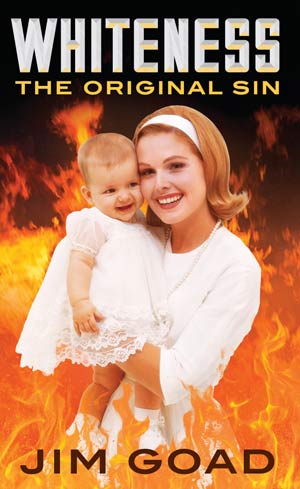
You can buy Jim Goad’s Whiteness: The Original Sin here.

Michael A. Hoffman II: The truth was in the writings of the white slaves themselves who referred to themselves as such, and eyewitnesses to their plight who wrote accounts of what they saw. This is in my bookThey Were White and They Were Slaves.

As for willful misuse of language, I suppose I should apologize for defying the Establishment-imposed monopoly on how the word “slave” is to be employed, but I cannot, because like all monopolies this one is a form of restraint, enforced by thought cops indifferent to truths that violate the whole foundation of their monopoly on history and white self-image.

Jim Goad: Hogan claims your book deceptively uses “selective quotations taken from nearly 200 different secondary sources,” that your motive is “to deny reparations for slavery in America,” and that your “denial has a pro-slavery ideological lineage.”

Michael A. Hoffman II: One usually can discern that something is defective about an argument when it is ad hominem, and we discover this ill omen in Mr. Hogan’s resort to Pavlovian incentives for stigmatizing a writer with pejoratives calculated to cue an intended audience of partisans that here is someone to despise and dismiss. If he’s writing mainly for the benefit of Mark Potok and members of the new religion of Multiculturalism and Diversity, then he’s in luck. If he seeks a wider audience, however, then I don’t see how such tactics help to make his case.

The idea of paying reparations to any aggrieved racial or ethnic group is something with no appeal to me. It devolves into one-upmanship in the game of guilt imposition. Even in the matter of the Irish Catholic slaves, the focus is too narrow, and the subtext is one that excludes English Protestant slaves, since the Irish narrative is too often beholden to a vision of near-perpetual victimization by the English, which excludes the reality that a vicious white ruling class in London has seldom had any compunctions against betraying and enslaving their own white English yeomanry.

Do the English pay reparations to the Irish for what Oliver Cromwell did in transporting Irish slaves to the West Indies? Do the Catholics pay reparations for the pro-Catholic Stuart King Charles II for having shipped criminalized and enslaved English Protestants to the West Indies? A world full of victims demanding payment is a definition of a madhouse, not a civilization. The reparations process is very often politicized, with war victors or the plutocracy with the most bloat apportioning the guilt and assigning the victim status.

As a revisionist historian, I wrote They Were White and They Were Slaves for the astonishing reason (to some observers) that it was a chronicle that had not been adequately addressed and thus was pure gold from the standpoint of historical rediscovery. My “sin” is to have detailed the history without regard to the idol of political correctness. My book is good news for black people: You are not inferior; you were not the only race or the main race in chattel bondage.

Jim Goad: In an earlier email you wrote to me: “the work of my opponents (at least Hogan that is; the distaff side of the trio today admitted to me that she has not read my book), is so blundering (at least what I have read so far) as to actually add ammunition to my thesis.” How so?

Michael A. Hoffman II: At this URL, Hogan, Matthew Reilly, and Laura McAtackney make the case for one of the assertions in my book. They write:

“If a white servant assaulted another servant or a slave, it was treated as a misdemeanor and they were fined. If they assaulted their master they were whipped. Their indenture was legal property therefore a servant’s remaining time could be left in wills, traded for commodities and sold. Since one’s labor is inseparable from one’s person, this meant indentured servants in Barbados were treated as a sort of commodity. The distinction between voluntary and involuntary indentured servitude is also important, but all too often serves as justification for the existence of “white slavery”. It is true that some Europeans, particularly prisoners of war or political prisoners, were sent to places like Barbados against their will and without a predetermined period of servitude. However, upon arrival, those without contracts were, by law, required to serve the master who purchased their labor for a limited number of years, depending on their age. It is also true that many servants didn’t live to see the end of their period of servitude due to brutal treatment and unsparing work regimens, but while under the conditions of servitude, they were subject to the same laws that governed European servants, not enslaved Africans.” (End quote; emphasis supplied).

Apart from the risible fiction that all white bondage was “indentured” and for a “predetermined period” and therefore all of it was scrupulously governed by some kind of “European servant” legislation and jurisprudence, Hogan, Reilly, and McAtackney concede that “many” whites in bondage suffered “brutal treatment and unsparing work regimens” which proved lethal.

Even they admit that many whites were sent into bondage in Barbados and then worked to death. This is not slavery and it cannot be designated chattel slavery? By what sufficiently dainty term do we describe it? The death of many “servants” was by accident? Were their masters prosecuted and executed for this? What sort of human being who is beaten and worked to death is undeserving of the name “slave”?

Notice as well the knee-jerk assumption the three critics of white slave history exhibit: They expect us to believe that in every case where a white person in bondage is whipped, it was because “they assaulted their master.” How do they know this? Imagine the outcry if someone made such a characterization about the whipping of blacks in bondage—that the flogging was always their fault?

How is the experience of whites in servitude, who were at the mercy of masters of all types, reducible to the notion that no master ever unjustly lashed an un-free white person? This myth presupposes that whites were never whipped due to having tried to run away, or because they were too sick to work, or they refused the master’s sexual advances. By some miracle, the human predicament by which nonwhites in bondage unjustly found themselves on the receiving end of a lash is not shared by whites in bondage. Here we observe the subhuman status of whites in servitude as we demarcate the dimensions of the distortion: They died as slaves yet must not be called slaves; unlike black human beings who experienced servitude and were unconscionably whipped, whites who were whipped almost always deserved it.

Jim Goad: Isn’t it true that several historians who can in no way be smeared as “holocaust deniers” or “white supremacists” essentially agree that white slavery existed in the colonies? In my research forThe Redneck Manifesto, I found historians across the political spectrum essentially agreeing with the historical facts you raise in your research.

Michael A. Hoffman II: The cumulative evidence of A. Roger Ekirch in Bound for America (1990) is conclusive, though he employs euphemisms for white enslavement. He certainly does not fit the hysteric’s categories of “denier” or “supremacist.” Oscar and Mary Handlin openly refer to whites in servitude in the seventeenth century as “slaves. ” See “Origins of the Southern Labor System” in William and Mary Quarterly, April, 1950. Personally, I rely mainly on testimony of the white slaves themselves, their own writings and pleadings and those persons high and low who encountered them and wrote of them.

Jim Goad: With all these allegations of people trying to deny white guilt, is it possible that others are trying to deny black responsibility? Couldn’t one argue that some people are lazily trying to use slavery as a blanket and bulletproof excuse for black academic and economic failure?

Michael A. Hoffman II: Some black people are angered that there is an entire industry in the U.S. centered on the so-called “Holocaust” of Judaic persons in eastern Europe decades ago, with museums in America and innumerable college classes, books, and movies, and a de facto “Holocaust” tax on Americans in the form of billions of dollars in US aid sent to the Israelis, while the descendants of the black people who worked the plantations and helped to bring to market the cotton—the greatest material prize of antebellum America—never did receive their “40 acres and a mule.” One wonders whether the recent energy devoted to black slave reparations and African-American museums and university curricula would be as intensely promulgated and ubiquitous if there was no “Holocaust” industry to remind American black people that they are not getting their share of the white guilt pie.

Certainly if reparations are to be paid for slavery in America, they must also be paid to the descendants of the white slaves who also performed the requisite labor that enriched the planter class and before there was much of a planter class on the eastern frontier, the white slaves of the 17th century performed the most back-breaking labor of colonial settlement: land-clearing.

Jim Goad: So much of Hogan’s alleged “debunking” simply employs the fallacies of argumentum ad hominem and appeal to motive. But since he called your motives into question, what might be someone’s motive in denying the well-documented history of white slavery?

Michael A. Hoffman II: In my book I give examples of white British aristocrats speeding in their carriages to abolitionist meetings where the plight of blacks in America was decried, heedless of white children by the side of the road who had finished toiling 16 hours, half-naked in a mine; or having their arms and legs mutilated in the factory machinery of the early Industrial Revolution whose owners, such as Josiah Wedgewood, and the famous poet and mine owner Lord Byron, considered poor British whites entirely expendable.

Charles Dickens, who had been a child laborer in a chemical factory, termed this callous hypocrisy “telescopic philanthropy.” The white elite of Britain had the apparition of black enslavement constantly before their eyes, even though it was thousands of miles away, while they were oblivious to the English boys who were sold to chimney sweeps and who sometimes burned and suffocated to death in the chimneys of the magnificent mansions of the abolitionists. Almost no one was paying attention to their agony. It’s supposed to be naughty of me to refer to child labor in the factories, mines, and chimneys of Britain as white slavery. I do not know what else to term girls and boys stripped virtually naked toiling side-by-side in a mine for 16 hours stunted and blackened, or a factory, where they often were seriously injured or killed, because if they didn’t undertake this labor they would starve to death. They went to their labor before dawn and ceased their labors after dark.

Most of your readers are familiar with white self-hatred and this perverse loathing, coupled with the legacy of the betrayal of the masses of white paupers and laborers in Britain by their rulers, has created the current situation of ruinous psychological and spiritual alienation that would seem to desire demographic extinction of their own seed.

Jim Goad: The SPLC claims that you are engaging in “an ahistorical reimagining of real events weaponized by racists and conspiracy theorists.” Speaking of “ahistorical reimaginings,” has the Southern Poverty Law Center ever addressed the Jewish role in the transatlantic slave trade?

Michael A. Hoffman II: Mr. Dees’s poverty palace is a satrap in the Israeli orbit. His hate mill seldom grinds the racist libels and murderous deeds of the settler-rabbis. Goyim-hating Chabad rabbis travel throughout the US to disseminate their racist doctrines, and the SPLC purrs like a kitten in the face of it. Dees and Potok are not going to reveal to their duped supporters—and their numerous cronies at executive levels of the US media—the pivotal role Judiac-Americans played in the merchandising of black flesh prior to the 20th century. Black academics such as the late Prof. Tony Martin of Wellesley College are marginalized and their career opportunities severely curtailed if they dare to inform their students of the vast Judaic role in black enslavement in the Americas, as detailed in the magisterial history books, The Secret Relationship Between Blacks and Jews, Volumes I, II, and III.

Jim Goad: Hogan claims that the purpose of reviving this alleged “myth” is that it “aims to shut down all debate about the legacy of black slavery in the United States.” Yet for someone who is apparently in favor of free and open debate, you claim he’s blocked you on Twitter. Would you be willing to debate Hogan…?

Michael A. Hoffman II: I would very much hope that Mr. Hogan would be true to his fighting Celtic heritage and consent to go a round with this writer.

(Written in 2016, published in the 2018 book Whiteness: The Original Sin. The Hogan/Hoffman debate never happened, but Jim Goad interviewed Hoffman on his podcast in 2017.)

The Best of Jim Goad White Slavery Denial

The%20Best%20of%20Jim%20Goad%0AWhite%20Slavery%20Denial%0A

Share

  • Gab

Enjoyed this article?

Be the first to leave a tip in the jar!

Instant Echeck GreenPay™

Related

  • Slaves from the North:

  • An Interview with Glen Allen, Free Speech Advocate

  • The SPLC Indictment

  • The FBI Cuts Ties with ZOG

  • Slavery and Native Americans

  • The Ghosts of Earl Butz

  • The Jacksun Also Rises

  • The Greatest Anti-White Boxer of All Time

Tags

indentured servitudeSPLCThe Best of Jim Goadthe IrishThe Redneck Manifestowhite slavery

Previous

« Ground Zero of the Sexual Revolution

Next

» The Populist Moment Preorder

14 comments

  1. Francis XB says:
    April 5, 2025 at 10:18 pm

    The race-hustling faction of the Left cares very little about “slavery” per se.  Rather, slavery is an issue  around which they can organize.


    Slavery (the issue) is used to whip up the faithful into a righteous anger which can then be exploited to create fronts, make demands, and guilt trip trad Americans. If slavery had never existed, the race-hustlers would come up with something else to assault YT. And this is why they have to rewrite history to conform to the current party line, Orwellian and all that sort of thing.


    Look at the way this tactic works:

    The race-hustlers have been pushing the slavery-reparations issue since at least the 1990s. It took a number of years to build up momentum but now reparations are coming into the mainstream with various universities, localities and states looking at it to justify race-based redistribution rackets. Protracted campaigns and offensive tactics work in information warfare and the payoff can be big buck$.


    Anyway, the Right needs to learn some lessons from this dust-up. Getting defensive on the slavery issue will not work. The race-hustlers could care less about the facts because this has nothing to do with slavery. It has to do with power. And to get power, you have to (a) get organized, (b) take the info war offensive, and (c) gain control of institutions.


    There was a massive revival of de facto slavery in the 20th century via various communist regimes: the Gulag, Chairman Mao’s cultural revolution, the Khmer Rouge mayhem in Cambodia.  Should the victims of communism start demanding reparations from the proponents of cultural marxism?


    Enquiring minds want to know!

    6
    6
    • Scott
    • Uncle Semantic
    • kolokol
    • DarkPlato
    • Dave Chambers
    • jrphillips
    1. DarkPlato says:
      April 7, 2025 at 3:25 pm

      Good point.  They are simply using whatever tactical landscape happens to exist.  They would just use perhaps communism at another time and place.


      I would actually be in favor of reparations if it was a one time final payment agreement.  We waste as much money giving to these foreign entities and at least reparation money would stay in the country.  (And go to bovarian motor works I guess.)

      0
      0
  2. Peter Quint says:
    April 6, 2025 at 1:31 am

    Great article! I think I will go and enjoy some of that “privilege” I am always accused of possessing. 😎

    2
    2
    • kolokol
    • DarkPlato
  3. Uncle Semantic says:
    April 6, 2025 at 4:14 pm

    There is an absolutist evil on this cursed planet that must be mercilessly extirpated. The brutal history of White slavery must be dragged into sunlight before the masses and force them to witness what was buried for generations. To think that our own “elite” would shamelessly do this to their people like they’re the lowest garbage is beyond disgusting. When the Hell will this finally end?

    1
    1
    • kolokol
  4. eyeslevel says:
    April 6, 2025 at 6:31 pm

    Millions of white people were kidnapped and enslaved by Turks and North Africans. Barbary pirates sailed as far as Iceland to kidnap white people.

    https://en.wikipedia.org/wiki/Turkish_Abductions

    3
    3
    • kolokol
    • Scott
    • DarkPlato
    1. Bookai says:
      April 6, 2025 at 11:54 pm

      Turkic peoples themselves were subject to enslavement . The institution of slavery is one of the most widespread, ancient and natural inventions of mankind. This is why the oppression Olympics around it are largely pointless. European slaves were a highly sought commodity from al-Andalus to the Emirate of Bukhara and the Europeans themselves delivered them to the hands of the traders. Vikings, Franks, Germans, Bohemians, the Genoese, Venetians, the Byzantines and various Slavic chieftains were ready to provide the supply as it ensured a great boost to their rising economies in the early Medieval period. It was only when the harvesting areas dried up (due to the spread of Christianity and increasing restrictions on the enslavement of remaining infidels), the former trading partners were left with raids and war as the only options. Barbary piracy, Ottoman conquest and exploitation of the Balkans, Mongol/Tatar/Nogai slave raids in the Eastern Europe served to procure the most sought commodity in the Muslim empires. In modern times the history went a full circle somewhat as the sexual slave trafficking from the poorest parts of Eastern Europe  started in cooperation between local mafias and their clients in the Middle East among other destinations. In other parts of Europe some foolish women would throw themselves into the arms of sweet-talking Sand Princes and end up in a situation not to dissimilar to their enslaved sisters from Ukraine or Moldova. The main difference to the old times is that the slave soldiers and eunuchs servants went out of fashion leaving European men out of harm’s way.


      1
      1
      • kolokol
  5. Indigo Wasteland says:
    April 6, 2025 at 10:25 pm

    If you read any books on the Colonization movement (sending freed black slaves to Liberia) you will learn that the majority of white slaveowners hated being slaveowners and were looking for a way out and were trapped into slaveholding by the mistakes their fathers and grandfathers made. They knew mass emancipation was a death sentence for them and their neighbors. Emancipation linked with immediate  export to Liberia and compensation was their dream.

    But there were a few slave owners who DID like the slave system. I was surprised to find John C. Calhoun was one of them. In 7th grade history when we had to do American history, I was impressed hearing from our teacher and reading in our dumb textbook about nullification, and Calhoun was a hero to me. Decades later I read a good bio of Calhoun that said he was a sick fuck who thought negro slavery was great and that he actually enjoyed working side by side with his slaves in pioneer upcountry South Carolina before he was weakened by tuberculosis. Calhoun, despite his great work as Secretary of War, was ultimately nothing more than a Macron, getting thrills from embracing sweaty Africans.

    1
    1
    • kolokol
  6. Hamlet's Ghost says:
    April 6, 2025 at 10:50 pm

    Most white people, if they could go back far enough, would find that most of their ancestors were serfs in medieval Europe. Why are we never told about the “terrible legacy of serfdom”, even though serfdom survived well into the modern era in much of Europe?

    P.S. While due-diligencing this post, I discovered that serfdom/slavery was still being practiced in Scotland until the Colliers (Scotland) act of 1799(!!!).

    https://en.wikipedia.org/wiki/Colliers_and_Salters_(Scotland)_Act_1775#Colliers_(Scotland)_Act_1799

    2
    2
    • kolokol
    • Scott
  7. Bookai says:
    April 7, 2025 at 12:35 am

    Probably the most eye-opening element of this article is the blase attitude of Anglo-Saxon elites towards the press-ganging and indentured servitude of the lower classes contrasted with their virtuous zeal for the abolitionist causes. I can’t help but to make the comparison with their modern equivalents endlessly beating the collective chest over the “sins” of colonialism and racism while completely disregarding the plight of their ethnic kinsmen, or even making very tasteful jokes about the “white trash”, “pillbillies”, “gammons” or “little Englanders”.

    One can help, but notice that when the Anglo elites start remembering about their peasants, it’s usually due to the incoming war or when some members of high society decide to take up a social cause as was customary in Britain during the time of Charles Dickens. Unfortunately today most of the causes appear to revolve around the brow-beating the Anglo-Saxon men as seen recently with that Adolescence show. Mr Starmer’s announcements really reminded me of that condescending, upper class paternalism that seems to be more about the elite’s self-image rather than any welfare of the subjects.


    3
    3
    • Dave Chambers
    • Scott
    • jrphillips
  8. Weave says:
    April 7, 2025 at 1:55 pm

    Aren’t blacks ever embarrassed that they are (told they are) the only ones always so easily conquered and enslaved? Having a low IQ must be like living in a very dark room your whole life.

    0
    0
    1. Peter Quint says:
      April 7, 2025 at 2:25 pm

      No, because in their minds it is never their fault, they are always victims. Such are the blessings of a low IQ—the inability for introspection and self evaluation. 😇

      2
      2
      • DarkPlato
      • Scott
  9. Flel says:
    April 7, 2025 at 8:16 pm

    Great article. I was struck by the extra cruel treatment of an indentured slave being within site of his homeland only to be pressed into another ship heading out.  Why did african slaves not pine for a return to the homeland? I suspect they knew being a slave here was a lot better than being used and abused by fellow africans back home. Much like being a slave in Rome was probably better than in Arabia. The mistreatment of whites is seen through a modern lens of us always being powerful and privileged. Blacks hate when they lose their victim prestige to anyone. Latins and Jewry are constantly honing in on their space yet the Jews actually do have plenty of power and still grind for recognition of their past plight.

    0
    0
  10. Jocelynn Cordes says:
    April 8, 2025 at 6:39 am

    Excellent essay and excellent interview. Thank you for both.

    At a certain point in this piece, I couldn’t help but recall some details from the life of Admiral Charles Napier (cousin to the general). A few years back I wrote an op-ed for my local paper on “toxic masculinity” and the psychiatric association’s recent embrace of the concept. At that time, I had been reading Napier’s biography and couldn’t help but note that the characteristics he displayed as a youth were very much like those the professionals insist on ridding boys of through medication.

    “Black Charlie,” as he was known, badgered his father into letting him go to sea at twelve years of age. The rambunctious kid eventually climbed the ranks of the British navy and became one of its most ardent reformers, lobbying through letter writing campaigns to the Admiralty against impressment, flogging, and that most dreadful punishment of all- keelhauling.  Interestingly, it was only late in the nineteenth century that any of these practices were finally made illegal.

    1
    1
    • Scott
  11. Mike says:
    April 10, 2025 at 4:30 am

    Christian being a contemporary euphemism for European

    According to the 1785 Dictionary of The Vulgar Tongue the slang for mulatto back then was dingy Christian.

    0
    0

Comments are closed.

If you have a Subscriber access,
simply login first to see your comment auto-approved.

Note on comments privacy & moderation

Your email is never published nor shared.

Comments are moderated. If you don't see your comment, please be patient. If approved, it will appear here soon. Do not post your comment a second time.

Writers of May

(2 votes) Morris van de Camp David M. Zsutty Derek Stark Jayant Bhandari Greg Johnson

Articles of May

The Lunch Wars by David M. Zsutty Heidegger on Nietzsche, Part One by Collin Cleary 2 votes
    • Small Is Beautiful:
      The Napoleon of Notting Hill and G. K. Chesterton Upon Defending One’s Homeland from Others—and Itself

      Steven Tucker

      2

    • The Psychology Behind MrBeast’s Moronic Thought Experiment

      Endeavour

      9

    • On the Roots of Anti-Immigrant Sentiment in Contemporary Britain

      Lipton Matthews

      6

    • Remembering Enoch Powell:
      June 16, 1912–February 8, 1998

      Greg Johnson

      14

    • Counter-Currents Radio Podcast No. 691
      Rob Rundo Returns

      Counter-Currents Radio

    • The Fragile Polity that is Syria

      Morris van de Camp

      2

    • Nigel Farage Calls Britain a Two-Tier State

      Mark Gullick

      4

    • Nationalism This Week
      Letter to J. D. Vance

      Greg Johnson

      32

    • Lost In Trans-Mission:
      How the Media Fails To Reveal the Inconvenient Truth About the Usual Suspects

      Steven Tucker

      10

    • Liar, Liar, Pants on Fire!

      Beau Albrecht

      7

    • Editor’s Update
      Rob Rundo on Counter-Currents Radio, Fundraiser Update, & a New $20,000 Matching Grant

      Greg Johnson

    • The Bitter End of Western Metaphysics:
      Heidegger on Nietzsche, Part Three

      Collin Cleary

      10

    • Uncivil War

      Mark Gullick

      50

    • Exclusive Interview with Karel Veliky:
      The Final Chapter in the Film Series! Part II

      Ondrej Mann

      2

    • Happy Birthday to Us!

      Greg Johnson

      6

    • Zsutty’s Maximum

      David M. Zsutty

      16

    • Exclusive Interview with Karel Veliky:
      The Final Chapter in the Film Series! Part I

      Ondrej Mann

      2

    • The Union Jackal, June 2026

      Mark Gullick

      23

    • The Inferiority Behind Immigrant Superiority

      Jayant Bhandari

      15

    • Counter-Currents Radio Podcast No. 690
      Greg Johnson & David Zsutty Discuss Current Things: AI, Henry Nowak, the Iran Crisis, & More

      Counter-Currents Radio

      7

    • Collin Cleary: What Rome Means to Me

      Collin Cleary

      4

    • Paul Krugman: Closet Bolshevik

      Spencer J. Quinn

      21

    • Fugue of Ideas:
      Ibram X. Kendi’s Chain of Ideas

      Greg Johnson

      19

    • Based Blacks

      Lipton Matthews

      24

    • Black Intellectual Fatigue

      Derek Stark

      41

    • Why White Advocates Should Avoid “Based Blacks”

      Dani Vypont

      32

    • Nietzsche & Race

      Mark Gullick

    • Editor’s Update
      Rob Rundo Rescheduled to Next Week on Counter-Currents Radio;
      Tonight Greg Johnson & David Zsutty Answer Your Questions;
      Fundraiser Update & a New $20,000 Matching Grant

      Greg Johnson

    • The Counter-Currents 2026 Fundraiser
      Lifetime Subscriber Welcome Packages Extended

      Greg Johnson

    • Nationalism This Week
      Who’s Looking Back?

      Greg Johnson

      29

    • China’s Threat to American Security:
      Food, Farmland, Foreign Control, & Energy Policy

      Lipton Matthews

      5

    • The Bitter End of Western Metaphysics:
      Heidegger on Nietzsche, Part Two

      Collin Cleary

      16

    • The Killing of Henry Nowak

      Mark Gullick

      38

    • The Crisis of Chinese Technology Thieves

      Morris van de Camp

      1

    • The Strange World of Gender Bender Fiction:
      & What This Genre Tells Us About Autosexuality

      Dani Vypont

      3

    • Watching the Watchers:
      The Dark Triad Question

      David M. Zsutty

      14

    • The Remigration Movement Solidifies

      F. Roger Devlin

      2

    • Casting Aspersions:
      The Fatal Consequences of Race-Swapped Casting, From Helen of Troy to Henry of Southampton

      Steven Tucker

      20

    • The Murder of Henry Nowak

      Millennial Woes

      23

    • Don’t Forget to Vote in Our Writer & Article of the Month Poll

      Greg Johnson

    • The Robot Hotdog Stand

      Greg Johnson

      37

    • Laughing Our Way to Victory

      Dave Chambers

      7

    • The Zodiac Killer

      Mark Gullick

      11

    • Jared Taylor: What Rome Means to Me

      Jared Taylor

      1

    • An Interview with Endeavour:
      My Way of Life Is an Adventure!

      Ondrej Mann

      6

    • José Pedro Zúquete’s The Identitarians

      Greg Johnson

      3

    • Editor’s Update
      Fundraiser Update & How to Watch the Remigration Summit

      Greg Johnson

      5

    • The Bitter End of Western Metaphysics:
      Heidegger on Nietzsche, Part One

      Collin Cleary

      12

    • Berlin: City of Stones

      Spencer J. Quinn

      6

    • True Folk-Horror Is Horror of Your Own Folk:
      Mark Gatiss vs the Brexit Blind Dead  

      Steven Tucker

      4

    • Livla

      The Psychology Behind MrBeast’s Moronic Thought Experiment

      From a biological perspective, this thought experiment is the equivalent of a selection event that...

    • Adrian Roberts

      Remembering Enoch Powell

      In Mein Kampf, Hitler argued that the side which makes war inevitable is the side most responsible...

    • Adrian Roberts

      Remembering Enoch Powell

      So the English owe everybody reparations? Damn.

    • Wasili

      The Psychology Behind MrBeast’s Moronic Thought Experiment

      Great article!  Indeed, the following point can’t be emphasized enough: The [insert non-white...

    • Will Williams

      On the Roots of Anti-Immigrant Sentiment in Contemporary Britain

      Ecological experts call the replacement of one species by another as habitat succession. In my...

    • Douglas Mercer

      Remembering Enoch Powell

      In 1977 Powell gave a speech called The Road To National Suicide: “On the other hand there are at...

    • JayeRyanOD

      The Fragile Polity that is Syria

      I strongly support ex Syrian President Assad supported by my kinsmen the Russians . Before the...

    • Joe Gould

      The Psychology Behind MrBeast’s Moronic Thought Experiment

      I don’t see the decline of real, useful work as alarming or surprising, rather it is inevitable.We...

    • E_Perez

      On the Roots of Anti-Immigrant Sentiment in Contemporary Britain

      A little soft, the article, especially when its title promised to go to the roots. "The...

    • Elear

      Small Is Beautiful: The Napoleon of Notting Hill

      A wonderful essay about things so small yet so precious. Fighting off the invaders is meaningless if...

    • Quu

      The Psychology Behind MrBeast’s Moronic Thought Experiment

      Thank you, yes, it's very interesting, revealing a predisposition that isn't globally normal, and...

    • The Laughing cavalier

      Remembering Enoch Powell

      It was England who declared war - both times - and neither time was England under any threat. It'...

    • TheLau ghin gCavalier

      The Psychology Behind MrBeast’s Moronic Thought Experiment

      A version of this scenario did the rounds on 4chan where red was "nothing happens" and blue was "50...

    • Peter Quint

      Small Is Beautiful: The Napoleon of Notting Hill

      The Secret People G. K. ChestertonThey have given us into the hands of new unhappy lords,Lords...

    • Douglas Mercer

      Remembering Enoch Powell

      The UK now has 19 percent non-White which is more than double what it had in 2001 which was 8...

    • Lexi

      Letter to J. D. Vance

      They irrationally love Trump; their support for JDV is only an extension of this. Who loves JDV for...

    • Adrian Roberts

      The Psychology Behind MrBeast’s Moronic Thought Experiment

      I puzzled over the thought experiment for several minutes before reading the rest of the article....

    • Scott

      Remembering Enoch Powell

      I'm not an expert on postwar Albion, but I think the impressive colored invasion there is mostly a...

    • Scott

      Remembering Enoch Powell

      London unequivocally started the war.The Entente were determined after the “embarassment at Munich...

    • Peter Quint

      Remembering Enoch Powell

      How did he deter population replacement; it seems to me that it has been proceeding right-on-time...

    • Earth Day Special

      John Morgan

      12

    • A Robertson Roundup
      Remembering Wilmot Robertson
      (April 16, 1915 – July 8, 2005)

      Margot Metroland

      13

    • The Paranoid Style in White Nationalism

      Greg Johnson

      30

    • Join the Dance!

      Andrew Hamilton

      1

    • We Can’t Save the Earth Without Reducing African Birth Rates

      James Dunphy

      36

    • “I’m Not a Conspiracy Theorist, but . . .”:
      Jeffrey Epstein’s Death Gives New Life to “Conspiracy Theories”

      Greg Johnson

      22

    • Sylvia Plath: Stasis in Darkness

      Vic Olvir

      17

    • Vanguardism, Vantardism, & Mainstreaming

      Greg Johnson

      80

    • Aviation, Geography, & Race

      Charles Lindbergh

      3

    • Some Thoughts on Yule

      Collin Cleary

      4

    • Living in Truth:
      A Yuletide Homily

      Jef Costello

      7

    • John Kennedy Toole’s A Confederacy of Dunces

      Greg Johnson

      20

    • On Aleksandr Solzhenitsyn’s Warning to the West

      Spencer J. Quinn

      7

    • Elitism, British Modernism, & Wyndham Lewis

      Jonathan Bowden

      6

    • Philip K. Dick’s Do Androids Dream of Electric Sheep? as Anti-Semitic/Christian-Gnostic Allegory

      Greg Johnson

      20

    • “Conspiracy Theory” or Conspiracy?

      Andrew Hamilton

      21

    • Remembering H. P. Lovecraft
      (August 20, 1890–March 15, 1937)

      Greg Johnson

      3

    • Who Are We?
      Nordics, Aryans, & Whites

      Greg Johnson

      71

    • Remembering William Gayley Simpson
      (July 23, 1892–December 31, 1990)
      A Pleasant Afternoon with Harriet & Bill Simpson

      Margot Metroland

      18

    • Here are the Young Men
      Remembering Ian Curtis
      (July 15, 1956–May 18, 1980)

      Mark Gullick

      18

    • Percy Grainger
      Artist of the Right

      Alex Graham

      7

    • Remembering Revilo Oliver
      (July 7, 1908–August 20, 1994)

      Greg Johnson

      18

    • The Meaning of July 4th for the White Man

      Gregory Hood

      13

    • The Front National’s Evolution

      Bruno Mégret

    • Merwin K. Hart
      Forgotten American Hero & Man of the Right

      Morris van de Camp

      10

    • George Orwell’s Nineteen Eighty-Four

      Jonathan Bowden

      8

    • Carleton S. Coon
      Scientist & Reluctant White Advocate

      Morris van de Camp

      3

    • The Kwanzaa Absurdity Will Be Dwarfed by Juneteenth

      Robert Hampton

      10

    • Stravinsky

      Alex Graham

      7

    • Like the Roman:
      Remembering Enoch Powell (1912-1998)

      Mark Gullick

      23

    • The 1970s: The Golden Age of Hijacking

      Morris van de Camp

      21

    • Jonathan Bowden’s Deliverance
      Part 6

      Jonathan Bowden

    • Do You Want to Play a Game?

      Mark Gullick

      1

    • Sexually Incontinent on the Indian Subcontinent:
      Who Rapes More Animals, Indians or Pakistanis? The Battle Continues!

      Steven Tucker

      3

    • Neo-Fascism in Film
      Part 5

      Karel Veliky

      15

    • The Game of Tarot

      Mark Gullick

      2

    • Institutions Cannot Be Transplanted

      Jayant Bhandari

      5

    • Jonathan Bowden’s Deliverance
      Part 5

      Jonathan Bowden

    • Crosstown Traffic:
      Jimi Hendrix & The Post-War Rock ‘N’ Roll Revolution

      Mark Gullick

      1

    • Slaves from the North:
      Finns & Karelians in the East European Slave Trade, 900–1600

      Lipton Matthews

      14

    • Neo-Fascism in Film
      Part 4

      Karel Veliky

      2

    • David Lean’s A Passage to India

      Spencer J. Quinn

      1

    • Elites are Essential to Development

      Lipton Matthews

      7

    • Jonathan Bowden’s Deliverance
      Part 4

      Jonathan Bowden

    • Neo-Fascism in Film
      Part 3

      Karel Veliky

      6

    • E. M. Forster’s A Passage to India & the Indian Mentality

      Spencer J. Quinn

      25

    • Jonathan Bowden’s Deliverance
      Part 3

      Jonathan Bowden

    • The Rest Is Silence
      Heidegger’s Quietism

      Mark Gullick

      2

    • Dispelling the Historical Fallacy of Indian Nationalism

      Lipton Matthews

      8

    • Neo-Fascism in Film
      Part 2

      Karel Veliky

      8

    • Jonathan Bowden’s Deliverance
      Part 2

      Jonathan Bowden

    • Life of a Klansman

      Mark Gullick

      8

    • Jonathan Bowden’s Deliverance, Part 1

      Jonathan Bowden

    • Decolonial Ideas are Holding Back Developing Countries

      Lipton Matthews

      8

    • Neo-fascism in Film, Part 1

      Karel Veliky

      21

    • Jonathan Bowden’s Onslaught, Part 8
      Divigations on Decadence

      Jonathan Bowden

    • Jonathan Bowden’s Onslaught, Part 7
      Intrigues in the National Front

      Jonathan Bowden

      1

    • Rotten to the Core

      Mark Gullick

      8

    • Strauss on Husserl’s “Philosophy as Rigorous Science”

      Greg Johnson

    • Jonathan Bowden’s Onslaught, Part 6
      Francis Bacon & Right-Wing Nihilism

      Jonathan Bowden

    • András László
    • Derek Hawthorne
    • Beau Albrecht
    • Alain de Benoist
    • Kerry Bolton
    • Jonathan Bowden
    • Collin Cleary
    • Jef Costello
    • Savitri Devi
    • Julius Evola
    • Jim Goad
    • Gregory Hood
    • Juleigh Howard-Hobson
    • Greg Johnson
    • Charles Krafft
    • Anthony M. Ludovici
    • Trevor Lynch
    • H. L. Mencken
    • J. A. Nicholl
    • James J. O’Meara
    • Christopher Pankhurst
    • Tito Perdue
    • Michael Polignano
    • Spencer J. Quinn
    • Fenek Solère
    • Irmin Vinson
    • Leo Yankevich
    • Francis Parker Yockey
    • Multiple authors
  • Editor-in-Chief

    • Greg Johnson, Ph.D.

    Featured Writers

    • Beau Albrecht
    • Gunnar Alfredsson
    • Collin Cleary, Ph.D.
    • Jef Costello
    • Morris V. de Camp
    • F. Roger Devlin, Ph.D.
    • Stephen Paul Foster, Ph.D.
    • Jim Goad
    • Alex Graham
    • Mark Gullick, Ph.D.
    • Greg Johnson, Ph.D.
    • Travis LeBlanc
    • Trevor Lynch
    • Margot Metroland
    • James J. O’Meara
    • Angelo Plume
    • Spencer J. Quinn
    • Fred Reed
    • Clarissa Schnabel
    • Michael Walker
    • David M. Zsutty

    Frequent Writers

    • Asier Abadroa
    • Aquilonius
    • Alain de Benoist
    • Kerry Bolton, Ph.D.
    • Dave Chambers
    • Steven Clark
    • James Dunphy
    • Endeavour
    • Richard Houck
    • Jason Kessler
    • Titus Livius
    • Ondrej Mann
    • Lipton Matthews
    • Mark Mazari
    • John Morgan
    • Jaroslav Ostrogniew
    • Kathryn S.
    • Christian Secor
    • Anne Wilson Smith
    • Thomas Steuben
    • William De Vere
    • Kenneth Vinther
    • Max West

    Classic Authors

    • Maurice Bardèche
    • Jonathan Bowden
    • Julius Evola
    • Guillaume Faye
    • Ernst Jünger
    • Kevin MacDonald, Ph.D.
    • D. H. Lawrence
    • Charles Lindbergh
    • Jack London
    • H. P. Lovecraft
    • Anthony M. Ludovici
    • Sir Oswald Mosley
    • National Vanguard
    • Friedrich Nietzsche
    • Revilo Oliver
    • William Pierce
    • Ezra Pound
    • Saint-Loup
    • Savitri Devi
    • Carl Schmitt
    • Miguel Serrano
    • Oswald Spengler
    • P. R. Stephensen
    • Jean Thiriart
    • John Tyndall
    • Dominique Venner
    • Leo Yankevich
    • Francis Parker Yockey

    Other Authors

    • Howe Abbott-Hiss
    • Michael Bell
    • Giles Corey
    • Jack Donovan
    • Richardo Duchesne, Ph.D.
    • Emile Durand
    • Guillaume Durocher
    • Mark Dyal
    • Tom Goodroch
    • Andrew Hamilton
    • Robert Hampton
    • Huntley Haverstock
    • Derek Hawthorne
    • Gregory Hood
    • Juleigh Howard-Hobson
    • Alexander Jacob
    • Ruuben Kaalep
    • Tobias Langdon
    • Julian Langness
    • Patrick Le Brun
    • G A Malvicini
    • John Michael McCloughlin
    • Millennial Woes
    • Michael O’Meara
    • Christopher Pankhurst
    • Michael Polignano
    • J. J. Przybylski
    • Quintilian
    • Edouard Rix
    • C. B. Robertson
    • C. F. Robinson
    • Herve Ryssen
    • Alan Smithee
    • Fenek Solere
    • Ann Sterzinger
    • Robert Steuckers
    • Tomislav Sunic
    • Donald Thoresen
    • Marian Van Court
    • Irmin Vinson
    • Book Reviews
    • Movie Reviews
    • TV Reviews
    • Music Reviews
    • Art Criticism
    • Graphic Novels & Comics
    • Video Game Reviews
    • Fiction
    • Poems
    • Interviews
    • Videos
    • English Translations
    • Other Languages
      • Arabic
      • Bulgarian
      • Croatian
      • Czech
      • Danish
      • Dutch
      • Estonian
      • Finnish
      • French
      • German
      • Greek
      • Hungarian
      • Italian
      • Lithuanian
      • Norwegian
      • Polish
      • Portuguese
      • Romanian
      • Russian
      • Slovak
      • Spanish
      • Swedish
      • Ukrainian
    • Commemorations
    • Why We Write
  • Archives
  • Top 100 Commenters
  • The Looney Bin
Sponsored Links
Europa.com Above Time Coffee Antelope Hill Publishing Paul Waggener IHR-Store Spencer J. Quinn American Renaissance Jim Goad The Occidental Observer
Donate Now Mailing list
Books for sale
  • The Philosopher Is In
  • Sexual Utopia in Power (Expanded Edition)
  • In Defense of Prejudice
  • Loving Our Own
  • Tyranny & Wisdom
  • The Populist Moment
  • Is America Doomed?
  • To all books
Copyright © 2026 Counter-Currents Publishing, Ltd.

Paywall Access


Please enter your email address.

Lost your password?

Edit your comment

Writer & Article of the Month May 2026

Voting for this month has concluded. Here are the final results!

Top Writers

  • #1 Morris van de Camp 2 votes
  • #2 David M. Zsutty 2 votes
  • #3 Derek Stark 2 votes
  • #4 Jayant Bhandari 2 votes
  • #5 Greg Johnson 2 votes
  • #6 Jared Taylor 1 vote
  • #7 Collin Cleary 1 vote
  • #8 Spencer J. Quinn 1 vote
  • #9 Mark Gullick 1 vote
  • #10 Lipton Matthews 1 vote
  • #11 Keith Woods 1 vote
  • #12 Steven Tucker 1 vote

Top Articles

  • #1 The Lunch Wars 2 votes
  • #2 Heidegger on Nietzsche, Part One 2 votes
  • #3 Lothrop Stoddard’s The Revolt Against Civilization 1 vote
  • #4 Could Fascism Work? 1 vote
  • #5 Jared Taylor's Elevator Pitch to a Billionaire 1 vote
  • #6 Predation Wearing the Mask of Civilization 1 vote
  • #7 Peak Fatigue in Fort Wayne 1 vote
  • #8 Keith Wood's Elevator Pitch to a Billionaire 1 vote
  • #9 Do You Want to Play a Game? 1 vote
  • #10 Why Billionaires Should Fund White Identity Politics 1 vote
  • #11 The 1970s: The Golden Age of Hijacking 1 vote
  • #12 True Folk-Horror Is Horror of Your Own Folk 1 vote
  • #13 Finding Atlantis Part 4 1 vote
  • #14 Berlin: City of Stones 1 vote
  • #15 The Ghost of the Confederacy 1 vote

Total votes cast: 17