Counter-Currents
  • Advertise
  • Private Events
  • T&C
  • About
  • Contact
  • RSS
    • Main feed
    • Podcast feed
    • Videos feed
    • Comments feed
  • Welcome
  • Webzine
  • Books
  • Merch
  • Podcasts
  • Videos
  • Donate
  • Patrons
  • Subscribe
  • Crypto

LEVEL2

Donate Now Mailing list
Upcoming podcasts
  • Rob Rundo on Counter-Currents Radio

    Rob Rundo on Counter-Currents Radio

    Counter-Currents Radio

    06/13/2026 — 3 pm EST / 9 pm CET
  • Daniel Tyrie on Counter-Currents Radio

    Daniel Tyrie on Counter-Currents Radio

    Counter-Currents Radio

    06/20/2026 — 3 pm EST / 9 pm CET

Writers of May

(2 votes) Morris van de Camp David M. Zsutty Derek Stark Jayant Bhandari Greg Johnson

Articles of May

Heidegger on Nietzsche, Part One by Collin Cleary The Lunch Wars by David M. Zsutty 2 votes
  • Welcome
  • Webzine
  • Books
  • Merch
  • Podcasts
  • Videos
  • Donate
  • Patrons
  • Subscribe
  • Crypto
    • The Bitter End of Western Metaphysics:
      Heidegger on Nietzsche, Part Three

      Collin Cleary

    • Uncivil War

      Mark Gullick

      11

    • Exclusive Interview with Karel Veliky:
      The Final Chapter in the Film Series! Part II

      Ondrej Mann

    • Happy Birthday to Us!

      Greg Johnson

      6

    • Zsutty’s Maximum

      David M. Zsutty

      12

    • Exclusive Interview with Karel Veliky:
      The Final Chapter in the Film Series! Part I

      Ondrej Mann

      2

    • The Union Jackal, June 2026

      Mark Gullick

      23

    • The Inferiority Behind Immigrant Superiority

      Jayant Bhandari

      15

    • Counter-Currents Radio Podcast No. 690
      Greg Johnson & David Zsutty Discuss Current Things: AI, Henry Nowak, the Iran Crisis, & More

      Counter-Currents Radio

      5

    • Collin Cleary: What Rome Means to Me

      Collin Cleary

      4

    • Paul Krugman: Closet Bolshevik

      Spencer J. Quinn

      16

    • Fugue of Ideas:
      Ibram X. Kendi’s Chain of Ideas

      Greg Johnson

      18

    • Based Blacks

      Lipton Matthews

      11

    • Black Intellectual Fatigue

      Derek Stark

      36

    • Why White Advocates Should Avoid “Based Blacks”

      Dani Vypont

      24

    • Nietzsche & Race

      Mark Gullick

    • Editor’s Update
      Rob Rundo Rescheduled to Next Week on Counter-Currents Radio;
      Tonight Greg Johnson & David Zsutty Answer Your Questions;
      Fundraiser Update & a New $20,000 Matching Grant

      Greg Johnson

    • The Counter-Currents 2026 Fundraiser
      Lifetime Subscriber Welcome Packages Extended

      Greg Johnson

    • Nationalism This Week
      Who’s Looking Back?

      Greg Johnson

      29

    • China’s Threat to American Security:
      Food, Farmland, Foreign Control, & Energy Policy

      Lipton Matthews

      5

    • The Bitter End of Western Metaphysics:
      Heidegger on Nietzsche, Part Two

      Collin Cleary

      16

    • The Killing of Henry Nowak

      Mark Gullick

      38

    • The Crisis of Chinese Technology Thieves

      Morris van de Camp

      1

    • The Strange World of Gender Bender Fiction:
      & What This Genre Tells Us About Autosexuality

      Dani Vypont

      3

    • Watching the Watchers:
      The Dark Triad Question

      David M. Zsutty

      14

    • The Remigration Movement Solidifies

      F. Roger Devlin

      1

    • Casting Aspersions:
      The Fatal Consequences of Race-Swapped Casting, From Helen of Troy to Henry of Southampton

      Steven Tucker

      20

    • The Murder of Henry Nowak

      Millennial Woes

      23

    • Don’t Forget to Vote in Our Writer & Article of the Month Poll

      Greg Johnson

    • The Robot Hotdog Stand

      Greg Johnson

      37

    • Laughing Our Way to Victory

      Dave Chambers

      7

    • The Zodiac Killer

      Mark Gullick

      11

    • Jared Taylor: What Rome Means to Me

      Jared Taylor

      1

    • An Interview with Endeavour:
      My Way of Life Is an Adventure!

      Ondrej Mann

      6

    • José Pedro Zúquete’s The Identitarians

      Greg Johnson

      3

    • Editor’s Update
      Fundraiser Update & How to Watch the Remigration Summit

      Greg Johnson

      5

    • The Bitter End of Western Metaphysics:
      Heidegger on Nietzsche, Part One

      Collin Cleary

      12

    • Berlin: City of Stones

      Spencer J. Quinn

      6

    • True Folk-Horror Is Horror of Your Own Folk:
      Mark Gatiss vs the Brexit Blind Dead  

      Steven Tucker

      4

    • Counter-Currents Radio Podcast No. 689
      Thomas Massie, the America 2050 Bust, the Need for Whites to Divest from America, the AI Economic Apocalypse, & Pro-White Project Pitches to Billionaires

      Counter-Currents Radio

      7

    • Nationalism This Week
      Remigration is Inevitable, Part 3

      Greg Johnson

      27

    • Why Billionaires Should Fund White Identity Politics

      Lipton Matthews

      8

    • How Cold War Two Came About

      Morris van de Camp

      5

    • Now Available for Pre-Order at a Special Price!
      Greg Johnson’s The Philosopher Is In

      Greg Johnson

    • David Zsutty’s Elevator Pitch to a Billionaire

      David M. Zsutty

      1

    • Headbanging Lite

      Mark Gullick

      5

    • White Advocacy Past and Present

      Peter Bradley

      13

    • The Lunch Wars

      David M. Zsutty

      47

    • The Russians are Coming/The Russians are Coming

      Steven Clark

      1

    • Peak Fatigue in Fort Wayne

      Gabriel Anderson

      24

    • Adrian Roberts

      The Union Jackal, June 2026

      If stopping Andy Burnham is the top priority, then the parties of 'the right' need to take some...

    • Jocelynn Cordes

      Uncivil War

      The immigration policies may be foolish, but they are conducted with fervor. But why fervor?

    • Jocelynn Cordes

      Uncivil War

      An army heavy on gays and chicks are hardly Mongol hordes.  Gold.

    • Adrian Roberts

      Zsutty’s Maximum

      Counter-Currents would not need to exist if whites were never mean to other whites.

    • Mark Gullick

      Uncivil War

      I would say genocidal immigration rather than suicidal, but your point holds. Even Blackadder knew...

    • ArminiusMaximus

      Uncivil War

      Thank you. I neglected to mention that the main grocery store that was by my hotel had two security...

    • Mark Gullick

      The Union Jackal, June 2026

      Good point well made. That said, as far as I am aware, the only big tennis match ever to be halted...

    • Dominic Fox

      Zsutty’s Maximum

      Thank you! This one will be added to my list. I've always been obsessed with condensing insights...

    • Mark Gullick

      Uncivil War

      One of many things I like about CC is that you can read whole essays in the comments section. You...

    • ArminiusMaximus

      Uncivil War

      I was just in Brescia where I counted at least 5 Chinese owned cafes. One used the mud world as...

    • Thomas Johnson

      Uncivil War

      "Recently, [Professor Betz] made an interesting comment. If civil war or something similar starts in...

    • Joe Gould

      Uncivil War

      Good. There is not a branch of our great family that ought to be quiet in the face of White genocide...

    • Mark Gullick

      Uncivil War

      I absolutely agree. There is much talk of the "people-smuggling gangs", but no one ever sees one....

    • Fred C. Dobbs

      Uncivil War

      I highly doubt that the retarded Sudanese man figured out how to game the immigration system on his...

    • Elear

      Uncivil War

      I've seen claims on social media that the rioters are predominantly Scots-Irish, not Irish. Same for...

    • Ondrej Mann

      Exclusive Interview with Karel Veliky Part 1

      This is a matter of aesthetics and historical context, and that is always problematic. As for the...

    • Greg Johnson

      Happy Birthday to Us! 16

      Thank you! The Philosopher Is In is now shipping. Take a look and let me know what you think

    • Joe Gould

      Zsutty’s Maximum

      Uniquely, Whites typically favor morally defined in-groups.* That means you can get us to treat you...

    • CC Reader

      Happy Birthday to Us! 16

      Happy birthday

    • Scott

      Why White Advocates Should Avoid “Based Blacks”

      I would agree that arch Conservative William F. Buckley, Jr. was a bit of a con man. Buckley’s “...

    • Earth Day Special

      John Morgan

      12

    • A Robertson Roundup
      Remembering Wilmot Robertson
      (April 16, 1915 – July 8, 2005)

      Margot Metroland

      13

    • The Paranoid Style in White Nationalism

      Greg Johnson

      30

    • Join the Dance!

      Andrew Hamilton

      1

    • We Can’t Save the Earth Without Reducing African Birth Rates

      James Dunphy

      36

    • “I’m Not a Conspiracy Theorist, but . . .”:
      Jeffrey Epstein’s Death Gives New Life to “Conspiracy Theories”

      Greg Johnson

      22

    • Sylvia Plath: Stasis in Darkness

      Vic Olvir

      17

    • Vanguardism, Vantardism, & Mainstreaming

      Greg Johnson

      80

    • Aviation, Geography, & Race

      Charles Lindbergh

      3

    • Some Thoughts on Yule

      Collin Cleary

      4

    • Living in Truth:
      A Yuletide Homily

      Jef Costello

      7

    • John Kennedy Toole’s A Confederacy of Dunces

      Greg Johnson

      20

    • On Aleksandr Solzhenitsyn’s Warning to the West

      Spencer J. Quinn

      7

    • Elitism, British Modernism, & Wyndham Lewis

      Jonathan Bowden

      6

    • Philip K. Dick’s Do Androids Dream of Electric Sheep? as Anti-Semitic/Christian-Gnostic Allegory

      Greg Johnson

      20

    • “Conspiracy Theory” or Conspiracy?

      Andrew Hamilton

      21

    • Remembering H. P. Lovecraft
      (August 20, 1890–March 15, 1937)

      Greg Johnson

      3

    • Who Are We?
      Nordics, Aryans, & Whites

      Greg Johnson

      71

    • Remembering William Gayley Simpson
      (July 23, 1892–December 31, 1990)
      A Pleasant Afternoon with Harriet & Bill Simpson

      Margot Metroland

      18

    • Here are the Young Men
      Remembering Ian Curtis
      (July 15, 1956–May 18, 1980)

      Mark Gullick

      18

    • Percy Grainger
      Artist of the Right

      Alex Graham

      7

    • Remembering Revilo Oliver
      (July 7, 1908–August 20, 1994)

      Greg Johnson

      18

    • The Meaning of July 4th for the White Man

      Gregory Hood

      13

    • The Front National’s Evolution

      Bruno Mégret

    • Merwin K. Hart
      Forgotten American Hero & Man of the Right

      Morris van de Camp

      10

    • George Orwell’s Nineteen Eighty-Four

      Jonathan Bowden

      8

    • Carleton S. Coon
      Scientist & Reluctant White Advocate

      Morris van de Camp

      3

    • The Kwanzaa Absurdity Will Be Dwarfed by Juneteenth

      Robert Hampton

      10

    • Stravinsky

      Alex Graham

      7

    • Like the Roman:
      Remembering Enoch Powell (1912-1998)

      Mark Gullick

      23

    • Sexually Incontinent on the Indian Subcontinent:
      Who Rapes More Animals, Indians or Pakistanis? The Battle Continues!

      Steven Tucker

      3

    • Neo-Fascism in Film
      Part 5

      Karel Veliky

      15

    • The Game of Tarot

      Mark Gullick

      2

    • Institutions Cannot Be Transplanted

      Jayant Bhandari

      5

    • Jonathan Bowden’s Deliverance
      Part 5

      Jonathan Bowden

    • Crosstown Traffic:
      Jimi Hendrix & The Post-War Rock ‘N’ Roll Revolution

      Mark Gullick

      1

    • Slaves from the North:
      Finns & Karelians in the East European Slave Trade, 900–1600

      Lipton Matthews

      14

    • Neo-Fascism in Film
      Part 4

      Karel Veliky

      2

    • David Lean’s A Passage to India

      Spencer J. Quinn

      1

    • Elites are Essential to Development

      Lipton Matthews

      7

    • Jonathan Bowden’s Deliverance
      Part 4

      Jonathan Bowden

    • Neo-Fascism in Film
      Part 3

      Karel Veliky

      6

    • E. M. Forster’s A Passage to India & the Indian Mentality

      Spencer J. Quinn

      25

    • Jonathan Bowden’s Deliverance
      Part 3

      Jonathan Bowden

    • The Rest Is Silence
      Heidegger’s Quietism

      Mark Gullick

      2

    • Dispelling the Historical Fallacy of Indian Nationalism

      Lipton Matthews

      8

    • Neo-Fascism in Film
      Part 2

      Karel Veliky

      8

    • Jonathan Bowden’s Deliverance
      Part 2

      Jonathan Bowden

    • Life of a Klansman

      Mark Gullick

      8

    • Jonathan Bowden’s Deliverance, Part 1

      Jonathan Bowden

    • Decolonial Ideas are Holding Back Developing Countries

      Lipton Matthews

      8

    • Neo-fascism in Film, Part 1

      Karel Veliky

      21

    • Jonathan Bowden’s Onslaught, Part 8
      Divigations on Decadence

      Jonathan Bowden

    • Jonathan Bowden’s Onslaught, Part 7
      Intrigues in the National Front

      Jonathan Bowden

      1

    • Rotten to the Core

      Mark Gullick

      8

    • Strauss on Husserl’s “Philosophy as Rigorous Science”

      Greg Johnson

    • Jonathan Bowden’s Onslaught, Part 6
      Francis Bacon & Right-Wing Nihilism

      Jonathan Bowden

    • London After (& Before) Midnight:
      Aleister Crowley, The Landlord’s Worst Nightmare

      James J. O'Meara

      2

    • Jonathan Bowden’s Onslaught, Part 5
      The Post-War British Far Right

      Jonathan Bowden

    • No Rules: Rollerball

      Mark Gullick

      4

    • András László
    • Derek Hawthorne
    • Beau Albrecht
    • Alain de Benoist
    • Kerry Bolton
    • Jonathan Bowden
    • Collin Cleary
    • Jef Costello
    • Savitri Devi
    • Julius Evola
    • Jim Goad
    • Gregory Hood
    • Juleigh Howard-Hobson
    • Greg Johnson
    • Charles Krafft
    • Anthony M. Ludovici
    • Trevor Lynch
    • H. L. Mencken
    • J. A. Nicholl
    • James J. O’Meara
    • Christopher Pankhurst
    • Tito Perdue
    • Michael Polignano
    • Spencer J. Quinn
    • Fenek Solère
    • Irmin Vinson
    • Leo Yankevich
    • Francis Parker Yockey
    • Multiple authors
  • Editor-in-Chief

    • Greg Johnson, Ph.D.

    Featured Writers

    • Beau Albrecht
    • Gunnar Alfredsson
    • Collin Cleary, Ph.D.
    • Jef Costello
    • Morris V. de Camp
    • F. Roger Devlin, Ph.D.
    • Stephen Paul Foster, Ph.D.
    • Jim Goad
    • Alex Graham
    • Mark Gullick, Ph.D.
    • Greg Johnson, Ph.D.
    • Travis LeBlanc
    • Trevor Lynch
    • Margot Metroland
    • James J. O’Meara
    • Angelo Plume
    • Spencer J. Quinn
    • Fred Reed
    • Clarissa Schnabel
    • Michael Walker
    • David M. Zsutty

    Frequent Writers

    • Asier Abadroa
    • Aquilonius
    • Alain de Benoist
    • Kerry Bolton, Ph.D.
    • Dave Chambers
    • Steven Clark
    • James Dunphy
    • Endeavour
    • Richard Houck
    • Jason Kessler
    • Titus Livius
    • Ondrej Mann
    • Lipton Matthews
    • Mark Mazari
    • John Morgan
    • Jaroslav Ostrogniew
    • Kathryn S.
    • Christian Secor
    • Anne Wilson Smith
    • Thomas Steuben
    • William De Vere
    • Kenneth Vinther
    • Max West

    Classic Authors

    • Maurice Bardèche
    • Jonathan Bowden
    • Julius Evola
    • Guillaume Faye
    • Ernst Jünger
    • Kevin MacDonald, Ph.D.
    • D. H. Lawrence
    • Charles Lindbergh
    • Jack London
    • H. P. Lovecraft
    • Anthony M. Ludovici
    • Sir Oswald Mosley
    • National Vanguard
    • Friedrich Nietzsche
    • Revilo Oliver
    • William Pierce
    • Ezra Pound
    • Saint-Loup
    • Savitri Devi
    • Carl Schmitt
    • Miguel Serrano
    • Oswald Spengler
    • P. R. Stephensen
    • Jean Thiriart
    • John Tyndall
    • Dominique Venner
    • Leo Yankevich
    • Francis Parker Yockey

    Other Authors

    • Howe Abbott-Hiss
    • Michael Bell
    • Giles Corey
    • Jack Donovan
    • Richardo Duchesne, Ph.D.
    • Emile Durand
    • Guillaume Durocher
    • Mark Dyal
    • Tom Goodroch
    • Andrew Hamilton
    • Robert Hampton
    • Huntley Haverstock
    • Derek Hawthorne
    • Gregory Hood
    • Juleigh Howard-Hobson
    • Alexander Jacob
    • Ruuben Kaalep
    • Tobias Langdon
    • Julian Langness
    • Patrick Le Brun
    • G A Malvicini
    • John Michael McCloughlin
    • Millennial Woes
    • Michael O’Meara
    • Christopher Pankhurst
    • Michael Polignano
    • J. J. Przybylski
    • Quintilian
    • Edouard Rix
    • C. B. Robertson
    • C. F. Robinson
    • Herve Ryssen
    • Alan Smithee
    • Fenek Solere
    • Ann Sterzinger
    • Robert Steuckers
    • Tomislav Sunic
    • Donald Thoresen
    • Marian Van Court
    • Irmin Vinson
    • Book Reviews
    • Movie Reviews
    • TV Reviews
    • Music Reviews
    • Art Criticism
    • Graphic Novels & Comics
    • Video Game Reviews
    • Fiction
    • Poems
    • Interviews
    • Videos
    • English Translations
    • Other Languages
      • Arabic
      • Bulgarian
      • Croatian
      • Czech
      • Danish
      • Dutch
      • Estonian
      • Finnish
      • French
      • German
      • Greek
      • Hungarian
      • Italian
      • Lithuanian
      • Norwegian
      • Polish
      • Portuguese
      • Romanian
      • Russian
      • Slovak
      • Spanish
      • Swedish
      • Ukrainian
    • Commemorations
    • Why We Write
  • Archives
  • Top 100 Commenters
  • The Looney Bin
  • Advertise
  • Private Events
  • T&C
  • About
  • Contact
  • RSS
    • Main feed
    • Podcast feed
    • Videos feed
    • Comments feed
Sponsored Links
Europa.com Above Time Coffee Antelope Hill Publishing Paul Waggener IHR-Store Spencer J. Quinn American Renaissance Jim Goad The Occidental Observer
Print June 24, 2024 11 comments

Racial Thought in Irish Nationalism

Keith Woods

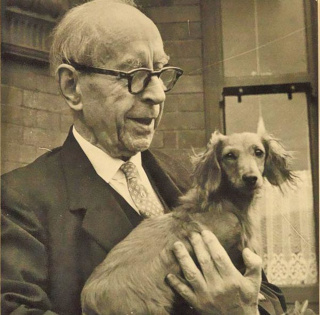
Pádraig Ó Siochfhradha, the Irish writer who most explicitly linked Ireland’s struggle for independence to ethnonationalism.

4,798 words

Micheál Martin, the Irish Tánaiste and leader of Fianna Fáil, recently uploaded a speech delivered to the Dáil on his conception of Irish nationalism. Martin wrote that:

The people who fought for and founded our state saw it as a place with multiple identities, open to the world and embodying the most important republican principle of all, to reflect the diversity of its people.

In the speech itself, Martin warned against:

Those who want to seal Ireland off from the world, those who aspire to some mythical purity on this island, know nothing of our past and have nothing to offer a country whose progress and prosperity is fundamentally based on its diversity and engagement with the world.

The people who fought for and founded our state saw it as a place with multiple identities, open to the world and embodying the most important republican principle of all, to reflect the diversity of its people. pic.twitter.com/FdiKdcFuC0

— Micheál Martin (@MichealMartinTD) June 18, 2024

The statements by Martin follow a pattern of regime politicians, intellectuals, and journalists rewriting Irish history. The Irish nationalist struggle, and thus the founding of the nation, is being revised away from an ethnonationalist struggle for independence — the “Ireland Gaelic and free” envisioned by Pádraig Pearse.

Instead, seemingly Left-wing or egalitarian elements of the nationalist revolution are emphasized: the proclamation addressed “Irish men and Irish women,” so it was really all about feminism and pluralism. Figures like James Connolly, a militant Marxist, are amplified, while the blood-and-soil ideology that informed the majority of leaders and participants in the revolution is ignored.

A typical example of this kind of revisionism was published in History Ireland, in an essay titled “Take it down from the mast, ‘Irish patriots.'” The author wrote that

[t]he emerging alt-right are increasingly desperate to assert their claim to the historic legacy of the 1916 Rising, the reality is that the ideology of Irish republicanism has always espoused a much more open, liberal and secular concept of Irish citizenship then they are aware of or willing to admit.

The true inheritors of Irish Republicanism, in the view of this author, are the multiculturalists. After all, the revolution counted among its members many returning political exiles from England and the continent, and some of its most important members, like James Connolly, were even born in foreign countries like Scotland. A quote is given from Wolfe Tone, the founder of Irish Republicanism, which is supposed to be a repudiation of Irish ethnic identity:

Tone’s definition of Irishness was based not on blood or creed. He sought ‘To unite the whole people of Ireland, to abolish all past dissentions and substitute the name of Irishman in the place of Protestant, Catholic and Dissenter , , ,’

Of course, it’s very evident from the quote provided that Tone is talking about the Irish people putting aside religious differences which divided them. If he didn’t see a difference between this Irish people and the British people (or any other people), why would he have even bothered pushing for Irish national independence, let alone dying for it?

The new nationalism
You can buy Greg Johnson’s Toward a New Nationalism here.

This kind of sloppy scholarship is becoming increasingly popular as champions of diversity look to remake Ireland’s revolutionary history in their image.

The Irish revolution is no longer the struggle of a distinct race striking for independence from rule by foreigners, but is now part of a more universal story of the struggle against imperialism, racism, and tyranny. This recasts the Irish struggle as one of many anti-colonial uprisings in the twentieth century. Our comrades are the Algerians, the Mau Mau, and Nelson Mandella.

More importantly, by adopting the values of the Left and challenging white supremacy, racism, and heteronormativity, we are somehow carrying on the struggle of Pearse, Connolly, and Collins. But now, this struggle is shared by our ruling parties, mainstream media, BlackRock, and the big American corporations headquartered in Dublin, and immigrants who know little to nothing of Irish history.

This identification of Irish nationalism as a vaguely Leftist, “anti-racist” struggle has also been taken up by some members of the Anglosphere Right. Sinn Féin’s leadership kneeling in honor of the Black Lives Matter movement, they argue, is par for course for the Irish nationalist cause, which was always based on a “slave morality” resentment against high civilization, embodied in the British Empire.

Alongside this revision, there has also begun this bizarre trend of Irish Leftists claiming that Irish nationalists who have an ethnic conception of nationhood are somehow importing foreign ideas. Ethnic nationalism and opposition to diversity, they claim, is more akin to British nationalism, as represented by people such as Tommy Robinson and Nick Griffin. They have even taken to promoting elaborate conspiracy theories about those who promote “Ireland for the Irish” being somehow controlled by shadowy British forces. Absurd as this may sound on its face, this has actually become the dominant narrative for the Irish Left opposed to nationalism.

This kind of revision isn’t unique to the Left, either. Recently, John McGuirk, the editor of the popular conservative news site Gript, turned his hand to deconstructing ethnonationalism. McGuirk’s article, “Hardline ethnonationalism is an intellectual dead end,” was sparked by his outrage at Irish ethnonationalists claiming that Rhasidat Adeleke, an ethnically Nigerian sprinter now representing Ireland, is not in fact Irish. McGuirk treats the ethnonationalist view of identity as something very new, fringe, and radical, belonging only to “tens of dozens” who make a lot of noise on social media.

So how accurate is this story? Did Irish nationalists view their struggle as part of a broader insurrection of the colored masses against white global dominance? Did they think Irishness was a civic identity, which could be extended to African sprinters and Polynesian rugby players, as McGuirk argues? We don’t need to speculate.

John Mitchel on race

Before the Easter Rising in 1916 launched the national revolution that would win Irish independence, the nationalist struggle was led by Fenians such as John Mitchel. Mitchel led the Young Ireland movement, and as editor of The Nation and the United Irishmen, he became one of the most influential spokesmen for Irish nationalism in the nineteenth century. Pearse called Mitchel’s jail journal “the last of the four gospels of the new testament of Irish nationality.”[1]

Mitchel is a controversial figure today, for while in exile in America at the outbreak of its Civil War, he became a staunch supporter of the Confederacy. Mitchel was influenced by the reactionary historian Thomas Carlyle, and shared his opposition to black and Jewish emancipation. In fact, he wrote defenses of slavery, and advocated a return of the Atlantic slave trade. Two of Mitchel’s sons enlisted in the Confederate army, with one dying at the Battle of Gettysburg.

Therefore, as the war approached its end, Mitchel was appalled at proposals in the Confederacy to enlist slaves to fight in exchange for their freedom. He wrote:

If it be true that the state of slavery keeps these people depressed below the condition to which they could develop their nature, their intelligence, and their capacity for enjoyment, and what we call “progress,” then every hour of their bondage for generations is a black stain on the white race.[2]

Mitchel’s uncompromising defense of slavery was controversial in his own time, but he remained committed even after the defeat of the Confederacy and his return to Ireland. Mitchel once said the following in response to a hypothetical of a freed Ireland having slaves of its own:

What do you think of Ireland’s emancipation now? Would you like an Irish Republic with an accompaniment of slave plantations?” — just answer quite simply — Yes, very much. At least I would answer so.[3]

How anomalous was Mitchel’s view? Well, Arthur Griffith was the founder of the original Sinn Féin, and obviously an enormously important figure in the story of Irish nationalism. He wrote in 1913, in defense of Mitchel, that:

The right of the Irish to political independence never was, is not, and never can be dependent upon the admission of equal right in all other peoples. . . .

Even his views on negro-slavery have been deprecatingly excused, as if excuse were needed for an Irish Nationalist declining to hold the negro his peer in right. When the Irish Nation needs explanation or apology for John Mitchel the Irish Nation will need its shroud.[4]

Griffith, Casement, and the crime against Europe

While editor of the newspaper Nationality, Griffith called the entry of non-whites into Europe “the crime against Europe,” expressing views of these races which would certainly have him classified today as a white supremacist, and using this to attack the Allied powers:

The nations who introduced into a European war these Asiatic and African savages . . . will stand condemned at the bar of posterity for the worst act ever committed by white men against the white race. . . . Europe . . . is the white man’s land, and the introduction of savage Asiatics and Africans into Europe in war between civilised Powers is unparalleled in European history since anno domini. It is a betrayal of the white race, and an infamy pregnant with a grim and horrible danger and woe in the future.[5]

What would Griffith think of the Sinn Féin of today, who support a “Republic for all” and remain supportive of immigration in a country where over a fifth of the population are now foreign-born? Well, in 1913 Griffith already believed there were too many foreigners in Ireland:

Two-and-a-half per cent of our population is of foreign birth — mostly English — too great a percentage for a country like ours.[6]

It’s interesting now to read Griffith, a figure so identified with the Irish cause, bringing his nationalist perspective to the Great War. But he was not the only Irish revolutionary to turn his attention to the great geopolitical shocks of the early twentieth century and how they concerned Ireland. This engagement with European and world affairs reveals much about how these figures thought about broader racial questions.

Roger Casement was an Irish revolutionary and British civil servant who was executed for his role in the 1916 Easter Rising, just five years after being given a knighthood by the British state. Casement wrote a series of very prescient articles about the prospect of a great European war in the years leading up to the outbreak of World War I. As well as being from the perspective of someone in favor of Irish independence, Casement also expresses a broader concern about the geopolitical direction of Europe — namely, that the British Empire was strengthening non-European races in their drive for hegemony over the continent. Casement wrote of how the British Empire strengthened the “Asiatic race” at the expense of Europeans:

The neutrality of Belgium never became a war issue until war had long since been decided on and had actually broken out; while Japan came into the contest solely because Europe had obligingly provided one, and because one European power preferred, for its own ends, to strengthen an Asiatic race to seeing a kindred white people it feared grow stronger in the sun.[7]

Casement also lamented the twisted circumstance of the British Empire appealing to Germanic and Irish Americans to aid them in subduing their own ethnic kin in Europe. Casement actually framed the struggle against the British Empire as an existential struggle for the future of the white race:

Arrangements with England, detentes, understandings, call them what you will, are merely parleys before the fight. The assault must be delivered, the fortress carried, or else Germany and with her, Europe, must resign the mission of the white races and hand over the government and future of the world to one chosen people.[8]

In later articles, Casement warned against the grave threat of an “Anglo-Saxon Alliance” between the British Empire and the United States, which he wrote would be a “perpetual threat to the peoples of Europe.” He proposed instead an alliance between Germany and the US as the ideal way to secure the long-term interests of white people, with a free Ireland as the link between Europe and North America. Casement was an Irish nationalist, yet he framed the struggle for Irish freedom as accommodating a more secure and prosperous world for the broader European race.

“Elementary principles of governing white men”

Similar appeals were made at the close of the First World War, as Irish representatives highlighted the indecency of a European nation existing in a state of subjugation. The Irish representative at the 1919 Versailles peace conference, Seán T. O’Kelly, failed to secure a meeting with US President Woodrow Wilson. In his frustration, O’Kelly remarked to an American journalist that “[i]t seems that the blacks and yellows, all colours and races, may be heard before the conference except the Irish.” A year later, O’Kelly sent a letter seeking an audience with Pope Benedict XV. O’Kelly wrote that Sinn Féin’s aim was “to obtain that independence which every other white race in the world has already won.”

Éamon De Valera, the President of the Irish Republic during the War of Independence, spent much of the war fundraising in the United States. On one occasion — in Birmingham, Alabama — he appealed to his American audience by reminding them that Ireland “was the only white nation on earth still in the bonds of political slavery.”

Erskine Childers, another prominent member of the Irish revolution, started out as sympathetic to the British Empire before coming to take up the Irish struggle. He wrote against British imperialism in Ireland not from a universal opposition to imperialism, but because of what he called the “elementary principles of governing white men.” Childers had first come to support the Boer struggle for independence before the Irish, and he asserted that:

No white community of pride and spirit would willingly tolerate the grotesque form of Crown Colony administration, founded on force, and now tempered by a kind of paternal State Socialism under which Ireland lives to-day.[9]

Not a universal opposition to imperialism or conquest informed Childers’ argument, but a belief that independence was a basic right of white peoples such as the Irish and the Boer. Indeed, Childers contrasted colonial rule over the Irish with colonial rule over American Indians:

In America and Ireland the Colonies were bi-racial, with this all-important distinction, that in America the native race was coloured, savage, heathen, nomadic, incapable of fusion with the whites, and, in relation to the almost illimitable territory colonized, not numerous; while in Ireland the native race was white, civilized, Christian, numerous.[10]

In contrasting the “coloured, savage, heathen” race with the “white, civilized” Irish, Childers makes a plea for national independence which assumes racial hierarchy and does not reject imperial rule outright, instead highlighting the injustice of one white people being subject to another so ethnologically similar.

The uniqueness of the Irish race

While De Valera is the founder of the Fianna Fail party, Fine Gael has always looked to Michael Collins as its spiritual successor. Collins is seen as an altogether more moderate and pragmatic figure, having led the war against British forces in Ireland before negotiating a treaty and fighting the hardliner Republicans. Collins too, wrote of a racial conception of nationalism as it concerned the Irish struggle, believing that the unique racial characteristics of the Irish would show in their national struggle:

This is where our Irish temperament, tenacity of the past, its vivid sense of past and future greatness, readiness for personal sacrifice, belief and pride in our race, can play an unique part, if it can stand out in its intellectual and moral strength, and shake off the weaknesses which long generations of subjection and inaction have imposed upon it.[11]

Collins not only believed the Irish characteristics would help them win the war, but also that racial purity would maintain the legitimacy of the new nation-state, flowering into a distinct Gaelic civilization.

It was in this spirit that Aodh De Blácam, an Irish nationalist journalist and future Senator, wrote in 1918 that the Easter Rising brought

. . . the nation back to the attitude of 220 years ago, the normal attitude of race-consciousness. Now, as then, the nation knows itself to be the true owner of this island.[12]

Elsewhere, De Blácam described this national and racial consciousness which he believed had animated ancient Ireland:

The nation which had come into being in Cormac’s day was a nation comparable to antique Greece or Fascist Italy . . . It must have abounded with energies that it drew from an intense excitement of racial consciousness.[13]

I can imagine an Irish Republican detractor reading this and suggesting these are mostly the words of “free staters,” and the anti-treaty, hardline Republicans had a broader conception of Irishness. But this is not the case. For example, take Ernie O’Malley, the Republican intellectual who served as assistant chief of staff of the Anti-Treaty IRA during the Irish Civil War. A historian who profiled O’Malley writes that:

Throughout his political writings he talks of race, racial qualities, racial similarities and differences . . . he sympathizes with the ideal of cherishing and restoring a supposedly authentic Gaelic Irish culture.[14]
You can buy Kerry Bolton’s Artists of the Right here.

O’Malley wrote that he opposed the pro-Treaty forces because they represented the same system which had stifled the expression of Irish nationhood prior. They would, he believed, warp “the spirit of the race” from expressing its unique “type of genius.”[15]

This kind of theorizing about the unique racial characteristics of the Irish is also present in Pádraig Pearse, the father of the 1916 Rising and the uprising in national consciousness that resulted from it. Pearse engaged with great interest with the racial theories of his day, in one case writing in opposition to the contention that an interest in the Indo-Europeans was alien to Ireland:

The broad scientific history which shows us as a branch of the Aryan race that played a big part in early European history, and later, as a nation isolated politically from the rest of Europe, but having every interchange with outside nations which progress demanded, receiving and giving, must take the place of the date book and the agony column style of history which has taught Irishmen to hate their foes but not to love each other.[16]

Douglas Hyde, the first President of Ireland and the founder of the Gaelic league, which led the revival in the Irish language, also spoke of the Irish as an Aryan people, and in an 1899 lecture he said the Irish needed a return to the country’s “pure Aryan language.”

In an essay titled “The Necessity for De-Anglicising Ireland,” Hyde discussed the development of the Irish nation in racial terms:

In a word, we must strive to cultivate everything that is most racial, most smacking of the soil, most Gaelic, most Irish, because in spite of the little admixture of Saxon blood in the north-east corner, this island is and will ever remain Celtic at the core.. On racial lines, then, we shall best develop, following the bent of our own natures.[17]

Hyde believed, like Collins, that the charting of an independent course for the Irish nation would bring out the best racial characteristics of the Irish people:

Upon Irish lines alone can the Irish race once more become what it was of yore — one of the most original, artistic, literary, and charming peoples of Europe.[18]

In 1922, the Irish Race Congress was held in Paris. This was part of a series of “Irish Race Conventions” held in the nineteenth and twentieth centuries. One speaker at the Paris Congress was Hyde. who told the convention that:

The Irish are neither negroes nor mongrels nor castaways, nor are they a people without a past. On the contrary, they boast almost the proudest race heritage in Europe. They are the descendants of a stock to which almost every country in Western Europe owes, and frankly acknowledges that it owes, a debt of lasting gratitude.[19]

The task for attendees then, Hyde argued, would be to instill the newly-independent Irish with a sense of heritage and pride in their race. Writing on this speech by Hyde, where he compares the subjugation of the Irish to other colonized people, John Brannigan, a modern scholar, writes this:

It is clear from Hyde’s eagerness to distinguish the Irish as white, western Europeans that he is not making an analogy here for the sake of solidarity, but to emphasise the absurdity of the Irish being seen as anything other than white Europeans, deserving of the status afforded white Europeans over and above the rights of the various racial others Hyde mentions in his lecture.[20]

Brannigan’s work is interesting in showing the racial thought of many Irish leaders and intellectuals. Once such intellectual was the Nobel laureate W. B. Yeats, who also became an advocate of the nationalist cause, and served as a Senator in the Irish Free State. In Yeats’s work,

[t]here is this underlying notion of a race as a ‘Unity of Being’, as having a collective memory, or collective bank of originary symbols, images or myths . . . The idea of the racial community promises to circumvent the potential anomie of modern social relations.[21]

Yeats himself wrote that:

Race, which has for its flower the family and the individual, is wiser than Government, and it is the source of all initiative.[22]

The Celtic revival and Irish racial consciousness

Both Yeats and Hyde were monumental figures in the story of Ireland’s Celtic revival. Hyde’s view that the purpose of this revival in Irish language, mythology, and self-consciousness was to reawaken a unique racial identity and foster its best characteristics was widely shared by other figures involved in the movement. Writing on “The Celtic Revival of Today” in 1899, Father J. O’Donovan summarized the aims of the movement as follows:

The present movement means, moreover, the emancipation of the Celt from foreign racial influence, and the building up of a new art and literature in Ireland, animated by the Celtic spirit, informed by everything that is good in Ireland’s past . . . It aims at no slavish imitation of the past, but at the establishment of a new era, informed by the spirit of the past in so far as that spirit is racial, and, as such, true for all time.[23]
You can buy Tito Perdue’s novel Opportunities in Alabama Agriculture here.

Similarly, a 1903 work on the importance of the revival of the Irish language recommended it on the basis that it would

train up the rising generation in all the traditions of their ancestors, it will keep alive those characteristics that individualize our race, it will keep alive our spirit of chivalry, of heroism, of generosity, of faith.[24]

The reawakening of Irish identity was not limited to the revival of the Irish language. The formation of the Gaelic Athletic Association (GAA) in 1884 gave organization and formal rules to the traditional Irish sports of Gaelic football and hurling, a response to the growing popularity of British sports in Ireland such as rugby and cricket.

The revival of uniquely Irish sport became an important part of the broader Celtic cultural revival, and here, too, the key figures were driven by ethnic nationalism and racial thinking. This was the reasoning of Michael Cusack, the founder of the GAA, writing in 1884:

The strength and energy of a race are largely dependent on the National pastimes for the development of a spirit of courage and endurance. A warlike race is ever fond of games requiring skill, strength, and staying power. The best games of such a race are never free from danger. But when a race is declining in martial spirit, no matter from what cause, the national games are neglected at first and then forgotten. And as the corrupting and degrading influences first manifest themselves in capital towns and large cities, so, too, we find that the national pastimes and racial characteristics first fade and disappear from such large centres of population.[25]

Cusack believed a revival in Gaelic games such as hurling, “invented by the most sublimely energetic and warlike race the world has ever known,” would preserve the strength and martial spirit of the Irish. So nationalistic was Cusack that he was the basis for the character of “The Citizen” in Joyce’s Ulysses, portrayed as a fiercely nationalist anti-Semite — a portrayal representing for Joyce the “xenophobic ideologies of radical Celticists.”[26]

No ambiguity

A later example of the ethnic conception of the Irish nation is found in a 1938 work by Pádraig Ó Siochfhradha, another renowned Irish writer and member of the Irish Senate. Perhaps more than anyone hitherto mentioned, Ó Siochfhradha outlines precisely the ethnonationalist basis for Irish nationalism, rooted in the unity of the Irish race and their “hereditary right” to the land. He wrote that the Gaels in Ireland had the five elements or ingredients that comprise full nationality. These were:

(1) A population of a single heritage and a single blood, i.e. unity of race.

(2) A population with a single language — the Irish language was the only common language for the whole race.

(3) A uniformity of memory and tradition with regard to history, culture and custom.

(4) A land theirs by hereditary right.

(5) Political freedom and authority over that land, that is, a state.[27]

If he was more explicit than others named in outlining the ethnonationalist basis for Irish nationalism, it was only because many of these precepts were taken for granted, too obvious to any Irishman to need theorizing.

If the common use of the word “race” among these writers to denote an ethnic group such as the Irish has seemed confusing, that’s because our sharp distinctions between race, ethnicity, and nation are quite modern. The distinction between “civic” and “ethnic” nationalism was not coined until 1944, with the publication of Hans Kohn’s The Idea of Nationalism.

Prior to a move away from racial thought after the Second World War and the popularization of the less biologically reductionist term of “ethnicity,” race had been used to denote individual ethnic groups as well as the larger racial groups we recognize today. Hence, it was common to refer to the Irish race, the French race, or the English race. This is only controversial today due to the political push to decouple ethnicity from biological kinship.

All the men surveyed here — revolutionaries, politicians, diplomats, and poets — had an ethnic, racial conception of Irishness. They did not view the Irish struggle as anything but the struggle of a race — a sub-race of the white, European race — for independence. They maintained a sense of racial identification with a broader white or Aryan race, and in the case of men such as Casement and Griffith, expressed thoughtful arguments on the interests of this race and the Irish place within it.

No one would reject more strongly the de-nationalizing project of the modern parties still carrying their lineage, and the recasting of their struggle as one that welcomed ethnic and racial diversity, than these men themselves. Rewriting their struggle to be for anything but an ethnonationalist cause is not only insulting to the intelligence of anyone with the most basic knowledge of Irish history, but a desecration of the great legacies of these men and of anyone who has sacrificed for the cause of Irish freedom.

This essay was reprinted with the author’s permission from Keith Woods’ Substack.

Notes

1. “John Mitchel: Flawed Hero,” History Ireland, 2013.

2. Ibid.

3. Ibid.

4. Donnelly, Seán. “Revolution and Nationalism in Treatyite Political Thought, 1891–1924.” Irish Historical Studies 47, no. 171 (2023): 130–49.

5. Griffith, Arthur. “Nationality,” 30 October 1915.

6. Griffith, Arthur. “The Census.” Sinn Féin, April 26, 1913. Republished in “An Cartlann.” Accessed June 22, 2024.

7. Casement, Roger. The Crime Against Europe: The Writings and Poetry of Roger Casement. 1915.

8. Ibid.

9. Peatling, G. K. “The Whiteness of Ireland Under and After the Union.” Journal of British Studies 44, no. 1 (2005): 115–33.

10. Ibid.

11. Collins, Michael, and Tim Pat Coogan. The path to freedom. Dublin: Talbot Press, 1922.

12. De Blácam, Aodh. Towards the Republic: A Study of New Ireland’s Social and Political Aims. Dublin: T. Kiersey, 1919.

13. De Blácem, Aodh Sandrach. Gaelic Literature Surveyed. Phoenix Publishing Company Limited, 1933.

14. English, Richard. Ernie O’Malley: IRA Intellectual. Clarendon Press, 1998

15. O’Malley, Ernie. The singing flame. Mercier Press Ltd, 2012.

16. Padraig Pearse, “A Matter Of Education,” From An Claidheamh Soluis, July 24, 1909.

17. Hyde, Douglas and Leerssen, Joseph Theodoor . The necessity for de-Anglicising Ireland. Academic Press Leiden, 1994.

18. Ibid.

19. Quoted in Brannigan, John. Race in Modern Irish Literature and Culture. Edinburgh University Press, 2020, p. 42.

20. Ibid., p. 43.

21. Ibid., p. 28.

22. Weng, Julie McCormick. “W. B. Yeats, the Irish Free State, and the Rhetoric of Race Suicide.” Chapter in Race in Irish Literature and Culture, edited by Malcolm Sen and Julie McCormick Weng, 143–71. Cambridge Themes in Irish Literature and Culture. Cambridge: Cambridge University Press, 2024.

23. O’Donovan, J. (Fr.). The Celtic Revival of Today. The Irish Ecclesiastical Record, Volume 5. Dublin: Browne and Nolan [etc.]. 1899.

24. Ó Duinnín, Pádraig. The Preservation of the Living Irish Language: A Work of National Importance, 1903.

25. Cusack, Michael. 1884. “A Word About Irish Athletics.” Republished in “An Cartlann.” Accessed June 22, 2024.

26. Cheng, Vincent J. Joyce, race, and empire. No. 3. Cambridge University Press, 1995, p. 198.

27. Ó Siochfhradha, Pádraig. Bonaventura. 1938.

Racial Thought in Irish Nationalism

Racial%20Thought%20in%20Irish%20Nationalism

Share

  • Gab

Enjoyed this article?

Be the first to leave a tip in the jar!

Instant Echeck GreenPay™

*  *  *

Counter-Currents has extended special privileges to those who donate at least $10/month or $120/year.

  1. Donors will have immediate access to all Counter-Currents posts. Everyone else will find that one post a day, five posts a week will be behind a “paywall” and will be available to the general public after 30 days. Naturally, we do not grant permission to other websites to repost paywall content before 30 days have passed.
  2. Paywall member comments will appear immediately instead of waiting in a moderation queue. (People who abuse this privilege will lose it.)
  3. Paywall members have the option of editing their comments.
  4. Paywall members get an Badge badge on their comments.
  5. Paywall members can “like” comments.
  6. Paywall members can “commission” a yearly article from Counter-Currents. Just send a question that you’d like to have discussed to [email protected]. (Obviously, the topics must be suitable to Counter-Currents and its broader project, as well as the interests and expertise of our writers.)

To get full access to all content behind the paywall, please visit our redesigned Paywall page. 

Related

  • Uncivil War

  • The Union Jackal, June 2026

  • Why Billionaires Should Fund White Identity Politics

  • Keith Wood’s Elevator Pitch to a Billionaire

  • The Selective Memory of Empire:

  • Counter-Currents in Rome

  • David Lean’s A Passage to India

  • E. M. Forster’s A Passage to India & the Indian Mentality

Tags

1916 Easter RisingAfrican slaveryAmerican Civil Waranti-colonialismAodh De BlácamArthur GriffithcolonialismDouglas HydeÉamon De ValeraErnie O’MalleyErskine ChildersethnonationalismFine Gaelimmigrants in IrelandIrelandIrish nationalismIrish RepublicanismIrishnessJames ConnollyJohn MitchelKeith WoodsMichael CollinsMicheál MartinPádraig Ó SiochfhradhaPádraig PearsereprintsRoger CasementSinn Féinslaverythe British Empirethe Celtic revivalthe Irish Civil Warthe Irish Race Congressthe Irish Revolutionthe Young Ireland movementW. B. YeatsWilliam Butler Yeats

11 comments

  1. Kallor says:
    June 25, 2024 at 1:31 am

    Amazing work as always.

    Keith’s “scum” comments finally pushed me to buy a lifetime C-C subscription.

    0
    0
  2. Joe Gould says:
    June 25, 2024 at 2:17 am

    Answering the falsification of history with chapter and verse quotations is the best sort of answer. Well done Keith Woods.

    0
    0
  3. Bigfoot says:
    June 25, 2024 at 3:27 am

    This lazy scholarship has been going on for a while now. Academics and journalists give some vague example of how muslims and other non-whites were supposedly always in Britain and other parts of Europe. Black actors portray British nobility in period pieces. I remember when Rosa Parks was invited to Ireland by a faction of the IRA because they supposedly had some type of solidarity with her. I’m convinced that some conservative commentators actually believe that multiculturalism is somehow going to work out. The rewriting of history has been going on for a while now. It’s not just Irish history either. Since the level of plagiarism has been coming to light, as well as the rewriting of various aspects of history, it’s obvious that a lot of people who have a PhD in a humanities field don’t know what they are talking about.

    0
    0
    1. Will W Williams says:
      June 25, 2024 at 3:58 am

      Bigfoot: June 25, 2024 This lazy scholarship has been going on for a while now… I’m convinced that some conservative commentators actually believe that multiculturalism is somehow going to work out…

      —

      Well said, Bigfoot. What exactly could they believe they are conserving? I’d like your comment had I not lost that capability. ;o}

      0
      0
      1. Bigfoot says:
        June 25, 2024 at 5:02 pm

        Perhaps we could use another term to describe what are commonly referred to as conservative or mainstream conservative. The question has been asked before “do they actually conserve anything?”. Counter Currents has articles about that issue. A lot of people refer to them as “controlled opposition”. Part of what I meant about commentators like that is that they do not see the big picture.

        0
        0
        1. Will W Williams says:
          June 26, 2024 at 3:23 am

          Bigfoot:  June 25, 2024 Perhaps we could use another term to describe what are commonly referred to as conservative or mainstream conservative…


          How about compromisers, or losers, or failures? They will never be radicalized racially.

          William Pierce told us about the problem 53 years ago in clear language that still holds up: “Why Conservatives Can’t Win” at Nationalvanguard.org

          In 2010 Dr. Johnson did an update on Dr. Pierce’s classic: with “Why Conservatives Still Can’t Win” here at C-C:

          The core of Pierce’s argument is that conservatives can’t win because they aren’t really trying. The left play for keeps. They have an overriding goal. They have a world to win. Conservatives are just trying to hold on to the 1950s or the 1980s. Conservatives may fight ferociously from time to time, but they are always playing defense. They think the election of a Nixon or a Reagan is a great victory, then lapse into complacency, only to awaken a few years later to find that the left has been on the march the whole time.

          Other things being equal, the side that fights to win will defeat the side that fights for a draw. Fortune favors the bold, those who launch offenses, not those who merely play defense.

          Conservatives also make a virtual cult out of being good sports, graceful losers, and ready compromisers.

          Kevin Strom gave us a fine explanation and update six years ago: “Boomer Conservatives Are Always Wrong” at Nationalvanguard.org


          1
          1
          • Bigfoot
  4. Dave Chambers says:
    June 25, 2024 at 5:24 am

    Wonderful article. All ethnonationalists should feel respect and admiration for the Irish people and their struggle. It’s certainly tragic that the alliance between America, Ireland, and Germany that Roger Casement wanted never came to fruition.


    0
    0
  5. Gaddius Maximus says:
    June 25, 2024 at 12:12 pm

    Keef’s substack is well worth it. Can recommend.

    0
    0
  6. Uncle Semantic says:
    June 25, 2024 at 4:07 pm

    Great article. Is the recent posts down to department section disabled for anybody else?

    0
    0
  7. Oil Can Harry says:
    June 26, 2024 at 3:30 am

    Excellent piece. I predict Irish elites will copy their British counterparts and falsely claim the Emerald Isle was always diverse and had plenty of Muslims and Africans in the 19th and 20th centuries- so what’s the problem?

    0
    0
  8. Francis XB says:
    June 27, 2024 at 1:23 pm

    The various arguments being made in favor of mass third world migrations into Ireland (or any other Western country) could be interpreted as ideological justifications. Verbal formulae by globalist PR reps to rationalize the Great Replacement (pace James Burnham, Sam Francis, et alia).


    As a PSYOP tactic, these arguments are an appeal to tradition. “Ireland has always been diverse, so today let us open the nation’s gates to import any and all ‘migrants’ so Ireland can be even more Irish.” Meantime, the globalist power structure makes out like bandits by turning Ireland into another deracinated economic postal code.


    But there’s another layer here. The pro-migration arguments really come down to so much word salad designed not to clarify the issue but obscure it. Strings of nonsense syllables:  “Diversity.” “Engagement.” “Enrichment.” “Whatever.” You see the same syllables repeated in various combinations when it comes to promoting open borders, ESG, open discrimination against white people, the latest regime thang. You have to ask, do the people who chant the salad really believe in any of this?


    Of course, what they believe is really irrelevant. What counts is who is paying their salaries and how many prestigious globalist conferences to which they will be invited. It’s all the more a point given the contradictions between the promise of some kind of Multicultist paradise and the reality of the rising tide of third worlder crime, terrorism and trashing of Western cities, as well as the political repression of nationalists.


    If there is any replacement to be done, it ought to be of the globalists and especially their PR flaks. No more word salad on the menu!

    0
    0

Comments are closed.

If you have a Subscriber access,
simply login first to see your comment auto-approved.

Note on comments privacy & moderation

Your email is never published nor shared.

Comments are moderated. If you don't see your comment, please be patient. If approved, it will appear here soon. Do not post your comment a second time.

Upcoming podcasts
  • Rob Rundo on Counter-Currents Radio

    Rob Rundo on Counter-Currents Radio

    Counter-Currents Radio

    Sat, Jun 13th — 3 pm EST / 9 pm CET
  • Daniel Tyrie on Counter-Currents Radio

    Daniel Tyrie on Counter-Currents Radio

    Counter-Currents Radio

    Sat, Jun 20th — 3 pm EST / 9 pm CET

Writers of May

(2 votes) Morris van de Camp David M. Zsutty Derek Stark Jayant Bhandari Greg Johnson

Articles of May

Heidegger on Nietzsche, Part One by Collin Cleary The Lunch Wars by David M. Zsutty 2 votes
    • The Bitter End of Western Metaphysics:
      Heidegger on Nietzsche, Part Three

      Collin Cleary

    • Uncivil War

      Mark Gullick

      11

    • Exclusive Interview with Karel Veliky:
      The Final Chapter in the Film Series! Part II

      Ondrej Mann

    • Happy Birthday to Us!

      Greg Johnson

      6

    • Zsutty’s Maximum

      David M. Zsutty

      12

    • Exclusive Interview with Karel Veliky:
      The Final Chapter in the Film Series! Part I

      Ondrej Mann

      2

    • The Union Jackal, June 2026

      Mark Gullick

      23

    • The Inferiority Behind Immigrant Superiority

      Jayant Bhandari

      15

    • Counter-Currents Radio Podcast No. 690
      Greg Johnson & David Zsutty Discuss Current Things: AI, Henry Nowak, the Iran Crisis, & More

      Counter-Currents Radio

      5

    • Collin Cleary: What Rome Means to Me

      Collin Cleary

      4

    • Paul Krugman: Closet Bolshevik

      Spencer J. Quinn

      16

    • Fugue of Ideas:
      Ibram X. Kendi’s Chain of Ideas

      Greg Johnson

      18

    • Based Blacks

      Lipton Matthews

      11

    • Black Intellectual Fatigue

      Derek Stark

      36

    • Why White Advocates Should Avoid “Based Blacks”

      Dani Vypont

      24

    • Nietzsche & Race

      Mark Gullick

    • Editor’s Update
      Rob Rundo Rescheduled to Next Week on Counter-Currents Radio;
      Tonight Greg Johnson & David Zsutty Answer Your Questions;
      Fundraiser Update & a New $20,000 Matching Grant

      Greg Johnson

    • The Counter-Currents 2026 Fundraiser
      Lifetime Subscriber Welcome Packages Extended

      Greg Johnson

    • Nationalism This Week
      Who’s Looking Back?

      Greg Johnson

      29

    • China’s Threat to American Security:
      Food, Farmland, Foreign Control, & Energy Policy

      Lipton Matthews

      5

    • The Bitter End of Western Metaphysics:
      Heidegger on Nietzsche, Part Two

      Collin Cleary

      16

    • The Killing of Henry Nowak

      Mark Gullick

      38

    • The Crisis of Chinese Technology Thieves

      Morris van de Camp

      1

    • The Strange World of Gender Bender Fiction:
      & What This Genre Tells Us About Autosexuality

      Dani Vypont

      3

    • Watching the Watchers:
      The Dark Triad Question

      David M. Zsutty

      14

    • The Remigration Movement Solidifies

      F. Roger Devlin

      1

    • Casting Aspersions:
      The Fatal Consequences of Race-Swapped Casting, From Helen of Troy to Henry of Southampton

      Steven Tucker

      20

    • The Murder of Henry Nowak

      Millennial Woes

      23

    • Don’t Forget to Vote in Our Writer & Article of the Month Poll

      Greg Johnson

    • The Robot Hotdog Stand

      Greg Johnson

      37

    • Laughing Our Way to Victory

      Dave Chambers

      7

    • The Zodiac Killer

      Mark Gullick

      11

    • Jared Taylor: What Rome Means to Me

      Jared Taylor

      1

    • An Interview with Endeavour:
      My Way of Life Is an Adventure!

      Ondrej Mann

      6

    • José Pedro Zúquete’s The Identitarians

      Greg Johnson

      3

    • Editor’s Update
      Fundraiser Update & How to Watch the Remigration Summit

      Greg Johnson

      5

    • The Bitter End of Western Metaphysics:
      Heidegger on Nietzsche, Part One

      Collin Cleary

      12

    • Berlin: City of Stones

      Spencer J. Quinn

      6

    • True Folk-Horror Is Horror of Your Own Folk:
      Mark Gatiss vs the Brexit Blind Dead  

      Steven Tucker

      4

    • Counter-Currents Radio Podcast No. 689
      Thomas Massie, the America 2050 Bust, the Need for Whites to Divest from America, the AI Economic Apocalypse, & Pro-White Project Pitches to Billionaires

      Counter-Currents Radio

      7

    • Nationalism This Week
      Remigration is Inevitable, Part 3

      Greg Johnson

      27

    • Why Billionaires Should Fund White Identity Politics

      Lipton Matthews

      8

    • How Cold War Two Came About

      Morris van de Camp

      5

    • Now Available for Pre-Order at a Special Price!
      Greg Johnson’s The Philosopher Is In

      Greg Johnson

    • David Zsutty’s Elevator Pitch to a Billionaire

      David M. Zsutty

      1

    • Headbanging Lite

      Mark Gullick

      5

    • White Advocacy Past and Present

      Peter Bradley

      13

    • The Lunch Wars

      David M. Zsutty

      47

    • The Russians are Coming/The Russians are Coming

      Steven Clark

      1

    • Peak Fatigue in Fort Wayne

      Gabriel Anderson

      24

    • Adrian Roberts

      The Union Jackal, June 2026

      If stopping Andy Burnham is the top priority, then the parties of 'the right' need to take some...

    • Jocelynn Cordes

      Uncivil War

      The immigration policies may be foolish, but they are conducted with fervor. But why fervor?

    • Jocelynn Cordes

      Uncivil War

      An army heavy on gays and chicks are hardly Mongol hordes.  Gold.

    • Adrian Roberts

      Zsutty’s Maximum

      Counter-Currents would not need to exist if whites were never mean to other whites.

    • Mark Gullick

      Uncivil War

      I would say genocidal immigration rather than suicidal, but your point holds. Even Blackadder knew...

    • ArminiusMaximus

      Uncivil War

      Thank you. I neglected to mention that the main grocery store that was by my hotel had two security...

    • Mark Gullick

      The Union Jackal, June 2026

      Good point well made. That said, as far as I am aware, the only big tennis match ever to be halted...

    • Dominic Fox

      Zsutty’s Maximum

      Thank you! This one will be added to my list. I've always been obsessed with condensing insights...

    • Mark Gullick

      Uncivil War

      One of many things I like about CC is that you can read whole essays in the comments section. You...

    • ArminiusMaximus

      Uncivil War

      I was just in Brescia where I counted at least 5 Chinese owned cafes. One used the mud world as...

    • Thomas Johnson

      Uncivil War

      "Recently, [Professor Betz] made an interesting comment. If civil war or something similar starts in...

    • Joe Gould

      Uncivil War

      Good. There is not a branch of our great family that ought to be quiet in the face of White genocide...

    • Mark Gullick

      Uncivil War

      I absolutely agree. There is much talk of the "people-smuggling gangs", but no one ever sees one....

    • Fred C. Dobbs

      Uncivil War

      I highly doubt that the retarded Sudanese man figured out how to game the immigration system on his...

    • Elear

      Uncivil War

      I've seen claims on social media that the rioters are predominantly Scots-Irish, not Irish. Same for...

    • Ondrej Mann

      Exclusive Interview with Karel Veliky Part 1

      This is a matter of aesthetics and historical context, and that is always problematic. As for the...

    • Greg Johnson

      Happy Birthday to Us! 16

      Thank you! The Philosopher Is In is now shipping. Take a look and let me know what you think

    • Joe Gould

      Zsutty’s Maximum

      Uniquely, Whites typically favor morally defined in-groups.* That means you can get us to treat you...

    • CC Reader

      Happy Birthday to Us! 16

      Happy birthday

    • Scott

      Why White Advocates Should Avoid “Based Blacks”

      I would agree that arch Conservative William F. Buckley, Jr. was a bit of a con man. Buckley’s “...

    • Earth Day Special

      John Morgan

      12

    • A Robertson Roundup
      Remembering Wilmot Robertson
      (April 16, 1915 – July 8, 2005)

      Margot Metroland

      13

    • The Paranoid Style in White Nationalism

      Greg Johnson

      30

    • Join the Dance!

      Andrew Hamilton

      1

    • We Can’t Save the Earth Without Reducing African Birth Rates

      James Dunphy

      36

    • “I’m Not a Conspiracy Theorist, but . . .”:
      Jeffrey Epstein’s Death Gives New Life to “Conspiracy Theories”

      Greg Johnson

      22

    • Sylvia Plath: Stasis in Darkness

      Vic Olvir

      17

    • Vanguardism, Vantardism, & Mainstreaming

      Greg Johnson

      80

    • Aviation, Geography, & Race

      Charles Lindbergh

      3

    • Some Thoughts on Yule

      Collin Cleary

      4

    • Living in Truth:
      A Yuletide Homily

      Jef Costello

      7

    • John Kennedy Toole’s A Confederacy of Dunces

      Greg Johnson

      20

    • On Aleksandr Solzhenitsyn’s Warning to the West

      Spencer J. Quinn

      7

    • Elitism, British Modernism, & Wyndham Lewis

      Jonathan Bowden

      6

    • Philip K. Dick’s Do Androids Dream of Electric Sheep? as Anti-Semitic/Christian-Gnostic Allegory

      Greg Johnson

      20

    • “Conspiracy Theory” or Conspiracy?

      Andrew Hamilton

      21

    • Remembering H. P. Lovecraft
      (August 20, 1890–March 15, 1937)

      Greg Johnson

      3

    • Who Are We?
      Nordics, Aryans, & Whites

      Greg Johnson

      71

    • Remembering William Gayley Simpson
      (July 23, 1892–December 31, 1990)
      A Pleasant Afternoon with Harriet & Bill Simpson

      Margot Metroland

      18

    • Here are the Young Men
      Remembering Ian Curtis
      (July 15, 1956–May 18, 1980)

      Mark Gullick

      18

    • Percy Grainger
      Artist of the Right

      Alex Graham

      7

    • Remembering Revilo Oliver
      (July 7, 1908–August 20, 1994)

      Greg Johnson

      18

    • The Meaning of July 4th for the White Man

      Gregory Hood

      13

    • The Front National’s Evolution

      Bruno Mégret

    • Merwin K. Hart
      Forgotten American Hero & Man of the Right

      Morris van de Camp

      10

    • George Orwell’s Nineteen Eighty-Four

      Jonathan Bowden

      8

    • Carleton S. Coon
      Scientist & Reluctant White Advocate

      Morris van de Camp

      3

    • The Kwanzaa Absurdity Will Be Dwarfed by Juneteenth

      Robert Hampton

      10

    • Stravinsky

      Alex Graham

      7

    • Like the Roman:
      Remembering Enoch Powell (1912-1998)

      Mark Gullick

      23

    • Sexually Incontinent on the Indian Subcontinent:
      Who Rapes More Animals, Indians or Pakistanis? The Battle Continues!

      Steven Tucker

      3

    • Neo-Fascism in Film
      Part 5

      Karel Veliky

      15

    • The Game of Tarot

      Mark Gullick

      2

    • Institutions Cannot Be Transplanted

      Jayant Bhandari

      5

    • Jonathan Bowden’s Deliverance
      Part 5

      Jonathan Bowden

    • Crosstown Traffic:
      Jimi Hendrix & The Post-War Rock ‘N’ Roll Revolution

      Mark Gullick

      1

    • Slaves from the North:
      Finns & Karelians in the East European Slave Trade, 900–1600

      Lipton Matthews

      14

    • Neo-Fascism in Film
      Part 4

      Karel Veliky

      2

    • David Lean’s A Passage to India

      Spencer J. Quinn

      1

    • Elites are Essential to Development

      Lipton Matthews

      7

    • Jonathan Bowden’s Deliverance
      Part 4

      Jonathan Bowden

    • Neo-Fascism in Film
      Part 3

      Karel Veliky

      6

    • E. M. Forster’s A Passage to India & the Indian Mentality

      Spencer J. Quinn

      25

    • Jonathan Bowden’s Deliverance
      Part 3

      Jonathan Bowden

    • The Rest Is Silence
      Heidegger’s Quietism

      Mark Gullick

      2

    • Dispelling the Historical Fallacy of Indian Nationalism

      Lipton Matthews

      8

    • Neo-Fascism in Film
      Part 2

      Karel Veliky

      8

    • Jonathan Bowden’s Deliverance
      Part 2

      Jonathan Bowden

    • Life of a Klansman

      Mark Gullick

      8

    • Jonathan Bowden’s Deliverance, Part 1

      Jonathan Bowden

    • Decolonial Ideas are Holding Back Developing Countries

      Lipton Matthews

      8

    • Neo-fascism in Film, Part 1

      Karel Veliky

      21

    • Jonathan Bowden’s Onslaught, Part 8
      Divigations on Decadence

      Jonathan Bowden

    • Jonathan Bowden’s Onslaught, Part 7
      Intrigues in the National Front

      Jonathan Bowden

      1

    • Rotten to the Core

      Mark Gullick

      8

    • Strauss on Husserl’s “Philosophy as Rigorous Science”

      Greg Johnson

    • Jonathan Bowden’s Onslaught, Part 6
      Francis Bacon & Right-Wing Nihilism

      Jonathan Bowden

    • London After (& Before) Midnight:
      Aleister Crowley, The Landlord’s Worst Nightmare

      James J. O'Meara

      2

    • Jonathan Bowden’s Onslaught, Part 5
      The Post-War British Far Right

      Jonathan Bowden

    • No Rules: Rollerball

      Mark Gullick

      4

    • András László
    • Derek Hawthorne
    • Beau Albrecht
    • Alain de Benoist
    • Kerry Bolton
    • Jonathan Bowden
    • Collin Cleary
    • Jef Costello
    • Savitri Devi
    • Julius Evola
    • Jim Goad
    • Gregory Hood
    • Juleigh Howard-Hobson
    • Greg Johnson
    • Charles Krafft
    • Anthony M. Ludovici
    • Trevor Lynch
    • H. L. Mencken
    • J. A. Nicholl
    • James J. O’Meara
    • Christopher Pankhurst
    • Tito Perdue
    • Michael Polignano
    • Spencer J. Quinn
    • Fenek Solère
    • Irmin Vinson
    • Leo Yankevich
    • Francis Parker Yockey
    • Multiple authors
  • Editor-in-Chief

    • Greg Johnson, Ph.D.

    Featured Writers

    • Beau Albrecht
    • Gunnar Alfredsson
    • Collin Cleary, Ph.D.
    • Jef Costello
    • Morris V. de Camp
    • F. Roger Devlin, Ph.D.
    • Stephen Paul Foster, Ph.D.
    • Jim Goad
    • Alex Graham
    • Mark Gullick, Ph.D.
    • Greg Johnson, Ph.D.
    • Travis LeBlanc
    • Trevor Lynch
    • Margot Metroland
    • James J. O’Meara
    • Angelo Plume
    • Spencer J. Quinn
    • Fred Reed
    • Clarissa Schnabel
    • Michael Walker
    • David M. Zsutty

    Frequent Writers

    • Asier Abadroa
    • Aquilonius
    • Alain de Benoist
    • Kerry Bolton, Ph.D.
    • Dave Chambers
    • Steven Clark
    • James Dunphy
    • Endeavour
    • Richard Houck
    • Jason Kessler
    • Titus Livius
    • Ondrej Mann
    • Lipton Matthews
    • Mark Mazari
    • John Morgan
    • Jaroslav Ostrogniew
    • Kathryn S.
    • Christian Secor
    • Anne Wilson Smith
    • Thomas Steuben
    • William De Vere
    • Kenneth Vinther
    • Max West

    Classic Authors

    • Maurice Bardèche
    • Jonathan Bowden
    • Julius Evola
    • Guillaume Faye
    • Ernst Jünger
    • Kevin MacDonald, Ph.D.
    • D. H. Lawrence
    • Charles Lindbergh
    • Jack London
    • H. P. Lovecraft
    • Anthony M. Ludovici
    • Sir Oswald Mosley
    • National Vanguard
    • Friedrich Nietzsche
    • Revilo Oliver
    • William Pierce
    • Ezra Pound
    • Saint-Loup
    • Savitri Devi
    • Carl Schmitt
    • Miguel Serrano
    • Oswald Spengler
    • P. R. Stephensen
    • Jean Thiriart
    • John Tyndall
    • Dominique Venner
    • Leo Yankevich
    • Francis Parker Yockey

    Other Authors

    • Howe Abbott-Hiss
    • Michael Bell
    • Giles Corey
    • Jack Donovan
    • Richardo Duchesne, Ph.D.
    • Emile Durand
    • Guillaume Durocher
    • Mark Dyal
    • Tom Goodroch
    • Andrew Hamilton
    • Robert Hampton
    • Huntley Haverstock
    • Derek Hawthorne
    • Gregory Hood
    • Juleigh Howard-Hobson
    • Alexander Jacob
    • Ruuben Kaalep
    • Tobias Langdon
    • Julian Langness
    • Patrick Le Brun
    • G A Malvicini
    • John Michael McCloughlin
    • Millennial Woes
    • Michael O’Meara
    • Christopher Pankhurst
    • Michael Polignano
    • J. J. Przybylski
    • Quintilian
    • Edouard Rix
    • C. B. Robertson
    • C. F. Robinson
    • Herve Ryssen
    • Alan Smithee
    • Fenek Solere
    • Ann Sterzinger
    • Robert Steuckers
    • Tomislav Sunic
    • Donald Thoresen
    • Marian Van Court
    • Irmin Vinson
    • Book Reviews
    • Movie Reviews
    • TV Reviews
    • Music Reviews
    • Art Criticism
    • Graphic Novels & Comics
    • Video Game Reviews
    • Fiction
    • Poems
    • Interviews
    • Videos
    • English Translations
    • Other Languages
      • Arabic
      • Bulgarian
      • Croatian
      • Czech
      • Danish
      • Dutch
      • Estonian
      • Finnish
      • French
      • German
      • Greek
      • Hungarian
      • Italian
      • Lithuanian
      • Norwegian
      • Polish
      • Portuguese
      • Romanian
      • Russian
      • Slovak
      • Spanish
      • Swedish
      • Ukrainian
    • Commemorations
    • Why We Write
  • Archives
  • Top 100 Commenters
  • The Looney Bin
Sponsored Links
Europa.com Above Time Coffee Antelope Hill Publishing Paul Waggener IHR-Store Spencer J. Quinn American Renaissance Jim Goad The Occidental Observer
Donate Now Mailing list
Books for sale
  • The Philosopher Is In
  • Sexual Utopia in Power (Expanded Edition)
  • In Defense of Prejudice
  • Loving Our Own
  • Tyranny & Wisdom
  • The Populist Moment
  • Is America Doomed?
  • To all books
Copyright © 2026 Counter-Currents Publishing, Ltd.

Paywall Access


Please enter your email address.

Lost your password?

Edit your comment

Writer & Article of the Month May 2026

Voting for this month has concluded. Here are the final results!

Top Writers

  • #1 Morris van de Camp 2 votes
  • #2 David M. Zsutty 2 votes
  • #3 Derek Stark 2 votes
  • #4 Jayant Bhandari 2 votes
  • #5 Greg Johnson 2 votes
  • #6 Jared Taylor 1 vote
  • #7 Collin Cleary 1 vote
  • #8 Spencer J. Quinn 1 vote
  • #9 Mark Gullick 1 vote
  • #10 Lipton Matthews 1 vote
  • #11 Keith Woods 1 vote
  • #12 Steven Tucker 1 vote

Top Articles

  • #1 Heidegger on Nietzsche, Part One 2 votes
  • #2 The Lunch Wars 2 votes
  • #3 The Ghost of the Confederacy 1 vote
  • #4 Lothrop Stoddard’s The Revolt Against Civilization 1 vote
  • #5 Could Fascism Work? 1 vote
  • #6 Jared Taylor's Elevator Pitch to a Billionaire 1 vote
  • #7 Predation Wearing the Mask of Civilization 1 vote
  • #8 Peak Fatigue in Fort Wayne 1 vote
  • #9 Keith Wood's Elevator Pitch to a Billionaire 1 vote
  • #10 Do You Want to Play a Game? 1 vote
  • #11 Why Billionaires Should Fund White Identity Politics 1 vote
  • #12 The 1970s: The Golden Age of Hijacking 1 vote
  • #13 True Folk-Horror Is Horror of Your Own Folk 1 vote
  • #14 Finding Atlantis Part 4 1 vote
  • #15 Berlin: City of Stones 1 vote

Total votes cast: 17