Counter-Currents
  • Advertise
  • Private Events
  • T&C
  • About
  • Contact
  • RSS
    • Main feed
    • Podcast feed
    • Videos feed
    • Comments feed
  • Welcome
  • Webzine
  • Books
  • Merch
  • Podcasts
  • Videos
  • Donate
  • Patrons
  • Subscribe
  • Crypto

LEVEL2

Donate Now Mailing list
Upcoming podcasts
  • Rob Rundo on Counter-Currents Radio

    Rob Rundo on Counter-Currents Radio

    Counter-Currents Radio

    06/13/2026 — 3 pm EST / 9 pm CET
  • Daniel Tyrie on Counter-Currents Radio

    Daniel Tyrie on Counter-Currents Radio

    Counter-Currents Radio

    06/20/2026 — 3 pm EST / 9 pm CET

Writers of May

(2 votes) Morris van de Camp David M. Zsutty Derek Stark Jayant Bhandari Greg Johnson

Articles of May

Heidegger on Nietzsche, Part One by Collin Cleary The Lunch Wars by David M. Zsutty 2 votes
  • Welcome
  • Webzine
  • Books
  • Merch
  • Podcasts
  • Videos
  • Donate
  • Patrons
  • Subscribe
  • Crypto
    • The Bitter End of Western Metaphysics:
      Heidegger on Nietzsche, Part Three

      Collin Cleary

      3

    • Uncivil War

      Mark Gullick

      18

    • Exclusive Interview with Karel Veliky:
      The Final Chapter in the Film Series! Part II

      Ondrej Mann

      1

    • Happy Birthday to Us!

      Greg Johnson

      6

    • Zsutty’s Maximum

      David M. Zsutty

      12

    • Exclusive Interview with Karel Veliky:
      The Final Chapter in the Film Series! Part I

      Ondrej Mann

      2

    • The Union Jackal, June 2026

      Mark Gullick

      23

    • The Inferiority Behind Immigrant Superiority

      Jayant Bhandari

      15

    • Counter-Currents Radio Podcast No. 690
      Greg Johnson & David Zsutty Discuss Current Things: AI, Henry Nowak, the Iran Crisis, & More

      Counter-Currents Radio

      5

    • Collin Cleary: What Rome Means to Me

      Collin Cleary

      4

    • Paul Krugman: Closet Bolshevik

      Spencer J. Quinn

      16

    • Fugue of Ideas:
      Ibram X. Kendi’s Chain of Ideas

      Greg Johnson

      18

    • Based Blacks

      Lipton Matthews

      11

    • Black Intellectual Fatigue

      Derek Stark

      37

    • Why White Advocates Should Avoid “Based Blacks”

      Dani Vypont

      25

    • Nietzsche & Race

      Mark Gullick

    • Editor’s Update
      Rob Rundo Rescheduled to Next Week on Counter-Currents Radio;
      Tonight Greg Johnson & David Zsutty Answer Your Questions;
      Fundraiser Update & a New $20,000 Matching Grant

      Greg Johnson

    • The Counter-Currents 2026 Fundraiser
      Lifetime Subscriber Welcome Packages Extended

      Greg Johnson

    • Nationalism This Week
      Who’s Looking Back?

      Greg Johnson

      29

    • China’s Threat to American Security:
      Food, Farmland, Foreign Control, & Energy Policy

      Lipton Matthews

      5

    • The Bitter End of Western Metaphysics:
      Heidegger on Nietzsche, Part Two

      Collin Cleary

      16

    • The Killing of Henry Nowak

      Mark Gullick

      38

    • The Crisis of Chinese Technology Thieves

      Morris van de Camp

      1

    • The Strange World of Gender Bender Fiction:
      & What This Genre Tells Us About Autosexuality

      Dani Vypont

      3

    • Watching the Watchers:
      The Dark Triad Question

      David M. Zsutty

      14

    • The Remigration Movement Solidifies

      F. Roger Devlin

      1

    • Casting Aspersions:
      The Fatal Consequences of Race-Swapped Casting, From Helen of Troy to Henry of Southampton

      Steven Tucker

      20

    • The Murder of Henry Nowak

      Millennial Woes

      23

    • Don’t Forget to Vote in Our Writer & Article of the Month Poll

      Greg Johnson

    • The Robot Hotdog Stand

      Greg Johnson

      37

    • Laughing Our Way to Victory

      Dave Chambers

      7

    • The Zodiac Killer

      Mark Gullick

      11

    • Jared Taylor: What Rome Means to Me

      Jared Taylor

      1

    • An Interview with Endeavour:
      My Way of Life Is an Adventure!

      Ondrej Mann

      6

    • José Pedro Zúquete’s The Identitarians

      Greg Johnson

      3

    • Editor’s Update
      Fundraiser Update & How to Watch the Remigration Summit

      Greg Johnson

      5

    • The Bitter End of Western Metaphysics:
      Heidegger on Nietzsche, Part One

      Collin Cleary

      12

    • Berlin: City of Stones

      Spencer J. Quinn

      6

    • True Folk-Horror Is Horror of Your Own Folk:
      Mark Gatiss vs the Brexit Blind Dead  

      Steven Tucker

      4

    • Counter-Currents Radio Podcast No. 689
      Thomas Massie, the America 2050 Bust, the Need for Whites to Divest from America, the AI Economic Apocalypse, & Pro-White Project Pitches to Billionaires

      Counter-Currents Radio

      7

    • Nationalism This Week
      Remigration is Inevitable, Part 3

      Greg Johnson

      27

    • Why Billionaires Should Fund White Identity Politics

      Lipton Matthews

      8

    • How Cold War Two Came About

      Morris van de Camp

      5

    • Now Available for Pre-Order at a Special Price!
      Greg Johnson’s The Philosopher Is In

      Greg Johnson

    • David Zsutty’s Elevator Pitch to a Billionaire

      David M. Zsutty

      1

    • Headbanging Lite

      Mark Gullick

      5

    • White Advocacy Past and Present

      Peter Bradley

      13

    • The Lunch Wars

      David M. Zsutty

      47

    • The Russians are Coming/The Russians are Coming

      Steven Clark

      1

    • Peak Fatigue in Fort Wayne

      Gabriel Anderson

      24

    • Malaparte

      The Bitter End of Western Metaphysics:
      Heidegger on Nietzsche, Part Three

      I am going to order Fundamental Tendency of Our Time, seems like a good place to start. By the...

    • Will Williams

      Why White Advocates Should Avoid “Based Blacks”

      Scott, it’s interesting that you call George Stephanopoulos a “Clinton apologist,” considering how...

    • Flel

      Black Intellectual Fatigue

      In the words of that great humanitarian Rodney King, can’t we all just get along? Jk. A stirred pot...

    • Collin Cleary

      The Bitter End of Western Metaphysics:
      Heidegger on Nietzsche, Part Three

      In fact, I had never heard of him until I read your comment. I have now looked at his Wikipedia...

    • New Flyer

      Uncivil War

      "One female politician (and a lot of them are women) interviewed on TV said that the problem was...

    • Peter Quint

      Uncivil War

      There are many reports of Catholics and Protestants sitting down for parley, not along religious...

    • Glide Ratio 0:1

      Uncivil War

      'They can go after social media and start throwing white people in jail, which is every Leftist...

    • Malaparte

      The Bitter End of Western Metaphysics:
      Heidegger on Nietzsche, Part Three

      I had asked this at bottom of comments to previous installment in this series, but I don't think...

    • Mark Gullick

      Uncivil War

      Yes, you are correct. My bad, as the youngsters say. A long night. Subs didn't pick it up though.

    • Paudi McCreevey

      Uncivil War

      You are correct. A few other errors indicate the author is not too familiar with Ireland, but they"...

    • Guest

      Exclusive Interview with Karel Veliky:
      The Final Chapter in the Film Series! Part II

      Mr. Mann, could you write a review of the current wonderful exhibition on the Přemyslid royal...

    • Adrian Roberts

      Uncivil War

      In Belfast, the police are the PSNI, not the Gardai (unless I am hopelessly misinformed).

    • Adrian Roberts

      The Union Jackal, June 2026

      If stopping Andy Burnham is the top priority, then the parties of 'the right' need to take some...

    • Paudi McCreevey

      Uncivil War

      This is a significant event. The response was organised, novel and effective. No mobs. No...

    • Jocelynn Cordes

      Uncivil War

      The immigration policies may be foolish, but they are conducted with fervor. But why fervor?

    • Jocelynn Cordes

      Uncivil War

      An army heavy on gays and chicks are hardly Mongol hordes.  Gold.

    • Adrian Roberts

      Zsutty’s Maximum

      Counter-Currents would not need to exist if whites were never mean to other whites.

    • Mark Gullick

      Uncivil War

      I would say genocidal immigration rather than suicidal, but your point holds. Even Blackadder knew...

    • ArminiusMaximus

      Uncivil War

      Thank you. I neglected to mention that the main grocery store that was by my hotel had two security...

    • Mark Gullick

      The Union Jackal, June 2026

      Good point well made. That said, as far as I am aware, the only big tennis match ever to be halted...

    • Earth Day Special

      John Morgan

      12

    • A Robertson Roundup
      Remembering Wilmot Robertson
      (April 16, 1915 – July 8, 2005)

      Margot Metroland

      13

    • The Paranoid Style in White Nationalism

      Greg Johnson

      30

    • Join the Dance!

      Andrew Hamilton

      1

    • We Can’t Save the Earth Without Reducing African Birth Rates

      James Dunphy

      36

    • “I’m Not a Conspiracy Theorist, but . . .”:
      Jeffrey Epstein’s Death Gives New Life to “Conspiracy Theories”

      Greg Johnson

      22

    • Sylvia Plath: Stasis in Darkness

      Vic Olvir

      17

    • Vanguardism, Vantardism, & Mainstreaming

      Greg Johnson

      80

    • Aviation, Geography, & Race

      Charles Lindbergh

      3

    • Some Thoughts on Yule

      Collin Cleary

      4

    • Living in Truth:
      A Yuletide Homily

      Jef Costello

      7

    • John Kennedy Toole’s A Confederacy of Dunces

      Greg Johnson

      20

    • On Aleksandr Solzhenitsyn’s Warning to the West

      Spencer J. Quinn

      7

    • Elitism, British Modernism, & Wyndham Lewis

      Jonathan Bowden

      6

    • Philip K. Dick’s Do Androids Dream of Electric Sheep? as Anti-Semitic/Christian-Gnostic Allegory

      Greg Johnson

      20

    • “Conspiracy Theory” or Conspiracy?

      Andrew Hamilton

      21

    • Remembering H. P. Lovecraft
      (August 20, 1890–March 15, 1937)

      Greg Johnson

      3

    • Who Are We?
      Nordics, Aryans, & Whites

      Greg Johnson

      71

    • Remembering William Gayley Simpson
      (July 23, 1892–December 31, 1990)
      A Pleasant Afternoon with Harriet & Bill Simpson

      Margot Metroland

      18

    • Here are the Young Men
      Remembering Ian Curtis
      (July 15, 1956–May 18, 1980)

      Mark Gullick

      18

    • Percy Grainger
      Artist of the Right

      Alex Graham

      7

    • Remembering Revilo Oliver
      (July 7, 1908–August 20, 1994)

      Greg Johnson

      18

    • The Meaning of July 4th for the White Man

      Gregory Hood

      13

    • The Front National’s Evolution

      Bruno Mégret

    • Merwin K. Hart
      Forgotten American Hero & Man of the Right

      Morris van de Camp

      10

    • George Orwell’s Nineteen Eighty-Four

      Jonathan Bowden

      8

    • Carleton S. Coon
      Scientist & Reluctant White Advocate

      Morris van de Camp

      3

    • The Kwanzaa Absurdity Will Be Dwarfed by Juneteenth

      Robert Hampton

      10

    • Stravinsky

      Alex Graham

      7

    • Like the Roman:
      Remembering Enoch Powell (1912-1998)

      Mark Gullick

      23

    • Sexually Incontinent on the Indian Subcontinent:
      Who Rapes More Animals, Indians or Pakistanis? The Battle Continues!

      Steven Tucker

      3

    • Neo-Fascism in Film
      Part 5

      Karel Veliky

      15

    • The Game of Tarot

      Mark Gullick

      2

    • Institutions Cannot Be Transplanted

      Jayant Bhandari

      5

    • Jonathan Bowden’s Deliverance
      Part 5

      Jonathan Bowden

    • Crosstown Traffic:
      Jimi Hendrix & The Post-War Rock ‘N’ Roll Revolution

      Mark Gullick

      1

    • Slaves from the North:
      Finns & Karelians in the East European Slave Trade, 900–1600

      Lipton Matthews

      14

    • Neo-Fascism in Film
      Part 4

      Karel Veliky

      2

    • David Lean’s A Passage to India

      Spencer J. Quinn

      1

    • Elites are Essential to Development

      Lipton Matthews

      7

    • Jonathan Bowden’s Deliverance
      Part 4

      Jonathan Bowden

    • Neo-Fascism in Film
      Part 3

      Karel Veliky

      6

    • E. M. Forster’s A Passage to India & the Indian Mentality

      Spencer J. Quinn

      25

    • Jonathan Bowden’s Deliverance
      Part 3

      Jonathan Bowden

    • The Rest Is Silence
      Heidegger’s Quietism

      Mark Gullick

      2

    • Dispelling the Historical Fallacy of Indian Nationalism

      Lipton Matthews

      8

    • Neo-Fascism in Film
      Part 2

      Karel Veliky

      8

    • Jonathan Bowden’s Deliverance
      Part 2

      Jonathan Bowden

    • Life of a Klansman

      Mark Gullick

      8

    • Jonathan Bowden’s Deliverance, Part 1

      Jonathan Bowden

    • Decolonial Ideas are Holding Back Developing Countries

      Lipton Matthews

      8

    • Neo-fascism in Film, Part 1

      Karel Veliky

      21

    • Jonathan Bowden’s Onslaught, Part 8
      Divigations on Decadence

      Jonathan Bowden

    • Jonathan Bowden’s Onslaught, Part 7
      Intrigues in the National Front

      Jonathan Bowden

      1

    • Rotten to the Core

      Mark Gullick

      8

    • Strauss on Husserl’s “Philosophy as Rigorous Science”

      Greg Johnson

    • Jonathan Bowden’s Onslaught, Part 6
      Francis Bacon & Right-Wing Nihilism

      Jonathan Bowden

    • London After (& Before) Midnight:
      Aleister Crowley, The Landlord’s Worst Nightmare

      James J. O'Meara

      2

    • Jonathan Bowden’s Onslaught, Part 5
      The Post-War British Far Right

      Jonathan Bowden

    • No Rules: Rollerball

      Mark Gullick

      4

    • András László
    • Derek Hawthorne
    • Beau Albrecht
    • Alain de Benoist
    • Kerry Bolton
    • Jonathan Bowden
    • Collin Cleary
    • Jef Costello
    • Savitri Devi
    • Julius Evola
    • Jim Goad
    • Gregory Hood
    • Juleigh Howard-Hobson
    • Greg Johnson
    • Charles Krafft
    • Anthony M. Ludovici
    • Trevor Lynch
    • H. L. Mencken
    • J. A. Nicholl
    • James J. O’Meara
    • Christopher Pankhurst
    • Tito Perdue
    • Michael Polignano
    • Spencer J. Quinn
    • Fenek Solère
    • Irmin Vinson
    • Leo Yankevich
    • Francis Parker Yockey
    • Multiple authors
  • Editor-in-Chief

    • Greg Johnson, Ph.D.

    Featured Writers

    • Beau Albrecht
    • Gunnar Alfredsson
    • Collin Cleary, Ph.D.
    • Jef Costello
    • Morris V. de Camp
    • F. Roger Devlin, Ph.D.
    • Stephen Paul Foster, Ph.D.
    • Jim Goad
    • Alex Graham
    • Mark Gullick, Ph.D.
    • Greg Johnson, Ph.D.
    • Travis LeBlanc
    • Trevor Lynch
    • Margot Metroland
    • James J. O’Meara
    • Angelo Plume
    • Spencer J. Quinn
    • Fred Reed
    • Clarissa Schnabel
    • Michael Walker
    • David M. Zsutty

    Frequent Writers

    • Asier Abadroa
    • Aquilonius
    • Alain de Benoist
    • Kerry Bolton, Ph.D.
    • Dave Chambers
    • Steven Clark
    • James Dunphy
    • Endeavour
    • Richard Houck
    • Jason Kessler
    • Titus Livius
    • Ondrej Mann
    • Lipton Matthews
    • Mark Mazari
    • John Morgan
    • Jaroslav Ostrogniew
    • Kathryn S.
    • Christian Secor
    • Anne Wilson Smith
    • Thomas Steuben
    • William De Vere
    • Kenneth Vinther
    • Max West

    Classic Authors

    • Maurice Bardèche
    • Jonathan Bowden
    • Julius Evola
    • Guillaume Faye
    • Ernst Jünger
    • Kevin MacDonald, Ph.D.
    • D. H. Lawrence
    • Charles Lindbergh
    • Jack London
    • H. P. Lovecraft
    • Anthony M. Ludovici
    • Sir Oswald Mosley
    • National Vanguard
    • Friedrich Nietzsche
    • Revilo Oliver
    • William Pierce
    • Ezra Pound
    • Saint-Loup
    • Savitri Devi
    • Carl Schmitt
    • Miguel Serrano
    • Oswald Spengler
    • P. R. Stephensen
    • Jean Thiriart
    • John Tyndall
    • Dominique Venner
    • Leo Yankevich
    • Francis Parker Yockey

    Other Authors

    • Howe Abbott-Hiss
    • Michael Bell
    • Giles Corey
    • Jack Donovan
    • Richardo Duchesne, Ph.D.
    • Emile Durand
    • Guillaume Durocher
    • Mark Dyal
    • Tom Goodroch
    • Andrew Hamilton
    • Robert Hampton
    • Huntley Haverstock
    • Derek Hawthorne
    • Gregory Hood
    • Juleigh Howard-Hobson
    • Alexander Jacob
    • Ruuben Kaalep
    • Tobias Langdon
    • Julian Langness
    • Patrick Le Brun
    • G A Malvicini
    • John Michael McCloughlin
    • Millennial Woes
    • Michael O’Meara
    • Christopher Pankhurst
    • Michael Polignano
    • J. J. Przybylski
    • Quintilian
    • Edouard Rix
    • C. B. Robertson
    • C. F. Robinson
    • Herve Ryssen
    • Alan Smithee
    • Fenek Solere
    • Ann Sterzinger
    • Robert Steuckers
    • Tomislav Sunic
    • Donald Thoresen
    • Marian Van Court
    • Irmin Vinson
    • Book Reviews
    • Movie Reviews
    • TV Reviews
    • Music Reviews
    • Art Criticism
    • Graphic Novels & Comics
    • Video Game Reviews
    • Fiction
    • Poems
    • Interviews
    • Videos
    • English Translations
    • Other Languages
      • Arabic
      • Bulgarian
      • Croatian
      • Czech
      • Danish
      • Dutch
      • Estonian
      • Finnish
      • French
      • German
      • Greek
      • Hungarian
      • Italian
      • Lithuanian
      • Norwegian
      • Polish
      • Portuguese
      • Romanian
      • Russian
      • Slovak
      • Spanish
      • Swedish
      • Ukrainian
    • Commemorations
    • Why We Write
  • Archives
  • Top 100 Commenters
  • The Looney Bin
  • Advertise
  • Private Events
  • T&C
  • About
  • Contact
  • RSS
    • Main feed
    • Podcast feed
    • Videos feed
    • Comments feed
Sponsored Links
Europa.com Above Time Coffee Antelope Hill Publishing Paul Waggener IHR-Store Spencer J. Quinn American Renaissance Jim Goad The Occidental Observer
Print March 6, 2023 22 comments

The Abolitionists as Virtue-Signalers:
Nehemiah Adams & A South-side View of Slavery

Spencer J. Quinn

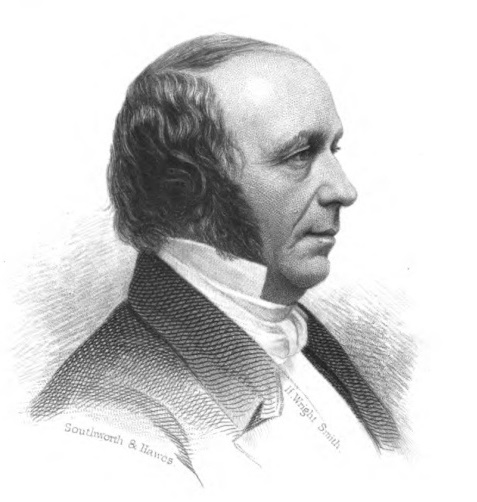
Nehemiah Adams

2,933 words

One of the most neurotic things about white people is the desperation so many of them have to be perceived as moral. Most will virtue-signal in a variety of cheap and easy ways. Those who take it seriously will often descend into activism. But there is one way to virtue signal — indeed, it is the best way — that will sanctify one’s morality for all to see: care more for outgroup members than for ingroup members.

After all, what motivation could there be — other than pure angelic virtue — for doing something so utterly self-defeating?

I believe that the stark evolutionary divide between those whites who outgroup-signal versus those who acknowledge natural outgroup differences was one of the American Civil War’s main causes. It was never really about slavery per se. If it had been, there would have been abolitionist movements in the eighteenth century over indentured servitude, or in Ancient Rome for that matter. It’s hardly a coincidence that only when large numbers of blacks were enslaved did many whites finally get serious about abolishing that ancient and peculiar institution.

It was these nineteenth-century virtue-signaling whites, the abolitionists, whom Protestant clergyman Nehemiah Adams addressed in his forgotten yet enlightening 1854 book, A South-side View of Slavery.

Adams had been a prominent abolitionist in his native Boston when he spent three months in the American South to restore his health. After seeing slavery up close and personal for the first time, however, he decided to revise his previous opinions and tell everyone in the North about it upon his return. His message was clear: North and South were on a collision course of either “fratricide or suicide,” and the main culprits were not Southern slaveowners, but wrongheaded Northern abolitionists who were forcing Southerners to cling fast to increasingly strict forms of slavery out of self-preservation.

Upon his arrival in Dixie, as a person fully indoctrinated in anti-slavery dogma, Adams was prepared for the worst:

I will merely add, that there was one thing which I felt sure that I should see on landing, viz., the whole black population cowed down. This best expresses in a word my expectation. “I am a slave,” will be indented on the faces, limbs, and actions of the bondmen. Hopeless woe, entreating yet despairing, will frequently greet me. How could it be otherwise, if slavery be such as our books, and sermons, and lectures, and newspaper articles represent?

But what did he see? He saw what he was not supposed to see — what we are still not supposed to see 170 years later: a thriving black slave population. He describes black slaves as cheerful, healthy, well-dressed, respectful, and competent. Adams writes, “A better-looking, happier, more courteous set of people I had never seen, than those colored men, women, and children whom I met the first few days of my stay in Savannah.” In another passage he describes a brigade of Savannah Negro firefighters, and asks why, if slavery had been the evil the abolitionists claimed, would the Savannah whites trust the people they oppress with protecting them from fires?

You can buy Spencer J. Quinn’s young adult novel The No College Club here.

He likewise reports several times on the wonderful music and oratory in the black church services he attended. He also notes, time and time again, the cooperation and mutual respect that existed between blacks and whites in the South at that time. For example, many of the legal restrictions slaves had to abide by, and which Northerners found so horrifying, were in fact rarely enforced and often existed for good reasons.

Instead of warping a recalcitrant reality to fit his rigid ideology, Nehemiah Adams therefore did what any honest and clear-thinking person would do: He revised his ideology. This gave him newfound “feelings of affection for the blacks and respect for their masters.” It also led him to point a long finger at abolitionists for exacerbating the North-South divide. He argues that of course Southern whites would write laws to prevent blacks from assembling for public lectures or staying out after curfew. What else could they have done after abolitionist troublemakers started heading South to preach insurrection, escape, crime, and miscegenation? This posed a serious problem. Despite this, whites often allowed blacks to break such laws as long as trust had been established beforehand, which happened often, according to Adams.

And yes, one abolitionist was found with prints depicting “a white woman in no equivocal relations to a colored man.” Such a thing must have been outrageous on many levels to the Southern mind. According to Adams, the South was on the verge of abolishing — or at least phasing out — slavery itself in the early nineteenth century, when these sorts of intrusions started happening:

As northern zeal has promulgated bolder sentiments with regard to the right and duty of slaves to steal, burn, and kill, in effecting their liberty, the south has intrenched itself by more vigorous laws and customs.

Here is a list of observations and anecdotes which led Adams to believe that slavery as it was practiced in the antebellum South was unjustly maligned:

  • Southern towns and cities were quite orderly. With a “wholesome restraint” placed upon the black population by Christianity and by the whites themselves, the widespread crime, homelessness, and poverty found in many Northern cities found no equivalent south of the Mason-Dixon line.
  • Plantation work for slaves was “severe,” but no worse than it was for whites on Northern farms. Slaves were often given long breaks in the middle of the day, early dismissal at night, and Sundays and holidays off. So the slaveowners tended to be reasonable with their slaves.
  • Slaves in some cases amassed wealth:

Some slaves are owners of bank and railroad shares. A slave woman, having had three hundred dollars stolen from her by a white man, her master was questioned in court as to the probability of her having had so much money. He said that he not unfrequently had borrowed fifty and a hundred dollars of her, and added, that she was always very strict as to his promised time of payment.

  • Blacks’ human rights were protected by law and by public sentiment:

In Georgia it is much safer to kill a white man than a negro; and if either is done in South Carolina, the law is exceedingly apt to be put in force. In Georgia, I have witnessed a strong purpose among lawyers to prevent the murderer of a negro from escaping justice.

  • In some cases, slaveowners defended their slaves’ honor with violence. For example, a slaveowner once challenged a town mayor to a duel for whipping his slave. In another instance, a slaveowner admonished a mechanic for abusing his slave and suffered a knife attack for his efforts.
  • Many of the runaway slaves so celebrated in the North were either frauds looking to obtain cash and support from gullible whites, or ultimately returned to their masters after finding freedom not to their liking.
  • Slaveowners were responsible for their slaves’ welfare from birth to death. If a slave became incapacitated due to age, illness, or injury, for example, his owner was required by law to support him for the rest of his natural life. As a result, pauperism among blacks in the antebellum South was almost unheard of:

I saw a white-headed negro at the door of his cabin on a gentleman’s estate, who had done no work for ten years. He enjoys all the privileges of the plantation, garden, and orchard; is clothed and fed as carefully as though he were useful. On asking him his age, he said he thought he “must be nigh a hundred;” that he was a servant to a gentleman in the army “when Washington fit Cornwallis and took him at Little York.”

  • Many slaves themselves preferred the institution’s arrangement. One woman who provided washing services outside of her responsibilities to her master had saved up enough to buy her freedom. But she did not:

She says that if she were to buy her freedom, she would have no one to take care of her for the rest of her life. Now her master is responsible for her support. She has no care about her future. Old age, sickness, poverty, do not trouble her. “I can indulge myself and children,” she says, “in things which otherwise I could not get. If we want new things faster than mistress gets them for us, I can spare money to get them. If I buy my freedom, I cut myself off from the interests of the white folks in me. Now they feel that I belong to them, and people will look to see if they treat me well.” Her only trouble is, that her master may die before her; then she will “have to be free.”

  • The slaves’ widespread religiosity had a felicitous impact on them, raising them up as a people and making them happy, moral, and industrious:

It is deeply affecting to hear the slaves give thanks in their prayers that they have not been left like the heathen who know not God, but are raised, as it were, to heaven in their Christian privileges.

Adams also includes a heartrending story of how an irresponsible and indebted slaveowner had sold a female slave but managed to retrieve her newborn in order to sell it as well. This appalled so many people in the region that the woman’s new owner and a lady philanthropist unbeknownst to each other had bid at this infant’s auction in order to restore him to his mother (which thankfully did end up happening). Adams points out that this auction was in violation of the law when it came to selling slaves under five years of age, and that several white Southerners had apologized to him for the revolting display. He also regretted the fact the Northern press would report only this story’s negative aspects and suppress the fact that it was white benevolence that corrected slavery’s flaws.

Adams rests his greatest hope on this last point. At the book’s conclusion, he still professes opposition to slavery; his greatest change is his newfound faith in the white Christians of the South to lead the way, gradually, toward abolition. “The south is best qualified to lead the whole country in plans and efforts for the African race,” he writes. “We will follow her.”

What should be deplored is not slavery as it was practiced in the South, but its all-too-common abuses, which were — in part — made worse by unwelcome abolitionist meddling. They also involved evil slaves as often as evil slaveowners. Adams reserves pointed scorn for unscrupulous slave traders who thought nothing of breaking up families to make a profit. Further, for all his superlative rhetoric on the virtues of black people and his undying love and solicitude for them — which has not aged well in post-1965 America — Adams retains a subtle, yet unyielding sense of race realism:

The two distinct races could not live together except by the entire subordination of one to the other. Protection is now extended to the blacks; their interests are the interests of the owners. But ceasing to be a protected class, they would fall prey to avarice, suffer oppression and grievous wrongs, encounter the rivalry of white immigrants, which is an element in the question of emancipation here, and nowhere else. Antipathy to their color would not diminish, and being the feebler race, they would be subjected to great miseries.

As a benevolent white supremacist brimming with Christian compassion, Adams proposes that the eventual and hoped-for emancipation of blacks be followed by a system in which blacks live in “some form of subordination to the whites.” He seems to have too much affection for them to send them back to Africa.

As once can see, Adams relies a lot on anecdotal evidence in A South-side View of Slavery. He offers few names, dates, or otherwise verifiable information. He instead simply describes what he saw, derives inferences from it, and hopes his book will be enough to dissuade Northerners from radical abolitionism. If his book were filled with fabrications and exaggerations, I imagine it would have been reported on at the time — but that does not seem to be the case, despite the shellacking Adams took in the abolitionist press after his book’s publication. For example, in 1857 the abolitionist paper The Liberator deplored South-side as “as vile a work as was ever written, in apology and defense of ‘the sum of all villainies’ . . .” Not exactly an accusation of mendacity, is it?

Nevertheless, some of his depictions were so rosy, I began to suspect some kind of Potemkin plantation at work. Surely the lives of black slaves couldn’t have been quite this good. Also, the fact that Adams had amassed all this information after a mere three months in the South is rather suspicious. Could it have been that some white Southerners had gone out of their way to convince him of their point of view? This is essentially what Harriet Jacobs, a former slave, accuses Adams of doing. In her 1861 memoir Incidents in the Life of a Slave Girl, she writes:

A clergyman who goes to the south, for the first time, has usually some feeling, however vague, that slavery is wrong. The slaveholder suspects this, and plays his game accordingly. He makes himself as agreeable as possible; talks on theology, and other kindred topics. The reverend gentleman is asked to invoke a blessing on a table loaded with luxuries. After dinner he walks round the premises, and sees the beautiful groves and flowering vines, and the comfortable huts of favored household slaves. The southerner invites him to talk with these slaves. He asks them if they want to be free, and they say, “O, no, massa.” This is sufficient to satisfy him. He comes home to publish a “South-Side View of Slavery,” and to complain of the exaggerations of abolitionists. He assures people that he has been to the south, and seen slavery for himself; that it is a beautiful “patriarchal institution;” that the slaves don’t want their freedom; that they have hallelujah meetings, and other religious privileges.
You can buy Spencer J. Quinn’s Solzhenitsyn and the Right here.

Fair enough; A South-side View of Slavery hardly abides by the highest standards of scholarship. But clearly such cursory invective does little justice to Adams’ conscientious approach. Further, similar criticisms could be levied against Jacobs as well. She says quite a few racist and incendiary things about whites in her book. How do we know she wasn’t making some or even all of her claims up? How do we know her abolitionist friends didn’t convince her to fudge the truth a bit for the cause?

The very best part of A South-side View of Slavery occurs near the end, when Adams offers proof that his fellow abolitionists are really just a group of narcissistic virtue-signalers who do far more harm than good. In demonstrating that the worst of American slavery was nevertheless better than what was experienced by the miserable masses in the great Northern (and English) cities, he shares several accounts of exquisitely painful white suffering that his high-minded colleagues hadn’t thought worthy of adding to their view of the sum of all villainies — and this was happening right under their noses in the very cities where they lived.

His rebuke to these people is beautiful:

No chains about the Court House prevent you from interposing as bail for the tempted souls in their first step into crime; no Mason’s and Dixon’s line makes a boundary to your lawful zeal. These poor ye have always with you, and when ye will ye may do them good. If the saying is true, that a man who goes to law should have clean hands, he who reproves others for neglect and sin should be sure that the God before whom he arraigns them can not wither him by that rebuke, “Thou hypocrite! first cast out the beam out of thine own eye!”

Where I go that Nehemiah Adams does not, however, is to extrapolate from slavery the real reason behind the deadly disconnect between North and South — which is race. White slaves — or white coal miners, white factory workers, or other poor whites who may as well have been slaves at the time — would not, and indeed did not elicit as much ardor from these abolitionist do-gooders as black slaves hundreds miles away who were surviving, and in many cases thriving, within what was perhaps the mildest form of slavery at the time.

The European powers of the day allowed white slavery to go on in North Africa for centuries before getting serious about stopping it. In many cases, white slaves in Barbary had it far worse than blacks in the antebellum South. Yet, over and over again white leaders preferred diplomacy, flattery, and bribery to the costly but effective use of their militaries to end the problem. Where were the abolitionists then? White people were just as Christian in 1554 as they were in 1854, so why did they start beating the war drums only after black slavery appeared in the New World? What else was there to their moral equation besides race and the desire to virtue-signal over an outgroup?

If anything, Nehemiah Adams’ A South-side View of Slavery demonstrates the bankruptcy and hypocrisy of those radical abolitionists who did more to start the bloodiest war on American soil than anyone else. It unveils the sham that was — and still is — the virtue-signalers’ anti-white posturing. And sadly, it underscores the tragic flaw in the white mind: We try so hard to appear to be good that we forget the most important thing: that we already are.

* * *

Like all journals of dissident ideas, Counter-Currents depends on the support of readers like you. Help us compete with the censors of the Left and the violent accelerationists of the Right with a donation today. (The easiest way to help is with an e-check donation. All you need is your checkbook.)

GreenPay™ by Green Payment

Select donation type

Select or enter an amount to give

Select or enter an amount to give monthly

For other ways to donate, click here.

The Abolitionists as Virtue-Signalers: Nehemiah Adams & A South-side View of Slavery

The%20Abolitionists%20as%20Virtue-Signalers%3A%0ANehemiah%20Adams%20andamp%3B%20A%20South-side%20View%20of%20Slavery%0A

Share

  • Gab

Enjoyed this article?

Be the first to leave a tip in the jar!

Instant Echeck GreenPay™

Related

  • Zsutty’s Maximum

  • Collin Cleary: What Rome Means to Me

  • Paul Krugman: Closet Bolshevik

  • Jared Taylor: What Rome Means to Me

  • Berlin: City of Stones

  • Lothrop Stoddard’s The Revolt Against Civilization

  • The Selective Memory of Empire:

  • Trump vs. Transgenderism

Tags

A South-side View of SlaveryabolitionismAmerican Civil WarAmerican Southantebellum SouthBlacks in AmericaChristianityChristianity and slaveryHarriet JacobsNehemiah AdamsslaverySpencer J. Quinnthe South

22 comments

  1. Hamlet's Ghost says:
    March 6, 2023 at 10:56 am

    Libs nowadays love to emote on the failures of blacks over the last 60+ years as an effect of “the terrible legacy of slavery”, or other some such twaddle. Why does no one ask about the terrible legacy of medieval serfdom on whites, or recount the horrible conditions of ships transporting convicts to Australia?

    I saw a biopic movie about the life of William Wilberforce, the British abolitionist played by Benedict Cumberbatch. I couldn’t help but feel the virtue signaling that hung through the theme of the movie like a miasma of righteousness. E.g. abolitionists would organize boycotts against slave-grown sugar sold in stores and only buy certified “free sugar”. I doubt it ever had an effect of slavery, but boy how good it must have felt for all those people indulging in their righteous indignation.

    Dickens’ term “telescopic philantropy” comes to mind: It’s easier to pontificate over the poor opressed Negroes of the Congo than the barefoot street urchins just outside your carriage.

    0
    0
    1. Spencer Quinn says:
      March 6, 2023 at 11:54 am

      Best exemplified by the Mrs. Jellyby character in Bleak House who was far more interested in the suffering of faraway blacks in Africa than in the welfare of her own family which was sinking into poverty.

      0
      0
      1. Fire Walk With Lee says:
        March 6, 2023 at 12:12 pm

        The term “familiarity breeds contempt” comes to mind.

        0
        0
      2. JC says:
        March 8, 2023 at 1:53 pm

        Another writer who nailed that particular hypocrisy brilliantly was Nancy Mitford in “Love in a Cold Climate.” It’s perfectly brutal.

        0
        0
  2. Jim Goad says:
    March 6, 2023 at 2:25 pm

    Not technically an abolitionist. I guess you’d call him a post-abolitionist:

    If I had the power I would arm…every Negro of the South…and turn them loose on the Rebels of the South and exterminate every man, woman and child south of Mason and Dixon’s line. I would like to see Negro troops, under the command of [U.S. General Benjamin F.] Butler, crowd every Rebel into the Gulf of Mexico and drown them as the Devil did the hogs in the Sea of Galilee.

    —Parson Brownlow, Tennessee’s Carpetbag Governor

    0
    0
    1. Lord Shang says:
      March 6, 2023 at 4:54 pm

      A true, 100%, white proto-antifa evolutionary-cum-moral defective, and one who, like many leftists, was obviously mentally unstable. Here is a Wiki quote from Brownlow, showing a completely different side:

      … in September 1858, Brownlow stated in his opening argument:

      Not only will I throughout this discussion openly and boldly take the ground that Slavery as it exists in America ought to be perpetuated, but that slavery is an established and inevitable condition to human society. I will maintain the ground that God always intended the relation of master and slave to exist; that Christ and the early teachers of Christianity, found slavery differing in no material respect from American slavery, incorporated into every department of society … that slavery having existed ever since the first organization of society, it will exist to the end of time.[21]

      All races produce some unbalanced people. Only whites produce unbalanced people who hate their own people.

      WNs need to recognize that white racial self-abnegationism springs from an evolutionary maladaptation prevalent throughout the Europoid gene pool. This defect, I assert, was at the root of most of the suicidally self-destructive ideological fanaticism whites have exhibited across our racial past. If we wish our race to live, and to do so in liberty, dignity and honor, we have to extirpate this genetic defect (either via crude extermination if during wartime, or, someday, possibly, more sophisticated techniques of embryonic engineering), or rigorously segregate and later fully separate ourselves from its bearers.

      To repeat myself from past comments: we need “white nationalist nationalism” – to focus on ideologically and later geographically corralling as many of our right-thinking people as possible, so that WNs can become electoral majorities in at least one or more sovereign and defensible polities. Then we must be forever hyper-vigilant wrt to any early-age exhibition of liberal tendencies. Such liberals (perhaps also to be determined by better scientific understanding of the genetic basis of ideological preference) will need to be continuously physically expelled from the Ethnostate, at least until such time as we shall be able literally to eliminate this racio-genetic defect at the molecular level.

      0
      0
      1. Beau Albrecht says:
        March 7, 2023 at 12:40 pm

        I really doubt it’s genetic.  Under normal circumstances, people have normal in-group preferences for their own folk.  Ideology is the big wildcard.  In the 1850s, the Yankees were getting whipped up into a lather with ultracalvinism.  Since the 1960s, we’ve been massively propagandized with cultural Marxism (similar in certain ways but weaponized).  We don’t need genetic engineering; we need to thoroughly discredit The System’s opinion-forming institutions.

        As for Brownlow, he sounds like the typical political prostitute who’d say whatever the people pulling his strings wanted him to say.  Surely the war fever didn’t help either.

        0
        0
        1. Lord Shang says:
          March 9, 2023 at 4:14 pm

          Herr Albrecht, you are sadly unlikely to be correct. An hereditarian basis is the only credible explanation for the universality of postwar white racial cuckoldry. Even if white Americans could be brainwashed into thinking perpetual black uplift, as our duty because of slavery a century and a half ago, is our raison d’etre, what explains Scandinavian border openings? Why does “diversity” and “anti-racism” resonate so strongly across Europa (and absolutely nowhere else)? I still recall this conversation I had with what seemed like a decent, intelligent Brit expat worker at a party in the 00s. Somehow the conversation turned to politics, and within only a few minutes this ass was sputtering about my “fascism” simply because I had registered disapproval of ‘coloured’ immigration. I’m 99% certain this pasty-faced oh so obvious Englishman did not personally benefit in any way from diversity (unless there was a strange sexual fetish lurking somewhere). He was a private sector worker as I recall; made presumably decent money; and seemed totally normal in every way. But man did the idea that the UK might want to preserve its, um, ancient and perpetual identity sure did set the fellow off!!

          ONLY whites ever behave in this way. There is getting to be a huge wealth of data on this (as well as a growing body illustrating the probable genetic basis of ideological preference). I knew decades ago that views on something so visceral as race had to be more strongly genetically determined that those on something like monetary policy, a technical matter about which most people know little (and therefore about which they are more open to reasoned persuasion). I haven’t become a CC reader because I was persuaded by a deep study of racial science. Psychologists are already getting better at developing testing methods to locate points of correlation with racist as against diversitist orientations (eg, one’s propensity to feel disgust correlates positively with xenophobia). And they have discovered that those who feel more positively about diversity share more traits in common with each other than with those prone to disliking diversity.

          I’m confident that one day molecular biologists will be able to demonstrate great similarities in brain structure within the xenophobic and xenophilic communities, respectively, as well as great differences between the two groups.


          0
          0
  3. Bob Roberts says:
    March 6, 2023 at 3:35 pm

    Members of the noble British family, Leveson-Gower, (whose name raises the hackles up the spine of my Jewdar) were strict abolitionists and drafted a letter in 1853, which was signed by half a million British women, calling for an end to slavery in the America’s. They sent the letter to Harriet Beecher Stowe, the American abolitionist and author of Uncle Tom’s Cabin. Even becoming friends with Stowe and other abolitionists.

    The family’s adamant anti-slavery stance was subject to criticism because they had engaged in “the Highland Clearances” in Scotland. Even that stalwart of right wing propaganda, Karl Marx, saw fit to point out the hypocrisy.

    https://en.wikipedia.org/wiki/Elizabeth_Leveson-Gower,_Duchess_of_Sutherland

    0
    0
    1. Spencer Quinn says:
      March 7, 2023 at 5:22 am

      Adams dedicates a chapter to debunking the abolitionist propaganda found in Uncle Tom’s Cabin.

      0
      0
      1. Bob Roberts says:
        March 7, 2023 at 8:15 pm

        Harriet Beecher Stowe may be the first white American to don dreadlocks.

        https://en.wikipedia.org/wiki/File:Portrait_of_Harriet_Beecher_Stowe,_1852._(21452599131)_(cropped).jpg

        0
        0
        1. Bob Roberts says:
          March 7, 2023 at 9:59 pm

          The link above seems to have been truncated.

          Second try:

          https://bit.ly/41SSXgI


          0
          0
        2. DissesMyIsland says:
          March 9, 2023 at 10:57 pm

          No its just curled

          0
          0
  4. S. Clark says:
    March 6, 2023 at 3:51 pm

    Reference the movie Amazing Grace, the biopic about Wilberforce; Wilberforce

    was played by Ioan Gruffudd, best known as BBC’s Horatio Hornblower. Cumberbatch played William Pitt.

    0
    0
  5. Petronius says:
    March 6, 2023 at 7:17 pm

    This is absolutely stunning.

    0
    0
  6. Trollope says:
    March 6, 2023 at 8:06 pm

    I love the Old South.It was a good system for a superior race to deal with an inferior one.Firm,friendly and never let the black forget who is boss.

    0
    0
  7. Francis XB says:
    March 7, 2023 at 12:07 am

    Here’s something:  with all the obsession and quasi-religious hysteria over slavery in antebellum America, why is there little concern about the slavery which takes place today:

    Like the revival of slave markets in post-Qaddafi Libya (and similar elsewhere worldwide).

    Like  Rotherham style sex grooming rings.

    Like de facto indentured servitude among migrants working off debts to “coyotes.”

    Like the general subjugation of the globe via the Great Reset, multi-year lockdowns, techno-feudalism and etcetera.


    Might also ask why Marxist ideology is openly taught on college campuses when Marxist states often implemented massive forced labor regimes (gulag, Cultural Revolution, Pol Pot).


    Perhaps the obsession with the slavery of a long gone era is to distract from the actual repression on the march today?


    It’s easy enough to be “against slavery” when all one needs do is make a ritual denunciation of the Confederacy (a country which no longer exists!) and, perhaps, pull down a statue or two while the local politicos gives the cops a stand-down order.  You do not have to fight night riders raiding your town in pre-Civil War Kansas. nor have to slog through bloodbaths like Fredericksburg and Shiloh.


    And certainly you do not have to stand up in Benghazi or Rotherham against actual slavery and face men with AK-47s and (perhaps worse) being ritually denounced by Regime media as a (horrors) “Islamophobe.”


    There’s a lot of virtue to be signaled these days, and the faithful respond right on cue and from the safety of their living rooms.  And ignore their  neighbors being hauled away in the middle of the night for protesting their children’s subjugation…


    0
    0
    1. Spencer Quinn says:
      March 7, 2023 at 5:21 am

      “There’s a lot of virtue to be signaled these days”

      Yes, I was leaving it to the CC readership to make that connection. Some things just haven’t changed, have they?

      0
      0
  8. S. Clark says:
    March 7, 2023 at 5:38 pm

    Nehemiah Adams may have been seeing things through rose colored glasses, but he offers a perspective of balance. I’m reminded how Jefferson Davis kept a large number of slaves, they always said they were well-clothed, well treated, and one slave said “Dem Davises never let no one touch one of their niggers.” Davis argued against passing laws to protect slaves; he argued slaveowners simply follow his example.

    As Paul Johnson argued in his History of the American People, two states were responsible for the civil war, Massachusetts and South Carolina. There was a religious fanaticism on both sides. I also think that nationalism was in high gear then, and saving the union was seen as nationalistic, so it was able to convince the intellectual class of the need for the war.

    Nathaniel Hawthorne wrote how he enjoyed visiting Lincoln and was impressed by his rustic charm, but Hawthorne admitted he could see no genuine reason for the war, and was confused why it continued.

    Going back to Wilberforce, he was criticized in his time for showing no interest in helping to free European sailors taken as slaves by the Barbary pirates, and indeed, Wilberforce never cared about their plight.

    To get Hollywood’s view of antebellum America and the arguments of the south and north, I refer readers to my CC movie review of Santa Fe Trail, Feb. 17, 2021. In it, Errol Flynn plays Jeb Stuart, Raymond Massey John Brown, and the southerners come out as good guys.

    0
    0
  9. Flavia says:
    March 8, 2023 at 1:49 pm

    “Where were the abolitionists then? White people were just as Christian in 1554 as they were in 1854, so why did they start beating the war drums only after black slavery appeared in the New World? What else was there to their moral equation besides race and the desire to virtue-signal over an outgroup?”


    This passage packs quite a wallop, and to my knowledge, the question in the last sentence has never been sufficiently explored. While I was reading this essay, I thought of Admiral Charles Napier (cousin to the General) who agitated for the abolition of flogging and impressment for nearly his whole career. In fact, he made a pain in the ass of himself with the Admiralty for always going on about it. But no one gave a shit. Flogging wasn’t even outlawed till the late 19th century, either. And keelhauling? Just imagine putting someone through that. But the abolitionists were in a frenzy over the plight of blacks in the South.


    0
    0
    1. Dr ExCathedra says:
      March 9, 2023 at 11:47 am

      I am of the opinion that the influence of the Enlightenment on all areas of Western society, including religion, is greatly overlooked or underestimated. To this day.

      By 1854 an unprecedented utopian worldview simplified into the incoherent unholy trinity of Liberty, Equality, Fraternity had penetrated everywhere, the churches included.

      In 1554, White Christians were utterly innocent of such drivel.

      0
      0
  10. JC says:
    March 11, 2023 at 8:16 am

    Mr. Spencer, with all due respect, I’d hesitate to dismiss Harriet Jacobs’ critique of Adams’ book too quickly. Recall that the exact same falsification of reality that she describes as being deliberately manufactured in order to delude visitor’s is exactly the same “reality” that was manufactured in Russia when, during the two major famines, journalists visited to investigate what was going on. Perhaps Nehemiah Adams was, wittingly or unwittingly, playing the same role as Walter Duranty.

    0
    0

Comments are closed.

If you have a Subscriber access,
simply login first to see your comment auto-approved.

Note on comments privacy & moderation

Your email is never published nor shared.

Comments are moderated. If you don't see your comment, please be patient. If approved, it will appear here soon. Do not post your comment a second time.

Upcoming podcasts
  • Rob Rundo on Counter-Currents Radio

    Rob Rundo on Counter-Currents Radio

    Counter-Currents Radio

    Sat, Jun 13th — 3 pm EST / 9 pm CET
  • Daniel Tyrie on Counter-Currents Radio

    Daniel Tyrie on Counter-Currents Radio

    Counter-Currents Radio

    Sat, Jun 20th — 3 pm EST / 9 pm CET

Writers of May

(2 votes) Morris van de Camp David M. Zsutty Derek Stark Jayant Bhandari Greg Johnson

Articles of May

Heidegger on Nietzsche, Part One by Collin Cleary The Lunch Wars by David M. Zsutty 2 votes
    • The Bitter End of Western Metaphysics:
      Heidegger on Nietzsche, Part Three

      Collin Cleary

      3

    • Uncivil War

      Mark Gullick

      18

    • Exclusive Interview with Karel Veliky:
      The Final Chapter in the Film Series! Part II

      Ondrej Mann

      1

    • Happy Birthday to Us!

      Greg Johnson

      6

    • Zsutty’s Maximum

      David M. Zsutty

      12

    • Exclusive Interview with Karel Veliky:
      The Final Chapter in the Film Series! Part I

      Ondrej Mann

      2

    • The Union Jackal, June 2026

      Mark Gullick

      23

    • The Inferiority Behind Immigrant Superiority

      Jayant Bhandari

      15

    • Counter-Currents Radio Podcast No. 690
      Greg Johnson & David Zsutty Discuss Current Things: AI, Henry Nowak, the Iran Crisis, & More

      Counter-Currents Radio

      5

    • Collin Cleary: What Rome Means to Me

      Collin Cleary

      4

    • Paul Krugman: Closet Bolshevik

      Spencer J. Quinn

      16

    • Fugue of Ideas:
      Ibram X. Kendi’s Chain of Ideas

      Greg Johnson

      18

    • Based Blacks

      Lipton Matthews

      11

    • Black Intellectual Fatigue

      Derek Stark

      37

    • Why White Advocates Should Avoid “Based Blacks”

      Dani Vypont

      25

    • Nietzsche & Race

      Mark Gullick

    • Editor’s Update
      Rob Rundo Rescheduled to Next Week on Counter-Currents Radio;
      Tonight Greg Johnson & David Zsutty Answer Your Questions;
      Fundraiser Update & a New $20,000 Matching Grant

      Greg Johnson

    • The Counter-Currents 2026 Fundraiser
      Lifetime Subscriber Welcome Packages Extended

      Greg Johnson

    • Nationalism This Week
      Who’s Looking Back?

      Greg Johnson

      29

    • China’s Threat to American Security:
      Food, Farmland, Foreign Control, & Energy Policy

      Lipton Matthews

      5

    • The Bitter End of Western Metaphysics:
      Heidegger on Nietzsche, Part Two

      Collin Cleary

      16

    • The Killing of Henry Nowak

      Mark Gullick

      38

    • The Crisis of Chinese Technology Thieves

      Morris van de Camp

      1

    • The Strange World of Gender Bender Fiction:
      & What This Genre Tells Us About Autosexuality

      Dani Vypont

      3

    • Watching the Watchers:
      The Dark Triad Question

      David M. Zsutty

      14

    • The Remigration Movement Solidifies

      F. Roger Devlin

      1

    • Casting Aspersions:
      The Fatal Consequences of Race-Swapped Casting, From Helen of Troy to Henry of Southampton

      Steven Tucker

      20

    • The Murder of Henry Nowak

      Millennial Woes

      23

    • Don’t Forget to Vote in Our Writer & Article of the Month Poll

      Greg Johnson

    • The Robot Hotdog Stand

      Greg Johnson

      37

    • Laughing Our Way to Victory

      Dave Chambers

      7

    • The Zodiac Killer

      Mark Gullick

      11

    • Jared Taylor: What Rome Means to Me

      Jared Taylor

      1

    • An Interview with Endeavour:
      My Way of Life Is an Adventure!

      Ondrej Mann

      6

    • José Pedro Zúquete’s The Identitarians

      Greg Johnson

      3

    • Editor’s Update
      Fundraiser Update & How to Watch the Remigration Summit

      Greg Johnson

      5

    • The Bitter End of Western Metaphysics:
      Heidegger on Nietzsche, Part One

      Collin Cleary

      12

    • Berlin: City of Stones

      Spencer J. Quinn

      6

    • True Folk-Horror Is Horror of Your Own Folk:
      Mark Gatiss vs the Brexit Blind Dead  

      Steven Tucker

      4

    • Counter-Currents Radio Podcast No. 689
      Thomas Massie, the America 2050 Bust, the Need for Whites to Divest from America, the AI Economic Apocalypse, & Pro-White Project Pitches to Billionaires

      Counter-Currents Radio

      7

    • Nationalism This Week
      Remigration is Inevitable, Part 3

      Greg Johnson

      27

    • Why Billionaires Should Fund White Identity Politics

      Lipton Matthews

      8

    • How Cold War Two Came About

      Morris van de Camp

      5

    • Now Available for Pre-Order at a Special Price!
      Greg Johnson’s The Philosopher Is In

      Greg Johnson

    • David Zsutty’s Elevator Pitch to a Billionaire

      David M. Zsutty

      1

    • Headbanging Lite

      Mark Gullick

      5

    • White Advocacy Past and Present

      Peter Bradley

      13

    • The Lunch Wars

      David M. Zsutty

      47

    • The Russians are Coming/The Russians are Coming

      Steven Clark

      1

    • Peak Fatigue in Fort Wayne

      Gabriel Anderson

      24

    • Malaparte

      The Bitter End of Western Metaphysics:
      Heidegger on Nietzsche, Part Three

      I am going to order Fundamental Tendency of Our Time, seems like a good place to start. By the...

    • Will Williams

      Why White Advocates Should Avoid “Based Blacks”

      Scott, it’s interesting that you call George Stephanopoulos a “Clinton apologist,” considering how...

    • Flel

      Black Intellectual Fatigue

      In the words of that great humanitarian Rodney King, can’t we all just get along? Jk. A stirred pot...

    • Collin Cleary

      The Bitter End of Western Metaphysics:
      Heidegger on Nietzsche, Part Three

      In fact, I had never heard of him until I read your comment. I have now looked at his Wikipedia...

    • New Flyer

      Uncivil War

      "One female politician (and a lot of them are women) interviewed on TV said that the problem was...

    • Peter Quint

      Uncivil War

      There are many reports of Catholics and Protestants sitting down for parley, not along religious...

    • Glide Ratio 0:1

      Uncivil War

      'They can go after social media and start throwing white people in jail, which is every Leftist...

    • Malaparte

      The Bitter End of Western Metaphysics:
      Heidegger on Nietzsche, Part Three

      I had asked this at bottom of comments to previous installment in this series, but I don't think...

    • Mark Gullick

      Uncivil War

      Yes, you are correct. My bad, as the youngsters say. A long night. Subs didn't pick it up though.

    • Paudi McCreevey

      Uncivil War

      You are correct. A few other errors indicate the author is not too familiar with Ireland, but they"...

    • Guest

      Exclusive Interview with Karel Veliky:
      The Final Chapter in the Film Series! Part II

      Mr. Mann, could you write a review of the current wonderful exhibition on the Přemyslid royal...

    • Adrian Roberts

      Uncivil War

      In Belfast, the police are the PSNI, not the Gardai (unless I am hopelessly misinformed).

    • Adrian Roberts

      The Union Jackal, June 2026

      If stopping Andy Burnham is the top priority, then the parties of 'the right' need to take some...

    • Paudi McCreevey

      Uncivil War

      This is a significant event. The response was organised, novel and effective. No mobs. No...

    • Jocelynn Cordes

      Uncivil War

      The immigration policies may be foolish, but they are conducted with fervor. But why fervor?

    • Jocelynn Cordes

      Uncivil War

      An army heavy on gays and chicks are hardly Mongol hordes.  Gold.

    • Adrian Roberts

      Zsutty’s Maximum

      Counter-Currents would not need to exist if whites were never mean to other whites.

    • Mark Gullick

      Uncivil War

      I would say genocidal immigration rather than suicidal, but your point holds. Even Blackadder knew...

    • ArminiusMaximus

      Uncivil War

      Thank you. I neglected to mention that the main grocery store that was by my hotel had two security...

    • Mark Gullick

      The Union Jackal, June 2026

      Good point well made. That said, as far as I am aware, the only big tennis match ever to be halted...

    • Earth Day Special

      John Morgan

      12

    • A Robertson Roundup
      Remembering Wilmot Robertson
      (April 16, 1915 – July 8, 2005)

      Margot Metroland

      13

    • The Paranoid Style in White Nationalism

      Greg Johnson

      30

    • Join the Dance!

      Andrew Hamilton

      1

    • We Can’t Save the Earth Without Reducing African Birth Rates

      James Dunphy

      36

    • “I’m Not a Conspiracy Theorist, but . . .”:
      Jeffrey Epstein’s Death Gives New Life to “Conspiracy Theories”

      Greg Johnson

      22

    • Sylvia Plath: Stasis in Darkness

      Vic Olvir

      17

    • Vanguardism, Vantardism, & Mainstreaming

      Greg Johnson

      80

    • Aviation, Geography, & Race

      Charles Lindbergh

      3

    • Some Thoughts on Yule

      Collin Cleary

      4

    • Living in Truth:
      A Yuletide Homily

      Jef Costello

      7

    • John Kennedy Toole’s A Confederacy of Dunces

      Greg Johnson

      20

    • On Aleksandr Solzhenitsyn’s Warning to the West

      Spencer J. Quinn

      7

    • Elitism, British Modernism, & Wyndham Lewis

      Jonathan Bowden

      6

    • Philip K. Dick’s Do Androids Dream of Electric Sheep? as Anti-Semitic/Christian-Gnostic Allegory

      Greg Johnson

      20

    • “Conspiracy Theory” or Conspiracy?

      Andrew Hamilton

      21

    • Remembering H. P. Lovecraft
      (August 20, 1890–March 15, 1937)

      Greg Johnson

      3

    • Who Are We?
      Nordics, Aryans, & Whites

      Greg Johnson

      71

    • Remembering William Gayley Simpson
      (July 23, 1892–December 31, 1990)
      A Pleasant Afternoon with Harriet & Bill Simpson

      Margot Metroland

      18

    • Here are the Young Men
      Remembering Ian Curtis
      (July 15, 1956–May 18, 1980)

      Mark Gullick

      18

    • Percy Grainger
      Artist of the Right

      Alex Graham

      7

    • Remembering Revilo Oliver
      (July 7, 1908–August 20, 1994)

      Greg Johnson

      18

    • The Meaning of July 4th for the White Man

      Gregory Hood

      13

    • The Front National’s Evolution

      Bruno Mégret

    • Merwin K. Hart
      Forgotten American Hero & Man of the Right

      Morris van de Camp

      10

    • George Orwell’s Nineteen Eighty-Four

      Jonathan Bowden

      8

    • Carleton S. Coon
      Scientist & Reluctant White Advocate

      Morris van de Camp

      3

    • The Kwanzaa Absurdity Will Be Dwarfed by Juneteenth

      Robert Hampton

      10

    • Stravinsky

      Alex Graham

      7

    • Like the Roman:
      Remembering Enoch Powell (1912-1998)

      Mark Gullick

      23

    • Sexually Incontinent on the Indian Subcontinent:
      Who Rapes More Animals, Indians or Pakistanis? The Battle Continues!

      Steven Tucker

      3

    • Neo-Fascism in Film
      Part 5

      Karel Veliky

      15

    • The Game of Tarot

      Mark Gullick

      2

    • Institutions Cannot Be Transplanted

      Jayant Bhandari

      5

    • Jonathan Bowden’s Deliverance
      Part 5

      Jonathan Bowden

    • Crosstown Traffic:
      Jimi Hendrix & The Post-War Rock ‘N’ Roll Revolution

      Mark Gullick

      1

    • Slaves from the North:
      Finns & Karelians in the East European Slave Trade, 900–1600

      Lipton Matthews

      14

    • Neo-Fascism in Film
      Part 4

      Karel Veliky

      2

    • David Lean’s A Passage to India

      Spencer J. Quinn

      1

    • Elites are Essential to Development

      Lipton Matthews

      7

    • Jonathan Bowden’s Deliverance
      Part 4

      Jonathan Bowden

    • Neo-Fascism in Film
      Part 3

      Karel Veliky

      6

    • E. M. Forster’s A Passage to India & the Indian Mentality

      Spencer J. Quinn

      25

    • Jonathan Bowden’s Deliverance
      Part 3

      Jonathan Bowden

    • The Rest Is Silence
      Heidegger’s Quietism

      Mark Gullick

      2

    • Dispelling the Historical Fallacy of Indian Nationalism

      Lipton Matthews

      8

    • Neo-Fascism in Film
      Part 2

      Karel Veliky

      8

    • Jonathan Bowden’s Deliverance
      Part 2

      Jonathan Bowden

    • Life of a Klansman

      Mark Gullick

      8

    • Jonathan Bowden’s Deliverance, Part 1

      Jonathan Bowden

    • Decolonial Ideas are Holding Back Developing Countries

      Lipton Matthews

      8

    • Neo-fascism in Film, Part 1

      Karel Veliky

      21

    • Jonathan Bowden’s Onslaught, Part 8
      Divigations on Decadence

      Jonathan Bowden

    • Jonathan Bowden’s Onslaught, Part 7
      Intrigues in the National Front

      Jonathan Bowden

      1

    • Rotten to the Core

      Mark Gullick

      8

    • Strauss on Husserl’s “Philosophy as Rigorous Science”

      Greg Johnson

    • Jonathan Bowden’s Onslaught, Part 6
      Francis Bacon & Right-Wing Nihilism

      Jonathan Bowden

    • London After (& Before) Midnight:
      Aleister Crowley, The Landlord’s Worst Nightmare

      James J. O'Meara

      2

    • Jonathan Bowden’s Onslaught, Part 5
      The Post-War British Far Right

      Jonathan Bowden

    • No Rules: Rollerball

      Mark Gullick

      4

    • András László
    • Derek Hawthorne
    • Beau Albrecht
    • Alain de Benoist
    • Kerry Bolton
    • Jonathan Bowden
    • Collin Cleary
    • Jef Costello
    • Savitri Devi
    • Julius Evola
    • Jim Goad
    • Gregory Hood
    • Juleigh Howard-Hobson
    • Greg Johnson
    • Charles Krafft
    • Anthony M. Ludovici
    • Trevor Lynch
    • H. L. Mencken
    • J. A. Nicholl
    • James J. O’Meara
    • Christopher Pankhurst
    • Tito Perdue
    • Michael Polignano
    • Spencer J. Quinn
    • Fenek Solère
    • Irmin Vinson
    • Leo Yankevich
    • Francis Parker Yockey
    • Multiple authors
  • Editor-in-Chief

    • Greg Johnson, Ph.D.

    Featured Writers

    • Beau Albrecht
    • Gunnar Alfredsson
    • Collin Cleary, Ph.D.
    • Jef Costello
    • Morris V. de Camp
    • F. Roger Devlin, Ph.D.
    • Stephen Paul Foster, Ph.D.
    • Jim Goad
    • Alex Graham
    • Mark Gullick, Ph.D.
    • Greg Johnson, Ph.D.
    • Travis LeBlanc
    • Trevor Lynch
    • Margot Metroland
    • James J. O’Meara
    • Angelo Plume
    • Spencer J. Quinn
    • Fred Reed
    • Clarissa Schnabel
    • Michael Walker
    • David M. Zsutty

    Frequent Writers

    • Asier Abadroa
    • Aquilonius
    • Alain de Benoist
    • Kerry Bolton, Ph.D.
    • Dave Chambers
    • Steven Clark
    • James Dunphy
    • Endeavour
    • Richard Houck
    • Jason Kessler
    • Titus Livius
    • Ondrej Mann
    • Lipton Matthews
    • Mark Mazari
    • John Morgan
    • Jaroslav Ostrogniew
    • Kathryn S.
    • Christian Secor
    • Anne Wilson Smith
    • Thomas Steuben
    • William De Vere
    • Kenneth Vinther
    • Max West

    Classic Authors

    • Maurice Bardèche
    • Jonathan Bowden
    • Julius Evola
    • Guillaume Faye
    • Ernst Jünger
    • Kevin MacDonald, Ph.D.
    • D. H. Lawrence
    • Charles Lindbergh
    • Jack London
    • H. P. Lovecraft
    • Anthony M. Ludovici
    • Sir Oswald Mosley
    • National Vanguard
    • Friedrich Nietzsche
    • Revilo Oliver
    • William Pierce
    • Ezra Pound
    • Saint-Loup
    • Savitri Devi
    • Carl Schmitt
    • Miguel Serrano
    • Oswald Spengler
    • P. R. Stephensen
    • Jean Thiriart
    • John Tyndall
    • Dominique Venner
    • Leo Yankevich
    • Francis Parker Yockey

    Other Authors

    • Howe Abbott-Hiss
    • Michael Bell
    • Giles Corey
    • Jack Donovan
    • Richardo Duchesne, Ph.D.
    • Emile Durand
    • Guillaume Durocher
    • Mark Dyal
    • Tom Goodroch
    • Andrew Hamilton
    • Robert Hampton
    • Huntley Haverstock
    • Derek Hawthorne
    • Gregory Hood
    • Juleigh Howard-Hobson
    • Alexander Jacob
    • Ruuben Kaalep
    • Tobias Langdon
    • Julian Langness
    • Patrick Le Brun
    • G A Malvicini
    • John Michael McCloughlin
    • Millennial Woes
    • Michael O’Meara
    • Christopher Pankhurst
    • Michael Polignano
    • J. J. Przybylski
    • Quintilian
    • Edouard Rix
    • C. B. Robertson
    • C. F. Robinson
    • Herve Ryssen
    • Alan Smithee
    • Fenek Solere
    • Ann Sterzinger
    • Robert Steuckers
    • Tomislav Sunic
    • Donald Thoresen
    • Marian Van Court
    • Irmin Vinson
    • Book Reviews
    • Movie Reviews
    • TV Reviews
    • Music Reviews
    • Art Criticism
    • Graphic Novels & Comics
    • Video Game Reviews
    • Fiction
    • Poems
    • Interviews
    • Videos
    • English Translations
    • Other Languages
      • Arabic
      • Bulgarian
      • Croatian
      • Czech
      • Danish
      • Dutch
      • Estonian
      • Finnish
      • French
      • German
      • Greek
      • Hungarian
      • Italian
      • Lithuanian
      • Norwegian
      • Polish
      • Portuguese
      • Romanian
      • Russian
      • Slovak
      • Spanish
      • Swedish
      • Ukrainian
    • Commemorations
    • Why We Write
  • Archives
  • Top 100 Commenters
  • The Looney Bin
Sponsored Links
Europa.com Above Time Coffee Antelope Hill Publishing Paul Waggener IHR-Store Spencer J. Quinn American Renaissance Jim Goad The Occidental Observer
Donate Now Mailing list
Books for sale
  • The Philosopher Is In
  • Sexual Utopia in Power (Expanded Edition)
  • In Defense of Prejudice
  • Loving Our Own
  • Tyranny & Wisdom
  • The Populist Moment
  • Is America Doomed?
  • To all books
Copyright © 2026 Counter-Currents Publishing, Ltd.

Paywall Access


Please enter your email address.

Lost your password?

Edit your comment

Writer & Article of the Month May 2026

Voting for this month has concluded. Here are the final results!

Top Writers

  • #1 Morris van de Camp 2 votes
  • #2 David M. Zsutty 2 votes
  • #3 Derek Stark 2 votes
  • #4 Jayant Bhandari 2 votes
  • #5 Greg Johnson 2 votes
  • #6 Jared Taylor 1 vote
  • #7 Collin Cleary 1 vote
  • #8 Spencer J. Quinn 1 vote
  • #9 Mark Gullick 1 vote
  • #10 Lipton Matthews 1 vote
  • #11 Keith Woods 1 vote
  • #12 Steven Tucker 1 vote

Top Articles

  • #1 Heidegger on Nietzsche, Part One 2 votes
  • #2 The Lunch Wars 2 votes
  • #3 The Ghost of the Confederacy 1 vote
  • #4 Lothrop Stoddard’s The Revolt Against Civilization 1 vote
  • #5 Could Fascism Work? 1 vote
  • #6 Jared Taylor's Elevator Pitch to a Billionaire 1 vote
  • #7 Predation Wearing the Mask of Civilization 1 vote
  • #8 Peak Fatigue in Fort Wayne 1 vote
  • #9 Keith Wood's Elevator Pitch to a Billionaire 1 vote
  • #10 Do You Want to Play a Game? 1 vote
  • #11 Why Billionaires Should Fund White Identity Politics 1 vote
  • #12 The 1970s: The Golden Age of Hijacking 1 vote
  • #13 True Folk-Horror Is Horror of Your Own Folk 1 vote
  • #14 Finding Atlantis Part 4 1 vote
  • #15 Berlin: City of Stones 1 vote

Total votes cast: 17