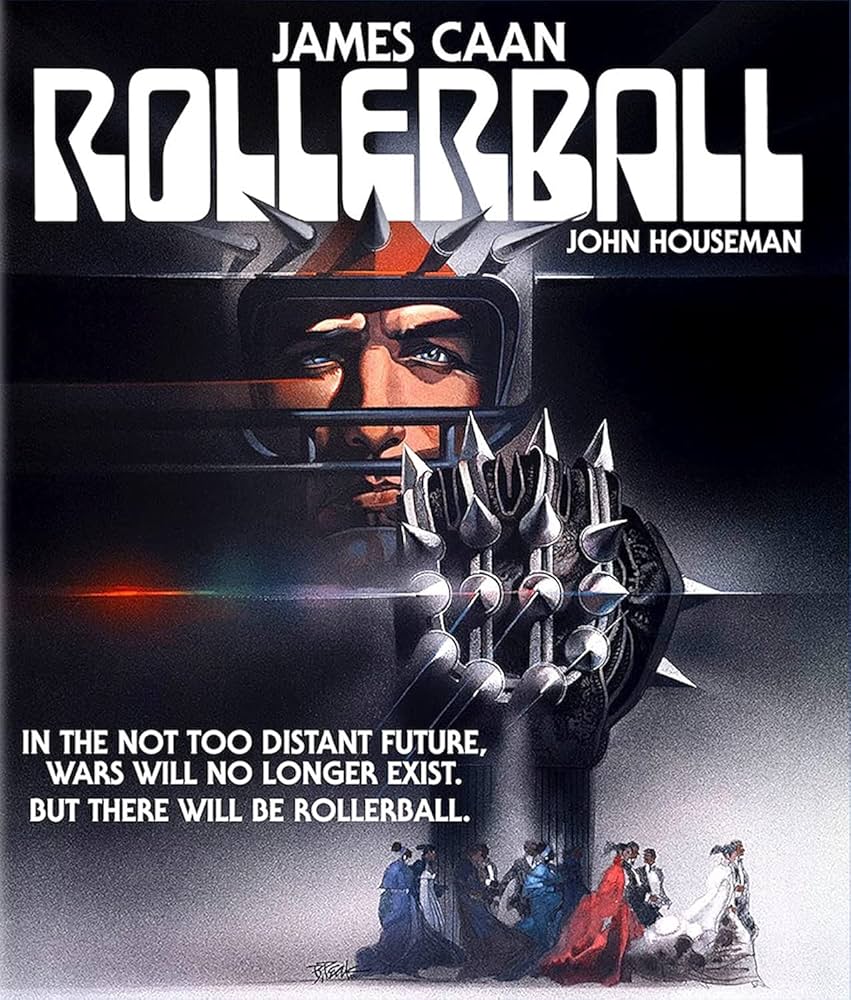
What if one of the greatest sporting movies ever made was about a sport that doesn’t exist? Director Norman Jewison’s Rollerball has just passed its half-century, coming out as it did in 1975. It was based on a 1973 short story, Roller Ball Murder, written by William Harrison for Esquire magazine. Harrison also wrote the film’s screenplay. (more…)
Author: Mark Gullick
-
3,056 words
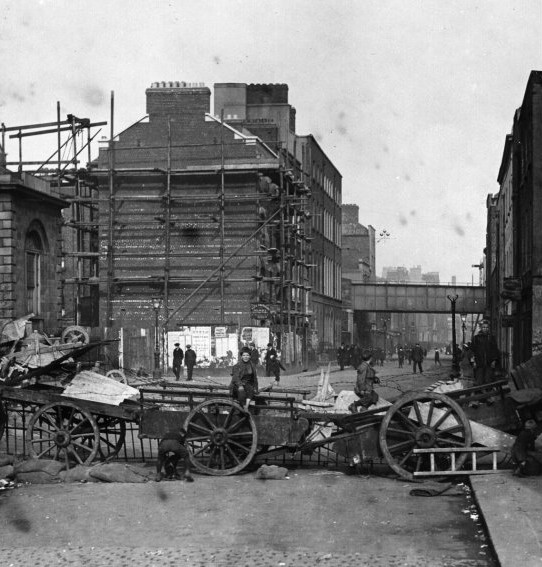
On Easter Monday, 1916, after hundreds of years of living under English rule, the Irish rose up against their oppressor. What became known as the Easter Rising (also the Easter Rebellion) lasted six days, and is still a source of pride to the fighting Irish. It was a bloody affair. Most of the leaders of the rebellion, men such as Thomas Plunkett and James Connolly, were executed, and hundreds of rebels were interned both in Ireland and England. Many died in the conflict, including heavy losses on the English side. Those redcoats learned what a lot of people have learned since; if you are going to fight an Irishman, you had better be good with your fists. (more…)
-
“Many no longer doubt the possibility of a world crisis. . .” These words seem entirely appropriate for our current interesting times, but were actually written almost exactly a hundred years ago. For the generation which produced the author, the great French metaphysician René Guénon, they would only have to wait just over a decade for their crisis, which took the form of World War 2. What will our crisis be? (more…)
-
Whatever happened to morality? This is not a lament over declining moral standards, or dismay at a rise in immoral behavior. These things are certainly happening, but they are the registration and confirmation of an individual moral standard, usually of a nation, a gauge which changes between cultures, civilizations, and epochs. (more…)
-
The British Academy of Film and Television Arts is the equivalent to America’s Academy of Motion Picture Arts and Sciences. Both organizations perform the same ceremonial functions in handing out their respective awards, the BAFTAs and the Oscars, although their overall duties have increased this century. When race moves center-stage, as it has in the movie business, a lot of people have a lot more work to do, and not just making movies. (more…)
-
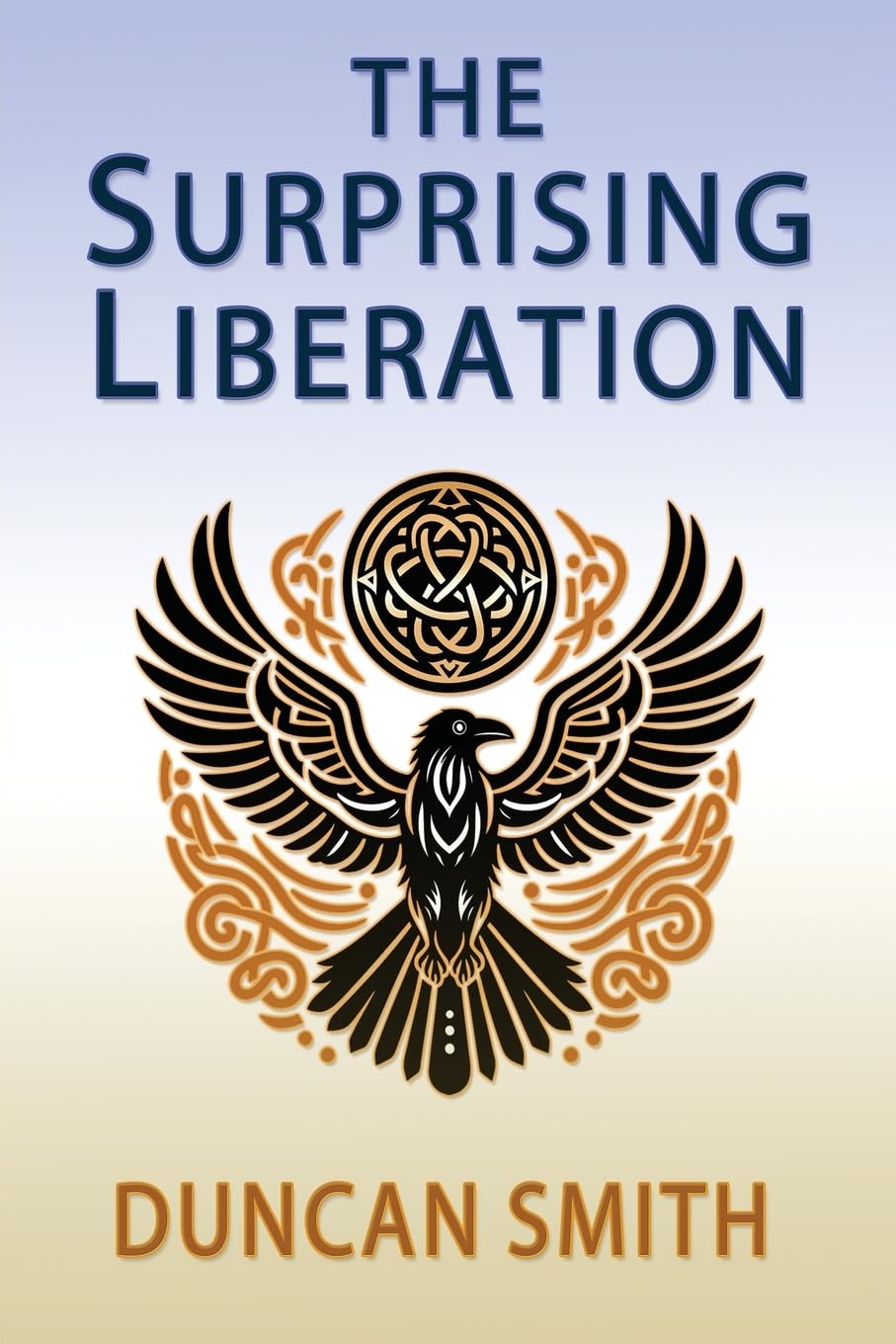
Duncan Smith
The Surprising Liberation
Sydney: Alfadex Books, 2025Who ultimately runs the world? That depends on who you ask. But one thing is clear; someone does. Even if we can’t look into the inner chambers of power and see who is working the levers, we can at least agree that there is power. Someone is exercising it, and they are probably not doing so for our good. That there exists such power is provable by its effects; By his works shall ye know him, and those works are many. (more…)
-
The British political landscape has shifted more in the past five years than it did over the preceding century. By the mid-19th century, the Whig Party had disbanded (as the American Whigs also did at around the same time) or transformed into the Liberal Party. The turn of the 20th century saw the creation of the Labour Party, and a political binary that would last for over 100 years. (more…)
-
It is an old party game to ask that someone or something be described as though they or it were an animal. If X was an animal, what type of animal would X be? For a long time, if the Epstein files had been an animal, they would have been Schrödinger’s cat. Did the files exist or didn’t they? (more…)
-
We are all suffering from Nazi fatigue. Donald Trump is celebrating a decade of being “literally Hitler,” and will apparently soon be putting immigrants into camps. In Britain, young schoolchildren are shown timelines linking Mussolini, Hitler, and Nigel Farage, and showing how the first two lead inexorably to the Reform UK leader. The rest of us on the Right are just plain Nazis, although one consolation is that if we are, at least we get to wear cool clothes. (more…)
-
The Blackface Bard
Hardly a week passes without the British public being informed of something, and it’s always the same thing; another famous historical figure foolishly believed to be white was in fact black. This time, the race grifters have gone for gold, changing the racial profile of the greatest playwright in history. That’s right, white folks; William Shakespeare was black. And there’s more. The Bard of Avon wasn’t just a black man, she was a black woman. (more…)
-
A kind of pulp-fiction Kafka, a prophet.
Eric P. Nash, reviewing Philip K. Dick’s Do Androids Dream of Electric Sheep? For the New York Times in 1968.“Which is better, the book or the movie?” It’s a question friends ask one another, and is at least as old as cinema. In all probability, it is a revised, post-cinema version of “book or theatre-play?” It’s always rewarding to see a favorite book translated onto the silver screen, but it is also a pleasure to work backwards, should you happen to see the film before you read the book. (more…)
-
The culture wars are very real, and the best proof of their existence is that the Left-wing mainstream media regularly claim that they are not. That there is some level of cultural conflict between the establishment Left and their useful idiots, and the dissenters, is ridiculed as a far-Right fever-dream. What does the current Left-wing government make of these supposed culture wars? (more…)
-
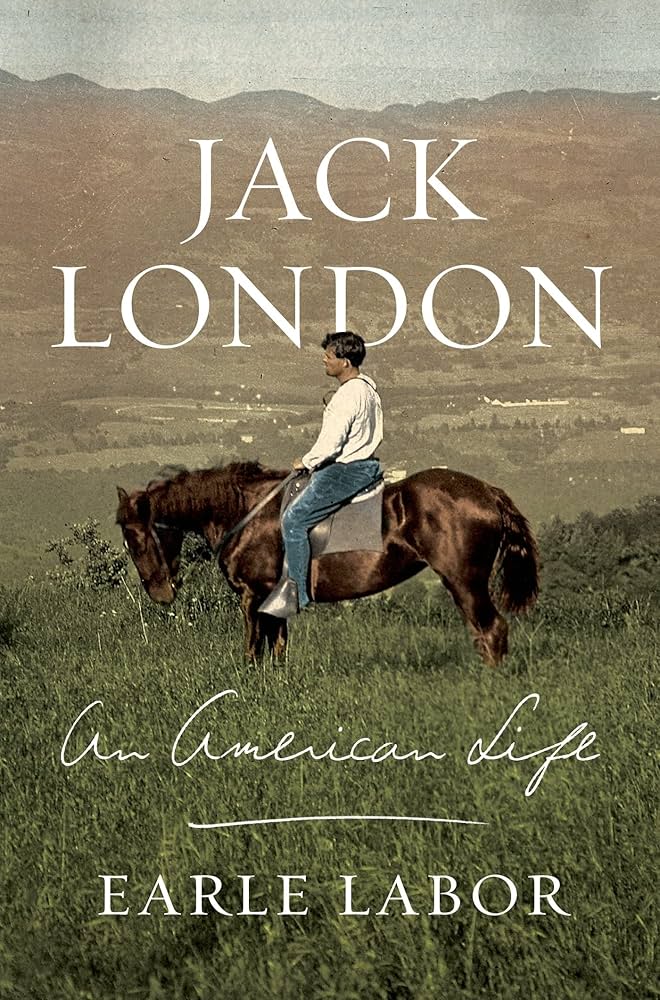
Earle Labor
Jack London: An American Life
Farrar, Straus & Giroux, 2013“The greatest story Jack London ever wrote was the story he lived.”
– Alfred Kazin
American writer Jack London was born John Griffith Chaney on January 12, 1876. Born into poverty in San Francisco, London later said that “life is not always a matter of holding good cards, but sometimes playing a poor hand well.” He would go on to become one of America’s most famous literary sons, albeit one whose life contained many contradictions and internal oppositions. “No American writer,” writes London scholar Earle Labor “has been subjected to more misleading commentaries.” (more…)