Counter-Currents
  • Advertise
  • Private Events
  • T&C
  • About
  • Contact
  • RSS
    • Main feed
    • Podcast feed
    • Videos feed
    • Comments feed
  • Welcome
  • Webzine
  • Books
  • Merch
  • Podcasts
  • Videos
  • Donate
  • Patrons
  • Subscribe
  • Crypto

LEVEL2

Donate Now Mailing list
Upcoming podcasts
  • Rob Rundo on Counter-Currents Radio

    Rob Rundo on Counter-Currents Radio

    Counter-Currents Radio

    06/13/2026 — 3 pm EST / 9 pm CET
  • Daniel Tyrie on Counter-Currents Radio

    Daniel Tyrie on Counter-Currents Radio

    Counter-Currents Radio

    06/20/2026 — 3 pm EST / 9 pm CET

Writers of May

(2 votes) Morris van de Camp David M. Zsutty Derek Stark Jayant Bhandari Greg Johnson

Articles of May

The Lunch Wars by David M. Zsutty Heidegger on Nietzsche, Part One by Collin Cleary 2 votes
  • Welcome
  • Webzine
  • Books
  • Merch
  • Podcasts
  • Videos
  • Donate
  • Patrons
  • Subscribe
  • Crypto
    • Counter-Currents Radio Podcast No. 690
      Greg Johnson & David Zsutty Discuss Current Things: AI, Henry Nowak, the Iran Crisis, & More

      Counter-Currents Radio

    • Collin Cleary: What Rome Means to Me

      Collin Cleary

      1

    • Paul Krugman: Closet Bolshevik

      Spencer J. Quinn

      11

    • Fugue of Ideas:
      Ibram X. Kendi’s Chain of Ideas

      Greg Johnson

      11

    • Based Blacks

      Lipton Matthews

      6

    • Black Intellectual Fatigue

      Derek Stark

      30

    • Why White Advocates Should Avoid “Based Blacks”

      Dani Vypont

      20

    • Nietzsche & Race

      Mark Gullick

    • Editor’s Update
      Rob Rundo Rescheduled to Next Week on Counter-Currents Radio;
      Tonight Greg Johnson & David Zsutty Answer Your Questions;
      Fundraiser Update & a New $20,000 Matching Grant

      Greg Johnson

    • The Counter-Currents 2026 Fundraiser
      Lifetime Subscriber Welcome Packages Extended

      Greg Johnson

    • Nationalism This Week
      Who’s Looking Back?

      Greg Johnson

      29

    • China’s Threat to American Security:
      Food, Farmland, Foreign Control, & Energy Policy

      Lipton Matthews

      5

    • The Bitter End of Western Metaphysics:
      Heidegger on Nietzsche, Part Two

      Collin Cleary

      15

    • The Killing of Henry Nowak

      Mark Gullick

      38

    • The Crisis of Chinese Technology Thieves

      Morris van de Camp

      1

    • The Strange World of Gender Bender Fiction:
      & What This Genre Tells Us About Autosexuality

      Dani Vypont

      3

    • Watching the Watchers:
      The Dark Triad Question

      David M. Zsutty

      14

    • The Remigration Movement Solidifies

      F. Roger Devlin

      1

    • Casting Aspersions:
      The Fatal Consequences of Race-Swapped Casting, From Helen of Troy to Henry of Southampton

      Steven Tucker

      20

    • The Murder of Henry Nowak

      Millennial Woes

      23

    • Don’t Forget to Vote in Our Writer & Article of the Month Poll

      Greg Johnson

    • The Robot Hotdog Stand

      Greg Johnson

      35

    • Laughing Our Way to Victory

      Dave Chambers

      7

    • The Zodiac Killer

      Mark Gullick

      11

    • Jared Taylor: What Rome Means to Me

      Jared Taylor

      1

    • An Interview with Endeavour:
      My Way of Life Is an Adventure!

      Ondrej Mann

      6

    • José Pedro Zúquete’s The Identitarians

      Greg Johnson

      3

    • Editor’s Update
      Fundraiser Update & How to Watch the Remigration Summit

      Greg Johnson

      5

    • The Bitter End of Western Metaphysics:
      Heidegger on Nietzsche, Part One

      Collin Cleary

      11

    • Berlin: City of Stones

      Spencer J. Quinn

      6

    • True Folk-Horror Is Horror of Your Own Folk:
      Mark Gatiss vs the Brexit Blind Dead  

      Steven Tucker

      4

    • Counter-Currents Radio Podcast No. 689
      Thomas Massie, the America 2050 Bust, the Need for Whites to Divest from America, the AI Economic Apocalypse, & Pro-White Project Pitches to Billionaires

      Counter-Currents Radio

      7

    • Nationalism This Week
      Remigration is Inevitable, Part 3

      Greg Johnson

      27

    • Why Billionaires Should Fund White Identity Politics

      Lipton Matthews

      8

    • How Cold War Two Came About

      Morris van de Camp

      5

    • Now Available for Pre-Order at a Special Price!
      Greg Johnson’s The Philosopher Is In

      Greg Johnson

    • David Zsutty’s Elevator Pitch to a Billionaire

      David M. Zsutty

      1

    • Headbanging Lite

      Mark Gullick

      5

    • White Advocacy Past and Present

      Peter Bradley

      13

    • The Lunch Wars

      David M. Zsutty

      47

    • The Russians are Coming/The Russians are Coming

      Steven Clark

      1

    • Peak Fatigue in Fort Wayne

      Gabriel Anderson

      24

    • Keith Woods’ Elevator Pitch to a Billionaire

      Keith Woods

    • The Cruelty of Kindness

      Morris van de Camp

      9

    • Predation Wearing the Mask of Civilization

      Jayant Bhandari

      13

    • The Mandalorian & Grogu

      Trevor Lynch

      24

    • Editor’s Update
      Fundraiser Update & a New $20,000 Matching Grant
      Greg Johnson & David Zsutty Discuss Thomas Massie on Counter-Currents Radio

      Greg Johnson

      2

    • How the Jews Defeated Thomas Massie—& Themselves

      David M. Zsutty

      27

    • Jared Taylor’s Elevator Pitch to a Billionaire

      Jared Taylor

      15

    • Nationalism This Week
      Remigration Is Inevitable, Part 2

      Greg Johnson

      8

    • Bigfoot

      Fugue of Ideas: Ibram X. Kendi’s Chain of Ideas

      It’s obvious that this is lazy scholarship and black hyperbole, however, I doubt that he encountered...

    • Bigfoot

      Black Intellectual Fatigue

      She is a Jew. I didn't mention it because I had any sympathy for her. And I certainly didn't think...

    • Glide Ratio 0:1

      The Killing of Henry Nowak

      Any one know what happened to Finnish, Kai Murros? He made an excellent essay on the benefits of...

    • Glide Ratio 0:1

      Why White Advocates Should Avoid “Based Blacks”

      My experience with conservatives is actually worse than "light" liberals (leftists). I've had more...

    • Peter Quint

      Black Intellectual Fatigue

      With a name like Mary Leftkowitz, she has got to be a jewess, can’t feel sorry for her. 🙃

    • kolokol

      Paul Krugman: Closet Bolshevik

      Trump is the most pro-Jewish president in American history. Therefore, very few Jews hate Trump now...

    • Will Williams

      The SPLC Indictment

      I didn’t watch the entire hearing of the House Judiciary Committee’s grilling the current, not-so-...

    • Bigfoot

      Black Intellectual Fatigue

      Back in 1996, a book was published by female academic, Mary Leftkowitz, called Not out of Africa. It...

    • Bigfoot

      Black Intellectual Fatigue

      I can't help but wonder if many white, academics get frustrated with some of their black students in...

    • Stronza

      Black Intellectual Fatigue

      Defense gives closing arguments in punishment phase: Texas defines sudden passion as passion that...

    • Jocelynn Cordes

      Black Intellectual Fatigue

      Also excellent.

    • Jocelynn Cordes

      Black Intellectual Fatigue

      Excellent.

    • Will Williams

      Why White Advocates Should Avoid “Based Blacks”

      Excellent comment, Scott. You will enjoy this short biography of Commander Rockwell by Dr. Pierce,...

    • YT

      Black Intellectual Fatigue

      Defenders of the West have referred to our race as, in some part, “Faustian” for longer than I’ve...

    • YT

      Black Intellectual Fatigue

      I agree, except that we shouldn’t be cruel or disrespectful towards those nonwhites who wish to ally...

    • YT

      Black Intellectual Fatigue

      I said nothing to imply that white genocide will be halted by liberal arts engagement (that’s...

    • Will Williams

      How the Jews Defeated Thomas Massie—And Themselves

      I’d asked:  Perhaps someone else can provide a link to Massie’s historic speech on the House...

    • Flel

      Paul Krugman: Closet Bolshevik

      I watched the video. Who’s calling the kettle black here? It’s great that he claims all these...

    • Bob Thomas

      Paul Krugman: Closet Bolshevik

      Many bolsheviks appear to be mopey putzes on the surface. The conservative English journalist Derek...

    • Hammerhead

      Collin Cleary: What Rome Means to Me

      Collin's take is the best yet. Really solid, just excellent.

    • Earth Day Special

      John Morgan

      12

    • A Robertson Roundup
      Remembering Wilmot Robertson
      (April 16, 1915 – July 8, 2005)

      Margot Metroland

      13

    • The Paranoid Style in White Nationalism

      Greg Johnson

      30

    • Join the Dance!

      Andrew Hamilton

      1

    • We Can’t Save the Earth Without Reducing African Birth Rates

      James Dunphy

      36

    • “I’m Not a Conspiracy Theorist, but . . .”:
      Jeffrey Epstein’s Death Gives New Life to “Conspiracy Theories”

      Greg Johnson

      22

    • Sylvia Plath: Stasis in Darkness

      Vic Olvir

      17

    • Vanguardism, Vantardism, & Mainstreaming

      Greg Johnson

      80

    • Aviation, Geography, & Race

      Charles Lindbergh

      3

    • Some Thoughts on Yule

      Collin Cleary

      4

    • Living in Truth:
      A Yuletide Homily

      Jef Costello

      7

    • John Kennedy Toole’s A Confederacy of Dunces

      Greg Johnson

      20

    • On Aleksandr Solzhenitsyn’s Warning to the West

      Spencer J. Quinn

      7

    • Elitism, British Modernism, & Wyndham Lewis

      Jonathan Bowden

      6

    • Philip K. Dick’s Do Androids Dream of Electric Sheep? as Anti-Semitic/Christian-Gnostic Allegory

      Greg Johnson

      20

    • “Conspiracy Theory” or Conspiracy?

      Andrew Hamilton

      21

    • Remembering H. P. Lovecraft
      (August 20, 1890–March 15, 1937)

      Greg Johnson

      3

    • Who Are We?
      Nordics, Aryans, & Whites

      Greg Johnson

      71

    • Remembering William Gayley Simpson
      (July 23, 1892–December 31, 1990)
      A Pleasant Afternoon with Harriet & Bill Simpson

      Margot Metroland

      18

    • Here are the Young Men
      Remembering Ian Curtis
      (July 15, 1956–May 18, 1980)

      Mark Gullick

      18

    • Percy Grainger
      Artist of the Right

      Alex Graham

      7

    • Remembering Revilo Oliver
      (July 7, 1908–August 20, 1994)

      Greg Johnson

      18

    • The Meaning of July 4th for the White Man

      Gregory Hood

      13

    • The Front National’s Evolution

      Bruno Mégret

    • Merwin K. Hart
      Forgotten American Hero & Man of the Right

      Morris van de Camp

      10

    • George Orwell’s Nineteen Eighty-Four

      Jonathan Bowden

      8

    • Carleton S. Coon
      Scientist & Reluctant White Advocate

      Morris van de Camp

      3

    • The Kwanzaa Absurdity Will Be Dwarfed by Juneteenth

      Robert Hampton

      10

    • Stravinsky

      Alex Graham

      7

    • Like the Roman:
      Remembering Enoch Powell (1912-1998)

      Mark Gullick

      23

    • Neo-Fascism in Film
      Part 5

      Karel Veliky

      15

    • The Game of Tarot

      Mark Gullick

      2

    • Institutions Cannot Be Transplanted

      Jayant Bhandari

      5

    • Jonathan Bowden’s Deliverance
      Part 5

      Jonathan Bowden

    • Crosstown Traffic:
      Jimi Hendrix & The Post-War Rock ‘N’ Roll Revolution

      Mark Gullick

      1

    • Slaves from the North:
      Finns & Karelians in the East European Slave Trade, 900–1600

      Lipton Matthews

      14

    • Neo-Fascism in Film
      Part 4

      Karel Veliky

      2

    • David Lean’s A Passage to India

      Spencer J. Quinn

      1

    • Elites are Essential to Development

      Lipton Matthews

      7

    • Jonathan Bowden’s Deliverance
      Part 4

      Jonathan Bowden

    • Neo-Fascism in Film
      Part 3

      Karel Veliky

      6

    • E. M. Forster’s A Passage to India & the Indian Mentality

      Spencer J. Quinn

      25

    • Jonathan Bowden’s Deliverance
      Part 3

      Jonathan Bowden

    • The Rest Is Silence
      Heidegger’s Quietism

      Mark Gullick

      2

    • Dispelling the Historical Fallacy of Indian Nationalism

      Lipton Matthews

      8

    • Neo-Fascism in Film
      Part 2

      Karel Veliky

      8

    • Jonathan Bowden’s Deliverance
      Part 2

      Jonathan Bowden

    • Life of a Klansman

      Mark Gullick

      8

    • Jonathan Bowden’s Deliverance, Part 1

      Jonathan Bowden

    • Decolonial Ideas are Holding Back Developing Countries

      Lipton Matthews

      8

    • Neo-fascism in Film, Part 1

      Karel Veliky

      21

    • Jonathan Bowden’s Onslaught, Part 8
      Divigations on Decadence

      Jonathan Bowden

    • Jonathan Bowden’s Onslaught, Part 7
      Intrigues in the National Front

      Jonathan Bowden

      1

    • Rotten to the Core

      Mark Gullick

      8

    • Strauss on Husserl’s “Philosophy as Rigorous Science”

      Greg Johnson

    • Jonathan Bowden’s Onslaught, Part 6
      Francis Bacon & Right-Wing Nihilism

      Jonathan Bowden

    • London After (& Before) Midnight:
      Aleister Crowley, The Landlord’s Worst Nightmare

      James J. O'Meara

      2

    • Jonathan Bowden’s Onslaught, Part 5
      The Post-War British Far Right

      Jonathan Bowden

    • No Rules: Rollerball

      Mark Gullick

      4

    • Jonathan Bowden’s Onslaught, Part 3
      Brett Easton Ellis’ American Psycho

      Jonathan Bowden

    • András László
    • Derek Hawthorne
    • Beau Albrecht
    • Alain de Benoist
    • Kerry Bolton
    • Jonathan Bowden
    • Collin Cleary
    • Jef Costello
    • Savitri Devi
    • Julius Evola
    • Jim Goad
    • Gregory Hood
    • Juleigh Howard-Hobson
    • Greg Johnson
    • Charles Krafft
    • Anthony M. Ludovici
    • Trevor Lynch
    • H. L. Mencken
    • J. A. Nicholl
    • James J. O’Meara
    • Christopher Pankhurst
    • Tito Perdue
    • Michael Polignano
    • Spencer J. Quinn
    • Fenek Solère
    • Irmin Vinson
    • Leo Yankevich
    • Francis Parker Yockey
    • Multiple authors
  • Editor-in-Chief

    • Greg Johnson, Ph.D.

    Featured Writers

    • Beau Albrecht
    • Gunnar Alfredsson
    • Collin Cleary, Ph.D.
    • Jef Costello
    • Morris V. de Camp
    • F. Roger Devlin, Ph.D.
    • Stephen Paul Foster, Ph.D.
    • Jim Goad
    • Alex Graham
    • Mark Gullick, Ph.D.
    • Greg Johnson, Ph.D.
    • Travis LeBlanc
    • Trevor Lynch
    • Margot Metroland
    • James J. O’Meara
    • Angelo Plume
    • Spencer J. Quinn
    • Fred Reed
    • Clarissa Schnabel
    • Michael Walker
    • David M. Zsutty

    Frequent Writers

    • Asier Abadroa
    • Aquilonius
    • Alain de Benoist
    • Kerry Bolton, Ph.D.
    • Dave Chambers
    • Steven Clark
    • James Dunphy
    • Endeavour
    • Richard Houck
    • Jason Kessler
    • Titus Livius
    • Ondrej Mann
    • Lipton Matthews
    • Mark Mazari
    • John Morgan
    • Jaroslav Ostrogniew
    • Kathryn S.
    • Christian Secor
    • Anne Wilson Smith
    • Thomas Steuben
    • William De Vere
    • Kenneth Vinther
    • Max West

    Classic Authors

    • Maurice Bardèche
    • Jonathan Bowden
    • Julius Evola
    • Guillaume Faye
    • Ernst Jünger
    • Kevin MacDonald, Ph.D.
    • D. H. Lawrence
    • Charles Lindbergh
    • Jack London
    • H. P. Lovecraft
    • Anthony M. Ludovici
    • Sir Oswald Mosley
    • National Vanguard
    • Friedrich Nietzsche
    • Revilo Oliver
    • William Pierce
    • Ezra Pound
    • Saint-Loup
    • Savitri Devi
    • Carl Schmitt
    • Miguel Serrano
    • Oswald Spengler
    • P. R. Stephensen
    • Jean Thiriart
    • John Tyndall
    • Dominique Venner
    • Leo Yankevich
    • Francis Parker Yockey

    Other Authors

    • Howe Abbott-Hiss
    • Michael Bell
    • Giles Corey
    • Jack Donovan
    • Richardo Duchesne, Ph.D.
    • Emile Durand
    • Guillaume Durocher
    • Mark Dyal
    • Tom Goodroch
    • Andrew Hamilton
    • Robert Hampton
    • Huntley Haverstock
    • Derek Hawthorne
    • Gregory Hood
    • Juleigh Howard-Hobson
    • Alexander Jacob
    • Ruuben Kaalep
    • Tobias Langdon
    • Julian Langness
    • Patrick Le Brun
    • G A Malvicini
    • John Michael McCloughlin
    • Millennial Woes
    • Michael O’Meara
    • Christopher Pankhurst
    • Michael Polignano
    • J. J. Przybylski
    • Quintilian
    • Edouard Rix
    • C. B. Robertson
    • C. F. Robinson
    • Herve Ryssen
    • Alan Smithee
    • Fenek Solere
    • Ann Sterzinger
    • Robert Steuckers
    • Tomislav Sunic
    • Donald Thoresen
    • Marian Van Court
    • Irmin Vinson
    • Book Reviews
    • Movie Reviews
    • TV Reviews
    • Music Reviews
    • Art Criticism
    • Graphic Novels & Comics
    • Video Game Reviews
    • Fiction
    • Poems
    • Interviews
    • Videos
    • English Translations
    • Other Languages
      • Arabic
      • Bulgarian
      • Croatian
      • Czech
      • Danish
      • Dutch
      • Estonian
      • Finnish
      • French
      • German
      • Greek
      • Hungarian
      • Italian
      • Lithuanian
      • Norwegian
      • Polish
      • Portuguese
      • Romanian
      • Russian
      • Slovak
      • Spanish
      • Swedish
      • Ukrainian
    • Commemorations
    • Why We Write
  • Archives
  • Top 100 Commenters
  • The Looney Bin
  • Advertise
  • Private Events
  • T&C
  • About
  • Contact
  • RSS
    • Main feed
    • Podcast feed
    • Videos feed
    • Comments feed
Sponsored Links
Europa.com Above Time Coffee Antelope Hill Publishing Paul Waggener IHR-Store Spencer J. Quinn American Renaissance Jim Goad The Occidental Observer
Print July 9, 2024 12 comments

Rolling Back Progressive Extremism

F. Roger Devlin

3,199 words

Eric Kaufmann
The Third Awokening: A 12-Point Plan for Rolling Back Progressive Extremism
New York, Nashville: Post Hill Press, 2024

Eric Kaufmann is best known as the author of Whiteshift (2019), a thick book on the future of white majorities in Western nations. The book’s thesis is that whites must be offered a bit of carrot as well as stick to reconcile us to being gradually phased out of the nations our ancestors created. This would involve official toleration of a white ethnic identity in the society of the future as long as that identity is kept “open” to those not fully white at the biological level. The model appears to be Brazil, where nearly half the population “identifies” culturally as white, even though most have some admixture. Among the blessings Kaufmann expects to accrue to the West from such a shift in white identity is an end to “Right-wing populism” as represented by Donald Trump and the European nationalist parties.

This will strike most white advocates as a rather pathetic and not very tempting olive branch, but it was more than enough to render the author suspect within his academic milieu. A quick look at Wikipedia turns up a typical reaction: Whiteshift’s lack of any discussion of “settler colonialism or of the place of first Nation populations and enslavement of African Americans and Jim Crow segregation in the USA [represent] serious — in fact, fatal — omissions in a book concerned to rehabilitate symbols of white identity.”

Kaufmann resigned from a tenured position at Birkbeck University of London in 2023 following five years of “steady hostility from radical staff and students.” He is now at the University of Buckingham, described by Roger Scruton, another Birkbeck refugee who found shelter there, as “probably the least politically correct university in Europe.” His new book is a polemic against the malicious bigotry he and so many others have had to endure from out-of-control radicals.

The last couple of years have witnessed a partial retreat from the collective madness of 2020’s Summer of George Floyd. A county in Virginia has restored Confederate names to a couple of high schools; a few companies have revoked racial policies that turned out to be bad for business; some states have banned “diversity, equity, and inclusion” programs in their public colleges. We should not be in any rush to declare victory. Revolutions always undertake more than they can fulfill. They are followed by periods of stabilization which set limits to them, but also render permanent some of the changes they introduced.

So it is with genuine insight that Kaufmann begins his study of our “woke” era by recalling a forgotten episode of the MacNeil-Lehrer News Hour from 1991. At that time, “political correctness” was a newly-fashionable term for strange goings-on at prestigious American colleges and universities:

When Robert MacNeil declared to a young Dinesh D’Souza that political correctness “has already begun to pass” due to its excesses being ridiculed in the press, D’Souza wisely replied that while it was “somewhat on the defensive,” the proponents of PC were “not a handful of radicals” but rather “institutionalized . . . [representing the] establishment.”

MacNeil’s complacency was not uncommon. It was hard for many people to take seriously a movement characterized by students chanting “Hey hey, ho ho, Western Civ has got to go,” claims that Isaac Newton’s Principia was a “rape manual,” or Modern Language Association presentations with titles such as Jane Austen and the Masturbating Girl. Books were brought out in the “humor” category collecting over-the-top examples of academic craziness. Not a few expected the whole business to collapse from its inherent absurdity.

The trouble was that the imposters who had taken over the American academy were not laughing. They were too busy indoctrinating the brightest of the rising generation at the nation’s most prestigious universities. Beneath all the silliness and pretentious “postmodern” jargon, the upshot of their message was that law, rationality, and truth itself — along with the entire tradition of Western science, philosophy, and imaginative literature — were part of a multimillennial conspiracy by “white males” to subjugate and oppress the rest of humanity. While they appeared to face broad popular opposition, most of this was focused on damage limitation such as keeping Shakespeare in the curriculum. As I saw it, this was absurdly inadequate: Our institutions had to be purged with fire and sword. If these bastards were not stopped dead in their tracks, their thinking would dominate the entire United States within a generation.
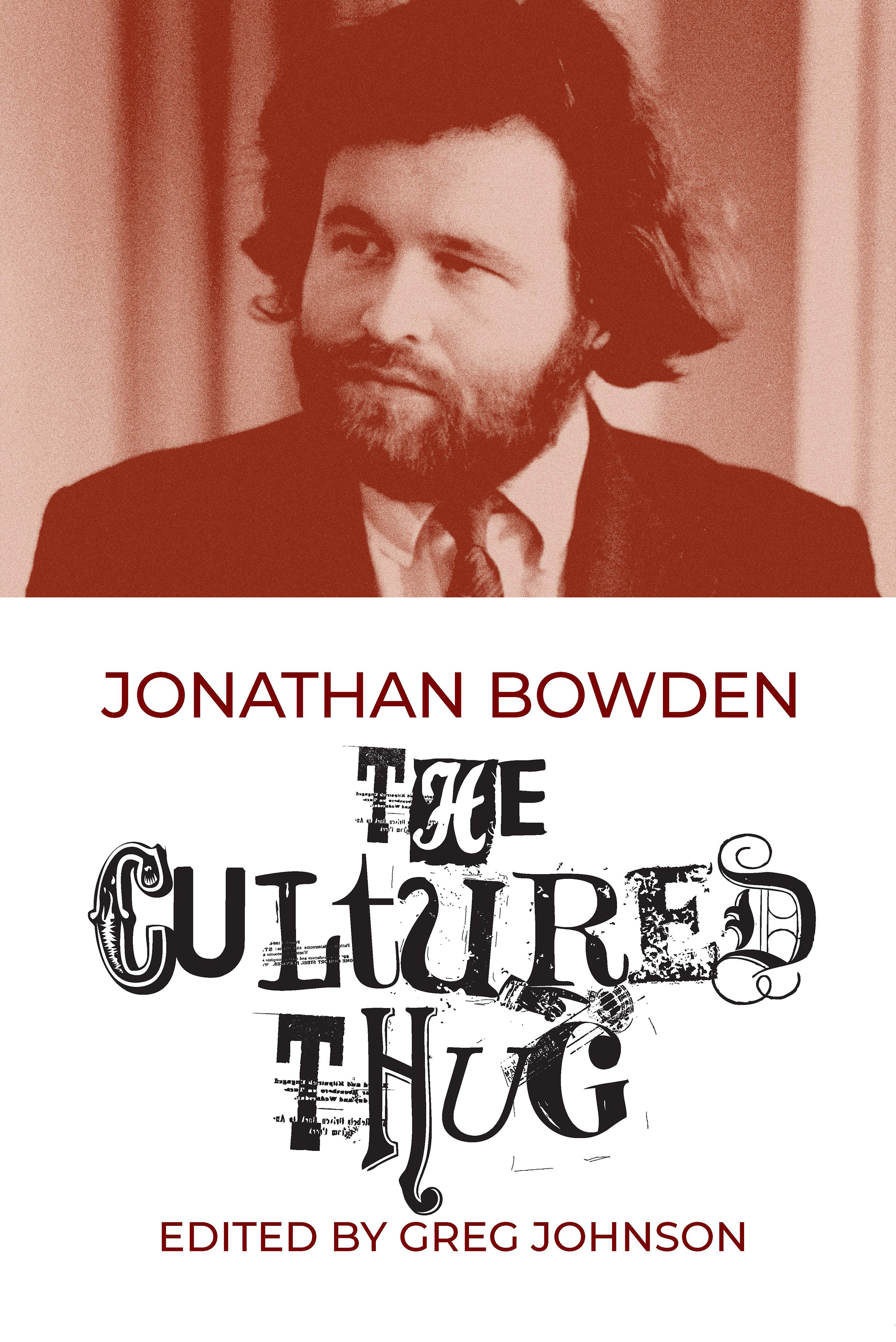
You can buy Jonathan Bowden’s collection The Cultured Thug here.

And that is exactly what has happened.

One of the strengths of The Third Awokening is its broad historical perspective. Eric Kaufmann understands that present-day wokeness, which he dates from about the mid-2010s, has its roots not only in the “political correctness” wars of the early 1990s (the second “awokening”), but that these stretch back to the cultural revolution of the late 1960s (the first). Indeed, American anti-majoritarianism goes back at least to Randolph Bourne and the Young Intellectuals of Greenwich Village in the 1910s. These writers championed recent immigrant groups from Europe as a relief from the supposedly stuffy and dull Anglo-Saxon establishment. In those days, Scandinavians were regarded as exotic bearers of the needed “diversity” — the heroine of Sinclair Lewis’s Main Street (1920) feared they might one day fall victim to cultural assimilation.

Then, between the 1940s and the 1960s, and without a lot of fanfare, American attitudes on race and ethnicity underwent a sea change. Asian exclusion was repealed in 1943, the US military was racially integrated from 1946 through ‘48, and history textbooks were rewritten to emphasize immigrant contributions in the 1950s. In 1944, 52% of American whites still agreed with the statement that “White people should have the first chance at any kind of job,” a figure that sank to 3% by 1972. Asked “If a negro with just as much income and education as you had moved into your block, would it make any difference to you?” only 35% said no in 1942; by 1967, the figure was 67%. In 2020, Kaufmann conducted a survey of older Americans to try to get their sense of when the modern stigmatization of “racism” began to prevail: respondents gave a median date of 1959, with 95% of responses falling between 1954 and 1963. The so-called Civil Rights Movement was largely complete by 1965.

The first “awokening” began almost immediately thereafter. At least three points distinguish this development from the quieter and more gradual shift in sensibility just reviewed: 1) a certain narrowing in moral outlook, 2) an unprecedented decline in the authority of America and its institutions, and 3) the rise of uncoordinated moral panics as vehicles of cultural change.

1) Alluding to Jonathan Haidt’s moral foundations theory, Kaufmann points out that before this time America was committed to a number of moral ideals which had to be kept in balance:

When one moral intuition, such as equality or harm protection, bumps up against another, such as liberty or patriotism, an individual becomes aware of trade-offs and is more careful to temper the kind of normative extremism that expands the scope of taboos. Once one’s morality becomes unbalanced, there is no check on pushing for maximal normative sanctions on an ever-expanding range of increasingly microscopic transgressions. This is effectively what happened in Western societies, beginning in the mid-1960s. . . . Anti-racism, a community norm within the reformist left and liberal-humanitarian circles, suddenly became hegemonic within the entire American public sphere.

For a significant number of Americans, morality got reduced to equality and harm avoidance focused on sacralized racial and sexual identity victim groups. Blacks provided the original paradigm, but the thinking has exploded like a moral equivalent of cosmology’s “Big Bang” to cover other racial and sexual identity groups and to cast opprobrium on seemingly non-racial matters such as standardized testing and punctuality. There seems to be no inherent limit to its expansion, nor to the triviality of “micro-aggressions” it can become aggrieved about. As Kaufmann notes:

Stigmas are not like laws. Where laws involve logical consistency, balancing competing principles, and applying proportional penalties calibrated to the severity of the offense, taboos take a Manichean, black-and-white view of the world. If you violate a stigma, this excites a disgust reaction, leading, at the very minimum, to social ostracism.

In the absence of counterbalancing moral concerns, a sentiment takes hold that no sacrifice is too great for the eradication of “racism” and the realization of the egalitarian utopia which is supposed to result. Other social values, such as those embodied in traditional American freedoms, cannot survive in this atmosphere.

2) Most countries’ histories contain unpleasant episodes, as Kaufmann writes, but they normally find ways to “rationalize, contextualize, or downplay these sins.” America used to do this as well: “When Black people (1870) or women (1920) acquired the vote, or anti-Semitism faded (1940s), there was no collapse in American moral authority.” Yet such a collapse did occur beginning in the late 1960s, a delegitimation of both whites and the country they had created. Shelby Steele recalls:

The lines of moral power, like plates in the earth, had shifted. White guilt became so palpable you could see it on people. At the time, what it looked like to my eyes was a remarkable loss of authority. And what whites lost in authority, blacks gained. You cannot feel guilty about anyone without giving away power to them.

Many whites sought redemption through institutional reforms such as racial preferences or diversity training. This did nothing to help blacks, but that was not the point: the actions were symbolic and exculpatory. At the same time, a small but henceforth significant minority of zealots arose for whom there could never be any exculpation for “racism” — America’s real and alleged historical wrongs called for nothing less than the death penalty.

3) It is not easy to specify an exact date for the “first awokening,” but Kaufmann locates a possible turning point in a seemingly unimportant episode recalled by columnist Paul Krugman: the repainting of lawn jockeys in front of Long Island homes in the summer of 1965. “While it didn’t literally happen overnight,” Krugman remembers, “it did happen fast.” Nobody ordered the change. Some nameless liberal presumably got a bright idea one day about how he could “make a statement,” and suddenly the race was on: No one wanted his house sporting the last negro lawn jockey in town. The Great Long Island Lawn Jockey Repainting Race of 1965 prefigured later moral panics in its lack of coordination and its rapid spread, suggestive of tinder waiting for a random spark to fall upon it.

Every great social or political movement is characterized by a small, hard core and a much larger and fuzzier periphery. Hardcore radicals are important, but they cannot achieve much without broader social support. Kaufmann offers an analogy: Fundamentalist Christians might want to ban dancing and enforce laws against businesses opening on Sundays, but they can only hope to succeed in societies with many less committed Christians at least susceptible to being won over to their cause. Or again: There are plenty of Muslims who sincerely dislike suicide bombings and the beheading of infidels, but it is easy for radicals to put them in an embarrassing position by wielding the accusation that they are being “un-Islamic.” This hits home for people who recognize the same authorities as the radicals themselves.

All modern moral panics (of which the “racial reckoning” that followed George Floyd’s death was the largest and most recent) display this same pattern. They are sparked by what Cass Sunstein has called “opprobrium entrepreneurs,” but can only succeed because far larger numbers of people are willing to give at least passive support to the zealots. Kaufmann writes:

While radical ideas like Critical Race Theory or gender ideology have gained ground, they have only succeeded because they resonated with an established left-liberal hypersensitivity around identity issues. This attention to the demand side, or consumption of ideas, is missing from many books which focus only on the radicals and the ideas they produce.

Kaufmann is correct, and this broader approach is a major strength of his book.

* * *

No agreement has ever been reached on what to call the perverse mentality now dominating our institutions: “political correctness” and “cultural Marxism” are among the labels that have come and gone. Kaufmann introduces “cultural socialism” as his own preferred moniker. He acknowledges that, unlike economic socialism, it is a set of emotional responses rather than a doctrine. Yet it shares

the defining feature of socialism, [namely,] its egalitarianism, linked to a worldview which explains inequality as the result of social relations and coercive power rather than talent or hard work. An oppressor-oppressed, power-centric worldview is integral to both economic and cultural socialism.

You can buy Tito Perdue’s novel Vade Mecum here

Kaufmann is not a racial realist; he emphasizes history and culture as the sources of ineliminable group inequalities rather than evolution. But he does maintain that “a person who demands equal outcomes by race or sex should be treated as every bit as extreme as one who insists that every person enjoy the same wealth, power and prestige.”

Among the most visible features of the “woke” era has been the dismissal of dissenters from their jobs and from public life, popularly known as cancellation. Some critics argue that concern over “cancel culture” is exaggerated because the phenomenon is uncommon, and the author readily admits that “the number of people who lose their jobs or reputations to cancel culture is only a tiny fraction of the population.” The problem with this appeal to infrequency is that “it ignores the vast iceberg of self-censorship that sits underneath the statistically unusual examples of people being fired or defamed for speech.” The system operates like a mafia. Students of the Sicilian mafia know that they do not practice violence for its own sake; they prefer to keep it to the minimum necessary to maintain the credibility of their threats. But this is enough to keep an entire society living in fear. Cancellations, such as Google’s 2017 firing of James Damore for citing evolved sex differences in an essay criticizing the company’s diversity policies, are infrequent top-down acts, but they depend on the support of bottom-up and peer-to-peer ideological pressure.

Kaufmann has conducted detailed surveys on commitment to traditional liberal freedoms vs. support for disciplinary measures against dissenters within contemporary organizations. Importantly, he did not simply ask about people’s belief in freedom of conscience or freedom of speech in the abstract; nearly everyone claims to support such ideals until they come into conflict with the supposed need to protect a sacralized identity group from harm. Kaufmann’s survey questions presented dilemmas forcing respondents to choose between classical liberal ideals and the avoidance of harm to such groups.

What he found is that skeptics who go along with the pressure to protect their jobs are outnumbered by those sincerely supportive of at least some sanctions against dissent. In the author’s own words: “There is no silent liberal majority just waiting to find its courage; left-liberal conviction, not cowardice, accounts for the power of cancel culture.” He insightfully compares today’s cultural socialists to the worshipers of a demanding God who dishes out fearful punishments to followers who fall short of his demands: they may fear the punishments, but that does not mean their loyalty to their God is insincere. Indeed, the relation between fear of and support for cancel culture is significantly positive:

A stunning 49 percent of Americans who worry about losing their job or reputation for speech agree [that this is] “a justified price to pay to protect historically disadvantaged groups.” Support for cancel culture seems to flow from a person’s moral belief system, which operate on a different plane from their personal concerns. Fear of being disciplined for speech isn’t going to turn people against cancel culture.

For us, this means focusing less on shaming others into acquiring a backbone and more on demonstrating the falsity of the beliefs on which anti-majoritarian tyranny rests.

Support for cultural socialism is greatest among the young, women, and those Kaufmann calls the “highly educated,” but whom I would prefer to call the “extensively schooled.” It is also stronger among whites than the non-whites who are its intended beneficiaries. This should not surprise anyone familiar with Kevin MacDonald’s account of moralistic utopianism as an outgrowth of certain aspects of Northern European culture.

High support for cultural socialism among the youngest birth cohorts is, of course, an especially worrisome finding, particularly when combined with evidence that the common pattern of persons becoming more conservative with age has broken down in the Anglosphere since the birth cohort of 1981-96 (“millennials”). The recent climbdown from the excesses of the “Summer of Floyd” has been the work of older liberals who will pass from the scene long before the next “awokening,” for which the tinder is already quietly being laid now.

Kaufmann finds little support for the view, always popular with American conservatives, that a religious revival is the key to solving our problems. Survey data reveals that the people in the pews are roughly as infected with the woke mind virus as everyone else. Indeed, the sacralization of victimhood may represent in part an unhealthy hypertrophy of certain aspects of Christian doctrine. If religion is to play a role in defeating “wokeism,” it will have to be a religion consciously adapted for that purpose.

We shall also have to rid ourselves of the notion, still common in libertarian circles, that government is the exclusive threat to our freedom. As Kaufmann writes:

Cancel culture tends to flow from the bottom up rather than the top down, resulting in an “emergent authoritarianism” that largely arises from activists bullying institutions rather than elected officials telling them what to do. . . . I remain skeptical that older donors and the media have the stamina to do more than slow the advance of younger, more numerous and committed woke activists in the institutions.

Politicians, by contrast, are susceptible to popular anti-woke pressure. Gov. Glenn Youngkin of Virginia is no rock-ribbed conservative or even classical liberal, but he saw widespread outrage against Critical Race Theory (CRT) in public schools as a political opportunity, rode it to the governorship of Virginia, and kept his promise to eliminate it.

But Florida Governor Ron De Santis’ actions “represent the boldest application of state power in the service of anti-woke institutional reform to date.” Besides banning CRT, he has passed a Parental Rights in Education bill to prevent the sexual propagandizing of children before the third grade (a measure apparently viewed as controversial). He has gutted the diversity and equity bureaucracies at Florida’s institutions of higher learning, done away with “diversity statements” as a requirement for academic appointments, and even placed one small state college — New College of Florida — under the control of cultural conservatives, leading to the resignation of 40% of the faculty.

Kaufmann closes his book with some concrete proposals for using government power to roll back cultural socialism. These include protecting individuals from firing or other forms of retaliation for stating their views, enforcing political neutrality on public bodies and tech algorithms, adding political belief to the list of characteristics covered by anti-discrimination law, and mandating that schools teach about the First Amendment. But he warns that “at a deeper level, lasting change is only possible if our moral order ceases to revolve around the sacred totems of historically marginalized race, gender and sexual identity groups.”

Rolling Back Progressive Extremism

Rolling%20Back%20Progressive%20Extremism

Share

  • Gab

Enjoyed this article?

Be the first to leave a tip in the jar!

Instant Echeck GreenPay™

*  *  *

Counter-Currents has extended special privileges to those who donate at least $10/month or $120/year.

  1. Donors will have immediate access to all Counter-Currents posts. Everyone else will find that one post a day, five posts a week will be behind a “paywall” and will be available to the general public after 30 days. Naturally, we do not grant permission to other websites to repost paywall content before 30 days have passed.
  2. Paywall member comments will appear immediately instead of waiting in a moderation queue. (People who abuse this privilege will lose it.)
  3. Paywall members have the option of editing their comments.
  4. Paywall members get an Badge badge on their comments.
  5. Paywall members can “like” comments.
  6. Paywall members can “commission” a yearly article from Counter-Currents. Just send a question that you’d like to have discussed to [email protected]. (Obviously, the topics must be suitable to Counter-Currents and its broader project, as well as the interests and expertise of our writers.)

To get full access to all content behind the paywall, please visit our redesigned Paywall page. 

Related

  • The Remigration Movement Solidifies 

  • Laughing Our Way to Victory

  • Curtis Dozier’s The White Pedestal

  • Counter-Currents in Rome

  • Elites are Essential to Development

  • A Novel Approach: Roberto Bolaño’s 2666

  • Restoring American Deterrence through Innovation and Industry

  • Rome and Education

Tags

2020 American riotsanti-majoritarianismanti-wokenessBirkbeck University of Londonbook reviewscritical race theoryequalityEric KaufmannF. Roger DevlinGlenn YoungkinGoogleJames DamoreRandolph BourneRon DeSantisthe leftThe Third AwokeningUniversity of BuckinghamWhiteshiftwokeness

Previous

« How the South Beat Reconstruction, Part 2

Next

» Black History Month Resources

12 comments

  1. Bernie says:
    July 9, 2024 at 11:03 pm

    Another mainstream book that seems to push back against anti-whiteness without embracing white identity. Kaufmann is obviously not “our guy” but I see this as a positive trend – and one we can capitalize on.

    3
    3
    • Scott
    • Hamburger Today
    • DarkPlato
    1. Hamburger Today says:
      July 10, 2024 at 2:08 am

      I agree, but would add that the author’s concerns about ‘anti-Whiteness’ are specifically motivated by a desire to suppress pro-White politics. ‘Anti-anti-Whiteness’ is not the same as ‘pro-White’ but it can look a lot like it to the less-observant.

      Kaufmann is a member of the elite who is trying to find ways to ‘take the wind out’ of the ‘sails’ of White Identity Nationalism by following the path of ‘merit nationalism’ that ‘conservatives’ have been advocating – without success – since the invention of ‘affirmative action’.

      What Kaufmann fears is a new affective order where White cease to feel comfortable acting against their own interests and the interests of other Whites in order to feel good about being around non-Whites.

      The concrete solution of racial separation never occurs to him.

      But it’s occurred to White Nationalists.

      5
      5
      • Joe Gould
      • Bernie
      • DarkPlato
      • Scott
      • jrphillips
      1. Wifewaffen says:
        July 10, 2024 at 3:34 pm

        Great comment!

        0
        0
  2. Hamburger Today says:
    July 10, 2024 at 2:14 am

    For us, this means focusing less on shaming others into acquiring a backbone and more on demonstrating the falsity of the beliefs on which anti-majoritarian tyranny rests.

    Respectfully, I disagree.

    This has been the approach taken by ‘the Right’ and ‘conservatives’ for almost a century in which there has never been a significant sustained victory using this approach.

    If you think of ‘being wrong’ as the intellectual ‘stick’ then where is the emotional ‘carrot’ to that makes it viable for Whites to rally to their own defense?

    Increasingly, it seems to me that White Nationalism – racial separatism – combined with a pro-White White Identity – Whites caring about Whites because they are White – is the only really viable approach.

    Whites can care about Whites now and in doing so lay the emotional groundwork for a functioning separatism movement.

    In the end, Whites feel unloved, even by their own people.

    If the ‘pro-White’ movement cannot offer love in return – but only ‘facts and logic’ – there will not bee the loyalty and trust needed to make a future for the White race in the homelands of our ancestors.

    2
    2
    • DarkPlato
    • Joe Gould
    1. Wifewaffen says:
      July 10, 2024 at 3:40 pm

      The pro-White movement has to accept that the masses are moved by emotion, not logic.

      0
      0
  3. LineInTheSand says:
    July 10, 2024 at 3:48 am

    Mr. Devlin reports that Kaufman uses the term “cultural socialism” to describe the dispossession of traditional whites. Many people on the dissident right also use terms like this or “cultural Marxism” as well.

    I suggest that anytime you are tempted you use one of these terms, you say “anti-traditional white” instead.

    Terms like “cultural Marxism” or “cultural socialism” suggest that the fundamental problem is ideological or economic, when, in fact, the fundamental problem is racial hostility. These terms conceal more than they reveal.

    1
    1
    • DarkPlato
    1. Beau Albrecht says:
      July 10, 2024 at 4:35 pm

      Cultural Marxism serves to pull society apart at the seams.  Although race agitation is the most damaging part of it these days, there was a lot more to it than that.  Cultural Marxism began in 1919, and race agitation was there, but had a lot less potential at the time.  (The USA was 90% White, Europe was 100% White, and even liberals were pro-White.)  Therefore, cultural Marxism had a lot of other fronts too, which reached high gear in the 1960s.  Second wave feminism was one of them, pitting women against men.  Gay advocacy began as a cultural Marxist project (notably the Mattachine Society, among some others).  Then there was the famous generation gap – young versus old – which the Frankfurt School personally did wonders to exacerbate.  Really, the script can be extended indefinitely, which is why a few universities now have “fat studies” departments.

      1
      1
      • Scott
    2. Scott says:
      July 10, 2024 at 10:42 pm

      >> Terms like “cultural Marxism” or “cultural socialism” suggest that the fundamental problem is ideological or economic, when, in fact, the fundamental problem is racial hostility. These terms conceal more than they reveal. <<

      Well, a term like “anti-Traditional White” doesn’t carry much zing to it. No gravitas. You might as well go whole hog and embrace “White Supreemist.”

      The point of a term like Cultural Marxism is that it does not focus on obtuse economic theories.

      I actually tend to prefer the term Cultural Bolshevism because it nails the radical egalitarian ideology combined with the corrosive class-warfare, nihilism, or liberationist conflict for its own sake ─ with the goal being completely deracinated and alienated individuals that can be bought or sold globally like shares of stock.

      The term Bolshevism also denotes some bad actors for good measure ─ and if we want to have fun with it, we can put it into the old (((triple parentheses))) for a nice politically-incorrect or Happy Merchant echo.

      (((Cultural Bolshevism)))

      🙂

      0
      0
  4. Joe Gould says:
    July 10, 2024 at 4:20 am

    “This attention to the demand side, or consumption of ideas, is missing from many books which focus only on the radicals and the ideas they produce.”

    OK, here’s a comment on the demand side.

    For decades and generations sacralized identity groups have run over tepid fake-conservative arguments about efficiency, equality of opportunity, and so on. Obviously we are genetically primed to accept and respond strongly to sacralized identity groups. We need them, we want them, and we will have them. Our demand for collective goodies and baddies will always exist.

    Due to hostile action we have been given a set of sacralized identity groups that are about as maladaptive as possible for Whites as a genetic group and an identity group.

    This must not make us turn against establishing and defending sacralized identity groups. That’s the winning move, and the side that refuses to play it will lose.

    We have to make our collective posterity our own sacralized identity group.

    No matter how strong the taboos against promoting explicit positive White identity, and no matter how forbidding the odds against success, this struggle cannot be avoided or “finessed.” This is vital ground.

    1
    1
    • LineInTheSand
  5. ArminiusMaximus says:
    July 10, 2024 at 5:07 am

    I agree with LineInThrSand. I recently had a constructive argument with a friend blaming this on egalitarianism. They are not egalitarians. This is barely veiled racial supremacy and territorial and cultural conquest.

    We must hammer this home. This idea that we are fighting Egalitarians evokes is disagreeeing with people in powdered wigs, knickers and ruffled shirts. No. This is brazen full throated racial rivalry and conquest. Always call it what it is without coming across as hysterical. If so-and-so is an egalitarian why is he calling for more positions of authority and prestige in a zero sum manner? Put that way we will

    wake more people up and once they do awaken they will look around and be sufficiently alarmed.

    1
    1
    • LineInTheSand
  6. Francis XB says:
    July 10, 2024 at 8:34 am

    Here’s another interpretation:  the progressive agenda failed.


    The Civil Rights Movement proved unable to bring about equality among the races. Progressive urban policies have led to the disintegration of numerous major American cities. The crusade to  spread our democracy ™ worldwide via the Global War On Terror ended in debacle in 2021 as the Taliban swept into Kabul. And worst of all, despite decades of progressive indoctrination, the nationalist-dissident right is on the rise!


    So what do the progressives do? Well, they put down the boot. Political correctness was the first phase, using social ostracism against dissenters. This morphed into cancel culture and now the diversity-inclusion-equity regime. Since oldline liberal forces do not produce the promised land, then the eschaton shall be immanentized by the  technocratic corporate-government regime building the facade of a Potemkin Village. And woe to anyone who looks behind the false fronts.


    We might also look at the Summer of Floyd and beyond as one giant progressive temper tantrum. Seven decades of integrationist policies and blacks are still at the lower end of the socio-economic hierarchy? So burn everything down! The Pentagon cannot bring gender equality to the Afghanis? So the flag officers claim victories by changing the names of bases and throwing great American military leaders of the past to the wolves! The American (and European) peoples still are voting for nationalist candidates? So import a new electorate!


    What all this indicates is that the “woke” regime, despite its apparent ubiquitous facade, is on very shaky foundations. It can be upended by a dissident movement which understands the situation and develops the correct tactics.


    All this bears further discussion…

    0
    0
  7. Lemminkäinen says:
    July 10, 2024 at 7:12 pm

    Thanks for an informative review of a valuable book. Unfortunately there is plenty of grass root support for the woke agenda, even here in my small Nordic home country, which happens to have no historical baggage from colonialism etc. Wokism is surprisingly popular among the middle-aged educated middle class people. It is a new religion, as nationalism and communism have faded from the scene and become unfashionable among the local native elites that benefit from open borders. We´ll see, how deep this country has to succumb before we´ll get a bit more practrical and sane ideology.

    0
    0

Comments are closed.

If you have a Subscriber access,
simply login first to see your comment auto-approved.

Note on comments privacy & moderation

Your email is never published nor shared.

Comments are moderated. If you don't see your comment, please be patient. If approved, it will appear here soon. Do not post your comment a second time.

Upcoming podcasts
  • Rob Rundo on Counter-Currents Radio

    Rob Rundo on Counter-Currents Radio

    Counter-Currents Radio

    Sat, Jun 13th — 3 pm EST / 9 pm CET
  • Daniel Tyrie on Counter-Currents Radio

    Daniel Tyrie on Counter-Currents Radio

    Counter-Currents Radio

    Sat, Jun 20th — 3 pm EST / 9 pm CET

Writers of May

(2 votes) Morris van de Camp David M. Zsutty Derek Stark Jayant Bhandari Greg Johnson

Articles of May

The Lunch Wars by David M. Zsutty Heidegger on Nietzsche, Part One by Collin Cleary 2 votes
    • Counter-Currents Radio Podcast No. 690
      Greg Johnson & David Zsutty Discuss Current Things: AI, Henry Nowak, the Iran Crisis, & More

      Counter-Currents Radio

    • Collin Cleary: What Rome Means to Me

      Collin Cleary

      1

    • Paul Krugman: Closet Bolshevik

      Spencer J. Quinn

      11

    • Fugue of Ideas:
      Ibram X. Kendi’s Chain of Ideas

      Greg Johnson

      11

    • Based Blacks

      Lipton Matthews

      6

    • Black Intellectual Fatigue

      Derek Stark

      30

    • Why White Advocates Should Avoid “Based Blacks”

      Dani Vypont

      20

    • Nietzsche & Race

      Mark Gullick

    • Editor’s Update
      Rob Rundo Rescheduled to Next Week on Counter-Currents Radio;
      Tonight Greg Johnson & David Zsutty Answer Your Questions;
      Fundraiser Update & a New $20,000 Matching Grant

      Greg Johnson

    • The Counter-Currents 2026 Fundraiser
      Lifetime Subscriber Welcome Packages Extended

      Greg Johnson

    • Nationalism This Week
      Who’s Looking Back?

      Greg Johnson

      29

    • China’s Threat to American Security:
      Food, Farmland, Foreign Control, & Energy Policy

      Lipton Matthews

      5

    • The Bitter End of Western Metaphysics:
      Heidegger on Nietzsche, Part Two

      Collin Cleary

      15

    • The Killing of Henry Nowak

      Mark Gullick

      38

    • The Crisis of Chinese Technology Thieves

      Morris van de Camp

      1

    • The Strange World of Gender Bender Fiction:
      & What This Genre Tells Us About Autosexuality

      Dani Vypont

      3

    • Watching the Watchers:
      The Dark Triad Question

      David M. Zsutty

      14

    • The Remigration Movement Solidifies

      F. Roger Devlin

      1

    • Casting Aspersions:
      The Fatal Consequences of Race-Swapped Casting, From Helen of Troy to Henry of Southampton

      Steven Tucker

      20

    • The Murder of Henry Nowak

      Millennial Woes

      23

    • Don’t Forget to Vote in Our Writer & Article of the Month Poll

      Greg Johnson

    • The Robot Hotdog Stand

      Greg Johnson

      35

    • Laughing Our Way to Victory

      Dave Chambers

      7

    • The Zodiac Killer

      Mark Gullick

      11

    • Jared Taylor: What Rome Means to Me

      Jared Taylor

      1

    • An Interview with Endeavour:
      My Way of Life Is an Adventure!

      Ondrej Mann

      6

    • José Pedro Zúquete’s The Identitarians

      Greg Johnson

      3

    • Editor’s Update
      Fundraiser Update & How to Watch the Remigration Summit

      Greg Johnson

      5

    • The Bitter End of Western Metaphysics:
      Heidegger on Nietzsche, Part One

      Collin Cleary

      11

    • Berlin: City of Stones

      Spencer J. Quinn

      6

    • True Folk-Horror Is Horror of Your Own Folk:
      Mark Gatiss vs the Brexit Blind Dead  

      Steven Tucker

      4

    • Counter-Currents Radio Podcast No. 689
      Thomas Massie, the America 2050 Bust, the Need for Whites to Divest from America, the AI Economic Apocalypse, & Pro-White Project Pitches to Billionaires

      Counter-Currents Radio

      7

    • Nationalism This Week
      Remigration is Inevitable, Part 3

      Greg Johnson

      27

    • Why Billionaires Should Fund White Identity Politics

      Lipton Matthews

      8

    • How Cold War Two Came About

      Morris van de Camp

      5

    • Now Available for Pre-Order at a Special Price!
      Greg Johnson’s The Philosopher Is In

      Greg Johnson

    • David Zsutty’s Elevator Pitch to a Billionaire

      David M. Zsutty

      1

    • Headbanging Lite

      Mark Gullick

      5

    • White Advocacy Past and Present

      Peter Bradley

      13

    • The Lunch Wars

      David M. Zsutty

      47

    • The Russians are Coming/The Russians are Coming

      Steven Clark

      1

    • Peak Fatigue in Fort Wayne

      Gabriel Anderson

      24

    • Keith Woods’ Elevator Pitch to a Billionaire

      Keith Woods

    • The Cruelty of Kindness

      Morris van de Camp

      9

    • Predation Wearing the Mask of Civilization

      Jayant Bhandari

      13

    • The Mandalorian & Grogu

      Trevor Lynch

      24

    • Editor’s Update
      Fundraiser Update & a New $20,000 Matching Grant
      Greg Johnson & David Zsutty Discuss Thomas Massie on Counter-Currents Radio

      Greg Johnson

      2

    • How the Jews Defeated Thomas Massie—& Themselves

      David M. Zsutty

      27

    • Jared Taylor’s Elevator Pitch to a Billionaire

      Jared Taylor

      15

    • Nationalism This Week
      Remigration Is Inevitable, Part 2

      Greg Johnson

      8

    • Bigfoot

      Fugue of Ideas: Ibram X. Kendi’s Chain of Ideas

      It’s obvious that this is lazy scholarship and black hyperbole, however, I doubt that he encountered...

    • Bigfoot

      Black Intellectual Fatigue

      She is a Jew. I didn't mention it because I had any sympathy for her. And I certainly didn't think...

    • Glide Ratio 0:1

      The Killing of Henry Nowak

      Any one know what happened to Finnish, Kai Murros? He made an excellent essay on the benefits of...

    • Glide Ratio 0:1

      Why White Advocates Should Avoid “Based Blacks”

      My experience with conservatives is actually worse than "light" liberals (leftists). I've had more...

    • Peter Quint

      Black Intellectual Fatigue

      With a name like Mary Leftkowitz, she has got to be a jewess, can’t feel sorry for her. 🙃

    • kolokol

      Paul Krugman: Closet Bolshevik

      Trump is the most pro-Jewish president in American history. Therefore, very few Jews hate Trump now...

    • Will Williams

      The SPLC Indictment

      I didn’t watch the entire hearing of the House Judiciary Committee’s grilling the current, not-so-...

    • Bigfoot

      Black Intellectual Fatigue

      Back in 1996, a book was published by female academic, Mary Leftkowitz, called Not out of Africa. It...

    • Bigfoot

      Black Intellectual Fatigue

      I can't help but wonder if many white, academics get frustrated with some of their black students in...

    • Stronza

      Black Intellectual Fatigue

      Defense gives closing arguments in punishment phase: Texas defines sudden passion as passion that...

    • Jocelynn Cordes

      Black Intellectual Fatigue

      Also excellent.

    • Jocelynn Cordes

      Black Intellectual Fatigue

      Excellent.

    • Will Williams

      Why White Advocates Should Avoid “Based Blacks”

      Excellent comment, Scott. You will enjoy this short biography of Commander Rockwell by Dr. Pierce,...

    • YT

      Black Intellectual Fatigue

      Defenders of the West have referred to our race as, in some part, “Faustian” for longer than I’ve...

    • YT

      Black Intellectual Fatigue

      I agree, except that we shouldn’t be cruel or disrespectful towards those nonwhites who wish to ally...

    • YT

      Black Intellectual Fatigue

      I said nothing to imply that white genocide will be halted by liberal arts engagement (that’s...

    • Will Williams

      How the Jews Defeated Thomas Massie—And Themselves

      I’d asked:  Perhaps someone else can provide a link to Massie’s historic speech on the House...

    • Flel

      Paul Krugman: Closet Bolshevik

      I watched the video. Who’s calling the kettle black here? It’s great that he claims all these...

    • Bob Thomas

      Paul Krugman: Closet Bolshevik

      Many bolsheviks appear to be mopey putzes on the surface. The conservative English journalist Derek...

    • Hammerhead

      Collin Cleary: What Rome Means to Me

      Collin's take is the best yet. Really solid, just excellent.

    • Earth Day Special

      John Morgan

      12

    • A Robertson Roundup
      Remembering Wilmot Robertson
      (April 16, 1915 – July 8, 2005)

      Margot Metroland

      13

    • The Paranoid Style in White Nationalism

      Greg Johnson

      30

    • Join the Dance!

      Andrew Hamilton

      1

    • We Can’t Save the Earth Without Reducing African Birth Rates

      James Dunphy

      36

    • “I’m Not a Conspiracy Theorist, but . . .”:
      Jeffrey Epstein’s Death Gives New Life to “Conspiracy Theories”

      Greg Johnson

      22

    • Sylvia Plath: Stasis in Darkness

      Vic Olvir

      17

    • Vanguardism, Vantardism, & Mainstreaming

      Greg Johnson

      80

    • Aviation, Geography, & Race

      Charles Lindbergh

      3

    • Some Thoughts on Yule

      Collin Cleary

      4

    • Living in Truth:
      A Yuletide Homily

      Jef Costello

      7

    • John Kennedy Toole’s A Confederacy of Dunces

      Greg Johnson

      20

    • On Aleksandr Solzhenitsyn’s Warning to the West

      Spencer J. Quinn

      7

    • Elitism, British Modernism, & Wyndham Lewis

      Jonathan Bowden

      6

    • Philip K. Dick’s Do Androids Dream of Electric Sheep? as Anti-Semitic/Christian-Gnostic Allegory

      Greg Johnson

      20

    • “Conspiracy Theory” or Conspiracy?

      Andrew Hamilton

      21

    • Remembering H. P. Lovecraft
      (August 20, 1890–March 15, 1937)

      Greg Johnson

      3

    • Who Are We?
      Nordics, Aryans, & Whites

      Greg Johnson

      71

    • Remembering William Gayley Simpson
      (July 23, 1892–December 31, 1990)
      A Pleasant Afternoon with Harriet & Bill Simpson

      Margot Metroland

      18

    • Here are the Young Men
      Remembering Ian Curtis
      (July 15, 1956–May 18, 1980)

      Mark Gullick

      18

    • Percy Grainger
      Artist of the Right

      Alex Graham

      7

    • Remembering Revilo Oliver
      (July 7, 1908–August 20, 1994)

      Greg Johnson

      18

    • The Meaning of July 4th for the White Man

      Gregory Hood

      13

    • The Front National’s Evolution

      Bruno Mégret

    • Merwin K. Hart
      Forgotten American Hero & Man of the Right

      Morris van de Camp

      10

    • George Orwell’s Nineteen Eighty-Four

      Jonathan Bowden

      8

    • Carleton S. Coon
      Scientist & Reluctant White Advocate

      Morris van de Camp

      3

    • The Kwanzaa Absurdity Will Be Dwarfed by Juneteenth

      Robert Hampton

      10

    • Stravinsky

      Alex Graham

      7

    • Like the Roman:
      Remembering Enoch Powell (1912-1998)

      Mark Gullick

      23

    • Neo-Fascism in Film
      Part 5

      Karel Veliky

      15

    • The Game of Tarot

      Mark Gullick

      2

    • Institutions Cannot Be Transplanted

      Jayant Bhandari

      5

    • Jonathan Bowden’s Deliverance
      Part 5

      Jonathan Bowden

    • Crosstown Traffic:
      Jimi Hendrix & The Post-War Rock ‘N’ Roll Revolution

      Mark Gullick

      1

    • Slaves from the North:
      Finns & Karelians in the East European Slave Trade, 900–1600

      Lipton Matthews

      14

    • Neo-Fascism in Film
      Part 4

      Karel Veliky

      2

    • David Lean’s A Passage to India

      Spencer J. Quinn

      1

    • Elites are Essential to Development

      Lipton Matthews

      7

    • Jonathan Bowden’s Deliverance
      Part 4

      Jonathan Bowden

    • Neo-Fascism in Film
      Part 3

      Karel Veliky

      6

    • E. M. Forster’s A Passage to India & the Indian Mentality

      Spencer J. Quinn

      25

    • Jonathan Bowden’s Deliverance
      Part 3

      Jonathan Bowden

    • The Rest Is Silence
      Heidegger’s Quietism

      Mark Gullick

      2

    • Dispelling the Historical Fallacy of Indian Nationalism

      Lipton Matthews

      8

    • Neo-Fascism in Film
      Part 2

      Karel Veliky

      8

    • Jonathan Bowden’s Deliverance
      Part 2

      Jonathan Bowden

    • Life of a Klansman

      Mark Gullick

      8

    • Jonathan Bowden’s Deliverance, Part 1

      Jonathan Bowden

    • Decolonial Ideas are Holding Back Developing Countries

      Lipton Matthews

      8

    • Neo-fascism in Film, Part 1

      Karel Veliky

      21

    • Jonathan Bowden’s Onslaught, Part 8
      Divigations on Decadence

      Jonathan Bowden

    • Jonathan Bowden’s Onslaught, Part 7
      Intrigues in the National Front

      Jonathan Bowden

      1

    • Rotten to the Core

      Mark Gullick

      8

    • Strauss on Husserl’s “Philosophy as Rigorous Science”

      Greg Johnson

    • Jonathan Bowden’s Onslaught, Part 6
      Francis Bacon & Right-Wing Nihilism

      Jonathan Bowden

    • London After (& Before) Midnight:
      Aleister Crowley, The Landlord’s Worst Nightmare

      James J. O'Meara

      2

    • Jonathan Bowden’s Onslaught, Part 5
      The Post-War British Far Right

      Jonathan Bowden

    • No Rules: Rollerball

      Mark Gullick

      4

    • Jonathan Bowden’s Onslaught, Part 3
      Brett Easton Ellis’ American Psycho

      Jonathan Bowden

    • András László
    • Derek Hawthorne
    • Beau Albrecht
    • Alain de Benoist
    • Kerry Bolton
    • Jonathan Bowden
    • Collin Cleary
    • Jef Costello
    • Savitri Devi
    • Julius Evola
    • Jim Goad
    • Gregory Hood
    • Juleigh Howard-Hobson
    • Greg Johnson
    • Charles Krafft
    • Anthony M. Ludovici
    • Trevor Lynch
    • H. L. Mencken
    • J. A. Nicholl
    • James J. O’Meara
    • Christopher Pankhurst
    • Tito Perdue
    • Michael Polignano
    • Spencer J. Quinn
    • Fenek Solère
    • Irmin Vinson
    • Leo Yankevich
    • Francis Parker Yockey
    • Multiple authors
  • Editor-in-Chief

    • Greg Johnson, Ph.D.

    Featured Writers

    • Beau Albrecht
    • Gunnar Alfredsson
    • Collin Cleary, Ph.D.
    • Jef Costello
    • Morris V. de Camp
    • F. Roger Devlin, Ph.D.
    • Stephen Paul Foster, Ph.D.
    • Jim Goad
    • Alex Graham
    • Mark Gullick, Ph.D.
    • Greg Johnson, Ph.D.
    • Travis LeBlanc
    • Trevor Lynch
    • Margot Metroland
    • James J. O’Meara
    • Angelo Plume
    • Spencer J. Quinn
    • Fred Reed
    • Clarissa Schnabel
    • Michael Walker
    • David M. Zsutty

    Frequent Writers

    • Asier Abadroa
    • Aquilonius
    • Alain de Benoist
    • Kerry Bolton, Ph.D.
    • Dave Chambers
    • Steven Clark
    • James Dunphy
    • Endeavour
    • Richard Houck
    • Jason Kessler
    • Titus Livius
    • Ondrej Mann
    • Lipton Matthews
    • Mark Mazari
    • John Morgan
    • Jaroslav Ostrogniew
    • Kathryn S.
    • Christian Secor
    • Anne Wilson Smith
    • Thomas Steuben
    • William De Vere
    • Kenneth Vinther
    • Max West

    Classic Authors

    • Maurice Bardèche
    • Jonathan Bowden
    • Julius Evola
    • Guillaume Faye
    • Ernst Jünger
    • Kevin MacDonald, Ph.D.
    • D. H. Lawrence
    • Charles Lindbergh
    • Jack London
    • H. P. Lovecraft
    • Anthony M. Ludovici
    • Sir Oswald Mosley
    • National Vanguard
    • Friedrich Nietzsche
    • Revilo Oliver
    • William Pierce
    • Ezra Pound
    • Saint-Loup
    • Savitri Devi
    • Carl Schmitt
    • Miguel Serrano
    • Oswald Spengler
    • P. R. Stephensen
    • Jean Thiriart
    • John Tyndall
    • Dominique Venner
    • Leo Yankevich
    • Francis Parker Yockey

    Other Authors

    • Howe Abbott-Hiss
    • Michael Bell
    • Giles Corey
    • Jack Donovan
    • Richardo Duchesne, Ph.D.
    • Emile Durand
    • Guillaume Durocher
    • Mark Dyal
    • Tom Goodroch
    • Andrew Hamilton
    • Robert Hampton
    • Huntley Haverstock
    • Derek Hawthorne
    • Gregory Hood
    • Juleigh Howard-Hobson
    • Alexander Jacob
    • Ruuben Kaalep
    • Tobias Langdon
    • Julian Langness
    • Patrick Le Brun
    • G A Malvicini
    • John Michael McCloughlin
    • Millennial Woes
    • Michael O’Meara
    • Christopher Pankhurst
    • Michael Polignano
    • J. J. Przybylski
    • Quintilian
    • Edouard Rix
    • C. B. Robertson
    • C. F. Robinson
    • Herve Ryssen
    • Alan Smithee
    • Fenek Solere
    • Ann Sterzinger
    • Robert Steuckers
    • Tomislav Sunic
    • Donald Thoresen
    • Marian Van Court
    • Irmin Vinson
    • Book Reviews
    • Movie Reviews
    • TV Reviews
    • Music Reviews
    • Art Criticism
    • Graphic Novels & Comics
    • Video Game Reviews
    • Fiction
    • Poems
    • Interviews
    • Videos
    • English Translations
    • Other Languages
      • Arabic
      • Bulgarian
      • Croatian
      • Czech
      • Danish
      • Dutch
      • Estonian
      • Finnish
      • French
      • German
      • Greek
      • Hungarian
      • Italian
      • Lithuanian
      • Norwegian
      • Polish
      • Portuguese
      • Romanian
      • Russian
      • Slovak
      • Spanish
      • Swedish
      • Ukrainian
    • Commemorations
    • Why We Write
  • Archives
  • Top 100 Commenters
  • The Looney Bin
Sponsored Links
Europa.com Above Time Coffee Antelope Hill Publishing Paul Waggener IHR-Store Spencer J. Quinn American Renaissance Jim Goad The Occidental Observer
Donate Now Mailing list
Books for sale
  • The Philosopher Is In
  • Sexual Utopia in Power (Expanded Edition)
  • In Defense of Prejudice
  • Loving Our Own
  • Tyranny & Wisdom
  • The Populist Moment
  • Is America Doomed?
  • To all books
Copyright © 2026 Counter-Currents Publishing, Ltd.

Paywall Access


Please enter your email address.

Lost your password?

Edit your comment

Writer & Article of the Month May 2026

Voting for this month has concluded. Here are the final results!

Top Writers

  • #1 Morris van de Camp 2 votes
  • #2 David M. Zsutty 2 votes
  • #3 Derek Stark 2 votes
  • #4 Jayant Bhandari 2 votes
  • #5 Greg Johnson 2 votes
  • #6 Jared Taylor 1 vote
  • #7 Collin Cleary 1 vote
  • #8 Spencer J. Quinn 1 vote
  • #9 Mark Gullick 1 vote
  • #10 Lipton Matthews 1 vote
  • #11 Keith Woods 1 vote
  • #12 Steven Tucker 1 vote

Top Articles

  • #1 The Lunch Wars 2 votes
  • #2 Heidegger on Nietzsche, Part One 2 votes
  • #3 Predation Wearing the Mask of Civilization 1 vote
  • #4 Peak Fatigue in Fort Wayne 1 vote
  • #5 Keith Wood's Elevator Pitch to a Billionaire 1 vote
  • #6 Do You Want to Play a Game? 1 vote
  • #7 Why Billionaires Should Fund White Identity Politics 1 vote
  • #8 The 1970s: The Golden Age of Hijacking 1 vote
  • #9 True Folk-Horror Is Horror of Your Own Folk 1 vote
  • #10 Finding Atlantis Part 4 1 vote
  • #11 Berlin: City of Stones 1 vote
  • #12 The Ghost of the Confederacy 1 vote
  • #13 Lothrop Stoddard’s The Revolt Against Civilization 1 vote
  • #14 Could Fascism Work? 1 vote
  • #15 Jared Taylor's Elevator Pitch to a Billionaire 1 vote

Total votes cast: 17