Counter-Currents
  • Advertise
  • Private Events
  • T&C
  • About
  • Contact
  • RSS
    • Main feed
    • Podcast feed
    • Videos feed
    • Comments feed
  • Welcome
  • Webzine
  • Books
  • Merch
  • Podcasts
  • Videos
  • Donate
  • Patrons
  • Subscribe
  • Crypto

LEVEL2

Donate Now Mailing list

Writers of May

(2 votes) Morris van de Camp David M. Zsutty Derek Stark Jayant Bhandari Greg Johnson

Articles of May

The Lunch Wars by David M. Zsutty Heidegger on Nietzsche, Part One by Collin Cleary 2 votes
  • Welcome
  • Webzine
  • Books
  • Merch
  • Podcasts
  • Videos
  • Donate
  • Patrons
  • Subscribe
  • Crypto
    • Editor’s Update
      Rob Rundo on Counter-Currents Radio, Fundraiser Update, & a New $20,000 Matching Grant

      Greg Johnson

    • The Bitter End of Western Metaphysics:
      Heidegger on Nietzsche, Part Three

      Collin Cleary

      10

    • Uncivil War

      Mark Gullick

      32

    • Exclusive Interview with Karel Veliky:
      The Final Chapter in the Film Series! Part II

      Ondrej Mann

      2

    • Happy Birthday to Us!

      Greg Johnson

      6

    • Zsutty’s Maximum

      David M. Zsutty

      15

    • Exclusive Interview with Karel Veliky:
      The Final Chapter in the Film Series! Part I

      Ondrej Mann

      2

    • The Union Jackal, June 2026

      Mark Gullick

      23

    • The Inferiority Behind Immigrant Superiority

      Jayant Bhandari

      15

    • Counter-Currents Radio Podcast No. 690
      Greg Johnson & David Zsutty Discuss Current Things: AI, Henry Nowak, the Iran Crisis, & More

      Counter-Currents Radio

      5

    • Collin Cleary: What Rome Means to Me

      Collin Cleary

      4

    • Paul Krugman: Closet Bolshevik

      Spencer J. Quinn

      19

    • Fugue of Ideas:
      Ibram X. Kendi’s Chain of Ideas

      Greg Johnson

      18

    • Based Blacks

      Lipton Matthews

      16

    • Black Intellectual Fatigue

      Derek Stark

      41

    • Why White Advocates Should Avoid “Based Blacks”

      Dani Vypont

      29

    • Nietzsche & Race

      Mark Gullick

    • Editor’s Update
      Rob Rundo Rescheduled to Next Week on Counter-Currents Radio;
      Tonight Greg Johnson & David Zsutty Answer Your Questions;
      Fundraiser Update & a New $20,000 Matching Grant

      Greg Johnson

    • The Counter-Currents 2026 Fundraiser
      Lifetime Subscriber Welcome Packages Extended

      Greg Johnson

    • Nationalism This Week
      Who’s Looking Back?

      Greg Johnson

      29

    • China’s Threat to American Security:
      Food, Farmland, Foreign Control, & Energy Policy

      Lipton Matthews

      5

    • The Bitter End of Western Metaphysics:
      Heidegger on Nietzsche, Part Two

      Collin Cleary

      16

    • The Killing of Henry Nowak

      Mark Gullick

      38

    • The Crisis of Chinese Technology Thieves

      Morris van de Camp

      1

    • The Strange World of Gender Bender Fiction:
      & What This Genre Tells Us About Autosexuality

      Dani Vypont

      3

    • Watching the Watchers:
      The Dark Triad Question

      David M. Zsutty

      14

    • The Remigration Movement Solidifies

      F. Roger Devlin

      1

    • Casting Aspersions:
      The Fatal Consequences of Race-Swapped Casting, From Helen of Troy to Henry of Southampton

      Steven Tucker

      20

    • The Murder of Henry Nowak

      Millennial Woes

      23

    • Don’t Forget to Vote in Our Writer & Article of the Month Poll

      Greg Johnson

    • The Robot Hotdog Stand

      Greg Johnson

      37

    • Laughing Our Way to Victory

      Dave Chambers

      7

    • The Zodiac Killer

      Mark Gullick

      11

    • Jared Taylor: What Rome Means to Me

      Jared Taylor

      1

    • An Interview with Endeavour:
      My Way of Life Is an Adventure!

      Ondrej Mann

      6

    • José Pedro Zúquete’s The Identitarians

      Greg Johnson

      3

    • Editor’s Update
      Fundraiser Update & How to Watch the Remigration Summit

      Greg Johnson

      5

    • The Bitter End of Western Metaphysics:
      Heidegger on Nietzsche, Part One

      Collin Cleary

      12

    • Berlin: City of Stones

      Spencer J. Quinn

      6

    • True Folk-Horror Is Horror of Your Own Folk:
      Mark Gatiss vs the Brexit Blind Dead  

      Steven Tucker

      4

    • Counter-Currents Radio Podcast No. 689
      Thomas Massie, the America 2050 Bust, the Need for Whites to Divest from America, the AI Economic Apocalypse, & Pro-White Project Pitches to Billionaires

      Counter-Currents Radio

      7

    • Nationalism This Week
      Remigration is Inevitable, Part 3

      Greg Johnson

      27

    • Why Billionaires Should Fund White Identity Politics

      Lipton Matthews

      8

    • How Cold War Two Came About

      Morris van de Camp

      5

    • Now Available for Pre-Order at a Special Price!
      Greg Johnson’s The Philosopher Is In

      Greg Johnson

    • David Zsutty’s Elevator Pitch to a Billionaire

      David M. Zsutty

      1

    • Headbanging Lite

      Mark Gullick

      5

    • White Advocacy Past and Present

      Peter Bradley

      13

    • The Lunch Wars

      David M. Zsutty

      47

    • The Russians are Coming/The Russians are Coming

      Steven Clark

      1

    • Uncle Semantic

      Based Blacks

      Watch brian shapiro if you want a real dose of Every Single Time the person. Way worse than the...

    • Uncle Semantic

      Based Blacks

      When is it supposed to begin? Can’t be a bigger freak show than this stupid ufc fight at the white...

    • Uncle Semantic

      Based Blacks

      Will, I’m curious if your racial journey to where you stand now was from the republican/con inc./...

    • Uncle Semantic

      Based Blacks

      Do you think blacks would be more palatable to the proWhite message just by reminding them that...

    • Uncle Semantic

      Black Intellectual Fatigue

      In the words of that great humanitarian Rodney King, can’t we all just get along? No, with a capital...

    • Uncle Semantic

      Black Intellectual Fatigue

      Black Dolphin Prison is a Christmas present for scum like Austin’s killer.

    • Uncle Semantic

      Black Intellectual Fatigue

      Andre Williams has been making the rounds with certain podcasters and his is a welcome new voice as...

    • Taig77

      Uncivil War

      "...the Republicans wanted Northern Ireland to be independent." will come as a great surprise to...

    • Collin Cleary

      Heidegger on Nietzsche Part Three

      I have not heard of the Beattie dissertation, or of any discussion of it. The Mansfield book is also...

    • Collin Cleary

      Heidegger on Nietzsche Part Three

      I believe in objective truth, just not the Christian claims about objective truth. Truth is what...

    • Collin Cleary

      Heidegger on Nietzsche Part Three

      Thank you very much!

    • tempus

      Why White Advocates Should Avoid “Based Blacks”

      As for lending money, that also goes for Whites. Never lend more than you are willing to make a gift...

    • tempus

      Why White Advocates Should Avoid “Based Blacks”

      The only person other than my brother to whom I have lent money who ever paid me back was a Black...

    • tempus

      Why White Advocates Should Avoid “Based Blacks”

      The Old South was nowhere near as anti-black as the Old North. Part of the Republican platform on...

    • tempus

      Black Intellectual Fatigue

      Hopefully, more Whites are ceasing to be racial nihilists and are abandoning the new morality (...

    • Jaego

      Uncivil War

      The Orthodox ideal - just like every other denomination - is people of all races worshiping together...

    • Jaego

      Uncivil War

      Isolate the police. Family or friends, no matter. Disown them. Maybe in time people will forgive...

    • Jaego

      Uncivil War

      Tikkun Olam. Repair of the World. Enabling mass immigration is a mitzvah or holy deed in the Repair...

    • I Do Not Surrender, My Hand Is Red.

      Uncivil War

      This is very good advice Joe. Very good.

    • NIdahoOrthodox

      Uncivil War

      How many tens of thousands of automatic weapons and tons of Semtex are in hidden caches in the North...

    • Earth Day Special

      John Morgan

      12

    • A Robertson Roundup
      Remembering Wilmot Robertson
      (April 16, 1915 – July 8, 2005)

      Margot Metroland

      13

    • The Paranoid Style in White Nationalism

      Greg Johnson

      30

    • Join the Dance!

      Andrew Hamilton

      1

    • We Can’t Save the Earth Without Reducing African Birth Rates

      James Dunphy

      36

    • “I’m Not a Conspiracy Theorist, but . . .”:
      Jeffrey Epstein’s Death Gives New Life to “Conspiracy Theories”

      Greg Johnson

      22

    • Sylvia Plath: Stasis in Darkness

      Vic Olvir

      17

    • Vanguardism, Vantardism, & Mainstreaming

      Greg Johnson

      80

    • Aviation, Geography, & Race

      Charles Lindbergh

      3

    • Some Thoughts on Yule

      Collin Cleary

      4

    • Living in Truth:
      A Yuletide Homily

      Jef Costello

      7

    • John Kennedy Toole’s A Confederacy of Dunces

      Greg Johnson

      20

    • On Aleksandr Solzhenitsyn’s Warning to the West

      Spencer J. Quinn

      7

    • Elitism, British Modernism, & Wyndham Lewis

      Jonathan Bowden

      6

    • Philip K. Dick’s Do Androids Dream of Electric Sheep? as Anti-Semitic/Christian-Gnostic Allegory

      Greg Johnson

      20

    • “Conspiracy Theory” or Conspiracy?

      Andrew Hamilton

      21

    • Remembering H. P. Lovecraft
      (August 20, 1890–March 15, 1937)

      Greg Johnson

      3

    • Who Are We?
      Nordics, Aryans, & Whites

      Greg Johnson

      71

    • Remembering William Gayley Simpson
      (July 23, 1892–December 31, 1990)
      A Pleasant Afternoon with Harriet & Bill Simpson

      Margot Metroland

      18

    • Here are the Young Men
      Remembering Ian Curtis
      (July 15, 1956–May 18, 1980)

      Mark Gullick

      18

    • Percy Grainger
      Artist of the Right

      Alex Graham

      7

    • Remembering Revilo Oliver
      (July 7, 1908–August 20, 1994)

      Greg Johnson

      18

    • The Meaning of July 4th for the White Man

      Gregory Hood

      13

    • The Front National’s Evolution

      Bruno Mégret

    • Merwin K. Hart
      Forgotten American Hero & Man of the Right

      Morris van de Camp

      10

    • George Orwell’s Nineteen Eighty-Four

      Jonathan Bowden

      8

    • Carleton S. Coon
      Scientist & Reluctant White Advocate

      Morris van de Camp

      3

    • The Kwanzaa Absurdity Will Be Dwarfed by Juneteenth

      Robert Hampton

      10

    • Stravinsky

      Alex Graham

      7

    • Like the Roman:
      Remembering Enoch Powell (1912-1998)

      Mark Gullick

      23

    • The 1970s: The Golden Age of Hijacking

      Morris van de Camp

      21

    • Jonathan Bowden’s Deliverance
      Part 6

      Jonathan Bowden

    • Do You Want to Play a Game?

      Mark Gullick

      1

    • Sexually Incontinent on the Indian Subcontinent:
      Who Rapes More Animals, Indians or Pakistanis? The Battle Continues!

      Steven Tucker

      3

    • Neo-Fascism in Film
      Part 5

      Karel Veliky

      15

    • The Game of Tarot

      Mark Gullick

      2

    • Institutions Cannot Be Transplanted

      Jayant Bhandari

      5

    • Jonathan Bowden’s Deliverance
      Part 5

      Jonathan Bowden

    • Crosstown Traffic:
      Jimi Hendrix & The Post-War Rock ‘N’ Roll Revolution

      Mark Gullick

      1

    • Slaves from the North:
      Finns & Karelians in the East European Slave Trade, 900–1600

      Lipton Matthews

      14

    • Neo-Fascism in Film
      Part 4

      Karel Veliky

      2

    • David Lean’s A Passage to India

      Spencer J. Quinn

      1

    • Elites are Essential to Development

      Lipton Matthews

      7

    • Jonathan Bowden’s Deliverance
      Part 4

      Jonathan Bowden

    • Neo-Fascism in Film
      Part 3

      Karel Veliky

      6

    • E. M. Forster’s A Passage to India & the Indian Mentality

      Spencer J. Quinn

      25

    • Jonathan Bowden’s Deliverance
      Part 3

      Jonathan Bowden

    • The Rest Is Silence
      Heidegger’s Quietism

      Mark Gullick

      2

    • Dispelling the Historical Fallacy of Indian Nationalism

      Lipton Matthews

      8

    • Neo-Fascism in Film
      Part 2

      Karel Veliky

      8

    • Jonathan Bowden’s Deliverance
      Part 2

      Jonathan Bowden

    • Life of a Klansman

      Mark Gullick

      8

    • Jonathan Bowden’s Deliverance, Part 1

      Jonathan Bowden

    • Decolonial Ideas are Holding Back Developing Countries

      Lipton Matthews

      8

    • Neo-fascism in Film, Part 1

      Karel Veliky

      21

    • Jonathan Bowden’s Onslaught, Part 8
      Divigations on Decadence

      Jonathan Bowden

    • Jonathan Bowden’s Onslaught, Part 7
      Intrigues in the National Front

      Jonathan Bowden

      1

    • Rotten to the Core

      Mark Gullick

      8

    • Strauss on Husserl’s “Philosophy as Rigorous Science”

      Greg Johnson

    • Jonathan Bowden’s Onslaught, Part 6
      Francis Bacon & Right-Wing Nihilism

      Jonathan Bowden

    • András László
    • Derek Hawthorne
    • Beau Albrecht
    • Alain de Benoist
    • Kerry Bolton
    • Jonathan Bowden
    • Collin Cleary
    • Jef Costello
    • Savitri Devi
    • Julius Evola
    • Jim Goad
    • Gregory Hood
    • Juleigh Howard-Hobson
    • Greg Johnson
    • Charles Krafft
    • Anthony M. Ludovici
    • Trevor Lynch
    • H. L. Mencken
    • J. A. Nicholl
    • James J. O’Meara
    • Christopher Pankhurst
    • Tito Perdue
    • Michael Polignano
    • Spencer J. Quinn
    • Fenek Solère
    • Irmin Vinson
    • Leo Yankevich
    • Francis Parker Yockey
    • Multiple authors
  • Editor-in-Chief

    • Greg Johnson, Ph.D.

    Featured Writers

    • Beau Albrecht
    • Gunnar Alfredsson
    • Collin Cleary, Ph.D.
    • Jef Costello
    • Morris V. de Camp
    • F. Roger Devlin, Ph.D.
    • Stephen Paul Foster, Ph.D.
    • Jim Goad
    • Alex Graham
    • Mark Gullick, Ph.D.
    • Greg Johnson, Ph.D.
    • Travis LeBlanc
    • Trevor Lynch
    • Margot Metroland
    • James J. O’Meara
    • Angelo Plume
    • Spencer J. Quinn
    • Fred Reed
    • Clarissa Schnabel
    • Michael Walker
    • David M. Zsutty

    Frequent Writers

    • Asier Abadroa
    • Aquilonius
    • Alain de Benoist
    • Kerry Bolton, Ph.D.
    • Dave Chambers
    • Steven Clark
    • James Dunphy
    • Endeavour
    • Richard Houck
    • Jason Kessler
    • Titus Livius
    • Ondrej Mann
    • Lipton Matthews
    • Mark Mazari
    • John Morgan
    • Jaroslav Ostrogniew
    • Kathryn S.
    • Christian Secor
    • Anne Wilson Smith
    • Thomas Steuben
    • William De Vere
    • Kenneth Vinther
    • Max West

    Classic Authors

    • Maurice Bardèche
    • Jonathan Bowden
    • Julius Evola
    • Guillaume Faye
    • Ernst Jünger
    • Kevin MacDonald, Ph.D.
    • D. H. Lawrence
    • Charles Lindbergh
    • Jack London
    • H. P. Lovecraft
    • Anthony M. Ludovici
    • Sir Oswald Mosley
    • National Vanguard
    • Friedrich Nietzsche
    • Revilo Oliver
    • William Pierce
    • Ezra Pound
    • Saint-Loup
    • Savitri Devi
    • Carl Schmitt
    • Miguel Serrano
    • Oswald Spengler
    • P. R. Stephensen
    • Jean Thiriart
    • John Tyndall
    • Dominique Venner
    • Leo Yankevich
    • Francis Parker Yockey

    Other Authors

    • Howe Abbott-Hiss
    • Michael Bell
    • Giles Corey
    • Jack Donovan
    • Richardo Duchesne, Ph.D.
    • Emile Durand
    • Guillaume Durocher
    • Mark Dyal
    • Tom Goodroch
    • Andrew Hamilton
    • Robert Hampton
    • Huntley Haverstock
    • Derek Hawthorne
    • Gregory Hood
    • Juleigh Howard-Hobson
    • Alexander Jacob
    • Ruuben Kaalep
    • Tobias Langdon
    • Julian Langness
    • Patrick Le Brun
    • G A Malvicini
    • John Michael McCloughlin
    • Millennial Woes
    • Michael O’Meara
    • Christopher Pankhurst
    • Michael Polignano
    • J. J. Przybylski
    • Quintilian
    • Edouard Rix
    • C. B. Robertson
    • C. F. Robinson
    • Herve Ryssen
    • Alan Smithee
    • Fenek Solere
    • Ann Sterzinger
    • Robert Steuckers
    • Tomislav Sunic
    • Donald Thoresen
    • Marian Van Court
    • Irmin Vinson
    • Book Reviews
    • Movie Reviews
    • TV Reviews
    • Music Reviews
    • Art Criticism
    • Graphic Novels & Comics
    • Video Game Reviews
    • Fiction
    • Poems
    • Interviews
    • Videos
    • English Translations
    • Other Languages
      • Arabic
      • Bulgarian
      • Croatian
      • Czech
      • Danish
      • Dutch
      • Estonian
      • Finnish
      • French
      • German
      • Greek
      • Hungarian
      • Italian
      • Lithuanian
      • Norwegian
      • Polish
      • Portuguese
      • Romanian
      • Russian
      • Slovak
      • Spanish
      • Swedish
      • Ukrainian
    • Commemorations
    • Why We Write
  • Archives
  • Top 100 Commenters
  • The Looney Bin
  • Advertise
  • Private Events
  • T&C
  • About
  • Contact
  • RSS
    • Main feed
    • Podcast feed
    • Videos feed
    • Comments feed
Sponsored Links
Europa.com Above Time Coffee Antelope Hill Publishing Paul Waggener IHR-Store Spencer J. Quinn American Renaissance Jim Goad The Occidental Observer
Print June 19, 2024 1 comment

Notes on Plato’s Gorgias, Part 5
Rhetoric as Quackery

Greg Johnson

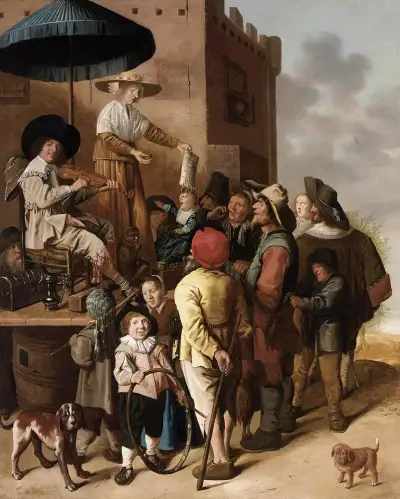
Jan Miense Molenaer, A Quack and His Assistant (1830)

3,159 words

Part 5 of 14 (Part 1 here, Part 2 here, Part 3 here, Part 4 here, Part 6 here)

Setting the Stage

Socrates’ conversation with Polus deals with three important philosophical issues.

First, Socrates explains the true nature of rhetoric, which requires that he contrast it with philosophy. This discussion requires several important distinctions: soul vs. body, art vs. quackery, edification vs. corruption, and friendship vs. flattery.

Second, Socrates explains the true nature of freedom. Freedom is not doing what you think you want. It is doing what you really want, which is to lead a good life. This generates a powerful argument against liberalism and for paternalism.

Third, Socrates makes a very powerful argument that, if forced to choose one or the other, it is better to suffer wrong than to do it. This is connected to a theory of punishment as rehabilitative, as basically medicine for the soul.

We should also be attentive to two themes running through this discussion, and the whole dialogue.

The first theme is power politics.

Gorgias claims that rhetoric secures the greatest of human goods: freedom for oneself and power over others. Rhetoric is the master art that encompasses and subordinates all other arts and the whole of society. Thus rhetoric is the art of taking and keeping comprehensive political power. As we shall see, Polus argues that orators and tyrants have the same power, the greatest power, which allows them to kill or exile their enemies and expropriate their property. When we get to Callicles, he basically argues that might makes right and defends tyranny as the best life.

So, all of Socrates’ interlocutors believe in power politics to one extent or another. Gorgias believes that power needs to be justly governed, but Polus and Callicles chafe against such structures. Thus throughout the Gorgias, Socrates is trying to argue the case of right against might. This is the true polemos of the dialogue. What separates Socrates from the sophists is his conviction that morality must rule over political power.

The second theme is shame.

Polus is a rude and disagreeable man. He interrupts conversations with his teacher Gorgias twice, and the second time he manages to hijack the conversation and hold the floor longer than Gorgias did. He begins by asking Socrates if he is really sincere about rhetoric. Then he accuses Gorgias of assenting to the idea that students of rhetoric must know justice merely out of shame: essentially, out of fear of his audience.

Polus also accuses Socrates of bad manners, in exploiting Gorgias’ natural reluctance to admit that, no, it is not his responsibility to teach his students about justice. Polus has a cynical, “We’re all men of the world here” attitude. Asking Gorgias before an audience if he cares about justice is as boorish as asking him if he’s ever been drunk. Everybody has been drunk, thus asking about it in public is to demand that everyone act the hypocrite out of politeness. Similarly, everyone cuts corners about morals, so it is just bad manners to ask everyone to pay lip service to justice. But Polus is proud to be shameless enough to declare the truth: rhetoric is a value-neutral art.

Was Gorgias genuinely and sincerely concerned with justice, or did he merely want to seem that way, because that’s the socially appropriate and politically prudent thing to do? As we will see, for Socrates, all men are always-already concerned with justice, no matter what their motives for speaking about it. Polus, however, immediately assumes that  both Socrates and Gorgias are acting in bad faith. That’s a very cynical assumption, and gentlemen aren’t cynical.

But Polus isn’t entirely cynical. He has some sense of right and wrong. Even accusing people of arguing in bad faith assumes a standard of right conduct and a willingness to uphold it. So does accusing Socrates of bad manners.

It is noteworthy that Socrates refutes Polis based on the latter’s belief that certain actions are “fine” or “noble” (kalon) and others are “shameful” (aischron). Socrates peppers his conversation with Polus with these terms. The Greek concept of the gentleman is the kalos k’agathos, literally the noble and good man. A susceptibility to such concepts means there’s something slightly gentlemanly about Polus as well, which allows Socrates to defeat him in the end.
You can buy Greg Johnson’s The Trial of Socrates here.

Then Callicles jumps in. Callicles realizes that to defend rhetoric and tyranny, one must overthrow justice and argue that might makes right. But, as we will see, Socrates discovers that Callicles’ concept of might is not mere physical force or mere force of numbers. It is an elitist notion of what is fine or noble which makes even Callicles susceptible to feelings of shame.

Both Polus and Callicles interpret shame to be merely a “social” feeling. Shame is how society enforces conformity to mutable human conventions. Socrates, however, believes that shame is natural. If all men by nature are pursuing the good life, it stands to reason that nature would equip us with sentiments that would draw us to toward the good and away from evil.

Socrates receives Polus’ interruption and outburst in good humor, responding with the words “O finest [kalliste] Polus,” working in the superlative form of kalon at the very start. Socrates notes that Polus is younger than himself and Gorgias, but he generously allows that this may not be mere bad manners on Polus’ part. This may be a genuine opportunity for youth to school maturity. Socrates invites Polus to expose his errors so that he may correct himself.

But on one condition: that he keep his answers brief, meaning: no speechifying. Socrates also insisted on this with Gorgias. Why? To keep control. In a dialogue, he can intervene at every step in the argument to guide it to his desired conclusions. In a speech, he won’t be able to get a word in edgewise. Instead, he and his audience will be drowned in superficially impressive but ultimately empty and stultifying clichés.

Polus bristles at this condition, but Socrates tartly remarks that if Polus wishes to avail himself of Athenian freedom of speech at too great a length, Socrates will invoke his Athenian freedom to ignore him. This points to a major weakness of all forms of argument: Words alone can’t force people to listen. Moreover, if Polus claims to know what Gorgias knows, surely he can answer questions just as well as his teacher. To sweeten the deal, Socrates invites Polus to ask the first question.

Art vs. Quackery

Polus asks Socrates, “What is rhetoric?” Socrates asks if he means ‘What sort of art [techne] is rhetoric?’ Polus says yes. Socrates then claims that rhetoric is not an art at all. Citing Polus’ own book, Socrates thinks that rhetoric is a “knack.”  The Greek word is empeiria, from which we get the word “empirical.” An empeiria is a skill based on experience.

Every art has a practical dimension, because arts change reality. No art is pure theory. Even arts that consist entirely of speeches require practice. To learn rhetoric, you can’t just talk about speeches, you’ve got to make them.

But a true art is not just practice. The true master of an art has taken a step back from the practices, reflected on them, and articulated some general principles: rules of thumb as well as explanatory theories. These are logoi, which you can translate as “verbal accounts.” A true art can give a rational account of itself. A true techne is thus empeiria plus logoi.

Because true artists have logoi, they are good at teaching their arts to others. Those who have mere knacks tend to be poor teachers. The best they can do is to urge others to imitate them and practice, practice, practice.

The main reason why philosophy is not, ultimately, an art for Socrates is that philosophy can’t be taught. That’s not because philosophy lacks logoi. Philosophy isn’t a knack. Philosophy isn’t teachable because we already know it. Therefore, philosophical education for Plato is primarily a matter of articulating what we already know.

In eighteenth-century English, the word “empiric” referred to a quack doctor, a charlatan, a bumbler. Quacks practiced medicine based solely on knacks: experience refined merely by trial and error. Thus Socrates is drawing a contrast between true arts and quackery, and rhetoricians are quacks.

Socrates’ contrasts are best summed up in a table, generated by two distinctions: the body vs. the soul and true well-being versus the mere appearance of well-being, which is feeling good. Specifically, Socrates is talking about caring for the body and caring for the soul. Such care can produce true and false forms of well-being for both body and soul.


Well-Being = real health


Produced by: work (self-discipline, friendship, edification, education, building up)


Aided by:

True art (techne) = (knack + logos)


Guided by:

the good


Merely Feeling/Looking Good = apparent health


Produced by: flattery (kolakeia), pandering, stooping down, self-indulgence, corruption

Aided by: knack (empeiria = skill without logos) + guesswork, schmoozing, puffery, bravado


Guided by:

The pleasurable

Care of the Body  

Health Production & Restoration

(produces physical well-being)

1.       gymnastics (health production = diet, exercise, healthy living)

2.       medicine (restores good health, purges bad health)


Counterfeit Health

(produces the appearance of physical well-being)

1.       cosmetics (creates the appearance of good health)

2.       confectionary (creates the feeling of good health while creating bad health)


 Care of the Soul  

Politics

(produces spiritual well-being)

1.       legislation (builds up  spiritual health)

2.       justice (punishment, purges spiritual sickness)


Counterfeit Politics

(produces spiritual corruption)

1.       sophistry (in legislatures, produces unjust legislation)

2.       oratory (in law courts, produces unjust punishments)

Why is well-being different from merely feeling good? Because sometimes pains are good for us, and pleasures are bad. It is always easier to take children to the candy store than the dentist, because candy tastes good, and dentistry feels bad. But dentistry is good for our physical well-being, and candy is bad.

Let’s begin with the first column, well-being, both of body and soul. Well-being basically means genuine physical and mental health. For Socrates, we all naturally seek well-being. But we don’t always achieve it, for several reasons. First, well-being requires external conditions that aren’t always available. Second, well-being requires efforts that don’t always work. Third, well-being requires knowledge that isn’t always available. Fourth, well-being has counterfeits that are often highly tempting, even addictive.

Counterfeit well-being brings us to the second column. When you have genuine well-being, you feel good and look good. Well-being is the cause. Feeling and looking good are the effects. Thus it is natural to try to reverse the causal relationship: by looking and feeling good, we hope to achieve well-being. But it doesn’t always work that way.

First, any good thing in excess becomes bad. Second, some pleasures are so destructive that they can’t be enjoyed even in moderation. For instance, highly addictive drugs and behaviors destroy your ability to moderate them. Third, merely looking good can secure some of the external rewards of well-being, but this simply makes one less likely to achieve actual well-being.

Well-being is produced by work, specifically edifying work — work that builds up both body and soul. These include a good diet, exercise, and education, both of character and mind. All of these require self-discipline, principally the virtue of moderation, as well as a willingness to defer gratification to the future and a refusal to settle for counterfeits and shortcuts. Edification is impossible, however, if one feels one is “good enough.” Thus to raise people up, we need to put them down, i.e., to purge them of smugness, complacency, and laziness. This often requires some tough talk, which is why friendship is one of the things that produces well-being. True friends tell you what you need to know to live well, regardless of whether you want to hear it. Socrates also adds that producing well-being is aided by genuine arts. But to be successful, the whole process must be guided by an understanding of the good, namely the well-being we are all pursuing.
You can buy Collin Cleary’s What is a Rune? here

Merely apparent well-being is appealing, because it requires less work, less self-discipline, less delayed gratification, and less discernment. The purveyors of fake well-being don’t try to break down your laziness and complacency to build you up. Instead, they flatter you by saying you are good enough the way you are.

Socrates uses the Greek word kolakeia here, which can be translated as “flattery.” A better translation might be “pandering.” Pandering caters to, exploits, and confirms people in ignorance and vice. It is the opposite of edification. Pandering offers shortcuts and easy solutions.

Pandering is the realm of quacks who have some genuine skills but paper over their weak points with bold guesswork and fraudulent fast talk. Because quacks produce apparent rather than real well-being, they are highly attuned to people’s psychology and opinions, which they manipulate. They are consummate puffers, flatterers, and schmoozers. But of course they will resort to bullying and gaslighting when cornered.

Just as edification is guided by the good, corruption is guided by a fake good: pleasure.

Let’s look more carefully at the care and corruption of the body.

The care of the body involves both the production and the restoration of health. Socrates calls the production of health “gymnastic,” which refers broadly to any health regimen, principally exercise and diet. Socrates calls the restoration of health “medicine.”

The fake care of the body also has two modes: production and restoration. Socrates calls the production of the appearance of health “cosmetics,” which would include every means of faking youth, health, and beauty: makeup, hair coloring, sun tanning, even plastic surgery.

Socrates calls the fake restoration of health/removal of illness “confectionery,” which basically means anything that makes you feel good while ruining your health, whether it be food, drink, or drugs. On this account, Dr. Feelgood prescribing uppers and downers would be a confectioner as well.

Now let’s turn to the care and corruption of the soul. In the Gorgias,  Socrates assigns the care of the soul not to philosophy, but to politics. Statecraft is soulcraft. As with the care of the body, the care of the soul has two modes: the production of health and the removal of disease.

Socrates calls the production of spiritual health “legislation,” literally laying down the law. The word for “law” here is nomos, which has a wider meaning than mere statutory law. It encompasses all social norms. Laying down the law basically means upholding standards and creating institutions and practices that morally and intellectually edify the people. Socrates calls the removal of spiritual sickness “justice.” As he explains later to Polus, Socrates sees punishment as spiritual medicine, as opposed to retribution or deterrence.

The fake care of the soul is counterfeit politics. It, too, has two modes: imparting fake health and removing the appearance of illness. Socrates calls counterfeit legislation “sophistry,” which is somewhat confusing, because it does not necessarily require the services of the sophists. I am sure that Socrates is primarily thinking of the role of sophistry in the rise to power of men who look good but act bad. But if real legislation produces spiritual health for the city as a whole, then sophistry as fake legislation would produce fake spiritual health for the city as whole. Some examples of this would be economic prosperity, military power, and impressive buildings and monuments — basically, everything that characterized Athens at its peak.

Socrates calls the false version of punishment “oratory,” which is again confusing, since it need not involve the use of oratory. The primary example Socrates is thinking of is the use of oratory in the courts to produce unjust outcomes. Think, for example, of Gorgias’ show speech, the Encomium of Helen, which argues that Helen of Troy is not responsible for her actions. The same arguments, of course, were used to exculpate any criminal. Fake justice can include false and ineffective forms of punishment. Furthermore, oratory could encompass the whole realm of propaganda, including the art of “spin-doctoring.” Moreover, the flip side of false exculpation is also false blame, which is a staple of political corruption as well.

Once we lay out this scheme, we can generate a set of wonderful analogies:

  1. Cosmetics is to gymnastics as confectionery is to medicine.
  2. Sophistry is to legislation as oratory is to justice.
  3. Confectionery is to medicine as oratory is to justice.
  4. Cosmetics is to gymnastics as sophistry is to legislation.

We can also generate some pithy metaphors:

  1. Legislation is the gymnastics of the soul.
  2. Gymnastics is the legislation of the body.
  3. Medicine is the justice of the body.
  4. Justice is the medicine of the soul.
  5. Confectionery is the oratory of the body.
  6. Oratory is the confectionery of the soul.
  7. Cosmetics is the sophistry of the body.
  8. Sophistry is the cosmetics of the soul.

The proper care of both the body and the soul is guided by knowledge of the good. This means, ultimately, that the soul rules itself and the body. Flattery in the care of both the body and the soul is guided by pleasure, which means rule by desire. This, Socrates argues, can only lead to chaos:

. . . if the body presided over itself, and were not under the guidance of the soul, and the soul did not discern and discriminate between confectionery and medicine, but the body was made the judge of them, and the rule of judgment was the bodily pleasure each produces, then the word of Anaxagoras—that word with which you, friend Polus, are so well acquainted—would prevail far and wide: “Chaos” would come again, and cookery, health, and medicine would mingle in an indiscriminate mass.

It is noteworthy that in the Gorgias, Socrates operates simply with a distinction between the soul and the body, whereas in the Republic, he makes a distinction between the body and three parts of the soul, from highest to lowest: reason, thumos, and desire. Thus, in terms of the Republic, the proper care of body and soul, since it is guided by knowledge of the good, would be the rule of reason over both body and the lower parts of the soul. Whereas flattery, because it caters to desire, is the rule of desire, which is the lowest part of the soul, over the body and the higher parts of the soul.

This is a very long answer to the short question “What kind of art is rhetoric?” The answer is: rhetoric is not the master art, as Gorgias claimed. The true master art is politics, which, because it encompasses all things and thus all human affairs and looks to the good, is identical with philosophy. Furthermore, rhetoric isn’t even an art at all. It is quackery. It is, moreover, quackery of the most dangerous kind, because it corrupts all of society from the top down, promoting every false standard of health and impeding every attempt to remove sickness and vice, thereby ruining the souls of all the citizens.

Notes on Plato’s Gorgias, Part 5 Rhetoric as Quackery

Notes%20on%20Platoand%238217%3Bs%20Gorgias%2C%20Part%205%0ARhetoric%20as%20Quackery%0A

Share

  • Gab

Enjoyed this article?

Be the first to leave a tip in the jar!

Instant Echeck GreenPay™

*  *  *

Counter-Currents has extended special privileges to those who donate at least $10/month or $120/year.

  1. Donors will have immediate access to all Counter-Currents posts. Everyone else will find that one post a day, five posts a week will be behind a “paywall” and will be available to the general public after 30 days. Naturally, we do not grant permission to other websites to repost paywall content before 30 days have passed.
  2. Paywall member comments will appear immediately instead of waiting in a moderation queue. (People who abuse this privilege will lose it.)
  3. Paywall members have the option of editing their comments.
  4. Paywall members get an Badge badge on their comments.
  5. Paywall members can “like” comments.
  6. Paywall members can “commission” a yearly article from Counter-Currents. Just send a question that you’d like to have discussed to [email protected]. (Obviously, the topics must be suitable to Counter-Currents and its broader project, as well as the interests and expertise of our writers.)

To get full access to all content behind the paywall, please visit our redesigned Paywall page. 

Related

  • Heidegger on Nietzsche Part Three

  • The Inferiority Behind Immigrant Superiority

  • Counter-Currents Radio Podcast No. 690

  • Fugue of Ideas: Ibram X. Kendi’s Chain of Ideas

  • Who’s Looking Back?

  • The Robot Hotdog Stand

  • José Pedro Zúquete’s The Identitarians

  • Counter-Currents Radio Podcast No. 689

Tags

CalliclesempeiriafreedomGorgiasGreek philosophyGreg Johnsonjusticelogoilogosmight makes rightmight vs. rightmoralityoratorypanderingphilosophyPlatoPoluspower politicsrhetoricshameSocratessophistrysophiststeachingtechnethe bodythe body vs. the soulthe good lifethe Sophistswell-beingwork

1 comment

  1. Muhammad Aryan says:
    July 28, 2024 at 9:31 am

    “Words are in your control until you have not uttered them; but when you have spoken them out you are under their control.

    Therefore, guard your tongue as you guard your gold and silver, for often one expression snatches away a blessing and invites punishment.”


    “The tongue is a beast; if it is let loose, it devours.”


    Imam Ali ibn Abi Talib (Peace and Blessings of Allah Almighty be upon him)

    0
    0
    Reply

If you have a Subscriber access,
simply login first to see your comment auto-approved.

Post a comment Cancel reply

Note on comments privacy & moderation

Your email is never published nor shared.

Comments are moderated. If you don't see your comment, please be patient. If approved, it will appear here soon. Do not post your comment a second time.

Writers of May

(2 votes) Morris van de Camp David M. Zsutty Derek Stark Jayant Bhandari Greg Johnson

Articles of May

The Lunch Wars by David M. Zsutty Heidegger on Nietzsche, Part One by Collin Cleary 2 votes
    • Editor’s Update
      Rob Rundo on Counter-Currents Radio, Fundraiser Update, & a New $20,000 Matching Grant

      Greg Johnson

    • The Bitter End of Western Metaphysics:
      Heidegger on Nietzsche, Part Three

      Collin Cleary

      10

    • Uncivil War

      Mark Gullick

      32

    • Exclusive Interview with Karel Veliky:
      The Final Chapter in the Film Series! Part II

      Ondrej Mann

      2

    • Happy Birthday to Us!

      Greg Johnson

      6

    • Zsutty’s Maximum

      David M. Zsutty

      15

    • Exclusive Interview with Karel Veliky:
      The Final Chapter in the Film Series! Part I

      Ondrej Mann

      2

    • The Union Jackal, June 2026

      Mark Gullick

      23

    • The Inferiority Behind Immigrant Superiority

      Jayant Bhandari

      15

    • Counter-Currents Radio Podcast No. 690
      Greg Johnson & David Zsutty Discuss Current Things: AI, Henry Nowak, the Iran Crisis, & More

      Counter-Currents Radio

      5

    • Collin Cleary: What Rome Means to Me

      Collin Cleary

      4

    • Paul Krugman: Closet Bolshevik

      Spencer J. Quinn

      19

    • Fugue of Ideas:
      Ibram X. Kendi’s Chain of Ideas

      Greg Johnson

      18

    • Based Blacks

      Lipton Matthews

      16

    • Black Intellectual Fatigue

      Derek Stark

      41

    • Why White Advocates Should Avoid “Based Blacks”

      Dani Vypont

      29

    • Nietzsche & Race

      Mark Gullick

    • Editor’s Update
      Rob Rundo Rescheduled to Next Week on Counter-Currents Radio;
      Tonight Greg Johnson & David Zsutty Answer Your Questions;
      Fundraiser Update & a New $20,000 Matching Grant

      Greg Johnson

    • The Counter-Currents 2026 Fundraiser
      Lifetime Subscriber Welcome Packages Extended

      Greg Johnson

    • Nationalism This Week
      Who’s Looking Back?

      Greg Johnson

      29

    • China’s Threat to American Security:
      Food, Farmland, Foreign Control, & Energy Policy

      Lipton Matthews

      5

    • The Bitter End of Western Metaphysics:
      Heidegger on Nietzsche, Part Two

      Collin Cleary

      16

    • The Killing of Henry Nowak

      Mark Gullick

      38

    • The Crisis of Chinese Technology Thieves

      Morris van de Camp

      1

    • The Strange World of Gender Bender Fiction:
      & What This Genre Tells Us About Autosexuality

      Dani Vypont

      3

    • Watching the Watchers:
      The Dark Triad Question

      David M. Zsutty

      14

    • The Remigration Movement Solidifies

      F. Roger Devlin

      1

    • Casting Aspersions:
      The Fatal Consequences of Race-Swapped Casting, From Helen of Troy to Henry of Southampton

      Steven Tucker

      20

    • The Murder of Henry Nowak

      Millennial Woes

      23

    • Don’t Forget to Vote in Our Writer & Article of the Month Poll

      Greg Johnson

    • The Robot Hotdog Stand

      Greg Johnson

      37

    • Laughing Our Way to Victory

      Dave Chambers

      7

    • The Zodiac Killer

      Mark Gullick

      11

    • Jared Taylor: What Rome Means to Me

      Jared Taylor

      1

    • An Interview with Endeavour:
      My Way of Life Is an Adventure!

      Ondrej Mann

      6

    • José Pedro Zúquete’s The Identitarians

      Greg Johnson

      3

    • Editor’s Update
      Fundraiser Update & How to Watch the Remigration Summit

      Greg Johnson

      5

    • The Bitter End of Western Metaphysics:
      Heidegger on Nietzsche, Part One

      Collin Cleary

      12

    • Berlin: City of Stones

      Spencer J. Quinn

      6

    • True Folk-Horror Is Horror of Your Own Folk:
      Mark Gatiss vs the Brexit Blind Dead  

      Steven Tucker

      4

    • Counter-Currents Radio Podcast No. 689
      Thomas Massie, the America 2050 Bust, the Need for Whites to Divest from America, the AI Economic Apocalypse, & Pro-White Project Pitches to Billionaires

      Counter-Currents Radio

      7

    • Nationalism This Week
      Remigration is Inevitable, Part 3

      Greg Johnson

      27

    • Why Billionaires Should Fund White Identity Politics

      Lipton Matthews

      8

    • How Cold War Two Came About

      Morris van de Camp

      5

    • Now Available for Pre-Order at a Special Price!
      Greg Johnson’s The Philosopher Is In

      Greg Johnson

    • David Zsutty’s Elevator Pitch to a Billionaire

      David M. Zsutty

      1

    • Headbanging Lite

      Mark Gullick

      5

    • White Advocacy Past and Present

      Peter Bradley

      13

    • The Lunch Wars

      David M. Zsutty

      47

    • The Russians are Coming/The Russians are Coming

      Steven Clark

      1

    • Uncle Semantic

      Based Blacks

      Watch brian shapiro if you want a real dose of Every Single Time the person. Way worse than the...

    • Uncle Semantic

      Based Blacks

      When is it supposed to begin? Can’t be a bigger freak show than this stupid ufc fight at the white...

    • Uncle Semantic

      Based Blacks

      Will, I’m curious if your racial journey to where you stand now was from the republican/con inc./...

    • Uncle Semantic

      Based Blacks

      Do you think blacks would be more palatable to the proWhite message just by reminding them that...

    • Uncle Semantic

      Black Intellectual Fatigue

      In the words of that great humanitarian Rodney King, can’t we all just get along? No, with a capital...

    • Uncle Semantic

      Black Intellectual Fatigue

      Black Dolphin Prison is a Christmas present for scum like Austin’s killer.

    • Uncle Semantic

      Black Intellectual Fatigue

      Andre Williams has been making the rounds with certain podcasters and his is a welcome new voice as...

    • Taig77

      Uncivil War

      "...the Republicans wanted Northern Ireland to be independent." will come as a great surprise to...

    • Collin Cleary

      Heidegger on Nietzsche Part Three

      I have not heard of the Beattie dissertation, or of any discussion of it. The Mansfield book is also...

    • Collin Cleary

      Heidegger on Nietzsche Part Three

      I believe in objective truth, just not the Christian claims about objective truth. Truth is what...

    • Collin Cleary

      Heidegger on Nietzsche Part Three

      Thank you very much!

    • tempus

      Why White Advocates Should Avoid “Based Blacks”

      As for lending money, that also goes for Whites. Never lend more than you are willing to make a gift...

    • tempus

      Why White Advocates Should Avoid “Based Blacks”

      The only person other than my brother to whom I have lent money who ever paid me back was a Black...

    • tempus

      Why White Advocates Should Avoid “Based Blacks”

      The Old South was nowhere near as anti-black as the Old North. Part of the Republican platform on...

    • tempus

      Black Intellectual Fatigue

      Hopefully, more Whites are ceasing to be racial nihilists and are abandoning the new morality (...

    • Jaego

      Uncivil War

      The Orthodox ideal - just like every other denomination - is people of all races worshiping together...

    • Jaego

      Uncivil War

      Isolate the police. Family or friends, no matter. Disown them. Maybe in time people will forgive...

    • Jaego

      Uncivil War

      Tikkun Olam. Repair of the World. Enabling mass immigration is a mitzvah or holy deed in the Repair...

    • I Do Not Surrender, My Hand Is Red.

      Uncivil War

      This is very good advice Joe. Very good.

    • NIdahoOrthodox

      Uncivil War

      How many tens of thousands of automatic weapons and tons of Semtex are in hidden caches in the North...

    • Earth Day Special

      John Morgan

      12

    • A Robertson Roundup
      Remembering Wilmot Robertson
      (April 16, 1915 – July 8, 2005)

      Margot Metroland

      13

    • The Paranoid Style in White Nationalism

      Greg Johnson

      30

    • Join the Dance!

      Andrew Hamilton

      1

    • We Can’t Save the Earth Without Reducing African Birth Rates

      James Dunphy

      36

    • “I’m Not a Conspiracy Theorist, but . . .”:
      Jeffrey Epstein’s Death Gives New Life to “Conspiracy Theories”

      Greg Johnson

      22

    • Sylvia Plath: Stasis in Darkness

      Vic Olvir

      17

    • Vanguardism, Vantardism, & Mainstreaming

      Greg Johnson

      80

    • Aviation, Geography, & Race

      Charles Lindbergh

      3

    • Some Thoughts on Yule

      Collin Cleary

      4

    • Living in Truth:
      A Yuletide Homily

      Jef Costello

      7

    • John Kennedy Toole’s A Confederacy of Dunces

      Greg Johnson

      20

    • On Aleksandr Solzhenitsyn’s Warning to the West

      Spencer J. Quinn

      7

    • Elitism, British Modernism, & Wyndham Lewis

      Jonathan Bowden

      6

    • Philip K. Dick’s Do Androids Dream of Electric Sheep? as Anti-Semitic/Christian-Gnostic Allegory

      Greg Johnson

      20

    • “Conspiracy Theory” or Conspiracy?

      Andrew Hamilton

      21

    • Remembering H. P. Lovecraft
      (August 20, 1890–March 15, 1937)

      Greg Johnson

      3

    • Who Are We?
      Nordics, Aryans, & Whites

      Greg Johnson

      71

    • Remembering William Gayley Simpson
      (July 23, 1892–December 31, 1990)
      A Pleasant Afternoon with Harriet & Bill Simpson

      Margot Metroland

      18

    • Here are the Young Men
      Remembering Ian Curtis
      (July 15, 1956–May 18, 1980)

      Mark Gullick

      18

    • Percy Grainger
      Artist of the Right

      Alex Graham

      7

    • Remembering Revilo Oliver
      (July 7, 1908–August 20, 1994)

      Greg Johnson

      18

    • The Meaning of July 4th for the White Man

      Gregory Hood

      13

    • The Front National’s Evolution

      Bruno Mégret

    • Merwin K. Hart
      Forgotten American Hero & Man of the Right

      Morris van de Camp

      10

    • George Orwell’s Nineteen Eighty-Four

      Jonathan Bowden

      8

    • Carleton S. Coon
      Scientist & Reluctant White Advocate

      Morris van de Camp

      3

    • The Kwanzaa Absurdity Will Be Dwarfed by Juneteenth

      Robert Hampton

      10

    • Stravinsky

      Alex Graham

      7

    • Like the Roman:
      Remembering Enoch Powell (1912-1998)

      Mark Gullick

      23

    • The 1970s: The Golden Age of Hijacking

      Morris van de Camp

      21

    • Jonathan Bowden’s Deliverance
      Part 6

      Jonathan Bowden

    • Do You Want to Play a Game?

      Mark Gullick

      1

    • Sexually Incontinent on the Indian Subcontinent:
      Who Rapes More Animals, Indians or Pakistanis? The Battle Continues!

      Steven Tucker

      3

    • Neo-Fascism in Film
      Part 5

      Karel Veliky

      15

    • The Game of Tarot

      Mark Gullick

      2

    • Institutions Cannot Be Transplanted

      Jayant Bhandari

      5

    • Jonathan Bowden’s Deliverance
      Part 5

      Jonathan Bowden

    • Crosstown Traffic:
      Jimi Hendrix & The Post-War Rock ‘N’ Roll Revolution

      Mark Gullick

      1

    • Slaves from the North:
      Finns & Karelians in the East European Slave Trade, 900–1600

      Lipton Matthews

      14

    • Neo-Fascism in Film
      Part 4

      Karel Veliky

      2

    • David Lean’s A Passage to India

      Spencer J. Quinn

      1

    • Elites are Essential to Development

      Lipton Matthews

      7

    • Jonathan Bowden’s Deliverance
      Part 4

      Jonathan Bowden

    • Neo-Fascism in Film
      Part 3

      Karel Veliky

      6

    • E. M. Forster’s A Passage to India & the Indian Mentality

      Spencer J. Quinn

      25

    • Jonathan Bowden’s Deliverance
      Part 3

      Jonathan Bowden

    • The Rest Is Silence
      Heidegger’s Quietism

      Mark Gullick

      2

    • Dispelling the Historical Fallacy of Indian Nationalism

      Lipton Matthews

      8

    • Neo-Fascism in Film
      Part 2

      Karel Veliky

      8

    • Jonathan Bowden’s Deliverance
      Part 2

      Jonathan Bowden

    • Life of a Klansman

      Mark Gullick

      8

    • Jonathan Bowden’s Deliverance, Part 1

      Jonathan Bowden

    • Decolonial Ideas are Holding Back Developing Countries

      Lipton Matthews

      8

    • Neo-fascism in Film, Part 1

      Karel Veliky

      21

    • Jonathan Bowden’s Onslaught, Part 8
      Divigations on Decadence

      Jonathan Bowden

    • Jonathan Bowden’s Onslaught, Part 7
      Intrigues in the National Front

      Jonathan Bowden

      1

    • Rotten to the Core

      Mark Gullick

      8

    • Strauss on Husserl’s “Philosophy as Rigorous Science”

      Greg Johnson

    • Jonathan Bowden’s Onslaught, Part 6
      Francis Bacon & Right-Wing Nihilism

      Jonathan Bowden

    • András László
    • Derek Hawthorne
    • Beau Albrecht
    • Alain de Benoist
    • Kerry Bolton
    • Jonathan Bowden
    • Collin Cleary
    • Jef Costello
    • Savitri Devi
    • Julius Evola
    • Jim Goad
    • Gregory Hood
    • Juleigh Howard-Hobson
    • Greg Johnson
    • Charles Krafft
    • Anthony M. Ludovici
    • Trevor Lynch
    • H. L. Mencken
    • J. A. Nicholl
    • James J. O’Meara
    • Christopher Pankhurst
    • Tito Perdue
    • Michael Polignano
    • Spencer J. Quinn
    • Fenek Solère
    • Irmin Vinson
    • Leo Yankevich
    • Francis Parker Yockey
    • Multiple authors
  • Editor-in-Chief

    • Greg Johnson, Ph.D.

    Featured Writers

    • Beau Albrecht
    • Gunnar Alfredsson
    • Collin Cleary, Ph.D.
    • Jef Costello
    • Morris V. de Camp
    • F. Roger Devlin, Ph.D.
    • Stephen Paul Foster, Ph.D.
    • Jim Goad
    • Alex Graham
    • Mark Gullick, Ph.D.
    • Greg Johnson, Ph.D.
    • Travis LeBlanc
    • Trevor Lynch
    • Margot Metroland
    • James J. O’Meara
    • Angelo Plume
    • Spencer J. Quinn
    • Fred Reed
    • Clarissa Schnabel
    • Michael Walker
    • David M. Zsutty

    Frequent Writers

    • Asier Abadroa
    • Aquilonius
    • Alain de Benoist
    • Kerry Bolton, Ph.D.
    • Dave Chambers
    • Steven Clark
    • James Dunphy
    • Endeavour
    • Richard Houck
    • Jason Kessler
    • Titus Livius
    • Ondrej Mann
    • Lipton Matthews
    • Mark Mazari
    • John Morgan
    • Jaroslav Ostrogniew
    • Kathryn S.
    • Christian Secor
    • Anne Wilson Smith
    • Thomas Steuben
    • William De Vere
    • Kenneth Vinther
    • Max West

    Classic Authors

    • Maurice Bardèche
    • Jonathan Bowden
    • Julius Evola
    • Guillaume Faye
    • Ernst Jünger
    • Kevin MacDonald, Ph.D.
    • D. H. Lawrence
    • Charles Lindbergh
    • Jack London
    • H. P. Lovecraft
    • Anthony M. Ludovici
    • Sir Oswald Mosley
    • National Vanguard
    • Friedrich Nietzsche
    • Revilo Oliver
    • William Pierce
    • Ezra Pound
    • Saint-Loup
    • Savitri Devi
    • Carl Schmitt
    • Miguel Serrano
    • Oswald Spengler
    • P. R. Stephensen
    • Jean Thiriart
    • John Tyndall
    • Dominique Venner
    • Leo Yankevich
    • Francis Parker Yockey

    Other Authors

    • Howe Abbott-Hiss
    • Michael Bell
    • Giles Corey
    • Jack Donovan
    • Richardo Duchesne, Ph.D.
    • Emile Durand
    • Guillaume Durocher
    • Mark Dyal
    • Tom Goodroch
    • Andrew Hamilton
    • Robert Hampton
    • Huntley Haverstock
    • Derek Hawthorne
    • Gregory Hood
    • Juleigh Howard-Hobson
    • Alexander Jacob
    • Ruuben Kaalep
    • Tobias Langdon
    • Julian Langness
    • Patrick Le Brun
    • G A Malvicini
    • John Michael McCloughlin
    • Millennial Woes
    • Michael O’Meara
    • Christopher Pankhurst
    • Michael Polignano
    • J. J. Przybylski
    • Quintilian
    • Edouard Rix
    • C. B. Robertson
    • C. F. Robinson
    • Herve Ryssen
    • Alan Smithee
    • Fenek Solere
    • Ann Sterzinger
    • Robert Steuckers
    • Tomislav Sunic
    • Donald Thoresen
    • Marian Van Court
    • Irmin Vinson
    • Book Reviews
    • Movie Reviews
    • TV Reviews
    • Music Reviews
    • Art Criticism
    • Graphic Novels & Comics
    • Video Game Reviews
    • Fiction
    • Poems
    • Interviews
    • Videos
    • English Translations
    • Other Languages
      • Arabic
      • Bulgarian
      • Croatian
      • Czech
      • Danish
      • Dutch
      • Estonian
      • Finnish
      • French
      • German
      • Greek
      • Hungarian
      • Italian
      • Lithuanian
      • Norwegian
      • Polish
      • Portuguese
      • Romanian
      • Russian
      • Slovak
      • Spanish
      • Swedish
      • Ukrainian
    • Commemorations
    • Why We Write
  • Archives
  • Top 100 Commenters
  • The Looney Bin
Sponsored Links
Europa.com Above Time Coffee Antelope Hill Publishing Paul Waggener IHR-Store Spencer J. Quinn American Renaissance Jim Goad The Occidental Observer
Donate Now Mailing list
Books for sale
  • The Philosopher Is In
  • Sexual Utopia in Power (Expanded Edition)
  • In Defense of Prejudice
  • Loving Our Own
  • Tyranny & Wisdom
  • The Populist Moment
  • Is America Doomed?
  • To all books
Copyright © 2026 Counter-Currents Publishing, Ltd.

Paywall Access


Please enter your email address.

Lost your password?

Edit your comment

Writer & Article of the Month May 2026

Voting for this month has concluded. Here are the final results!

Top Writers

  • #1 Morris van de Camp 2 votes
  • #2 David M. Zsutty 2 votes
  • #3 Derek Stark 2 votes
  • #4 Jayant Bhandari 2 votes
  • #5 Greg Johnson 2 votes
  • #6 Jared Taylor 1 vote
  • #7 Collin Cleary 1 vote
  • #8 Spencer J. Quinn 1 vote
  • #9 Mark Gullick 1 vote
  • #10 Lipton Matthews 1 vote
  • #11 Keith Woods 1 vote
  • #12 Steven Tucker 1 vote

Top Articles

  • #1 The Lunch Wars 2 votes
  • #2 Heidegger on Nietzsche, Part One 2 votes
  • #3 Peak Fatigue in Fort Wayne 1 vote
  • #4 Keith Wood's Elevator Pitch to a Billionaire 1 vote
  • #5 Do You Want to Play a Game? 1 vote
  • #6 Why Billionaires Should Fund White Identity Politics 1 vote
  • #7 The 1970s: The Golden Age of Hijacking 1 vote
  • #8 True Folk-Horror Is Horror of Your Own Folk 1 vote
  • #9 Finding Atlantis Part 4 1 vote
  • #10 Berlin: City of Stones 1 vote
  • #11 The Ghost of the Confederacy 1 vote
  • #12 Lothrop Stoddard’s The Revolt Against Civilization 1 vote
  • #13 Could Fascism Work? 1 vote
  • #14 Jared Taylor's Elevator Pitch to a Billionaire 1 vote
  • #15 Predation Wearing the Mask of Civilization 1 vote

Total votes cast: 17

Insert/edit link

Enter the destination URL

Or link to existing content

    No search term specified. Showing recent items. Search or use up and down arrow keys to select an item.