The 1957 courtroom drama 12 Angry Men is widely considered to be one of the best films ever made. The movie’s premise is that an 18-year-old boy is on trial in New York City for first-degree murder in the stabbing death of his father. (more…)
Tag: justice
-
Part 10 of 14 (Part 1 here, Part 2 here, Part 3 here, Part 4 here, Part 5 here, Part 6 here, Part 7 here, Part 8 here, Part 9 here, Part 11 here)
Having established that it is better to suffer injustice than to do it, and better to be punished for one’s crimes than get away with them, Socrates returns to the question of rhetoric. (more…)
-
1,871 words
Part 9 of 14 (Part 1 here, Part 2 here, Part 3 here, Part 4 here, Part 5 here, Part 6 here, Part 7 here, Part 8 here, Part 10 here)
There is a deeper problem with Plato’s account of justice in the Gorgias. He treats it as an art (techne). But is justice really an art like medicine? In such dialogues as the Laches, Charmides, and Euthydemus, Plato explores the problems of treating moral wisdom as a techne. This is the error of the sophists. (more…)
-

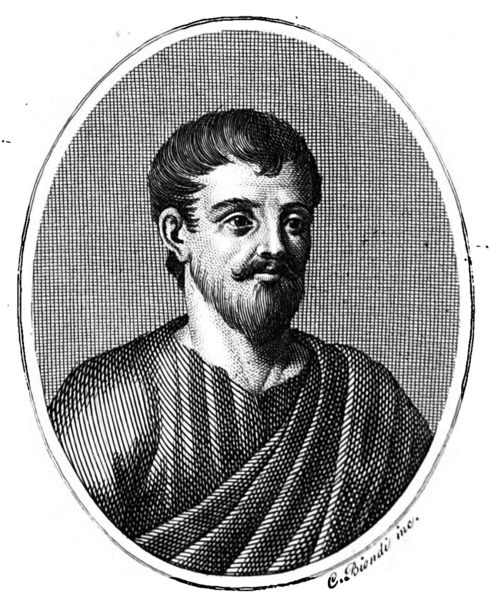
Harmen Jansz Muller, Chilon Philosophus Spartanus (1596) (Image courtesy of Wikimedia Commons)

Harmen Jansz Muller, Chilon Philosophus Spartanus (1596) (Image courtesy of Wikimedia Commons)
2,168 words
Part 8 of 14 (Part 1 here, Part 2 here, Part 3 here, Part 4 here, Part 5 here, Part 6 here, Part 7 here, Part 9 here)
Polus Refuted
Polus believes that it is better do injustice than to suffer it. Socrates claims that it is better to suffer injustice than to do it, and he offers to refute Polus by questioning him. Polus agrees. But before Socrates begins his refutation, he establishes that Polus believes the following claims: (more…)
-

A contemporary coin depicting Archelaus, King of Macedonia. (Image source: Wikipedia)

A contemporary coin depicting Archelaus, King of Macedonia. (Image source: Wikipedia)
2,094 words
Part 7 of 14 (Part 1 here, Part 2 here, Part 3 here, Part 4 here, Part 5 here, Part 6 here)
Doing Injustice vs. Suffering It
Polus grudgingly accepts Socrates’ argument that tyrants and demagogues don’t enjoy real power, since real power is the ability to attain well-being. Yet Polus doesn’t really believe it. (more…)
-
3,159 words
Part 5 of 14 (Part 1 here, Part 2 here, Part 3 here, Part 4 here, Part 6 here)
Setting the Stage
Socrates’ conversation with Polus deals with three important philosophical issues.
First, Socrates explains the true nature of rhetoric, which requires that he contrast it with philosophy. This discussion requires several important distinctions: soul vs. body, art vs. quackery, edification vs. corruption, and friendship vs. flattery. (more…)
-
June 17, 2024 Greg Johnson
Notes on Plato’s Gorgias, Part 4
The Master Art1,878 words
Part 4 of 14 (Part 1 here, Part 2 here, Part 3 here, Part 5 here)
Ethics as an Afterthought (456d–457c)
Is Socrates right that sophistry is essentially amoral and technocratic? After all, the sophists were widely seen as not just teachers of rhetoric but also as teachers of morals. However, as we shall see, both Polus and Callicles strongly embrace the amoral and technocratic idea of sophistry. Moreover, in the Meno—which is set in 402 BCE, after the Peloponnesian War and the latest possible date of the Gorgias—Meno tells Socrates: “I admire this most in Gorgias, Socrates, that you would never hear him promising this [to teach virtue]. Indeed, he ridicules the others [other sophists] when he hears them making this claim. He thinks one [the sophists] should [only] make people better speakers” (95c).[1] (more…)

-
5,755 words
Part 6 of 7 (Part 1 here, Part 2 here, Part 3 here, Part 4 here, Part 5 here, Part 7 here)
The final part of the Alcibiades I deals with the self and self-knowledge. Most ancient commentators held that this discussion is the core of the dialogue.
From Self-Cultivation to Self-Knowledge
Socrates has finally gotten Alcibiades to admit that he needs to pursue self-cultivation. But what is self-cultivation? We must answer that question lest we mistakenly cultivate something other than ourselves. (more…)
-

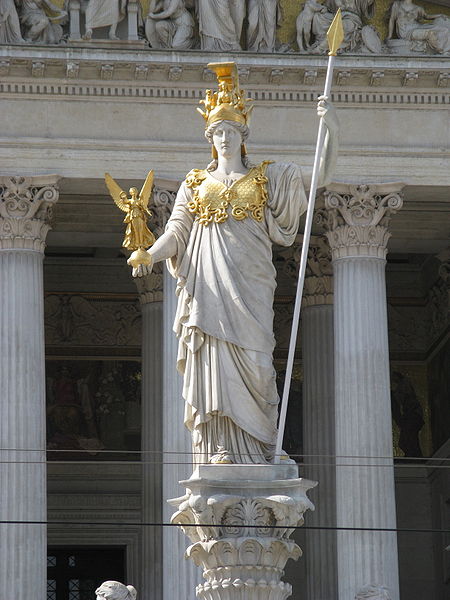
Condordia on the Jubilee Column in Stuttgart (Photo courtesy of Wikimedia Commons)

Condordia on the Jubilee Column in Stuttgart (Photo courtesy of Wikimedia Commons)
1,901 words
Part 5 of 7 (Part 1 here, Part 2 here, Part 3 here, Part 4 here, Part 6 here)
In our previous installment, we examined the speech Socrates made to break Alcibiades out of his complacency and spur him to educate and cultivate himself if he wishes to attain world renown.
Back to Dialogue
To borrow a term from classical music, the Alcibiades I has a “sonata” form: ABA. The first part (A1) consists of Socrates’ initial dialogue with Alcibiades. Part B is the speech about the Persian and Spartan queens. The third part (A2) is a return to the dialogue form. Socrates and Alcibiades first return to the idea of justice. Then they discuss self-knowledge. (more…)
-
Part 3 of 7 (Part 1 here, Part 2 here, Part 4 here)
Alcibiades admits that he doesn’t know what justice is. But he thinks he’s found a way around Socrates’ objection, since politics doesn’t really deal with justice (dike). Instead, it deals with the expedient or advantageous (sympheronta). The just and the expedient are different things, since one can benefit from unjust acts and be harmed by just acts.
Socrates suggests the example of a man who suffers injury or death by risking his life to save his kinsmen or countryman in battle. This is a just and courageous act, even though one is harmed by it. Conversely, if one avoids injury or death by being cowardly, one is benefitted by injustice. Therefore, the just and the advantageous are different things. (more…)
-
Part 2 of 7 (Part 1 here, Part 3 here)
In the first part of this series, Socrates accuses Alcibiades of wanting to be a tyrant and argues that if he wishes to fulfill this ambition, he must study philosophy. Alcibiades won’t admit that he aspires to be a tyrant, but “if” he did, he wants to know what Socrates would teach him.
The Question of Justice
-
Part 2 of 3 (Introduction Part I here, Introduction Part III here)
Translated by F. Roger Devlin
Now, for liberalism, man — far from being constituted as such by his bonds with others — must be thought of as an individual unbound by any constitutive form of belonging; i.e., outside any cultural or socio-historical context. (more…)
-
July 6, 2023 Counter-Currents Radio
Counter-Currents Radio Podcast No. 539
Greg Johnson on Plato’s Gorgias,
Lecture 2Greg Johnson is teaching a five-week course on Plato’s Gorgias on Counter-Currents Radio, which will continue on three Saturdays later this month (July 15, 22, and 29). The second lecture, which dealt with Socrates’ discussion with Polus from 461b to 481b, can be heard below. A visual aid that accompanies the lecture is here.
The theme of the course is “Might vs. Right.” Dr. Johnson is using Donald J. Zeyl’s translation of the Gorgias published by Hackett as both a separate book and as part of their Plato Complete Works volume. (more…)