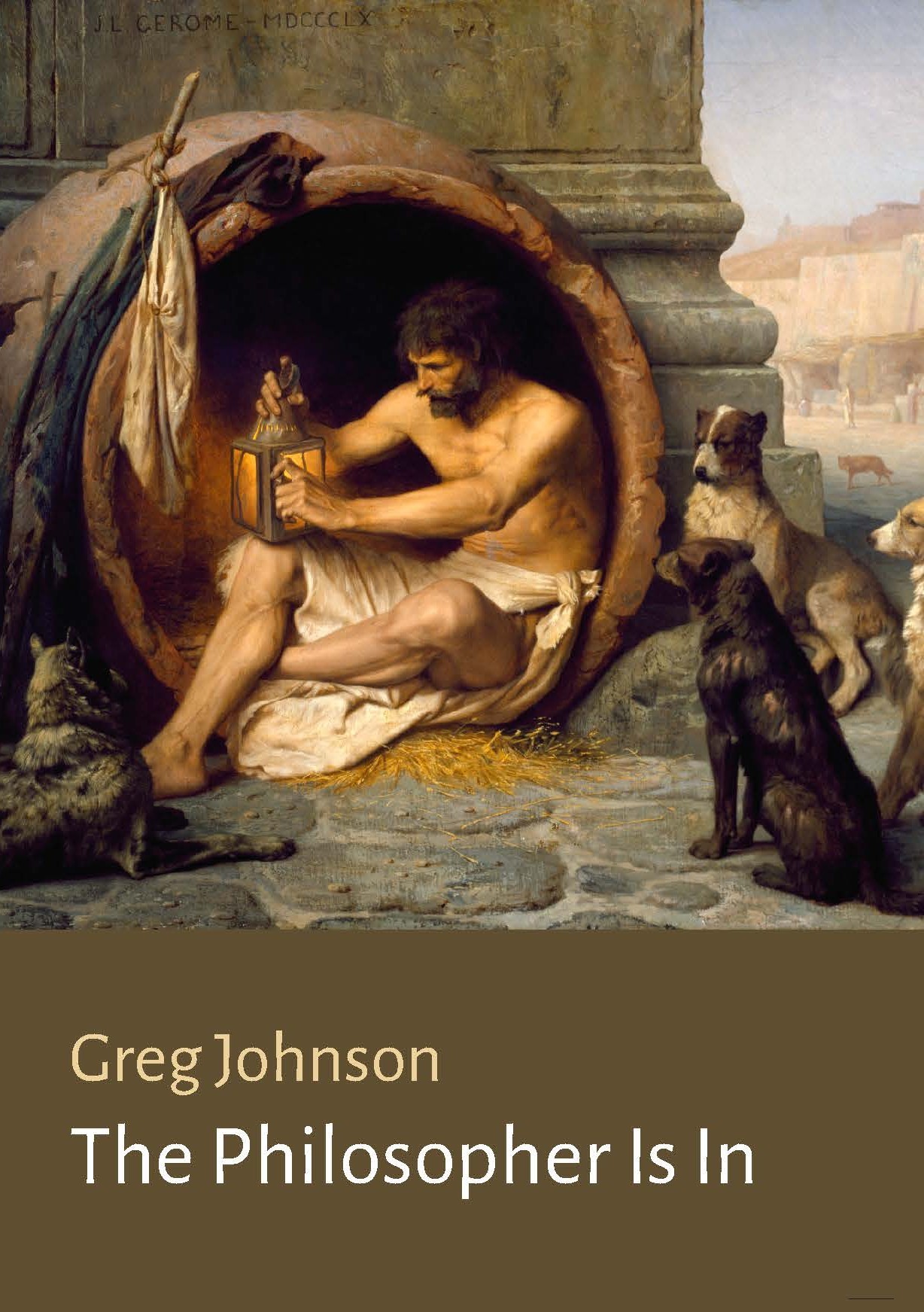
Greg Johnson
The Philosopher Is In
San Francisco: Counter-Currents, 2026
Release Date: June 20, 2026. Special pre-order price until then.
What is philosophy? Why should you study it? How can simple arguments shatter and remake your life? (more…)
Greg Johnson
The Philosopher Is In
San Francisco: Counter-Currents, 2026
Release Date: June 20, 2026. Special pre-order price until then.
What is philosophy? Why should you study it? How can simple arguments shatter and remake your life? (more…)
Eric read Ayn Rand’s Atlas Shrugged at the age of sixteen and decided that Rand was right. So he resolved to live his life by the ethics of rational self-interest. This meant that he only did things that served his self.
From that point forward, Eric cut a straight line through life. He knew what he wanted. He chose a career that felt right for him. He only studied things that advanced his goals. He only listened to music, read books, and watched movies that suited him. He associated with people who made him feel good about himself and avoided people who made him feel bad about himself. (more…)
2,729 words
Part 2 of 2, Part 1 here
Aristotle’s Defense of the Theoretical Life
Some people study mathematics, astronomy, etc. as ends in themselves, purely out of wonder or curiosity. One cannot defend such theoretical work by pointing out that it may still be useful for other aims, even if only by accident. This is to defend theory by claiming that it is really practical. To be a means to an end—even a remote, indirect, and accidental means to an end—is to be practical. This sort of defense still implies that one cannot justify theoretical pursuits that never lead, even accidentally, to practical applications. Thus, one can only justify theory as pure theory: the pursuit of knowledge (1) as an end in itself, and (2) regardless of practical consequences. To defend theory, one must defend it as “useless.” (more…)
3,077 words
Part 1 of 2
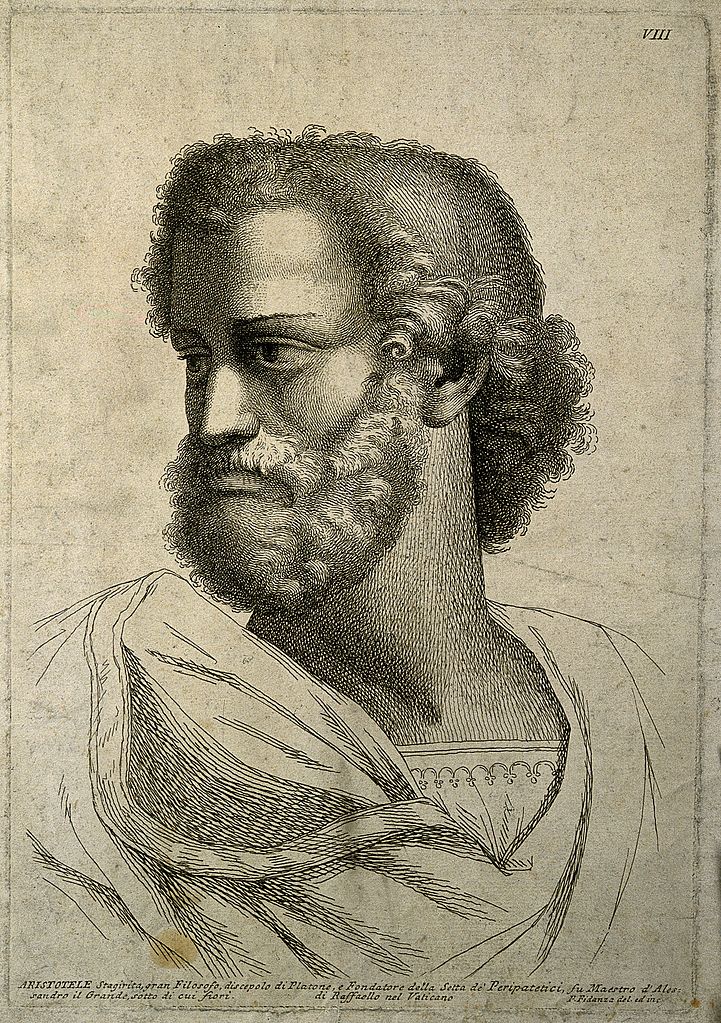
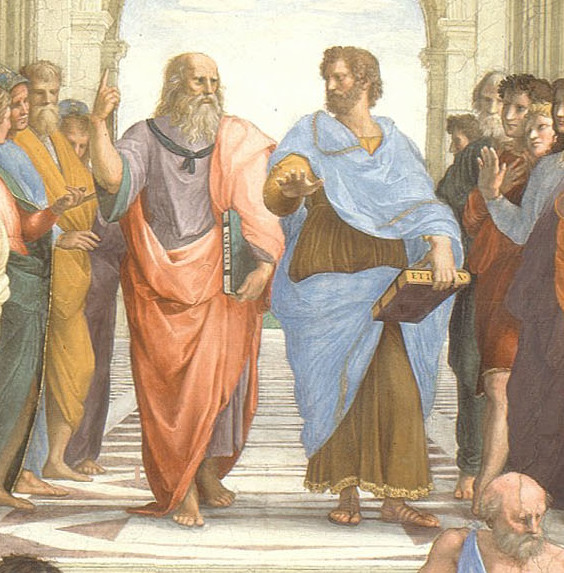
Plato and Aristotle are the twin peaks of Ancient Greek philosophy. Aristotle was Plato’s student. But in one way, Aristotle seems to backslide from Plato. Plato was interested in theoretical topics like mathematics and the philosophy of nature. But following Socrates, his conception of wisdom was primarily moral and practical. Aristotle, however, defends the superiority of the purely contemplative life over the practical life. This seems to be a return to pre-Socratic, theory-centered philosophy.
The earliest Greek philosophers were primarily interested in nature and were unconcerned with practical matters. This is nicely encapsulated by the story about Thales, the very first Greek philosopher, who was so fascinated with the heavens that he did not notice a well at his feet and thus fell into it. (more…)

You can order Greg Johnson’s Tyranny and Wisdom here.

You can order Greg Johnson’s Tyranny and Wisdom here.
2,627 words
Philosophy is the most important thing you will ever study, but it is easy to get bogged down in asides about the meanings of words. Thus it is helpful to get the basic terminology out of the way first.
It’s All Greek to Us
The European philosophical tradition began in Ancient Greece. Thus we will have to use a few Greek words to explain it. But don’t be intimidated. Since many English words have Greek roots, you have been speaking Greek all along without knowing it. (more…)
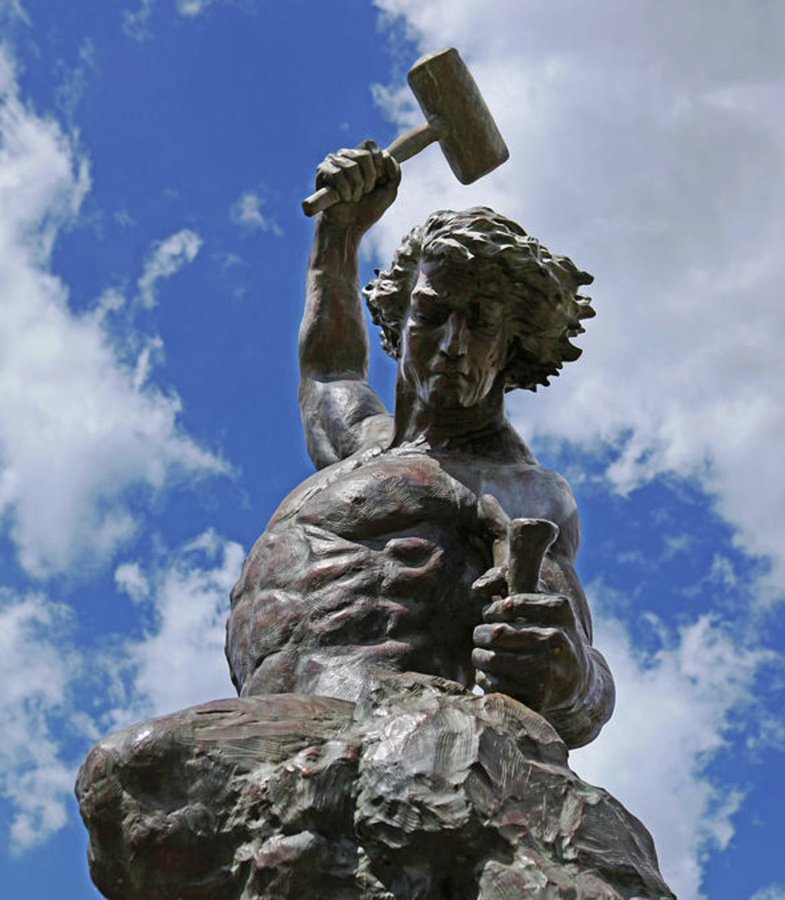
Mark Twain reportedly said, “‘Be yourself’ is the worst advice you can give some people.” The problem with Twain’s assertion is that, if you don’t tell people to “be themselves,” who else can they be? You don’t really have a choice. You can’t be somebody else. So, like it or not, we are doomed to be ourselves.
In ethics and psychology, another term for “being yourself” or “becoming yourself” is self-actualization, also called self-realization. For many, self-actualization is the definition of happiness. Thus they define the pursuit of happiness as self-actualization, becoming who you are. (more…)
2,865 words
In Plato’s Gorgias, Socrates does battle with the art (techne) of rhetoric, which in democratic Athens touted itself as the key to political power. We have a word for rule by techne: technocracy. Socrates regarded technocracy as a dangerous counterfeit of philosophy.
In Plato’s Charmides, Socrates deals with another counterfeit of philosophy, which I shall call “epistemology,” meaning the theoretical study of knowledge. Like philosophy, epistemology is comprehensive. It is knowledge of all forms and branches of knowledge, which correlate to pretty much the whole world. (more…)
2,083 words
In Plato’s Euthydemus, Socrates argues for the paramount importance of philosophy because philosophy is the pursuit of wisdom, and wisdom is the most reliable way to attain happiness, which all men are pursuing. Happiness requires many goods, but they won’t be good for us, unless we use them wisely. In fact, wisdom is so important for happiness that foolish people are better off having fewer goods, because these just provide them the means to harm themselves. A simple example of this is giving money to a drunk or a drug addict. They are better off poor. (more…)

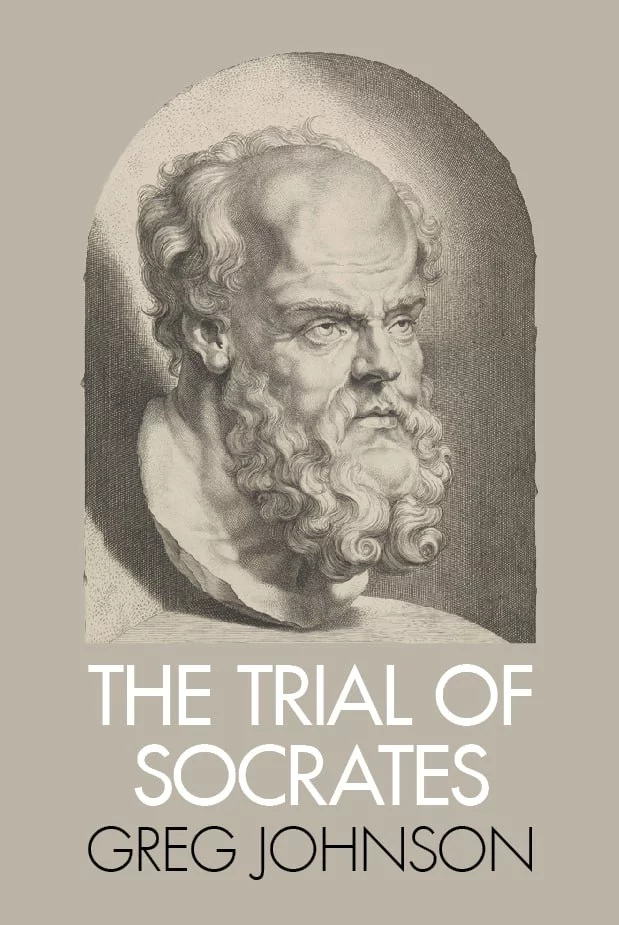
You can buy Greg Johnson’s The Trial of Socrates here.

You can buy Greg Johnson’s The Trial of Socrates here.
1,975 words
In my essay “The Most Important Thing in the World,” I presented Plato’s argument in the Euthydemus for the importance of philosophy. All men are pursuing happiness. To do so, we try to secure certain goods. Something is good if it contributes to your happiness. Socrates names a number of goods: wealth, health, good looks, the things that the body needs, noble lineage, power, honor among one’s countrymen, moderation, justice, courage, wisdom, and good fortune.
One of the Euthydemus’ most important distinctions is between two kinds of goods: conditional and unconditional. (more…)
1,732 words
Sometimes the most momentous truths can be established with the simplest arguments. A good example is Plato’s argument in his little-known dialogue Euthydemus for why philosophy (the pursuit of wisdom) is more important than any other pursuit. I found this argument completely convincing. It shattered and remade how I lead my life, and I used it to similarly shattering effect for years in Introduction to Philosophy courses. (more…)
In Greece in the fourth and fifth centuries BCE, the sophists were highly-prized teachers of the art or craft (techne) of rhetoric. (The Greek word techne is the root of our words technique and technology.)
Socrates was widely seen as a sophist, for instance in Aristophanes’ Clouds. To a naïve bystander, Socrates certainly looked like a sophist. Like the sophists, Socrates spent a great deal of time arguing about ideas. Moreover, Socrates was seen arguing with known sophists, including the greatest sophists of them all, Gorgias and Protagoras, as depicted in the Platonic dialogues which bear their names. But if one looks at Socrates’ actual arguments with sophists, it becomes clear that he was fundamentally opposed to sophistry. (more…)
1,151 words
During a livestream on July 2, 2022, I was asked what advice I would give to people who are contemplating suicide. Hyacinth Bouquet transcribed my answer, which I have edited. I want to thank her and the original questioner. (more…)