Nothing destroys a good idea so efficiently as success—not so much the success of the idea itself as much as the success of those, politicians mostly, who claim to be implementing it. This is why in Russia advocating privatization is more likely to get you punched in the face than listened to, (more…)

Tag: Patrick Buchanan
-
March 7, 2024 Greg Johnson
Nueva Derecha vs. Vieja Derecha
Capítulo 28: Competición por Estatus, Judíos y Convencionalización RacialistaEnglish original here
Capítulo 1 aquí, Capítulo 27 aquí, Capítulo 29 aquí
Este artículo fue escrito en diciembre de 2009 en respuesta a un ataque contra Patrick Buchanan por Alex Linder, de Vanguard News Network. Lo reedito aquí, esencialmente inalterado, porque hay algunos puntos que vale la pena considerar. (more…)
-
Patrick J. Buchanan
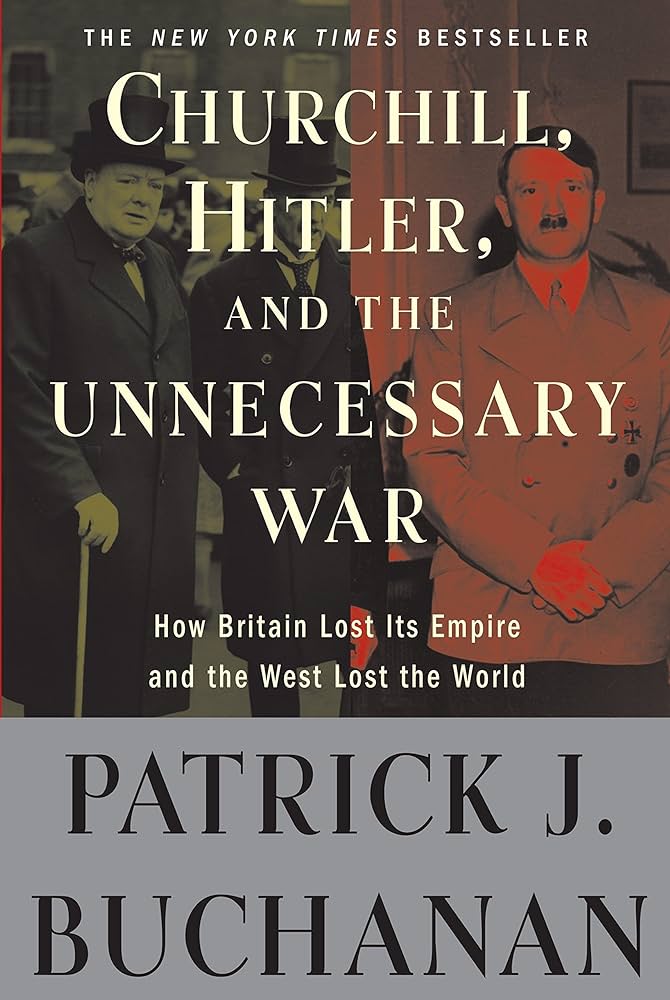
Churchill, Hitler, and the Unnecessary War: How Britain Lost Its Empire and the West Lost the World
New York: Random House, 2008See also: “The Collapse of British Power,” “The Audit of War,” “The Lost Victory,” “The Verdict of Peace,” “The Forced War,” “America First,” “Colonel McCormick,” & “Wind Down the Empire of Nothing” (more…)
-
Patrick J. Buchanan
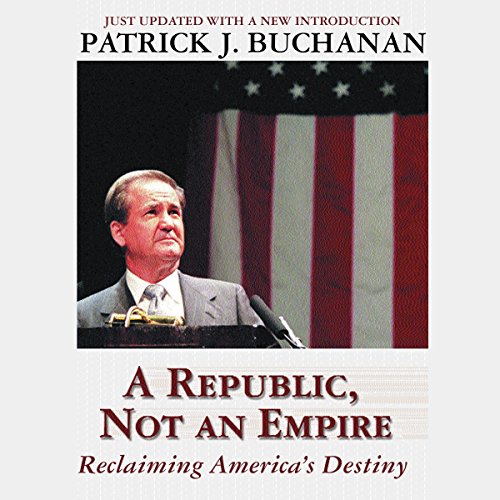
A Republic, Not an Empire: Reclaiming America’s Destiny
Washington, DC: Regnery Publishing, Inc., 1999See also: “The Collapse of British Power,” “The Audit of War,” “The Lost Victory,” & “The Verdict of Peace”
If ever there was a call which went unheeded, it is former presidential candidate Patrick J. Buchanan’s admonition that once the Cold War ended, the United States should have reduced its military footprint to a size capable of dealing with its own national interests. (more…)
-
Patrick J. Buchanan
Nixon’s White House Wars: The Battles that Made and Broke a President and Divided America Forever
New York: Crown Forum, 2017It’s déjà vu all over again, folks. The more things change, the more they stay the same. This is one of the takeaways from this fascinating political memoir by Pat Buchanan, who worked in the Nixon White House as a strategist and speechwriter after serving Candidate Nixon on the campaign trail. (more…)
-
2,020 words
Phyllis Schlafly
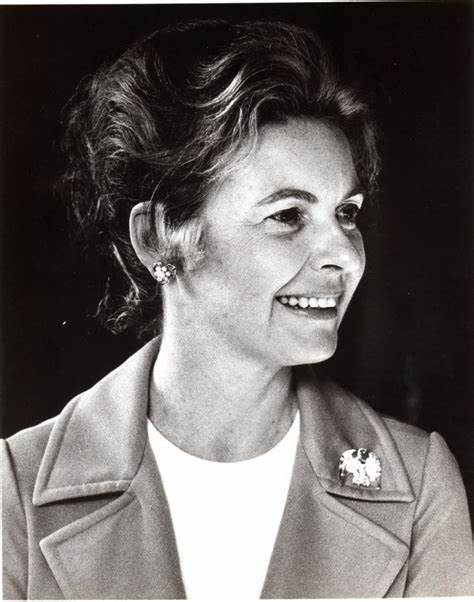
A Choice Not an Echo
Alton, Ill.: Pere Marquette Press, 1964Many of the greatest pioneers of Right-wing political thought in the United States are women. Right-leaning men are often too busy with their jobs and putting out the fires to be prophets. Female activists, for their part, have a remarkable ability to challenge and change the direction of institutions. One such woman was Phyllis Schlafly (1924-2016). (more…)
-
Author’s note: The following essay is the second part of a series of articles on developing an ideological framework for modern nationalism. The first essay, “The Promise and Reality of Globalization,” is available here. The first two essays discuss the deleterious socioeconomic effects of globalization. (more…)
-
Amid the social turmoil of the late 1960s, the German Communist student Rudi Dutschke called for a “long march through the institutions” as the preferred strategy of ensuring the victory of global Marxist revolution. The success of this initiative is no more prominent in the West than in today’s academia, where Frankfurt School (more…)
-
-
Mark Sedgwick, ed.
Key Thinkers of the Radical Right: Behind the New Threat to Liberal Democracy
Oxford: Oxford University Press, 2019Mark Sedgwick is an English scholar of Western Esotericism and Islam. He is Professor of Arab and Islamic Studies at Aarhus University in Denmark. (more…)
-

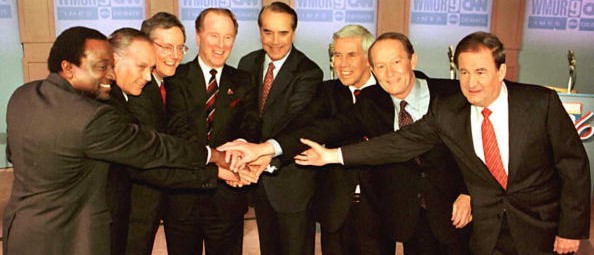
Republican leaders in 1996, including Bob Dole (center), Jack Kemp (to Dole’s right), and Patrick Buchanan (far right).
2,212 words
After spending several weeks in deep hugger-mugger at the Republican Party platform committee this summer, the leaders of the Right wing of the GOP emerged triumphant. Their deeply beloved and totally useless Human Life Amendment was reaffirmed. (more…)
-
2,310 words
Perhaps the greatest irony of the periodic political revolutions that occur in American democracy is that most of the voters who make them possible have not the foggiest notion of what they are doing. In 1932, Franklin Roosevelt won the White House by running on a platform that promised to balance the budget and reduce the scale and power of the federal government, and there is no doubt that most of the Americans who sent him to Washington supported him simply because of the desperate economic straits in which they found themselves and their country, not because of any passion they shared with him for the socialist and internationalist experiments that he and his brood immediately imposed. (more…)


145 words / 60:58