Counter-Currents
  • Advertise
  • Private Events
  • T&C
  • About
  • Contact
  • RSS
    • Main feed
    • Podcast feed
    • Videos feed
    • Comments feed
  • Welcome
  • Webzine
  • Books
  • Merch
  • Podcasts
  • Videos
  • Donate
  • Patrons
  • Subscribe
  • Crypto

LEVEL2

Donate Now Mailing list
Upcoming podcasts
  • Rob Rundo on Counter-Currents Radio

    Rob Rundo on Counter-Currents Radio

    Counter-Currents Radio

    06/13/2026 — 3 pm EST / 9 pm CET
  • Daniel Tyrie on Counter-Currents Radio

    Daniel Tyrie on Counter-Currents Radio

    Counter-Currents Radio

    06/20/2026 — 3 pm EST / 9 pm CET

Writers of May

(2 votes) Morris van de Camp David M. Zsutty Derek Stark Jayant Bhandari Greg Johnson

Articles of May

Heidegger on Nietzsche, Part One by Collin Cleary The Lunch Wars by David M. Zsutty 2 votes
  • Welcome
  • Webzine
  • Books
  • Merch
  • Podcasts
  • Videos
  • Donate
  • Patrons
  • Subscribe
  • Crypto
    • The Bitter End of Western Metaphysics:
      Heidegger on Nietzsche, Part Three

      Collin Cleary

      3

    • Uncivil War

      Mark Gullick

      18

    • Exclusive Interview with Karel Veliky:
      The Final Chapter in the Film Series! Part II

      Ondrej Mann

      1

    • Happy Birthday to Us!

      Greg Johnson

      6

    • Zsutty’s Maximum

      David M. Zsutty

      12

    • Exclusive Interview with Karel Veliky:
      The Final Chapter in the Film Series! Part I

      Ondrej Mann

      2

    • The Union Jackal, June 2026

      Mark Gullick

      23

    • The Inferiority Behind Immigrant Superiority

      Jayant Bhandari

      15

    • Counter-Currents Radio Podcast No. 690
      Greg Johnson & David Zsutty Discuss Current Things: AI, Henry Nowak, the Iran Crisis, & More

      Counter-Currents Radio

      5

    • Collin Cleary: What Rome Means to Me

      Collin Cleary

      4

    • Paul Krugman: Closet Bolshevik

      Spencer J. Quinn

      16

    • Fugue of Ideas:
      Ibram X. Kendi’s Chain of Ideas

      Greg Johnson

      18

    • Based Blacks

      Lipton Matthews

      11

    • Black Intellectual Fatigue

      Derek Stark

      37

    • Why White Advocates Should Avoid “Based Blacks”

      Dani Vypont

      25

    • Nietzsche & Race

      Mark Gullick

    • Editor’s Update
      Rob Rundo Rescheduled to Next Week on Counter-Currents Radio;
      Tonight Greg Johnson & David Zsutty Answer Your Questions;
      Fundraiser Update & a New $20,000 Matching Grant

      Greg Johnson

    • The Counter-Currents 2026 Fundraiser
      Lifetime Subscriber Welcome Packages Extended

      Greg Johnson

    • Nationalism This Week
      Who’s Looking Back?

      Greg Johnson

      29

    • China’s Threat to American Security:
      Food, Farmland, Foreign Control, & Energy Policy

      Lipton Matthews

      5

    • The Bitter End of Western Metaphysics:
      Heidegger on Nietzsche, Part Two

      Collin Cleary

      16

    • The Killing of Henry Nowak

      Mark Gullick

      38

    • The Crisis of Chinese Technology Thieves

      Morris van de Camp

      1

    • The Strange World of Gender Bender Fiction:
      & What This Genre Tells Us About Autosexuality

      Dani Vypont

      3

    • Watching the Watchers:
      The Dark Triad Question

      David M. Zsutty

      14

    • The Remigration Movement Solidifies

      F. Roger Devlin

      1

    • Casting Aspersions:
      The Fatal Consequences of Race-Swapped Casting, From Helen of Troy to Henry of Southampton

      Steven Tucker

      20

    • The Murder of Henry Nowak

      Millennial Woes

      23

    • Don’t Forget to Vote in Our Writer & Article of the Month Poll

      Greg Johnson

    • The Robot Hotdog Stand

      Greg Johnson

      37

    • Laughing Our Way to Victory

      Dave Chambers

      7

    • The Zodiac Killer

      Mark Gullick

      11

    • Jared Taylor: What Rome Means to Me

      Jared Taylor

      1

    • An Interview with Endeavour:
      My Way of Life Is an Adventure!

      Ondrej Mann

      6

    • José Pedro Zúquete’s The Identitarians

      Greg Johnson

      3

    • Editor’s Update
      Fundraiser Update & How to Watch the Remigration Summit

      Greg Johnson

      5

    • The Bitter End of Western Metaphysics:
      Heidegger on Nietzsche, Part One

      Collin Cleary

      12

    • Berlin: City of Stones

      Spencer J. Quinn

      6

    • True Folk-Horror Is Horror of Your Own Folk:
      Mark Gatiss vs the Brexit Blind Dead  

      Steven Tucker

      4

    • Counter-Currents Radio Podcast No. 689
      Thomas Massie, the America 2050 Bust, the Need for Whites to Divest from America, the AI Economic Apocalypse, & Pro-White Project Pitches to Billionaires

      Counter-Currents Radio

      7

    • Nationalism This Week
      Remigration is Inevitable, Part 3

      Greg Johnson

      27

    • Why Billionaires Should Fund White Identity Politics

      Lipton Matthews

      8

    • How Cold War Two Came About

      Morris van de Camp

      5

    • Now Available for Pre-Order at a Special Price!
      Greg Johnson’s The Philosopher Is In

      Greg Johnson

    • David Zsutty’s Elevator Pitch to a Billionaire

      David M. Zsutty

      1

    • Headbanging Lite

      Mark Gullick

      5

    • White Advocacy Past and Present

      Peter Bradley

      13

    • The Lunch Wars

      David M. Zsutty

      47

    • The Russians are Coming/The Russians are Coming

      Steven Clark

      1

    • Peak Fatigue in Fort Wayne

      Gabriel Anderson

      24

    • Malaparte

      The Bitter End of Western Metaphysics:
      Heidegger on Nietzsche, Part Three

      I am going to order Fundamental Tendency of Our Time, seems like a good place to start. By the...

    • Will Williams

      Why White Advocates Should Avoid “Based Blacks”

      Scott, it’s interesting that you call George Stephanopoulos a “Clinton apologist,” considering how...

    • Flel

      Black Intellectual Fatigue

      In the words of that great humanitarian Rodney King, can’t we all just get along? Jk. A stirred pot...

    • Collin Cleary

      The Bitter End of Western Metaphysics:
      Heidegger on Nietzsche, Part Three

      In fact, I had never heard of him until I read your comment. I have now looked at his Wikipedia...

    • New Flyer

      Uncivil War

      "One female politician (and a lot of them are women) interviewed on TV said that the problem was...

    • Peter Quint

      Uncivil War

      There are many reports of Catholics and Protestants sitting down for parley, not along religious...

    • Glide Ratio 0:1

      Uncivil War

      'They can go after social media and start throwing white people in jail, which is every Leftist...

    • Malaparte

      The Bitter End of Western Metaphysics:
      Heidegger on Nietzsche, Part Three

      I had asked this at bottom of comments to previous installment in this series, but I don't think...

    • Mark Gullick

      Uncivil War

      Yes, you are correct. My bad, as the youngsters say. A long night. Subs didn't pick it up though.

    • Paudi McCreevey

      Uncivil War

      You are correct. A few other errors indicate the author is not too familiar with Ireland, but they"...

    • Guest

      Exclusive Interview with Karel Veliky:
      The Final Chapter in the Film Series! Part II

      Mr. Mann, could you write a review of the current wonderful exhibition on the Přemyslid royal...

    • Adrian Roberts

      Uncivil War

      In Belfast, the police are the PSNI, not the Gardai (unless I am hopelessly misinformed).

    • Adrian Roberts

      The Union Jackal, June 2026

      If stopping Andy Burnham is the top priority, then the parties of 'the right' need to take some...

    • Paudi McCreevey

      Uncivil War

      This is a significant event. The response was organised, novel and effective. No mobs. No...

    • Jocelynn Cordes

      Uncivil War

      The immigration policies may be foolish, but they are conducted with fervor. But why fervor?

    • Jocelynn Cordes

      Uncivil War

      An army heavy on gays and chicks are hardly Mongol hordes.  Gold.

    • Adrian Roberts

      Zsutty’s Maximum

      Counter-Currents would not need to exist if whites were never mean to other whites.

    • Mark Gullick

      Uncivil War

      I would say genocidal immigration rather than suicidal, but your point holds. Even Blackadder knew...

    • ArminiusMaximus

      Uncivil War

      Thank you. I neglected to mention that the main grocery store that was by my hotel had two security...

    • Mark Gullick

      The Union Jackal, June 2026

      Good point well made. That said, as far as I am aware, the only big tennis match ever to be halted...

    • Earth Day Special

      John Morgan

      12

    • A Robertson Roundup
      Remembering Wilmot Robertson
      (April 16, 1915 – July 8, 2005)

      Margot Metroland

      13

    • The Paranoid Style in White Nationalism

      Greg Johnson

      30

    • Join the Dance!

      Andrew Hamilton

      1

    • We Can’t Save the Earth Without Reducing African Birth Rates

      James Dunphy

      36

    • “I’m Not a Conspiracy Theorist, but . . .”:
      Jeffrey Epstein’s Death Gives New Life to “Conspiracy Theories”

      Greg Johnson

      22

    • Sylvia Plath: Stasis in Darkness

      Vic Olvir

      17

    • Vanguardism, Vantardism, & Mainstreaming

      Greg Johnson

      80

    • Aviation, Geography, & Race

      Charles Lindbergh

      3

    • Some Thoughts on Yule

      Collin Cleary

      4

    • Living in Truth:
      A Yuletide Homily

      Jef Costello

      7

    • John Kennedy Toole’s A Confederacy of Dunces

      Greg Johnson

      20

    • On Aleksandr Solzhenitsyn’s Warning to the West

      Spencer J. Quinn

      7

    • Elitism, British Modernism, & Wyndham Lewis

      Jonathan Bowden

      6

    • Philip K. Dick’s Do Androids Dream of Electric Sheep? as Anti-Semitic/Christian-Gnostic Allegory

      Greg Johnson

      20

    • “Conspiracy Theory” or Conspiracy?

      Andrew Hamilton

      21

    • Remembering H. P. Lovecraft
      (August 20, 1890–March 15, 1937)

      Greg Johnson

      3

    • Who Are We?
      Nordics, Aryans, & Whites

      Greg Johnson

      71

    • Remembering William Gayley Simpson
      (July 23, 1892–December 31, 1990)
      A Pleasant Afternoon with Harriet & Bill Simpson

      Margot Metroland

      18

    • Here are the Young Men
      Remembering Ian Curtis
      (July 15, 1956–May 18, 1980)

      Mark Gullick

      18

    • Percy Grainger
      Artist of the Right

      Alex Graham

      7

    • Remembering Revilo Oliver
      (July 7, 1908–August 20, 1994)

      Greg Johnson

      18

    • The Meaning of July 4th for the White Man

      Gregory Hood

      13

    • The Front National’s Evolution

      Bruno Mégret

    • Merwin K. Hart
      Forgotten American Hero & Man of the Right

      Morris van de Camp

      10

    • George Orwell’s Nineteen Eighty-Four

      Jonathan Bowden

      8

    • Carleton S. Coon
      Scientist & Reluctant White Advocate

      Morris van de Camp

      3

    • The Kwanzaa Absurdity Will Be Dwarfed by Juneteenth

      Robert Hampton

      10

    • Stravinsky

      Alex Graham

      7

    • Like the Roman:
      Remembering Enoch Powell (1912-1998)

      Mark Gullick

      23

    • Sexually Incontinent on the Indian Subcontinent:
      Who Rapes More Animals, Indians or Pakistanis? The Battle Continues!

      Steven Tucker

      3

    • Neo-Fascism in Film
      Part 5

      Karel Veliky

      15

    • The Game of Tarot

      Mark Gullick

      2

    • Institutions Cannot Be Transplanted

      Jayant Bhandari

      5

    • Jonathan Bowden’s Deliverance
      Part 5

      Jonathan Bowden

    • Crosstown Traffic:
      Jimi Hendrix & The Post-War Rock ‘N’ Roll Revolution

      Mark Gullick

      1

    • Slaves from the North:
      Finns & Karelians in the East European Slave Trade, 900–1600

      Lipton Matthews

      14

    • Neo-Fascism in Film
      Part 4

      Karel Veliky

      2

    • David Lean’s A Passage to India

      Spencer J. Quinn

      1

    • Elites are Essential to Development

      Lipton Matthews

      7

    • Jonathan Bowden’s Deliverance
      Part 4

      Jonathan Bowden

    • Neo-Fascism in Film
      Part 3

      Karel Veliky

      6

    • E. M. Forster’s A Passage to India & the Indian Mentality

      Spencer J. Quinn

      25

    • Jonathan Bowden’s Deliverance
      Part 3

      Jonathan Bowden

    • The Rest Is Silence
      Heidegger’s Quietism

      Mark Gullick

      2

    • Dispelling the Historical Fallacy of Indian Nationalism

      Lipton Matthews

      8

    • Neo-Fascism in Film
      Part 2

      Karel Veliky

      8

    • Jonathan Bowden’s Deliverance
      Part 2

      Jonathan Bowden

    • Life of a Klansman

      Mark Gullick

      8

    • Jonathan Bowden’s Deliverance, Part 1

      Jonathan Bowden

    • Decolonial Ideas are Holding Back Developing Countries

      Lipton Matthews

      8

    • Neo-fascism in Film, Part 1

      Karel Veliky

      21

    • Jonathan Bowden’s Onslaught, Part 8
      Divigations on Decadence

      Jonathan Bowden

    • Jonathan Bowden’s Onslaught, Part 7
      Intrigues in the National Front

      Jonathan Bowden

      1

    • Rotten to the Core

      Mark Gullick

      8

    • Strauss on Husserl’s “Philosophy as Rigorous Science”

      Greg Johnson

    • Jonathan Bowden’s Onslaught, Part 6
      Francis Bacon & Right-Wing Nihilism

      Jonathan Bowden

    • London After (& Before) Midnight:
      Aleister Crowley, The Landlord’s Worst Nightmare

      James J. O'Meara

      2

    • Jonathan Bowden’s Onslaught, Part 5
      The Post-War British Far Right

      Jonathan Bowden

    • No Rules: Rollerball

      Mark Gullick

      4

    • András László
    • Derek Hawthorne
    • Beau Albrecht
    • Alain de Benoist
    • Kerry Bolton
    • Jonathan Bowden
    • Collin Cleary
    • Jef Costello
    • Savitri Devi
    • Julius Evola
    • Jim Goad
    • Gregory Hood
    • Juleigh Howard-Hobson
    • Greg Johnson
    • Charles Krafft
    • Anthony M. Ludovici
    • Trevor Lynch
    • H. L. Mencken
    • J. A. Nicholl
    • James J. O’Meara
    • Christopher Pankhurst
    • Tito Perdue
    • Michael Polignano
    • Spencer J. Quinn
    • Fenek Solère
    • Irmin Vinson
    • Leo Yankevich
    • Francis Parker Yockey
    • Multiple authors
  • Editor-in-Chief

    • Greg Johnson, Ph.D.

    Featured Writers

    • Beau Albrecht
    • Gunnar Alfredsson
    • Collin Cleary, Ph.D.
    • Jef Costello
    • Morris V. de Camp
    • F. Roger Devlin, Ph.D.
    • Stephen Paul Foster, Ph.D.
    • Jim Goad
    • Alex Graham
    • Mark Gullick, Ph.D.
    • Greg Johnson, Ph.D.
    • Travis LeBlanc
    • Trevor Lynch
    • Margot Metroland
    • James J. O’Meara
    • Angelo Plume
    • Spencer J. Quinn
    • Fred Reed
    • Clarissa Schnabel
    • Michael Walker
    • David M. Zsutty

    Frequent Writers

    • Asier Abadroa
    • Aquilonius
    • Alain de Benoist
    • Kerry Bolton, Ph.D.
    • Dave Chambers
    • Steven Clark
    • James Dunphy
    • Endeavour
    • Richard Houck
    • Jason Kessler
    • Titus Livius
    • Ondrej Mann
    • Lipton Matthews
    • Mark Mazari
    • John Morgan
    • Jaroslav Ostrogniew
    • Kathryn S.
    • Christian Secor
    • Anne Wilson Smith
    • Thomas Steuben
    • William De Vere
    • Kenneth Vinther
    • Max West

    Classic Authors

    • Maurice Bardèche
    • Jonathan Bowden
    • Julius Evola
    • Guillaume Faye
    • Ernst Jünger
    • Kevin MacDonald, Ph.D.
    • D. H. Lawrence
    • Charles Lindbergh
    • Jack London
    • H. P. Lovecraft
    • Anthony M. Ludovici
    • Sir Oswald Mosley
    • National Vanguard
    • Friedrich Nietzsche
    • Revilo Oliver
    • William Pierce
    • Ezra Pound
    • Saint-Loup
    • Savitri Devi
    • Carl Schmitt
    • Miguel Serrano
    • Oswald Spengler
    • P. R. Stephensen
    • Jean Thiriart
    • John Tyndall
    • Dominique Venner
    • Leo Yankevich
    • Francis Parker Yockey

    Other Authors

    • Howe Abbott-Hiss
    • Michael Bell
    • Giles Corey
    • Jack Donovan
    • Richardo Duchesne, Ph.D.
    • Emile Durand
    • Guillaume Durocher
    • Mark Dyal
    • Tom Goodroch
    • Andrew Hamilton
    • Robert Hampton
    • Huntley Haverstock
    • Derek Hawthorne
    • Gregory Hood
    • Juleigh Howard-Hobson
    • Alexander Jacob
    • Ruuben Kaalep
    • Tobias Langdon
    • Julian Langness
    • Patrick Le Brun
    • G A Malvicini
    • John Michael McCloughlin
    • Millennial Woes
    • Michael O’Meara
    • Christopher Pankhurst
    • Michael Polignano
    • J. J. Przybylski
    • Quintilian
    • Edouard Rix
    • C. B. Robertson
    • C. F. Robinson
    • Herve Ryssen
    • Alan Smithee
    • Fenek Solere
    • Ann Sterzinger
    • Robert Steuckers
    • Tomislav Sunic
    • Donald Thoresen
    • Marian Van Court
    • Irmin Vinson
    • Book Reviews
    • Movie Reviews
    • TV Reviews
    • Music Reviews
    • Art Criticism
    • Graphic Novels & Comics
    • Video Game Reviews
    • Fiction
    • Poems
    • Interviews
    • Videos
    • English Translations
    • Other Languages
      • Arabic
      • Bulgarian
      • Croatian
      • Czech
      • Danish
      • Dutch
      • Estonian
      • Finnish
      • French
      • German
      • Greek
      • Hungarian
      • Italian
      • Lithuanian
      • Norwegian
      • Polish
      • Portuguese
      • Romanian
      • Russian
      • Slovak
      • Spanish
      • Swedish
      • Ukrainian
    • Commemorations
    • Why We Write
  • Archives
  • Top 100 Commenters
  • The Looney Bin
  • Advertise
  • Private Events
  • T&C
  • About
  • Contact
  • RSS
    • Main feed
    • Podcast feed
    • Videos feed
    • Comments feed
Sponsored Links
Europa.com Above Time Coffee Antelope Hill Publishing Paul Waggener IHR-Store Spencer J. Quinn American Renaissance Jim Goad The Occidental Observer
Print June 6, 2025 4 comments

Before the Storm
A Prussian War & Peace Where Tolstoy Meets Fontane

Steven Clark

2,716 words

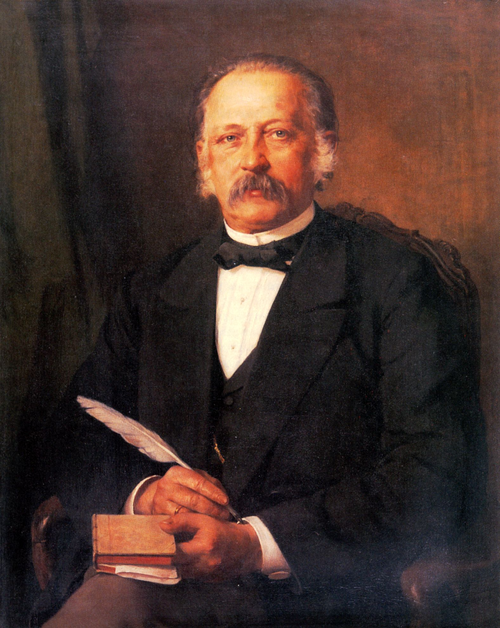
Theodor Fontane

Theodor Fontane (1819-1898) is widely regarded in Europe as the major example of German realist writing in the second half of the nineteenth century, although Americans have barely heard of him, obsessed as we are (or at least our German Lit. departments and New York arbiters of taste) with Thomas Mann.

Fontane, a Prussian descendant of French protestant refugees, started life as a pharmacist but abandoned that trade for writing. He progressed with methodical skill, from journalism to war correspondence (captured during the Franco-Prussian war), and in his fifties felt ready for fiction.Vor Dem Sturm (Before the Storm), published in 1878, was his first novel, chronicling a few weeks from Christmas season 1812 to February, 1813, a critical time for Prussia, Germany, and Napoleon.

After Napoleon’s disastrous Russian campaign, central Europe saw a chance to break free of Napoleonic control. Russia and Prussia were on their way to forming an alliance. Austria, while still allied to Napoleon, was interested. British loans, as always, stoked another coalition against Napoleon. Of Napoleon’s 600,000 man Grand Army that invaded Russia, almost half were from the various German states. Many German princes were having second and third thoughts about being allied to Napoleon, and were ready to join another coalition if the major players signed on. 

So, a novel of this period should have been one of grand military scope, intense political discussion, heroic endeavors with cries of Freiheit und Vaterland! from Germany and especially Prussia. This was what many Germans in 1878 wanted from Fontane. It wasn’t what they got. 

Before the Storm is a story of the pre-war time, and in it Fontane regales the reader with a dense and intimate study of people and land. The characters involved are a wide mix of village and noble society, especially dealing with Berndt Von Vitzewitz, Lord of Hohen-Vietz, Lewin and Renate, his son and daughter.

There are hopes that a double marriage might take place with the the offspring of Alexander Von Ladalinski, a Polish count who has melded into Prussian society, and his offspring, Tubal and Kathinka. Here lie the trappings of a Jane Austen novel, but Fontane branches into the Prussian world as shown in the Mark Brandenburg.  

Fontane wrote a series of travelogues on Mark Brandenburg over the years, even taking long walking tours through this region, and a reader may infer that this novel is as much travelogue as it is novel, a generally fatal flaw for a writer. “We want characters,” literacy critics demand, “Characters!” They are here, but Fontane makes the land as much a character as its people, and he asserts an eternal continuity that we catch in this two-month storyline. Where Tolstoy gives many (and brilliant if at times long-winded) observations on politics, Napoleon, etc., Fontane lets us overhear his characters’ thoughts instead of paraphrasing it for us. There is little of the omniscient third voice here.  

Fontane divided fiction into the einheitsroman (one view) and vielheitsroman (multiple views). Fontane prefers the latter in Before the Storm. The setting of the book, in the months just after Napoleon’s retreat from Moscow and the alliance of Prussia and Russia that began the war of liberation, begins in Christmas cheer, reflection, a rural epiphany coming before a political Lent. While Prussia was under semi-occupation, no one in the Mark is suffering particularly. Like in Jane Austen’s world, you’d never know there was a war. Well, almost. As folk in the Mark Brandenburg prepare for Christmas with lots of snow, vacant landscapes and sleigh bells tinkle as they whiz back and forth, ragged lines of retreating soldiers trudge past. Lewin stops by one straggling line, finds they are part of the German forces used by Napoleon, and consoles them as best as he can.  

We catch the ensemble of this rural Prussia. Besides Berndt and his family, there is a rivalry between the pastor Seidentopf and  Justice Turgany. They argue over faith and history. Seidentopf collects antiquities, among them a small sculpture called Odin’s Chariot, which he presumes to be an example of classical life present in the Mark. No, Turgany disagrees. It came later. Their debate centers on the Wends, the original inhabitants, driven out or absorbed by the Germans when, led by the Teutonic Knights, sought to colonize the east, a German passion that found a disastrous conclusion in Hitler’s Drang Nach Ost to seize Russia. 

Certainly their debate over the merits of a heroic or ordinary life is a major theme of the novel, and people are caught up in it in their own lives. When they stab at heroism, they are lacking.  

Others, like Schwarwenka, an innkeeper; Othegraven, a schoolmaster seeking his destiny; and so many others are detailed. Yet their lives are stimulating and the dialogue lively and human. This is very much an ensemble piece. The ordinary civic life of these people is always entwined with the land, its plains, forests, streams which is almost a cosmic narrator to this human world. There aren’t witches and fairies, but there is Hoppenmarieken, a female dwarf who lives in a shack, rarely talks except to bang her staff, and has become the postman for the area, delivering the mail from nearby Frankfurt. Her odd little hut is full of caged birds, and while kept at a distance, she is accepted and even needed, a spirit guide to the Mark and its residents.  

While men debate, work, and, when things get political, plot, the women in this story provide a spiritual base to the Mark and God. Aunt Schorlemmer, Brandt’s sister, provides much arguing for God, Lutheran hymns and maxims always on her lips, but she isn’t hypocritical or small-minded. Schorlemmer reflects a vibrant Christian/ Lutheran faith still very strong. A contrast is Countess Amelie, representing the older aristocratic order, who, like much of the aristocracy, speaks in French as much as German, looking back and imitating Frederick the Great, the former Prussian king who is a kind of  George Washington to these Prussians.  

Amelie and her world distrust the growing German romanticism people like Othegraven and Lewin represent. When a production of Wiliam Tell is offered, now a folk hero for resisting imperial and foreign rule, she prefers a French instead of German production. Again, the sense of a new sensibility of nation and people is on the cusp of development. Fontane captures a spiritual night before Christmas before presents are opened. 

Fontane shows a divide coming between all the partying, salons, and sleigh rides. The main couples reflect it. Lewin is the probing idealist, caught up in his affection for Kathinka but also admiring Maria, Kniehause’s adopted daughter, a ten-year old circus performer taken in by the town and admired. Adopted at Christmas, Marie was always has a spiritual presence, considered a Christmas and fairy child, but Marie is neither ephemeral nor doomed. She is a solid character, and Fontane’s story delves in Lewin’s choice between Kathinka and Marie. Although more approachable than Hoppenmarieken, Renate, on the other hand, is more rational and distant. She recalls Fanny in Austen’s Mansfield Park, an outsider, observer, and figure of wisdom in contrast to Kathinka, who is courtly and prefers life in Berlin with her father.  

The female characters presage what will be major theme of Fontane’s fiction, where the women uphold the values of the Prussian state, its Junkertum: simplicity, honor, and directness. In later works, like Frau Jenny Treible or, Fontane’s regarded masterpiece Effi Briest, these older virtues compete with a new crass and militaristic Prussia of the Wilhelminan age. Here, older Prussia is still extant, and a comparison between the America of the antebellum age and post Civil War gilded age is apt. Renate is direct and fair. Marie is described thusly: “What she had she loved, and what she did not have she did not miss.” Marie is “brave and submissive. Above all, she is true.” 

While Kathinka and Tubal are readily accepted by the Hohen-vietz family, they are caught up in politics. They were part of Poland annexed by Prussia in the 1790s. Count Ladalinski, their father, has made his peace with Prussia, but a new Polish nation semi-created by Napoleon is starting to claim the allegiance of his children. Where do they fit in Mark Brandenburg? As Count Ladalinski puts it, the Polish in Prussia lack a enter of gravity. Tubal and Kathinka “grew up but were not brought up.” 

Indeed, where does Prussia fit in at all? The crisis of 1812 leaves Prussia open to revolt,  continuing a national recovery since its disastrous defeat in 1806 at Jena and Auerstadt, which figures prominently among the cast,  but they, like Prussia, are caught up in what to do. Openly resist the French or wait and see what happens? The historical background is important, and R.J. Hollindale’s translation I read has an excellent foreword and notes.  

Prussia, defeated by Napoleon, nevertheless slowly rebuilt itself, initiated military and public reforms, and the general tone of Fontane’s characters is one of optimism. After the retreat from Moscow, King Frederick William dithered over what to do. Napoleon, to punish the Prussians, kept their army assigned to invade Russia guarding the flanks, especially in the north. 

This was seen as a humiliation, but it actually saved Prussia, because its contingent to the Grand Army avoided the catastrophe of the retreat, and in January of 1813, General Yorck put the Prussian corps under Russian command, leading to the first stage of the liberation, but in doing this he disobeyed orders.  

It’s tricky situation everyone in the book worries over. They want to be obedient, but taking action without orders? Not very Prussian. Of course they want the French to leave, but isn’t it best to wait for the King to order them into action? But the King retreats to Silesia, mulling. Having earlier been defeated, his philosophy is once bitten twice shy. He waits for good, strong, allies.  

In Berlin, one of the royal advisors favors “A policy of procrastination as being the only policy to pursue, Time alone will resolve our confusion and perplexity.” Berndt urges that the King listen to the people, but the advisor reports the King distrusts people who may in the end become a mob. “For he places good order above everything. With a unified enemy he knows where he is, with a many-headed mob he never does…He values the social order more highly than the political. And in that he is right.” 

The spirit of liberation spreads to Hohen-Vietz, and Berndt forms a militia to strike at the nearest fortress in Frankfurt. The gathering of forces and subsequent action became not a stirring chapter of defiance and heroism, but a muddle that resembles Mark Twain’s The Private History of Campaign That Failed than an ode to Preussens Gloria. 

It reads as being very anti-climactic and unheroic, but also very human and realistic as these Prussian citizen soldiers do their best. As it is, Lewin is captured, and a rescue attempt is far more successful, although not without personal tragedy. 

Another interesting factor is how Prussians view their neighbors. Throughout the book France is disliked, but the French soldiers in the story aren’t shown as bad sorts. The Russians are admired and seen as liberators. All of the Mark is excited at the arrival of Cossacks nearby. Unlike the traditional dread Jews have of them, to Prussia, they are the vanguard of freedom. In one of his many debates with Seidentopf, Turgany argues that the “rejuvenation of Europe lay between the Don and Dneiper.” Turgany concludes with a loud “long live Russia!” 

In chapter eleven of book three, Borodino, A German officer reads his account of the battle, noting Russian ferocity, French and German bravery, and marks how battered was the Grand Army. “We were only the ruins of what we had been,” he concludes. There is no animosity towards Russia.  

This foreshadows the 19th century peace Prussia and Russia enjoyed. Certainly recent events in Ukraine shows how missed that generous alliance is over Germany’s now quirky bonds to the EU, NATO, and American suzerainty. 

One of the endearing things about this work is how Fontane steps away from the expected drama of war and politics and goes deeper into people caught up in it. He steps away from the awaited climax and turns to small issues of the Mark Brandenburg, and how 

Its continuity overrides the “great” historical concerns. There is war, true, but there are centuries of life in the Mark. Continuation and tradition, be it Prussian or Christian,  is more desired than victory. 

The above attack on Frankfurt is a major example, but so is Book two, chapter fourteen, titled Something Happens.  It describes a burglary at Hohen-Vietz that frightens everyone, Renate Almost taken, and an aroused community thinks it the work of French deserters…such men have been stumbling through the land since the retreat…but a low-key investigation turns out to discover a more mundane explanation where Hoppenmarieken plays a semi-sordid part. 

I enjoyed losing myself in this book and its characters, narrative, and the fusion of people with their land. Volkisch, certainly, but without the aggressiveness of what the twentieth century gave to the world. The people of Mark Brandenburg want to be left alone to their pubs, sleigh rides, holiday parties, hymns, and discussions about…well, almost everything.  

Although Lewin and Renate are very much featured, the book is a true ensemble piece.  

I’m reminded of Wilder’s Our Town, or the magnificent Moonflower Vine of Jetta Carleton, where the land, people, and mores of southwest Missouri eats into you (reviewed in CC June 28, 2021). Like Before the Storm, the land is almost a cast member, and the book is full of Bible verses, hymns, folk wisdom and people revisiting old haunts and rediscovering themselves. 

Like when I discovered War and Peace, I spent a happy week immersing myself in the salons, dinner tables and woods of Lewin, Renate, Brandt, and Hoppemarieken. It was a very pleasing visit. 

Part of that visit is going to a Prussia not hated or propagandized into being a military nightmare. I was very bothered by recent posts on Sonar 21, a site which is solidly pro-Russia, which I have no problems with, but there is almost daily bile blaming Germans, Nazis, Neo-Nazis for all of the postwar problems, and Russia as the eternal victim. The poor, peace-loving USSR. Some posts even gleefully anticipate the Germans being bombed into extinction, and a couple praised the destruction of Dresden. I’ve become very sick of Kraut haters, and spending time in Hohen-Vietz was a rest and recuperation from the world, especially the waspish realm of the Internet. Before the Storm is not unlike War and Peace. It has to be read slowly. I spent a week of my life on Tolstoy, and as much on Fontane, missing such immersive reading. 

Daniel Mendelsohn’s article in The New Yorker on Fontane (Heroine Addict, March 7, 2011) quoted how readers at the time: 

Found “Before the Storm” a disconcertingly becalmed work: the author’s
Languid eavesdropping was, they found, ill suited to a subject that
Raised expectations of high color and excitement. (“Will they sit down
At the table again? Will they go to sleep again?” One of Fontane’s
Many correspondents wrote of the characters in that “silly” book). 

While Mendelsohn argued Fontane developed his later works in enlarging female characters representing energies and emotions, I think the same female strength is very apparent in this novel, and how female regeneration is needed. Lewin almost dies in a snowstorm over Kathinka, and it is Renate and Marie who restore him and through them and this emotional mishap he grows and matures.   

In the later nineteenth century, Germans wanted their Prussia to be one of trumpets and helmets. They forgot the other side, with the dichotomy of their hero, Frederick the Great. A true war leader, but also devoted to culture and the arts, a devoted and excellent flute player, laying the base for a Prussia devoted to order and law. Discipline, yes, but preferably before (A Lutheran) God’s dictates. I enjoyed how the world of Hohen-Vietz mixed both worlds and sought reconciliation with national duty but reverence for the commonplace and homeland. It is a world Miss Austen and Mr. Dickens would have been glad to visit. I certainly enjoyed my walking tour through its pages. 

Before the Storm A Prussian War & Peace Where Tolstoy Meets Fontane

Before%20the%20Storm%0AA%20Prussian%C2%A0War%20andamp%3B%20Peace%20Where%20Tolstoy%20Meets%20Fontane%0A

Share

  • Gab

Enjoyed this article?

Be the first to leave a tip in the jar!

Instant Echeck GreenPay™

Related

  • The Russians are Coming/The Russians are Coming

  • Le Debacle: Historical Echoes of Zola’s France

  • A Novel Approach: Roberto Bolaño’s 2666

  • Restoring American Deterrence through Innovation and Industry

  • E. M. Forster’s A Passage to India & the Indian Mentality

  • The Theology Behind Ruby Ridge

  • The Rest Is Silence: Heidegger’s Quietism

  • Matt’s Negative Gloss: Matt Goodwin’s Suicide of a Nation, Part Two

Tags

book reviewsLeo TolstoyNapoleonic WarsPrussiaSteven Clark

Previous

« The MAGA Divorce From Big Tech?

Next

» Hollow Solutions for a Hollow Generation

4 comments

  1. Traddles says:
    June 7, 2025 at 3:56 pm

    “the land as much a character as its people”

    Thomas Hardy also does this in some of his novels.  I haven’t read all of them, but it’s an effective element in The Return of the Native and The Mayor of Casterbridge, both of which I like very much.  It was a relief to me to spend some time in the beautiful, mysterious English countryside of the 19th century, despite the tragedies of the stories.

    Thank you for this interesting review.  Like you, I have enjoyed immersing myself in past worlds through literature and history.  This mixture of worldviews in the Prussia of the time is interesting, and as you suggest there is a great sadness when we consider what happened in the 20th century, and later.  It’s a very bittersweet experience reading Hardy for those reasons too.


    1
    1
    • Todd Wayne
    1. Lord Shang says:
      June 9, 2025 at 3:09 am

      I’m unable to read this review of an excellent and undeservingly neglected novel, but I would also recommend Fontane’s Effi Briest, even if the latter is domestic and interior and doesn’t deal with great historical questions.

      I would question the author’s early slighting of the works of Thomas Mann, however. Mann was one of the greatest novelists of the 20th century, even if he was somewhat liberal.

      0
      0
  2. Gurnemanz says:
    June 8, 2025 at 9:01 am

    Thank you for such an interesting review. It’s so good to receive recommendations for literature in translation.

    1
    1
    • Todd Wayne
  3. s. clark says:
    June 10, 2025 at 2:39 am

    Thanks for all your good comments.

    Traddles:  I’ve read a lot of Thomas Hardy. You might enjoy a CD by Saydisc, Songs of Thomas Hardy’s Wessex, which are folk songs well performed and were mentioned or sung in Hardy’ novels.

    Lord Shang. Sorry about the paying bit. I should open a website for my works. I went after Thomas Mann because I was so saturated with him by German instructors. Although, as one said, he just got tired of Mann’s theme of the-artist-in-society over and over. That being said, I enjoyed Buddenbrooks a lot, and his Doctor Faustus is pretty admirable. To do research on Adrian Leverkuhn and music, Mann spoke to Arnold Schoenberg (they both lived in LA), and the twelve-tone theory of Schoenberg was the basis for Leverkuhns music. Schoenberg was furious that he got no credit for the music, and Mann promised to give him credit for the music ideas in future editions.

    You might like to read Heroine Addict, Daniel Mendelsohn’s  New Yorker (March 7, 2011) study of Fontane’s works.

    Gurnemanz: I enjoy good translations, and now I’m preparing a book on the comedies of Andreas Gryphius, a 17th century German poet/dramatist, and have translated and adapted the works.

    1
    1
    • Traddles

Comments are closed.

If you have a Subscriber access,
simply login first to see your comment auto-approved.

Note on comments privacy & moderation

Your email is never published nor shared.

Comments are moderated. If you don't see your comment, please be patient. If approved, it will appear here soon. Do not post your comment a second time.

Upcoming podcasts
  • Rob Rundo on Counter-Currents Radio

    Rob Rundo on Counter-Currents Radio

    Counter-Currents Radio

    Sat, Jun 13th — 3 pm EST / 9 pm CET
  • Daniel Tyrie on Counter-Currents Radio

    Daniel Tyrie on Counter-Currents Radio

    Counter-Currents Radio

    Sat, Jun 20th — 3 pm EST / 9 pm CET

Writers of May

(2 votes) Morris van de Camp David M. Zsutty Derek Stark Jayant Bhandari Greg Johnson

Articles of May

Heidegger on Nietzsche, Part One by Collin Cleary The Lunch Wars by David M. Zsutty 2 votes
    • The Bitter End of Western Metaphysics:
      Heidegger on Nietzsche, Part Three

      Collin Cleary

      3

    • Uncivil War

      Mark Gullick

      18

    • Exclusive Interview with Karel Veliky:
      The Final Chapter in the Film Series! Part II

      Ondrej Mann

      1

    • Happy Birthday to Us!

      Greg Johnson

      6

    • Zsutty’s Maximum

      David M. Zsutty

      12

    • Exclusive Interview with Karel Veliky:
      The Final Chapter in the Film Series! Part I

      Ondrej Mann

      2

    • The Union Jackal, June 2026

      Mark Gullick

      23

    • The Inferiority Behind Immigrant Superiority

      Jayant Bhandari

      15

    • Counter-Currents Radio Podcast No. 690
      Greg Johnson & David Zsutty Discuss Current Things: AI, Henry Nowak, the Iran Crisis, & More

      Counter-Currents Radio

      5

    • Collin Cleary: What Rome Means to Me

      Collin Cleary

      4

    • Paul Krugman: Closet Bolshevik

      Spencer J. Quinn

      16

    • Fugue of Ideas:
      Ibram X. Kendi’s Chain of Ideas

      Greg Johnson

      18

    • Based Blacks

      Lipton Matthews

      11

    • Black Intellectual Fatigue

      Derek Stark

      37

    • Why White Advocates Should Avoid “Based Blacks”

      Dani Vypont

      25

    • Nietzsche & Race

      Mark Gullick

    • Editor’s Update
      Rob Rundo Rescheduled to Next Week on Counter-Currents Radio;
      Tonight Greg Johnson & David Zsutty Answer Your Questions;
      Fundraiser Update & a New $20,000 Matching Grant

      Greg Johnson

    • The Counter-Currents 2026 Fundraiser
      Lifetime Subscriber Welcome Packages Extended

      Greg Johnson

    • Nationalism This Week
      Who’s Looking Back?

      Greg Johnson

      29

    • China’s Threat to American Security:
      Food, Farmland, Foreign Control, & Energy Policy

      Lipton Matthews

      5

    • The Bitter End of Western Metaphysics:
      Heidegger on Nietzsche, Part Two

      Collin Cleary

      16

    • The Killing of Henry Nowak

      Mark Gullick

      38

    • The Crisis of Chinese Technology Thieves

      Morris van de Camp

      1

    • The Strange World of Gender Bender Fiction:
      & What This Genre Tells Us About Autosexuality

      Dani Vypont

      3

    • Watching the Watchers:
      The Dark Triad Question

      David M. Zsutty

      14

    • The Remigration Movement Solidifies

      F. Roger Devlin

      1

    • Casting Aspersions:
      The Fatal Consequences of Race-Swapped Casting, From Helen of Troy to Henry of Southampton

      Steven Tucker

      20

    • The Murder of Henry Nowak

      Millennial Woes

      23

    • Don’t Forget to Vote in Our Writer & Article of the Month Poll

      Greg Johnson

    • The Robot Hotdog Stand

      Greg Johnson

      37

    • Laughing Our Way to Victory

      Dave Chambers

      7

    • The Zodiac Killer

      Mark Gullick

      11

    • Jared Taylor: What Rome Means to Me

      Jared Taylor

      1

    • An Interview with Endeavour:
      My Way of Life Is an Adventure!

      Ondrej Mann

      6

    • José Pedro Zúquete’s The Identitarians

      Greg Johnson

      3

    • Editor’s Update
      Fundraiser Update & How to Watch the Remigration Summit

      Greg Johnson

      5

    • The Bitter End of Western Metaphysics:
      Heidegger on Nietzsche, Part One

      Collin Cleary

      12

    • Berlin: City of Stones

      Spencer J. Quinn

      6

    • True Folk-Horror Is Horror of Your Own Folk:
      Mark Gatiss vs the Brexit Blind Dead  

      Steven Tucker

      4

    • Counter-Currents Radio Podcast No. 689
      Thomas Massie, the America 2050 Bust, the Need for Whites to Divest from America, the AI Economic Apocalypse, & Pro-White Project Pitches to Billionaires

      Counter-Currents Radio

      7

    • Nationalism This Week
      Remigration is Inevitable, Part 3

      Greg Johnson

      27

    • Why Billionaires Should Fund White Identity Politics

      Lipton Matthews

      8

    • How Cold War Two Came About

      Morris van de Camp

      5

    • Now Available for Pre-Order at a Special Price!
      Greg Johnson’s The Philosopher Is In

      Greg Johnson

    • David Zsutty’s Elevator Pitch to a Billionaire

      David M. Zsutty

      1

    • Headbanging Lite

      Mark Gullick

      5

    • White Advocacy Past and Present

      Peter Bradley

      13

    • The Lunch Wars

      David M. Zsutty

      47

    • The Russians are Coming/The Russians are Coming

      Steven Clark

      1

    • Peak Fatigue in Fort Wayne

      Gabriel Anderson

      24

    • Malaparte

      The Bitter End of Western Metaphysics:
      Heidegger on Nietzsche, Part Three

      I am going to order Fundamental Tendency of Our Time, seems like a good place to start. By the...

    • Will Williams

      Why White Advocates Should Avoid “Based Blacks”

      Scott, it’s interesting that you call George Stephanopoulos a “Clinton apologist,” considering how...

    • Flel

      Black Intellectual Fatigue

      In the words of that great humanitarian Rodney King, can’t we all just get along? Jk. A stirred pot...

    • Collin Cleary

      The Bitter End of Western Metaphysics:
      Heidegger on Nietzsche, Part Three

      In fact, I had never heard of him until I read your comment. I have now looked at his Wikipedia...

    • New Flyer

      Uncivil War

      "One female politician (and a lot of them are women) interviewed on TV said that the problem was...

    • Peter Quint

      Uncivil War

      There are many reports of Catholics and Protestants sitting down for parley, not along religious...

    • Glide Ratio 0:1

      Uncivil War

      'They can go after social media and start throwing white people in jail, which is every Leftist...

    • Malaparte

      The Bitter End of Western Metaphysics:
      Heidegger on Nietzsche, Part Three

      I had asked this at bottom of comments to previous installment in this series, but I don't think...

    • Mark Gullick

      Uncivil War

      Yes, you are correct. My bad, as the youngsters say. A long night. Subs didn't pick it up though.

    • Paudi McCreevey

      Uncivil War

      You are correct. A few other errors indicate the author is not too familiar with Ireland, but they"...

    • Guest

      Exclusive Interview with Karel Veliky:
      The Final Chapter in the Film Series! Part II

      Mr. Mann, could you write a review of the current wonderful exhibition on the Přemyslid royal...

    • Adrian Roberts

      Uncivil War

      In Belfast, the police are the PSNI, not the Gardai (unless I am hopelessly misinformed).

    • Adrian Roberts

      The Union Jackal, June 2026

      If stopping Andy Burnham is the top priority, then the parties of 'the right' need to take some...

    • Paudi McCreevey

      Uncivil War

      This is a significant event. The response was organised, novel and effective. No mobs. No...

    • Jocelynn Cordes

      Uncivil War

      The immigration policies may be foolish, but they are conducted with fervor. But why fervor?

    • Jocelynn Cordes

      Uncivil War

      An army heavy on gays and chicks are hardly Mongol hordes.  Gold.

    • Adrian Roberts

      Zsutty’s Maximum

      Counter-Currents would not need to exist if whites were never mean to other whites.

    • Mark Gullick

      Uncivil War

      I would say genocidal immigration rather than suicidal, but your point holds. Even Blackadder knew...

    • ArminiusMaximus

      Uncivil War

      Thank you. I neglected to mention that the main grocery store that was by my hotel had two security...

    • Mark Gullick

      The Union Jackal, June 2026

      Good point well made. That said, as far as I am aware, the only big tennis match ever to be halted...

    • Earth Day Special

      John Morgan

      12

    • A Robertson Roundup
      Remembering Wilmot Robertson
      (April 16, 1915 – July 8, 2005)

      Margot Metroland

      13

    • The Paranoid Style in White Nationalism

      Greg Johnson

      30

    • Join the Dance!

      Andrew Hamilton

      1

    • We Can’t Save the Earth Without Reducing African Birth Rates

      James Dunphy

      36

    • “I’m Not a Conspiracy Theorist, but . . .”:
      Jeffrey Epstein’s Death Gives New Life to “Conspiracy Theories”

      Greg Johnson

      22

    • Sylvia Plath: Stasis in Darkness

      Vic Olvir

      17

    • Vanguardism, Vantardism, & Mainstreaming

      Greg Johnson

      80

    • Aviation, Geography, & Race

      Charles Lindbergh

      3

    • Some Thoughts on Yule

      Collin Cleary

      4

    • Living in Truth:
      A Yuletide Homily

      Jef Costello

      7

    • John Kennedy Toole’s A Confederacy of Dunces

      Greg Johnson

      20

    • On Aleksandr Solzhenitsyn’s Warning to the West

      Spencer J. Quinn

      7

    • Elitism, British Modernism, & Wyndham Lewis

      Jonathan Bowden

      6

    • Philip K. Dick’s Do Androids Dream of Electric Sheep? as Anti-Semitic/Christian-Gnostic Allegory

      Greg Johnson

      20

    • “Conspiracy Theory” or Conspiracy?

      Andrew Hamilton

      21

    • Remembering H. P. Lovecraft
      (August 20, 1890–March 15, 1937)

      Greg Johnson

      3

    • Who Are We?
      Nordics, Aryans, & Whites

      Greg Johnson

      71

    • Remembering William Gayley Simpson
      (July 23, 1892–December 31, 1990)
      A Pleasant Afternoon with Harriet & Bill Simpson

      Margot Metroland

      18

    • Here are the Young Men
      Remembering Ian Curtis
      (July 15, 1956–May 18, 1980)

      Mark Gullick

      18

    • Percy Grainger
      Artist of the Right

      Alex Graham

      7

    • Remembering Revilo Oliver
      (July 7, 1908–August 20, 1994)

      Greg Johnson

      18

    • The Meaning of July 4th for the White Man

      Gregory Hood

      13

    • The Front National’s Evolution

      Bruno Mégret

    • Merwin K. Hart
      Forgotten American Hero & Man of the Right

      Morris van de Camp

      10

    • George Orwell’s Nineteen Eighty-Four

      Jonathan Bowden

      8

    • Carleton S. Coon
      Scientist & Reluctant White Advocate

      Morris van de Camp

      3

    • The Kwanzaa Absurdity Will Be Dwarfed by Juneteenth

      Robert Hampton

      10

    • Stravinsky

      Alex Graham

      7

    • Like the Roman:
      Remembering Enoch Powell (1912-1998)

      Mark Gullick

      23

    • Sexually Incontinent on the Indian Subcontinent:
      Who Rapes More Animals, Indians or Pakistanis? The Battle Continues!

      Steven Tucker

      3

    • Neo-Fascism in Film
      Part 5

      Karel Veliky

      15

    • The Game of Tarot

      Mark Gullick

      2

    • Institutions Cannot Be Transplanted

      Jayant Bhandari

      5

    • Jonathan Bowden’s Deliverance
      Part 5

      Jonathan Bowden

    • Crosstown Traffic:
      Jimi Hendrix & The Post-War Rock ‘N’ Roll Revolution

      Mark Gullick

      1

    • Slaves from the North:
      Finns & Karelians in the East European Slave Trade, 900–1600

      Lipton Matthews

      14

    • Neo-Fascism in Film
      Part 4

      Karel Veliky

      2

    • David Lean’s A Passage to India

      Spencer J. Quinn

      1

    • Elites are Essential to Development

      Lipton Matthews

      7

    • Jonathan Bowden’s Deliverance
      Part 4

      Jonathan Bowden

    • Neo-Fascism in Film
      Part 3

      Karel Veliky

      6

    • E. M. Forster’s A Passage to India & the Indian Mentality

      Spencer J. Quinn

      25

    • Jonathan Bowden’s Deliverance
      Part 3

      Jonathan Bowden

    • The Rest Is Silence
      Heidegger’s Quietism

      Mark Gullick

      2

    • Dispelling the Historical Fallacy of Indian Nationalism

      Lipton Matthews

      8

    • Neo-Fascism in Film
      Part 2

      Karel Veliky

      8

    • Jonathan Bowden’s Deliverance
      Part 2

      Jonathan Bowden

    • Life of a Klansman

      Mark Gullick

      8

    • Jonathan Bowden’s Deliverance, Part 1

      Jonathan Bowden

    • Decolonial Ideas are Holding Back Developing Countries

      Lipton Matthews

      8

    • Neo-fascism in Film, Part 1

      Karel Veliky

      21

    • Jonathan Bowden’s Onslaught, Part 8
      Divigations on Decadence

      Jonathan Bowden

    • Jonathan Bowden’s Onslaught, Part 7
      Intrigues in the National Front

      Jonathan Bowden

      1

    • Rotten to the Core

      Mark Gullick

      8

    • Strauss on Husserl’s “Philosophy as Rigorous Science”

      Greg Johnson

    • Jonathan Bowden’s Onslaught, Part 6
      Francis Bacon & Right-Wing Nihilism

      Jonathan Bowden

    • London After (& Before) Midnight:
      Aleister Crowley, The Landlord’s Worst Nightmare

      James J. O'Meara

      2

    • Jonathan Bowden’s Onslaught, Part 5
      The Post-War British Far Right

      Jonathan Bowden

    • No Rules: Rollerball

      Mark Gullick

      4

    • András László
    • Derek Hawthorne
    • Beau Albrecht
    • Alain de Benoist
    • Kerry Bolton
    • Jonathan Bowden
    • Collin Cleary
    • Jef Costello
    • Savitri Devi
    • Julius Evola
    • Jim Goad
    • Gregory Hood
    • Juleigh Howard-Hobson
    • Greg Johnson
    • Charles Krafft
    • Anthony M. Ludovici
    • Trevor Lynch
    • H. L. Mencken
    • J. A. Nicholl
    • James J. O’Meara
    • Christopher Pankhurst
    • Tito Perdue
    • Michael Polignano
    • Spencer J. Quinn
    • Fenek Solère
    • Irmin Vinson
    • Leo Yankevich
    • Francis Parker Yockey
    • Multiple authors
  • Editor-in-Chief

    • Greg Johnson, Ph.D.

    Featured Writers

    • Beau Albrecht
    • Gunnar Alfredsson
    • Collin Cleary, Ph.D.
    • Jef Costello
    • Morris V. de Camp
    • F. Roger Devlin, Ph.D.
    • Stephen Paul Foster, Ph.D.
    • Jim Goad
    • Alex Graham
    • Mark Gullick, Ph.D.
    • Greg Johnson, Ph.D.
    • Travis LeBlanc
    • Trevor Lynch
    • Margot Metroland
    • James J. O’Meara
    • Angelo Plume
    • Spencer J. Quinn
    • Fred Reed
    • Clarissa Schnabel
    • Michael Walker
    • David M. Zsutty

    Frequent Writers

    • Asier Abadroa
    • Aquilonius
    • Alain de Benoist
    • Kerry Bolton, Ph.D.
    • Dave Chambers
    • Steven Clark
    • James Dunphy
    • Endeavour
    • Richard Houck
    • Jason Kessler
    • Titus Livius
    • Ondrej Mann
    • Lipton Matthews
    • Mark Mazari
    • John Morgan
    • Jaroslav Ostrogniew
    • Kathryn S.
    • Christian Secor
    • Anne Wilson Smith
    • Thomas Steuben
    • William De Vere
    • Kenneth Vinther
    • Max West

    Classic Authors

    • Maurice Bardèche
    • Jonathan Bowden
    • Julius Evola
    • Guillaume Faye
    • Ernst Jünger
    • Kevin MacDonald, Ph.D.
    • D. H. Lawrence
    • Charles Lindbergh
    • Jack London
    • H. P. Lovecraft
    • Anthony M. Ludovici
    • Sir Oswald Mosley
    • National Vanguard
    • Friedrich Nietzsche
    • Revilo Oliver
    • William Pierce
    • Ezra Pound
    • Saint-Loup
    • Savitri Devi
    • Carl Schmitt
    • Miguel Serrano
    • Oswald Spengler
    • P. R. Stephensen
    • Jean Thiriart
    • John Tyndall
    • Dominique Venner
    • Leo Yankevich
    • Francis Parker Yockey

    Other Authors

    • Howe Abbott-Hiss
    • Michael Bell
    • Giles Corey
    • Jack Donovan
    • Richardo Duchesne, Ph.D.
    • Emile Durand
    • Guillaume Durocher
    • Mark Dyal
    • Tom Goodroch
    • Andrew Hamilton
    • Robert Hampton
    • Huntley Haverstock
    • Derek Hawthorne
    • Gregory Hood
    • Juleigh Howard-Hobson
    • Alexander Jacob
    • Ruuben Kaalep
    • Tobias Langdon
    • Julian Langness
    • Patrick Le Brun
    • G A Malvicini
    • John Michael McCloughlin
    • Millennial Woes
    • Michael O’Meara
    • Christopher Pankhurst
    • Michael Polignano
    • J. J. Przybylski
    • Quintilian
    • Edouard Rix
    • C. B. Robertson
    • C. F. Robinson
    • Herve Ryssen
    • Alan Smithee
    • Fenek Solere
    • Ann Sterzinger
    • Robert Steuckers
    • Tomislav Sunic
    • Donald Thoresen
    • Marian Van Court
    • Irmin Vinson
    • Book Reviews
    • Movie Reviews
    • TV Reviews
    • Music Reviews
    • Art Criticism
    • Graphic Novels & Comics
    • Video Game Reviews
    • Fiction
    • Poems
    • Interviews
    • Videos
    • English Translations
    • Other Languages
      • Arabic
      • Bulgarian
      • Croatian
      • Czech
      • Danish
      • Dutch
      • Estonian
      • Finnish
      • French
      • German
      • Greek
      • Hungarian
      • Italian
      • Lithuanian
      • Norwegian
      • Polish
      • Portuguese
      • Romanian
      • Russian
      • Slovak
      • Spanish
      • Swedish
      • Ukrainian
    • Commemorations
    • Why We Write
  • Archives
  • Top 100 Commenters
  • The Looney Bin
Sponsored Links
Europa.com Above Time Coffee Antelope Hill Publishing Paul Waggener IHR-Store Spencer J. Quinn American Renaissance Jim Goad The Occidental Observer
Donate Now Mailing list
Books for sale
  • The Philosopher Is In
  • Sexual Utopia in Power (Expanded Edition)
  • In Defense of Prejudice
  • Loving Our Own
  • Tyranny & Wisdom
  • The Populist Moment
  • Is America Doomed?
  • To all books
Copyright © 2026 Counter-Currents Publishing, Ltd.

Paywall Access


Please enter your email address.

Lost your password?

Edit your comment

Writer & Article of the Month May 2026

Voting for this month has concluded. Here are the final results!

Top Writers

  • #1 Morris van de Camp 2 votes
  • #2 David M. Zsutty 2 votes
  • #3 Derek Stark 2 votes
  • #4 Jayant Bhandari 2 votes
  • #5 Greg Johnson 2 votes
  • #6 Jared Taylor 1 vote
  • #7 Collin Cleary 1 vote
  • #8 Spencer J. Quinn 1 vote
  • #9 Mark Gullick 1 vote
  • #10 Lipton Matthews 1 vote
  • #11 Keith Woods 1 vote
  • #12 Steven Tucker 1 vote

Top Articles

  • #1 Heidegger on Nietzsche, Part One 2 votes
  • #2 The Lunch Wars 2 votes
  • #3 The Ghost of the Confederacy 1 vote
  • #4 Lothrop Stoddard’s The Revolt Against Civilization 1 vote
  • #5 Could Fascism Work? 1 vote
  • #6 Jared Taylor's Elevator Pitch to a Billionaire 1 vote
  • #7 Predation Wearing the Mask of Civilization 1 vote
  • #8 Peak Fatigue in Fort Wayne 1 vote
  • #9 Keith Wood's Elevator Pitch to a Billionaire 1 vote
  • #10 Do You Want to Play a Game? 1 vote
  • #11 Why Billionaires Should Fund White Identity Politics 1 vote
  • #12 The 1970s: The Golden Age of Hijacking 1 vote
  • #13 True Folk-Horror Is Horror of Your Own Folk 1 vote
  • #14 Finding Atlantis Part 4 1 vote
  • #15 Berlin: City of Stones 1 vote

Total votes cast: 17