Counter-Currents
  • Advertise
  • Private Events
  • T&C
  • About
  • Contact
  • RSS
    • Main feed
    • Podcast feed
    • Videos feed
    • Comments feed
  • Welcome
  • Webzine
  • Books
  • Merch
  • Podcasts
  • Videos
  • Donate
  • Patrons
  • Subscribe
  • Crypto

LEVEL2

Donate Now Mailing list
Upcoming podcasts
  • Rob Rundo on Counter-Currents Radio

    Rob Rundo on Counter-Currents Radio

    Counter-Currents Radio

    06/13/2026 — 3 pm EST / 9 pm CET
  • Daniel Tyrie on Counter-Currents Radio

    Daniel Tyrie on Counter-Currents Radio

    Counter-Currents Radio

    06/20/2026 — 3 pm EST / 9 pm CET

Writers of May

(2 votes) Morris van de Camp David M. Zsutty Derek Stark Jayant Bhandari Greg Johnson

Articles of May

The Lunch Wars by David M. Zsutty Heidegger on Nietzsche, Part One by Collin Cleary 2 votes
  • Welcome
  • Webzine
  • Books
  • Merch
  • Podcasts
  • Videos
  • Donate
  • Patrons
  • Subscribe
  • Crypto
    • Editor’s Update
      Rob Rundo Rescheduled to Next Week on Counter-Currents Radio;
      Tonight Greg Johnson & David Zsutty Answer Your Questions;
      Fundraiser Update & a New $20,000 Matching Grant

      Greg Johnson

    • The Counter-Currents 2026 Fundraiser
      Lifetime Subscriber Welcome Packages Extended

      Greg Johnson

    • Nationalism This Week
      Who’s Looking Back?

      Greg Johnson

      17

    • China’s Threat to American Security:
      Food, Farmland, Foreign Control, & Energy Policy

      Lipton Matthews

      1

    • The Bitter End of Western Metaphysics:
      Heidegger on Nietzsche, Part Two

      Collin Cleary

      8

    • The Killing of Henry Nowak

      Mark Gullick

      28

    • The Crisis of Chinese Technology Thieves

      Morris van de Camp

      1

    • The Strange World of Gender Bender Fiction:
      & What This Genre Tells Us About Autosexuality

      Dani Vypont

      3

    • Watching the Watchers:
      The Dark Triad Question

      David M. Zsutty

      14

    • The Remigration Movement Solidifies

      F. Roger Devlin

      1

    • Casting Aspersions:
      The Fatal Consequences of Race-Swapped Casting, From Helen of Troy to Henry of Southampton

      Steven Tucker

      20

    • The Murder of Henry Nowak

      Millennial Woes

      23

    • Don’t Forget to Vote in Our Writer & Article of the Month Poll

      Greg Johnson

    • The Robot Hotdog Stand

      Greg Johnson

      35

    • Laughing Our Way to Victory

      Dave Chambers

      7

    • The Zodiac Killer

      Mark Gullick

      11

    • Jared Taylor: What Rome Means to Me

      Jared Taylor

      1

    • An Interview with Endeavour:
      My Way of Life Is an Adventure!

      Ondrej Mann

      6

    • José Pedro Zúquete’s The Identitarians

      Greg Johnson

      3

    • Editor’s Update
      Fundraiser Update & How to Watch the Remigration Summit

      Greg Johnson

      5

    • The Bitter End of Western Metaphysics:
      Heidegger on Nietzsche, Part One

      Collin Cleary

      11

    • Berlin: City of Stones

      Spencer J. Quinn

      6

    • True Folk-Horror Is Horror of Your Own Folk:
      Mark Gatiss vs the Brexit Blind Dead  

      Steven Tucker

      4

    • Counter-Currents Radio Podcast No. 689
      Thomas Massie, the America 2050 Bust, the Need for Whites to Divest from America, the AI Economic Apocalypse, & Pro-White Project Pitches to Billionaires

      Counter-Currents Radio

      7

    • Nationalism This Week
      Remigration is Inevitable, Part 3

      Greg Johnson

      27

    • Why Billionaires Should Fund White Identity Politics

      Lipton Matthews

      8

    • How Cold War Two Came About

      Morris van de Camp

      5

    • Now Available for Pre-Order at a Special Price!
      Greg Johnson’s The Philosopher Is In

      Greg Johnson

    • David Zsutty’s Elevator Pitch to a Billionaire

      David M. Zsutty

      1

    • Headbanging Lite

      Mark Gullick

      5

    • White Advocacy Past and Present

      Peter Bradley

      13

    • The Lunch Wars

      David M. Zsutty

      47

    • The Russians are Coming/The Russians are Coming

      Steven Clark

      1

    • Peak Fatigue in Fort Wayne

      Gabriel Anderson

      24

    • Keith Woods’ Elevator Pitch to a Billionaire

      Keith Woods

    • The Cruelty of Kindness

      Morris van de Camp

      9

    • Predation Wearing the Mask of Civilization

      Jayant Bhandari

      13

    • The Mandalorian & Grogu

      Trevor Lynch

      24

    • Editor’s Update
      Fundraiser Update & a New $20,000 Matching Grant
      Greg Johnson & David Zsutty Discuss Thomas Massie on Counter-Currents Radio

      Greg Johnson

      2

    • How the Jews Defeated Thomas Massie—& Themselves

      David M. Zsutty

      25

    • Jared Taylor’s Elevator Pitch to a Billionaire

      Jared Taylor

      15

    • Nationalism This Week
      Remigration Is Inevitable, Part 2

      Greg Johnson

      8

    • Could Fascism Work?

      Mark Gullick

      40

    • Jonathan Bowden’s Deliverance
      Part 7

      Jonathan Bowden

    • China’s Quiet Hand:
      Influence, Infiltration, & the Western Blind Spot

      Lipton Matthews

      9

    • Counter-Currents Radio Podcast No. 688
      Tyler Dykes on Running for US Congress in South Carolina

      Counter-Currents Radio

      3

    • Lothrop Stoddard’s The Revolt Against Civilization

      Spencer J. Quinn

      14

    • Lewis Strauss Did Nothing Wrong:
      How the politics of the Atom Bomb during the early Cold War Apply to Artificial Intelligence Today

      Morris van de Camp

      14

    • The Ghost of the Confederacy

      Dave Chambers

      12

    • America’s Century of Humiliation has Begun

      Greg Johnson

      27

    • Will Williams

      Who’s Looking Back?

      Vauquelin: June 7, 2026 ...You must judge AI/LLM based on those who control it. With the likes of...

    • Hi-ya!

      Heidegger on Nietzsche, Part Two

      Love to engage in this with more attention ; I’ve never seen “clearing” in presocratics and my hot...

    • Vauquelin

      Who’s Looking Back?

      You must judge AI/LLM based on those who control it. With the likes of Sam Altman and Alex Karp...

    • Chud

      Who’s Looking Back?

      There's another dangerous option where homebrew AI models scale up and the consumers get their...

    • Gabe

      Who’s Looking Back?

      Boom. Nailed it.

    • Joe Gould

      The Killing of Henry Nowak

      This is a good article. The only thing I want to add is, above all we must guard ourselves against...

    • Greg Johnson

      Who’s Looking Back?

      Thank you I also wonder if these AI bots are being used to gather intelligence on influential...

    • E_Perez

      Heidegger on Nietzsche, Part Two

      "Philosophy helps Western man understand how we got to where we are, and where things went wrong...

    • Chud

      Who’s Looking Back?

      I'll try to give a rundown. AI is a language learning model (LLM) that uses floating point...

    • Will Williams

      How the Jews Defeated Thomas Massie—And Themselves

      Massie to Honor USS Liberty Crew on House Floor [email protected]  June 6, 2026  thomas...

    • JBP

      Editor’s Update

      Sorry but... Wrong, wrong wrong and wrong. The current momentum of history will not change with a...

    • Will Williams

      The SPLC Indictment

      The indictment of the Southern Poverty Law Center by the Department of Justice on 21 April is...

    • Zarathustra

      Heidegger on Nietzsche, Part Two

      I rather liked this song by Puscifer.

    • Will Williams

      The Killing of Henry Nowak

      Pray in one hand, shit in the other, and see which hand fills up first.Connor McDowell: June 6...

    • Julius Strange

      Who’s Looking Back?

      It is always possible to run AI models locally to prevent data being collected. The bigger and more...

    • tempus

      Casting Aspersions

      There is a measure of beauty. It is the “Helen.” One Helen equals that quantity of beauty that...

    • tempus

      The Robot Hotdog Stand

      Since AI is a heavy energy consumer, the surest and quickest way for an AI to prevent another AI...

    • Tye

      Heidegger on Nietzsche, Part Two

      I remember his excellent pieces about The Birds. Thanks for the reminder, I’m going thru his essays...

    • SteveH

      The Killing of Henry Nowak

      'who" not "whom"

    • DenisetheCelt

      Laughing Our Way to Victory

      The Black Lies Splatter scam was run by jews. Period. Floyd was worthless drug-addicted criminal...

    • Earth Day Special

      John Morgan

      12

    • A Robertson Roundup
      Remembering Wilmot Robertson
      (April 16, 1915 – July 8, 2005)

      Margot Metroland

      13

    • The Paranoid Style in White Nationalism

      Greg Johnson

      30

    • Join the Dance!

      Andrew Hamilton

      1

    • We Can’t Save the Earth Without Reducing African Birth Rates

      James Dunphy

      36

    • “I’m Not a Conspiracy Theorist, but . . .”:
      Jeffrey Epstein’s Death Gives New Life to “Conspiracy Theories”

      Greg Johnson

      22

    • Sylvia Plath: Stasis in Darkness

      Vic Olvir

      17

    • Vanguardism, Vantardism, & Mainstreaming

      Greg Johnson

      80

    • Aviation, Geography, & Race

      Charles Lindbergh

      3

    • Some Thoughts on Yule

      Collin Cleary

      4

    • Living in Truth:
      A Yuletide Homily

      Jef Costello

      7

    • John Kennedy Toole’s A Confederacy of Dunces

      Greg Johnson

      20

    • On Aleksandr Solzhenitsyn’s Warning to the West

      Spencer J. Quinn

      7

    • Elitism, British Modernism, & Wyndham Lewis

      Jonathan Bowden

      6

    • Philip K. Dick’s Do Androids Dream of Electric Sheep? as Anti-Semitic/Christian-Gnostic Allegory

      Greg Johnson

      20

    • “Conspiracy Theory” or Conspiracy?

      Andrew Hamilton

      21

    • Remembering H. P. Lovecraft
      (August 20, 1890–March 15, 1937)

      Greg Johnson

      3

    • Who Are We?
      Nordics, Aryans, & Whites

      Greg Johnson

      71

    • Remembering William Gayley Simpson
      (July 23, 1892–December 31, 1990)
      A Pleasant Afternoon with Harriet & Bill Simpson

      Margot Metroland

      18

    • Here are the Young Men
      Remembering Ian Curtis
      (July 15, 1956–May 18, 1980)

      Mark Gullick

      18

    • Percy Grainger
      Artist of the Right

      Alex Graham

      7

    • Remembering Revilo Oliver
      (July 7, 1908–August 20, 1994)

      Greg Johnson

      18

    • The Meaning of July 4th for the White Man

      Gregory Hood

      13

    • The Front National’s Evolution

      Bruno Mégret

    • Merwin K. Hart
      Forgotten American Hero & Man of the Right

      Morris van de Camp

      10

    • George Orwell’s Nineteen Eighty-Four

      Jonathan Bowden

      8

    • Carleton S. Coon
      Scientist & Reluctant White Advocate

      Morris van de Camp

      3

    • The Kwanzaa Absurdity Will Be Dwarfed by Juneteenth

      Robert Hampton

      10

    • Stravinsky

      Alex Graham

      7

    • Like the Roman:
      Remembering Enoch Powell (1912-1998)

      Mark Gullick

      23

    • The Game of Tarot

      Mark Gullick

      1

    • Institutions Cannot Be Transplanted

      Jayant Bhandari

      5

    • Jonathan Bowden’s Deliverance
      Part 5

      Jonathan Bowden

    • Crosstown Traffic:
      Jimi Hendrix & The Post-War Rock ‘N’ Roll Revolution

      Mark Gullick

      1

    • Slaves from the North:
      Finns & Karelians in the East European Slave Trade, 900–1600

      Lipton Matthews

      14

    • Neo-Fascism in Film
      Part 4

      Karel Veliky

      2

    • David Lean’s A Passage to India

      Spencer J. Quinn

      1

    • Elites are Essential to Development

      Lipton Matthews

      7

    • Jonathan Bowden’s Deliverance
      Part 4

      Jonathan Bowden

    • Neo-Fascism in Film
      Part 3

      Karel Veliky

      6

    • E. M. Forster’s A Passage to India & the Indian Mentality

      Spencer J. Quinn

      25

    • Jonathan Bowden’s Deliverance
      Part 3

      Jonathan Bowden

    • The Rest Is Silence
      Heidegger’s Quietism

      Mark Gullick

      2

    • Dispelling the Historical Fallacy of Indian Nationalism

      Lipton Matthews

      8

    • Neo-Fascism in Film
      Part 2

      Karel Veliky

      8

    • Jonathan Bowden’s Deliverance
      Part 2

      Jonathan Bowden

    • Life of a Klansman

      Mark Gullick

      8

    • Jonathan Bowden’s Deliverance, Part 1

      Jonathan Bowden

    • Decolonial Ideas are Holding Back Developing Countries

      Lipton Matthews

      8

    • Neo-fascism in Film, Part 1

      Karel Veliky

      21

    • Jonathan Bowden’s Onslaught, Part 8
      Divigations on Decadence

      Jonathan Bowden

    • Jonathan Bowden’s Onslaught, Part 7
      Intrigues in the National Front

      Jonathan Bowden

      1

    • Rotten to the Core

      Mark Gullick

      8

    • Strauss on Husserl’s “Philosophy as Rigorous Science”

      Greg Johnson

    • Jonathan Bowden’s Onslaught, Part 6
      Francis Bacon & Right-Wing Nihilism

      Jonathan Bowden

    • London After (& Before) Midnight:
      Aleister Crowley, The Landlord’s Worst Nightmare

      James J. O'Meara

      2

    • Jonathan Bowden’s Onslaught, Part 5
      The Post-War British Far Right

      Jonathan Bowden

    • No Rules: Rollerball

      Mark Gullick

      4

    • Jonathan Bowden’s Onslaught, Part 3
      Brett Easton Ellis’ American Psycho

      Jonathan Bowden

    • An Alternate History of the Harris Presidency

      Beau Albrecht

      5

    • András László
    • Derek Hawthorne
    • Beau Albrecht
    • Alain de Benoist
    • Kerry Bolton
    • Jonathan Bowden
    • Collin Cleary
    • Jef Costello
    • Savitri Devi
    • Julius Evola
    • Jim Goad
    • Gregory Hood
    • Juleigh Howard-Hobson
    • Greg Johnson
    • Charles Krafft
    • Anthony M. Ludovici
    • Trevor Lynch
    • H. L. Mencken
    • J. A. Nicholl
    • James J. O’Meara
    • Christopher Pankhurst
    • Tito Perdue
    • Michael Polignano
    • Spencer J. Quinn
    • Fenek Solère
    • Irmin Vinson
    • Leo Yankevich
    • Francis Parker Yockey
    • Multiple authors
  • Editor-in-Chief

    • Greg Johnson, Ph.D.

    Featured Writers

    • Beau Albrecht
    • Gunnar Alfredsson
    • Collin Cleary, Ph.D.
    • Jef Costello
    • Morris V. de Camp
    • F. Roger Devlin, Ph.D.
    • Stephen Paul Foster, Ph.D.
    • Jim Goad
    • Alex Graham
    • Mark Gullick, Ph.D.
    • Greg Johnson, Ph.D.
    • Travis LeBlanc
    • Trevor Lynch
    • Margot Metroland
    • James J. O’Meara
    • Angelo Plume
    • Spencer J. Quinn
    • Fred Reed
    • Clarissa Schnabel
    • Michael Walker
    • David M. Zsutty

    Frequent Writers

    • Asier Abadroa
    • Aquilonius
    • Alain de Benoist
    • Kerry Bolton, Ph.D.
    • Dave Chambers
    • Steven Clark
    • James Dunphy
    • Endeavour
    • Richard Houck
    • Jason Kessler
    • Titus Livius
    • Ondrej Mann
    • Lipton Matthews
    • Mark Mazari
    • John Morgan
    • Jaroslav Ostrogniew
    • Kathryn S.
    • Christian Secor
    • Anne Wilson Smith
    • Thomas Steuben
    • William De Vere
    • Kenneth Vinther
    • Max West

    Classic Authors

    • Maurice Bardèche
    • Jonathan Bowden
    • Julius Evola
    • Guillaume Faye
    • Ernst Jünger
    • Kevin MacDonald, Ph.D.
    • D. H. Lawrence
    • Charles Lindbergh
    • Jack London
    • H. P. Lovecraft
    • Anthony M. Ludovici
    • Sir Oswald Mosley
    • National Vanguard
    • Friedrich Nietzsche
    • Revilo Oliver
    • William Pierce
    • Ezra Pound
    • Saint-Loup
    • Savitri Devi
    • Carl Schmitt
    • Miguel Serrano
    • Oswald Spengler
    • P. R. Stephensen
    • Jean Thiriart
    • John Tyndall
    • Dominique Venner
    • Leo Yankevich
    • Francis Parker Yockey

    Other Authors

    • Howe Abbott-Hiss
    • Michael Bell
    • Giles Corey
    • Jack Donovan
    • Richardo Duchesne, Ph.D.
    • Emile Durand
    • Guillaume Durocher
    • Mark Dyal
    • Tom Goodroch
    • Andrew Hamilton
    • Robert Hampton
    • Huntley Haverstock
    • Derek Hawthorne
    • Gregory Hood
    • Juleigh Howard-Hobson
    • Alexander Jacob
    • Ruuben Kaalep
    • Tobias Langdon
    • Julian Langness
    • Patrick Le Brun
    • G A Malvicini
    • John Michael McCloughlin
    • Millennial Woes
    • Michael O’Meara
    • Christopher Pankhurst
    • Michael Polignano
    • J. J. Przybylski
    • Quintilian
    • Edouard Rix
    • C. B. Robertson
    • C. F. Robinson
    • Herve Ryssen
    • Alan Smithee
    • Fenek Solere
    • Ann Sterzinger
    • Robert Steuckers
    • Tomislav Sunic
    • Donald Thoresen
    • Marian Van Court
    • Irmin Vinson
    • Book Reviews
    • Movie Reviews
    • TV Reviews
    • Music Reviews
    • Art Criticism
    • Graphic Novels & Comics
    • Video Game Reviews
    • Fiction
    • Poems
    • Interviews
    • Videos
    • English Translations
    • Other Languages
      • Arabic
      • Bulgarian
      • Croatian
      • Czech
      • Danish
      • Dutch
      • Estonian
      • Finnish
      • French
      • German
      • Greek
      • Hungarian
      • Italian
      • Lithuanian
      • Norwegian
      • Polish
      • Portuguese
      • Romanian
      • Russian
      • Slovak
      • Spanish
      • Swedish
      • Ukrainian
    • Commemorations
    • Why We Write
  • Archives
  • Top 100 Commenters
  • The Looney Bin
  • Advertise
  • Private Events
  • T&C
  • About
  • Contact
  • RSS
    • Main feed
    • Podcast feed
    • Videos feed
    • Comments feed
Sponsored Links
Europa.com Above Time Coffee Antelope Hill Publishing Paul Waggener IHR-Store Spencer J. Quinn American Renaissance Jim Goad The Occidental Observer
Print August 27, 2019 5 comments

The Leopard

Trevor Lynch

3,594 words

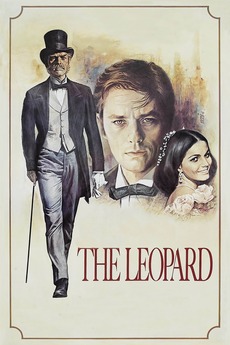
Luchino Visconti’s masterpiece is his 1963 historical epic The Leopard (Il Gattopardo, which actually refers to a smaller spotted wild cat, the serval, which is the heraldic animal of the princes of Salina in Sicily). Visconti’s film is a remarkably faithful adaptation of the 1958 novel of the same name by Giuseppe Tomasi di Lampedusa. The Leopard became the best-selling Italian novel of all time, carrying off many critical laurels as well. In its beauty of language, philosophical depth, and emotional power, The Leopard is one of the greatest novels I have ever read, and Visconti’s film does it full justice. Both are works of genius.

Set during the Risorgimento, the unification of Italy into a modern nation-state, The Leopard is sometimes called “the Italian Gone with the Wind,” which is an apt comparison, although The Leopard is better both as a book and a film. Like Gone with the Wind, The Leopard is a historical romance set against the backdrop of a war of national unification in which a modern, bourgeois-liberal industrial society (the Northern Kingdom of Piedmont and Sardinia, ruled from Turin by the house of Savoy) triumphs over a feudal, agrarian aristocracy (the Kingdom of the Two Sicilies, encompassing Sicily and Southern Italy and ruled from Naples by the house of Bourbon). Even the time period is basically the same. The novel The Leopard is set primarily in 1860–62, and the film takes place entirely in this time frame.

The story begins in May of 1860, when Giuseppe Garibaldi, a charismatic nationalist general, raised an insurgent force of a thousand volunteers and landed in Sicily to overthrow the Bourbons. The Garibaldini fought for no king or parliament. They fought for the nationalist idea. They fought for a unified Italy that did not yet exist.

Garibaldi fought his way to Palermo, declared himself dictator, then raised new troops to take the fight to the mainland, where he overthrew the last Bourbon king, Francis II. Then Garibaldi handed the Kingdom over to King Victor Emanuel of Piedmont and Sardinia and retired into private life. Plebiscites were held throughout Italy, except in Venice, which was under Austrian rule. All of Italy, save the Papal States, agreed to unification under the house of Savoy. In 1862, Garibaldi raised an army to march on Rome and forcibly incorporate the Papal States, but he was stopped by troops loyal to the new unified kingdom.

Lampedusa was a Sicilian aristocrat and a partisan of aristocracy. As a study of classical aristocratic virtues, The Leopard can be placed alongside Aristotle’s Nicomachean Ethics. As a meditation on the decline of aristocracy into oligarchy, it can be placed alongside Plato’s Republic. Visconti, however, was both an aristocrat and a self-professed Communist. Thus his adaptation also highlights other aspects of the novel, dramatizing how the revolutionary energies unleashed by the ideas of the sovereign people and a unified national state were co-opted by the old Italian aristocracy and corrupted by the rising middle classes. Although I am a national populist, not a Marxist, there is much truth in Visconti’s depiction.

The hero of The Leopard is Don Fabrizio Corbera, Prince of Salina, the head of an ancient Sicilian noble family. In the film, he is played by American actor Burt Lancaster, which is perfect casting, for Don Fabrizio is described as a hulking blue-eyed blond. Visconti’s casting of the whole Corbera clan is remarkable. Princess Maria Stella, played by Rina Morelli, perfectly fits her description in the book, and the couple’s children all resemble their parents and their siblings.

Another important character is the Prince’s nephew and ward, Tancredi, the orphaned and impoverished Prince of Falconeri, whom Lampeusa describes as blue-eyed, dark-haired, and rakishly handsome. Tancredi is brought to life on film by Alain Delon. Tancredi is an adventurous lad who has fallen in with liberals, nationalists, and revolutionaries. When Garibaldi lands, Tancredi rushes to join him.

Tancredi is described as charming, ambitious, and somewhat unscrupulous. Thus it is never clear how deep his commitment to the Risorgimento actually is. When he speaks to his uncle, the Prince of Salina, he tells him that everything must change so that everything can remain the same. The revolution will ultimately pass away, and Sicily’s immemorial customs and ancient aristocracy will quietly reassert themselves. It is never clear if this rather cynical view is accepted by Tancredi himself or simply crafted for his uncle’s consumption. But as the story—and especially the film—unfolds, it becomes increasingly clear that if Tancredi ever believed in the ideals of the Risorgimento, he eventually dropped them.

The Prince of Salina uses Tancredi’s connections to Garibaldi and his wealth and prestige to insulate himself and his family from the chaos of the revolution. With sublime indifference to current events, the family departs Palermo on its annual retreat to the village of Donnafugata, where they have inherited an immense palace.

Visconti’s portrayal of their journey and welcome is remarkable. The family arrives, emerging from the enclosed sweatboxes of their carriages, their elegant clothes white with dust from the unpaved mountain roads. Greeted ceremoniously by their retainers and the village notables, they immediately attend a church service. Visconti’s camera slowly pans across the Prince and his family, all of them studies of dignity and decorum although drenched in sweat and caked with filth. Only after thanking God for their safe journey do they retire to their palace and freshen up.

The dignified arrival of the Salinas stands in sharp contrast to Visconti’s farcical treatment of the local plebiscite presided over by Don Calogero Sedàra, the mayor of Donnafugata. Sedàra is a strong proponent of the new order. He makes no pretense of partiality. After the Prince votes, he proposes a toast with a liqueur in the three colors of the new Italian flag. The Prince, who straddles the worlds of the Bourbons and the Savoyards, chooses the Bourbon white, drinks, and winces at the cloying taste.

When Don Calogero reads the results, a brass band continually interrupts him. As it turns out, he has cooked the books. Of the 512 votes cast, 512 are “yes” votes. In truth, the plebiscites were widely fraudulent. The new order had not even legitimated its power, and it was already abusing the public trust.

Who is Don Calogero Sedàra? He is the man of the future. Just as the Prince of Salina represents the best of the aristocracy, Sedàra represents the virtues and limitations of the rising middle classes. Sedàra is a man of humble birth but outsized ambition and avarice, which he pursues single-mindedly, with boundless intelligence and energy. Now, like the Prince, a man of around 50, Sedàra has amassed a large fortune, become Mayor, and is the leader of the revolutionary forces in his district. Sedàra is described as a “beetle of a man,” and his portrayal by Paolo Stoppa is of limited success. Stoppa aptly communicates Sedàra’s avarice and gaucheries but not his intelligence and hard work.

Sedàra’s wife is never seen. She is reputed to be a woman of great beauty but bestial manners, probably due to mental illness. Her father was one of the Prince’s peasants, known as Pepe Cowshit. They have only one child, their daughter Angelica (Claudia Cardinale, in almost perfect casting, although she lacks Angelica’s green eyes), who has inherited her father’s intelligence and ambition as well as her mother’s beauty, which—reinforced by her father’s wealth and a bit of polishing at a Florentine finishing school—makes her a formidable force.

On the night of his arrival in Donnafugata, the Prince holds a dinner for the local notables, including Don Calogero. In the novel, it is explained that the Prince does not wear formal evening clothes at this dinner because he knows the villagers don’t have them. It is a magnanimous gesture, designed to make class distinctions less onerous on the dignity of the villagers.

But in comes Don Calogero, in white tie and tails, a gesture that in the Prince’s eyes is more significant than the revolution itself. Indeed, it is the revolution itself. Although ill-tailored and ill-shaven, Sedàra puts himself above the Prince and his family, at least to those who reckon by appearances. Those who know the truth, however, understand that this outcome has occurred only by virtue of the Prince’s magnanimous condescension and Sedàra’s social climbing. (In the film, the Prince’s magnanimous gesture is not communicated, so the Salinas’ surprise at Sedàra being overdressed comes off as mere snobbery, when the truth is precisely the opposite.)

All is forgotten, however, when the radiant Angelica appears. Tancredi is instantly smitten. But this presents a problem. Earlier that very day, the family’s Jesuit chaplain, Father Pirrone, told the Prince that his eldest daughter, Concetta, wished to marry her cousin Tancredi and believed the feeling to be mutual. The Prince, however, dismissed the idea because the timid and submissive Concetta is not a suitable bride for an ambitious man like Tancredi, who needs an equally ambitious wife and a far larger dowry than he could afford to provide Concetta. Angelica, however, is a perfect match, because she is beautiful, intelligent, a wealthy only-child, and a dedicated social climber.

One of the most interesting characters in The Leopard is Ciccio Tumeo (played by Serge Reggiani), the local church organist and the Prince’s hunting companion. Tumeo is an intelligent and thoughtful commoner. He is also a far more zealous guardian of the traditional order than the Prince. Tumeo is a Bourbon loyalist because of the patronage and kindness extended to his family by the deposed king’s ancestors. He was educated at royal expense, and when his family was in need, they petitioned the court for aid and received it. In his essentially feudal view, this patronage binds and obliges him to the Bourbons. Thus he voted “no” in the plebiscite and was incensed that his vote was changed by Sedàra, whom Ciccio regards as a dishonorable opportunist.

Tumeo tells the Prince of Sedàra’s bestial wife and her father, Pepe Cowshit. When the Prince informs Tumeo that on that very evening he is going to tell Sedàra of Tancredi’s proposal of marriage to Angelica, he thinks the match is not appropriate because of Angelica’s background. Furthermore, the prince off-handedly informs Tumeo that to prevent him from leaking news of the engagement, he and his hunting dog Teresina will be locked in the Prince’s gunroom until the deal is struck.

The Prince obviously values Tumeo’s judgment and companionship. So why doesn’t he simply swear Tumeo to silence? Probably because the Prince thinks that Tumeo’s oath is worthless, because he is not a gentleman. This casual condescension appears earlier in the film as well, when upon his arrival in Donnafugata, the Prince greets Teresina before he greets her master. (Actually, such behavior is common among “dog people” of all classes, and nobody takes it personally.)

The final sequence of the film is set two years later at a grand ball in Palermo in which Angelica and Don Calogero are introduced into Sicily’s high society. It seems a rather long wait, but the setting is determined by the politics of the times. Garibaldi’s attempt to march on Rome has been defeated by troops loyal to the new king in Turin. The house of Savoy is firmly in control. The revolutionary energies stirred by the Risorgimento’s idea of a sovereign Italian people in a united nation-state have been largely co-opted and corrupted by the glamor and prestige of the old aristocracy and the avarice of the bourgeoisie.

The aristocracy, however, is doomed to slow displacement. They have expensive tastes and, like Tancredi’s father, the Prince of Falconeri, are often very bad at managing money. In the past, great aristocratic fortunes could be replenished every few generations by the loot of a victorious war. But in the nineteenth century, the usual route was to marry the daughters of the rising oligarchy, who crave the status and lifestyle of the aristocracy and are better at making and managing money.

We see the process of corruption from the very beginning of The Leopard. When Tancredi and two of his fellow Garibaldini visit the Prince near Palermo in their dashing red uniforms, a young Northerner, Count Cavriaghi (Terence Hill), addresses the Prince as “excellence,” an honorific abolished by Garibaldi. An aristocrat himself, with tastes in poetry, music, and painting, Cavriaghi is dazzled by the Salina palace, especially its magnificent frescos. Later, after Tancredi’s engagement, Cavriaghi pays court to the Prince’s daughter Concetta. Later, when Tancredi and Cavriaghi appear in Donnafugata, they wear the Prussian blue uniforms of the national army. They have accepted demotions in rank from Garibaldi’s forces for a rise in social status.

The aristocracy magically softens Don Calogero’s revolutionary fervor as well, to the point that he buys a title for himself. When he informs the Prince of this at the end of their engagement negotiations, both the Prince and Father Pirrone walk away as if he has said nothing. Later, when the Prince turns down an invitation to join the senate in Turin, he recommends Sedàra instead, dryly remarking that “his family is an old one, or soon will be.”

By the ball, the process of corruption is complete. The leaders of the new army and the jumped-up bourgeoisie like the Sedàras are feted by the old aristocracy. Colonel Pallavicino, who defeated Garibalidi’s last insurgency at Aspromonte, is an especially honored guest. They feast and dance till dawn. Then, in a detail added to the movie, Pallavicino goes off to execute deserters who went to Garibaldi’s side at Aspromonte. Tancredi and Sedàra, the former revolutionary now dressed in top hat and tails, approve. It is time for law and order. It is time to get down to business.

At the ball, the Prince meditates on mortality. He is in decline. His family is in decline. His class is in decline. After the party, the Prince chooses to walk home. Seeing a priest on his way to administer someone’s last rites, he kneels and crosses himself, then looks up to Venus, as the morning star, and prays to be delivered from the realm of change. A mathematician and astronomer, the Prince is essentially a Platonist. He sees numbers as unchanging and the heavens as a realm of eternal, cyclical change. The Prince is both perfectly Catholic and perfectly pagan.

Three chapters of the novel were not adapted to the screen.

Chapter V, “Father Pirrone Pays a Visit,” tells of the priest’s 1861 excursion to his home village. However, the best lines of the chapter, where Pirrone discourses on the nature of the aristocracy to drowsy peasants, were incorporated into the film, in a scene during the Salinas’ journey to Donnafugata.

Chapter VII, “Death of a Prince,” narrates the prince’s last days in 1883, emphasizing the pagan themes intimated at the end of the ball. The Prince has two visions of Venus, at a train station as he returns to Palermo, and on his deathbed, where she appears to guide his soul to the unchanging realm. This chapter is utterly heartbreaking. I wish Visconti had included it in his film.

Chapter VIII, “Relics,” is set in 1910 and narrates the total ruin of the great house of Salina, whose prestige and substance have been squandered by the high living and bad business decisions of the Prince’s male heirs and the superstitious pieties of three of his four daughters, who have become old maids (apparently, they could not find a place in the new order). Angelica, now widowed, seems to have flourished, although there is no mention of any children to carry on the Falconeri name. It is fitting, then, that the last word of the novel is “dust.”

The Leopard is obviously a deeply pessimistic meditation on the decline of aristocracy and the rise of the middle classes. Written by the last Prince of Lampedusa, whose adopted son inherited his property but not his title, the novel was rejected by both publishers to which it was submitted. Then, before he could submit it to another publisher, the author died of cancer, aged 60. But The Leopard’s pessimism is somewhat belied by its spectacular posthumous success, both as a novel and a film. Because of books like The Leopard, we can at least hope that healthy archaic values and institutions can someday return and that, by understanding the seeds of decay, we can perhaps avert it.

Lampedusa was a reactionary and an advocate of aristocracy. I am not. In my view, Garibaldi’s only flaw was unifying Italy as a monarchy, not a republic. Although I cannot help but admire the Prince of Salina’s virtues and magnificent way of life, his political instincts were entirely wrong.

The Prince never should have married Tancredi to Angelica or contemplated any alliance with the Sedàras of the world. He should have married Tancredi to Concetta, who, because of his cynicism, ended up an embittered old maid. He should have taken a seat in the new Senate, not ceded it out of cynicism to the likes of Don Calogero Sedàra.

Furthermore, just as the Prince was too willing to ally himself with the middle classes, he was entirely too dismissive of improving the lot of the common people, in violation of the feudal ethos that bound the most decent man in the whole book, Ciccio Tumeo, to the deposed Bourbons. Sicily today is objectively better off with paved roads, running water, sewers, and other improvements airily dismissed by the Prince.

In short, the best outcome for Italy would have been a marriage of the feudal-warrior ethos of the old aristocracy with a progressive national populism, cutting out the rising oligarchy altogether. This position is actually represented in The Leopard by Cavalier Chevalley di Monterzuolo (played by Leslie French), the Piedmontese functionary who asks the Prince to join the new Senate. In the twentieth century, this synthesis was finally realized by Mussolini, only to be reversed by the Second World War, with some help from the dried-up husk of the house of Savoy.

When the Prince bids Chevalley goodbye, he says, “We were the leopards, the lions. Those who will take our place will be jackals, hyenas. And all of us—leopards, lions, jackals, and sheep—we’ll go on thinking ourselves the salt of the earth.” An accurate prophecy—but a self-fulfilling one. It was the dereliction of men like the Prince of Salina who made it so.

The Leopard’s depiction of the corruption of Garibaldi’s national populist revolution offers many lessons to national populists today. We should count ourselves fortunate that the old monarchies and aristocracies of Europe are pretty much dead, and those that remain are pretty much politically irrelevant. National populists believe that political sovereignty resides in the nation, not in dynasties. Political legitimacy flows from representing the common good of the people, not from dynastic descent. Social and political hierarchies are justified only by the common good of society, not by divine right or hereditary caste. Monarchy and aristocracy have a seductive glamor, but they are at best imperfect images of just political hierarchies.

However, national populists should emulate the honor-centered warrior ethos of the old aristocracies, as well as their feudal sense of social responsibility, which are the necessary correctives to bourgeois materialism and individualism.

Lampedusa makes clear that the material magnificence of the old aristocracy springs from essentially spiritual and anti-materialist values. Aristocracies arise by subordinating material interests, including the instinct of self-preservation, to the pursuit of honor. Aristocracies transmute material wealth into spiritual values like honor and prestige through munificence and the creation of beautiful and useless things, such as the entire realm of high culture.

But The Leopard also shows how high living combined with an ethos of generosity leads to the ruin of great estates and the rise of oligarchy. Oligarchs can better maintain the opulent lifestyles of the aristocracy because they are materialists, individualists, and fundamentally selfish. The bourgeois ethos subordinates honor and culture to self-preservation and commodious living. Obviously, a cash-poor revolutionary movement like national populism needs to adopt the warrior ethos of the aristocracy, but we can’t afford aristocratic pretensions in the material realm. We need to be revolutionary ascetics if we are to free ourselves from the trammels of oligarchy.

Everything about this movie is superb: the directing, casting, acting, costumes, camerawork, sets, and Nino Rota’s ravishing Romantic score. I have one reservation. Not a criticism so much as a reservation. The Leopard is a short novel but a very long movie, clocking in at 185 minutes in its definitive version. The ball sequence alone occupies the last 50 minutes. I resisted watching for years, simply because of the time investment. But there is something magical about this movie. When the ball started, I no longer felt I was watching a movie. I felt I was in it. And it made such a strong impression that it was all I remembered about the movie when I re-watched it after more than a decade to write this essay. Buy the Blu-ray and watch it in installments if you must, but you must watch it.

Visconti’s film will especially appeal to lovers of historical costume dramas, romances, and comedies of manners. If you like Jane Austen adaptations, you will find The Leopard especially appealing, for like Austen, Lampedusa is a student of classical virtue ethics and creates very subtle character portraits. Thus I highly recommend The Leopard, the novel and the film. They are two twentieth-century masterpieces, which can be appreciated both as escapist entertainment and as profound meditations on politics, morals, and the human condition.

The Unz Review, August 25, 2019

The Leopard

The%20Leopard

Share

  • Gab

Enjoyed this article?

Be the first to leave a tip in the jar!

Instant Echeck GreenPay™

Related

  • The Mandalorian and Grogu

  • Politics, Metapolitics, and Hegemony

  • Counter-Currents Radio Podcast No. 685

  • David Lean’s A Passage to India

  • Eternal Glory

  • Neo-Fascism in Film, Part 2

  • Neo-fascism in Film, Part 1

  • Jonathan Bowden’s Onslaught, Part 8

Tags

aristocracyItalyLuchino Viscontimonarchymovie reviewsNational PopulismTrevor Lynch

5 comments

  1. d_malaparte says:
    August 27, 2019 at 11:33 pm

    An exceptionally lucid review. The Leopard is a masterpiece. Even still, I would rank The Innocent (1976, based on d’Annuzio’s The Intruder), Senso (1954), and the great but utterly decadent Ludwig (1973) above it.

    And so far as coffee books go, I recommend —-> Sicily: Land of the Leopard Princes = https://www.amazon.com/Sicily-Leopard-Princes-Gerard-Gefen/dp/1850433763

    0
    0
    Reply
  2. karsten says:
    August 28, 2019 at 4:18 am

    The issue of the good/bad of monarchy is much the same as that of religion.

    Monarchy (and monarchs) are downstream of culture.

    There are exceptions and outliers, of course. But in the healthy, pro-white cultures of the past, even profligate or wanton monarchs do great things for their nations and people, especially in art and architecure. Today, by contrast, monarchs would in most cases be SJW-friendly, because, like anyone else, they’d be brainwashed by the cultural-Marxist culture in which we all live, every waking moment of our lives.

    0
    0
    Reply
  3. Nick Jeelvy says:
    August 28, 2019 at 6:22 am

    The great pathos of the film is the horror of the Prince’s realization that the world to come will not only be the death of him, his family, his class and ultimately people, but that the coming world is the world of moneylenders and parliamentarians, a world that fills both him and Don Ciccio with disgust.
    Unlike Don Ciccio, he understands that there is no hope.
    Fun fact: the ruins of Casa Lampedusa, the authors’ family home which was destroyed by an Allied shell, are still standing in Palermo.

    0
    0
    Reply
  4. Antidote says:
    August 28, 2019 at 11:26 am

    Great reviews of the film and the novel. I read the book decades ago, and I remember then how I was perplexed by Sedara’s sequestered wife; as I read I expected Sedara’s wife to emerge to fulfill some integral part of the novel, but of course this never happens. For some reason I was anticipating a Miss Havershim-type character.
    Burt Lancaster’s parents were Scots-Irish immigrants from Belfast who settled in Upper Manhattan. They were Wobbly, Eugene Debs Socialists–perhaps they went further left. Lancaster was reared in the Sicilian section of East Harlem—who knows, maybe he used some of his observations there for development of the Count of Salina.

    0
    0
    Reply
  5. BroncoColorado says:
    August 30, 2019 at 3:32 am

    Both the review and the film appear to be asking the question, what form of government is best for us? An ethno-state, or nearly so, is the ideal, but to be viable it will have to combine traditional forms of social organization with a technological economy, somewhat like Switzerland used to be.

    0
    0
    Reply

If you have a Subscriber access,
simply login first to see your comment auto-approved.

Post a comment Cancel reply

Note on comments privacy & moderation

Your email is never published nor shared.

Comments are moderated. If you don't see your comment, please be patient. If approved, it will appear here soon. Do not post your comment a second time.

Upcoming podcasts
  • Rob Rundo on Counter-Currents Radio

    Rob Rundo on Counter-Currents Radio

    Counter-Currents Radio

    Sat, Jun 13th — 3 pm EST / 9 pm CET
  • Daniel Tyrie on Counter-Currents Radio

    Daniel Tyrie on Counter-Currents Radio

    Counter-Currents Radio

    Sat, Jun 20th — 3 pm EST / 9 pm CET

Writers of May

(2 votes) Morris van de Camp David M. Zsutty Derek Stark Jayant Bhandari Greg Johnson

Articles of May

The Lunch Wars by David M. Zsutty Heidegger on Nietzsche, Part One by Collin Cleary 2 votes
    • Editor’s Update
      Rob Rundo Rescheduled to Next Week on Counter-Currents Radio;
      Tonight Greg Johnson & David Zsutty Answer Your Questions;
      Fundraiser Update & a New $20,000 Matching Grant

      Greg Johnson

    • The Counter-Currents 2026 Fundraiser
      Lifetime Subscriber Welcome Packages Extended

      Greg Johnson

    • Nationalism This Week
      Who’s Looking Back?

      Greg Johnson

      17

    • China’s Threat to American Security:
      Food, Farmland, Foreign Control, & Energy Policy

      Lipton Matthews

      1

    • The Bitter End of Western Metaphysics:
      Heidegger on Nietzsche, Part Two

      Collin Cleary

      8

    • The Killing of Henry Nowak

      Mark Gullick

      28

    • The Crisis of Chinese Technology Thieves

      Morris van de Camp

      1

    • The Strange World of Gender Bender Fiction:
      & What This Genre Tells Us About Autosexuality

      Dani Vypont

      3

    • Watching the Watchers:
      The Dark Triad Question

      David M. Zsutty

      14

    • The Remigration Movement Solidifies

      F. Roger Devlin

      1

    • Casting Aspersions:
      The Fatal Consequences of Race-Swapped Casting, From Helen of Troy to Henry of Southampton

      Steven Tucker

      20

    • The Murder of Henry Nowak

      Millennial Woes

      23

    • Don’t Forget to Vote in Our Writer & Article of the Month Poll

      Greg Johnson

    • The Robot Hotdog Stand

      Greg Johnson

      35

    • Laughing Our Way to Victory

      Dave Chambers

      7

    • The Zodiac Killer

      Mark Gullick

      11

    • Jared Taylor: What Rome Means to Me

      Jared Taylor

      1

    • An Interview with Endeavour:
      My Way of Life Is an Adventure!

      Ondrej Mann

      6

    • José Pedro Zúquete’s The Identitarians

      Greg Johnson

      3

    • Editor’s Update
      Fundraiser Update & How to Watch the Remigration Summit

      Greg Johnson

      5

    • The Bitter End of Western Metaphysics:
      Heidegger on Nietzsche, Part One

      Collin Cleary

      11

    • Berlin: City of Stones

      Spencer J. Quinn

      6

    • True Folk-Horror Is Horror of Your Own Folk:
      Mark Gatiss vs the Brexit Blind Dead  

      Steven Tucker

      4

    • Counter-Currents Radio Podcast No. 689
      Thomas Massie, the America 2050 Bust, the Need for Whites to Divest from America, the AI Economic Apocalypse, & Pro-White Project Pitches to Billionaires

      Counter-Currents Radio

      7

    • Nationalism This Week
      Remigration is Inevitable, Part 3

      Greg Johnson

      27

    • Why Billionaires Should Fund White Identity Politics

      Lipton Matthews

      8

    • How Cold War Two Came About

      Morris van de Camp

      5

    • Now Available for Pre-Order at a Special Price!
      Greg Johnson’s The Philosopher Is In

      Greg Johnson

    • David Zsutty’s Elevator Pitch to a Billionaire

      David M. Zsutty

      1

    • Headbanging Lite

      Mark Gullick

      5

    • White Advocacy Past and Present

      Peter Bradley

      13

    • The Lunch Wars

      David M. Zsutty

      47

    • The Russians are Coming/The Russians are Coming

      Steven Clark

      1

    • Peak Fatigue in Fort Wayne

      Gabriel Anderson

      24

    • Keith Woods’ Elevator Pitch to a Billionaire

      Keith Woods

    • The Cruelty of Kindness

      Morris van de Camp

      9

    • Predation Wearing the Mask of Civilization

      Jayant Bhandari

      13

    • The Mandalorian & Grogu

      Trevor Lynch

      24

    • Editor’s Update
      Fundraiser Update & a New $20,000 Matching Grant
      Greg Johnson & David Zsutty Discuss Thomas Massie on Counter-Currents Radio

      Greg Johnson

      2

    • How the Jews Defeated Thomas Massie—& Themselves

      David M. Zsutty

      25

    • Jared Taylor’s Elevator Pitch to a Billionaire

      Jared Taylor

      15

    • Nationalism This Week
      Remigration Is Inevitable, Part 2

      Greg Johnson

      8

    • Could Fascism Work?

      Mark Gullick

      40

    • Jonathan Bowden’s Deliverance
      Part 7

      Jonathan Bowden

    • China’s Quiet Hand:
      Influence, Infiltration, & the Western Blind Spot

      Lipton Matthews

      9

    • Counter-Currents Radio Podcast No. 688
      Tyler Dykes on Running for US Congress in South Carolina

      Counter-Currents Radio

      3

    • Lothrop Stoddard’s The Revolt Against Civilization

      Spencer J. Quinn

      14

    • Lewis Strauss Did Nothing Wrong:
      How the politics of the Atom Bomb during the early Cold War Apply to Artificial Intelligence Today

      Morris van de Camp

      14

    • The Ghost of the Confederacy

      Dave Chambers

      12

    • America’s Century of Humiliation has Begun

      Greg Johnson

      27

    • Will Williams

      Who’s Looking Back?

      Vauquelin: June 7, 2026 ...You must judge AI/LLM based on those who control it. With the likes of...

    • Hi-ya!

      Heidegger on Nietzsche, Part Two

      Love to engage in this with more attention ; I’ve never seen “clearing” in presocratics and my hot...

    • Vauquelin

      Who’s Looking Back?

      You must judge AI/LLM based on those who control it. With the likes of Sam Altman and Alex Karp...

    • Chud

      Who’s Looking Back?

      There's another dangerous option where homebrew AI models scale up and the consumers get their...

    • Gabe

      Who’s Looking Back?

      Boom. Nailed it.

    • Joe Gould

      The Killing of Henry Nowak

      This is a good article. The only thing I want to add is, above all we must guard ourselves against...

    • Greg Johnson

      Who’s Looking Back?

      Thank you I also wonder if these AI bots are being used to gather intelligence on influential...

    • E_Perez

      Heidegger on Nietzsche, Part Two

      "Philosophy helps Western man understand how we got to where we are, and where things went wrong...

    • Chud

      Who’s Looking Back?

      I'll try to give a rundown. AI is a language learning model (LLM) that uses floating point...

    • Will Williams

      How the Jews Defeated Thomas Massie—And Themselves

      Massie to Honor USS Liberty Crew on House Floor [email protected]  June 6, 2026  thomas...

    • JBP

      Editor’s Update

      Sorry but... Wrong, wrong wrong and wrong. The current momentum of history will not change with a...

    • Will Williams

      The SPLC Indictment

      The indictment of the Southern Poverty Law Center by the Department of Justice on 21 April is...

    • Zarathustra

      Heidegger on Nietzsche, Part Two

      I rather liked this song by Puscifer.

    • Will Williams

      The Killing of Henry Nowak

      Pray in one hand, shit in the other, and see which hand fills up first.Connor McDowell: June 6...

    • Julius Strange

      Who’s Looking Back?

      It is always possible to run AI models locally to prevent data being collected. The bigger and more...

    • tempus

      Casting Aspersions

      There is a measure of beauty. It is the “Helen.” One Helen equals that quantity of beauty that...

    • tempus

      The Robot Hotdog Stand

      Since AI is a heavy energy consumer, the surest and quickest way for an AI to prevent another AI...

    • Tye

      Heidegger on Nietzsche, Part Two

      I remember his excellent pieces about The Birds. Thanks for the reminder, I’m going thru his essays...

    • SteveH

      The Killing of Henry Nowak

      'who" not "whom"

    • DenisetheCelt

      Laughing Our Way to Victory

      The Black Lies Splatter scam was run by jews. Period. Floyd was worthless drug-addicted criminal...

    • Earth Day Special

      John Morgan

      12

    • A Robertson Roundup
      Remembering Wilmot Robertson
      (April 16, 1915 – July 8, 2005)

      Margot Metroland

      13

    • The Paranoid Style in White Nationalism

      Greg Johnson

      30

    • Join the Dance!

      Andrew Hamilton

      1

    • We Can’t Save the Earth Without Reducing African Birth Rates

      James Dunphy

      36

    • “I’m Not a Conspiracy Theorist, but . . .”:
      Jeffrey Epstein’s Death Gives New Life to “Conspiracy Theories”

      Greg Johnson

      22

    • Sylvia Plath: Stasis in Darkness

      Vic Olvir

      17

    • Vanguardism, Vantardism, & Mainstreaming

      Greg Johnson

      80

    • Aviation, Geography, & Race

      Charles Lindbergh

      3

    • Some Thoughts on Yule

      Collin Cleary

      4

    • Living in Truth:
      A Yuletide Homily

      Jef Costello

      7

    • John Kennedy Toole’s A Confederacy of Dunces

      Greg Johnson

      20

    • On Aleksandr Solzhenitsyn’s Warning to the West

      Spencer J. Quinn

      7

    • Elitism, British Modernism, & Wyndham Lewis

      Jonathan Bowden

      6

    • Philip K. Dick’s Do Androids Dream of Electric Sheep? as Anti-Semitic/Christian-Gnostic Allegory

      Greg Johnson

      20

    • “Conspiracy Theory” or Conspiracy?

      Andrew Hamilton

      21

    • Remembering H. P. Lovecraft
      (August 20, 1890–March 15, 1937)

      Greg Johnson

      3

    • Who Are We?
      Nordics, Aryans, & Whites

      Greg Johnson

      71

    • Remembering William Gayley Simpson
      (July 23, 1892–December 31, 1990)
      A Pleasant Afternoon with Harriet & Bill Simpson

      Margot Metroland

      18

    • Here are the Young Men
      Remembering Ian Curtis
      (July 15, 1956–May 18, 1980)

      Mark Gullick

      18

    • Percy Grainger
      Artist of the Right

      Alex Graham

      7

    • Remembering Revilo Oliver
      (July 7, 1908–August 20, 1994)

      Greg Johnson

      18

    • The Meaning of July 4th for the White Man

      Gregory Hood

      13

    • The Front National’s Evolution

      Bruno Mégret

    • Merwin K. Hart
      Forgotten American Hero & Man of the Right

      Morris van de Camp

      10

    • George Orwell’s Nineteen Eighty-Four

      Jonathan Bowden

      8

    • Carleton S. Coon
      Scientist & Reluctant White Advocate

      Morris van de Camp

      3

    • The Kwanzaa Absurdity Will Be Dwarfed by Juneteenth

      Robert Hampton

      10

    • Stravinsky

      Alex Graham

      7

    • Like the Roman:
      Remembering Enoch Powell (1912-1998)

      Mark Gullick

      23

    • The Game of Tarot

      Mark Gullick

      1

    • Institutions Cannot Be Transplanted

      Jayant Bhandari

      5

    • Jonathan Bowden’s Deliverance
      Part 5

      Jonathan Bowden

    • Crosstown Traffic:
      Jimi Hendrix & The Post-War Rock ‘N’ Roll Revolution

      Mark Gullick

      1

    • Slaves from the North:
      Finns & Karelians in the East European Slave Trade, 900–1600

      Lipton Matthews

      14

    • Neo-Fascism in Film
      Part 4

      Karel Veliky

      2

    • David Lean’s A Passage to India

      Spencer J. Quinn

      1

    • Elites are Essential to Development

      Lipton Matthews

      7

    • Jonathan Bowden’s Deliverance
      Part 4

      Jonathan Bowden

    • Neo-Fascism in Film
      Part 3

      Karel Veliky

      6

    • E. M. Forster’s A Passage to India & the Indian Mentality

      Spencer J. Quinn

      25

    • Jonathan Bowden’s Deliverance
      Part 3

      Jonathan Bowden

    • The Rest Is Silence
      Heidegger’s Quietism

      Mark Gullick

      2

    • Dispelling the Historical Fallacy of Indian Nationalism

      Lipton Matthews

      8

    • Neo-Fascism in Film
      Part 2

      Karel Veliky

      8

    • Jonathan Bowden’s Deliverance
      Part 2

      Jonathan Bowden

    • Life of a Klansman

      Mark Gullick

      8

    • Jonathan Bowden’s Deliverance, Part 1

      Jonathan Bowden

    • Decolonial Ideas are Holding Back Developing Countries

      Lipton Matthews

      8

    • Neo-fascism in Film, Part 1

      Karel Veliky

      21

    • Jonathan Bowden’s Onslaught, Part 8
      Divigations on Decadence

      Jonathan Bowden

    • Jonathan Bowden’s Onslaught, Part 7
      Intrigues in the National Front

      Jonathan Bowden

      1

    • Rotten to the Core

      Mark Gullick

      8

    • Strauss on Husserl’s “Philosophy as Rigorous Science”

      Greg Johnson

    • Jonathan Bowden’s Onslaught, Part 6
      Francis Bacon & Right-Wing Nihilism

      Jonathan Bowden

    • London After (& Before) Midnight:
      Aleister Crowley, The Landlord’s Worst Nightmare

      James J. O'Meara

      2

    • Jonathan Bowden’s Onslaught, Part 5
      The Post-War British Far Right

      Jonathan Bowden

    • No Rules: Rollerball

      Mark Gullick

      4

    • Jonathan Bowden’s Onslaught, Part 3
      Brett Easton Ellis’ American Psycho

      Jonathan Bowden

    • An Alternate History of the Harris Presidency

      Beau Albrecht

      5

    • András László
    • Derek Hawthorne
    • Beau Albrecht
    • Alain de Benoist
    • Kerry Bolton
    • Jonathan Bowden
    • Collin Cleary
    • Jef Costello
    • Savitri Devi
    • Julius Evola
    • Jim Goad
    • Gregory Hood
    • Juleigh Howard-Hobson
    • Greg Johnson
    • Charles Krafft
    • Anthony M. Ludovici
    • Trevor Lynch
    • H. L. Mencken
    • J. A. Nicholl
    • James J. O’Meara
    • Christopher Pankhurst
    • Tito Perdue
    • Michael Polignano
    • Spencer J. Quinn
    • Fenek Solère
    • Irmin Vinson
    • Leo Yankevich
    • Francis Parker Yockey
    • Multiple authors
  • Editor-in-Chief

    • Greg Johnson, Ph.D.

    Featured Writers

    • Beau Albrecht
    • Gunnar Alfredsson
    • Collin Cleary, Ph.D.
    • Jef Costello
    • Morris V. de Camp
    • F. Roger Devlin, Ph.D.
    • Stephen Paul Foster, Ph.D.
    • Jim Goad
    • Alex Graham
    • Mark Gullick, Ph.D.
    • Greg Johnson, Ph.D.
    • Travis LeBlanc
    • Trevor Lynch
    • Margot Metroland
    • James J. O’Meara
    • Angelo Plume
    • Spencer J. Quinn
    • Fred Reed
    • Clarissa Schnabel
    • Michael Walker
    • David M. Zsutty

    Frequent Writers

    • Asier Abadroa
    • Aquilonius
    • Alain de Benoist
    • Kerry Bolton, Ph.D.
    • Dave Chambers
    • Steven Clark
    • James Dunphy
    • Endeavour
    • Richard Houck
    • Jason Kessler
    • Titus Livius
    • Ondrej Mann
    • Lipton Matthews
    • Mark Mazari
    • John Morgan
    • Jaroslav Ostrogniew
    • Kathryn S.
    • Christian Secor
    • Anne Wilson Smith
    • Thomas Steuben
    • William De Vere
    • Kenneth Vinther
    • Max West

    Classic Authors

    • Maurice Bardèche
    • Jonathan Bowden
    • Julius Evola
    • Guillaume Faye
    • Ernst Jünger
    • Kevin MacDonald, Ph.D.
    • D. H. Lawrence
    • Charles Lindbergh
    • Jack London
    • H. P. Lovecraft
    • Anthony M. Ludovici
    • Sir Oswald Mosley
    • National Vanguard
    • Friedrich Nietzsche
    • Revilo Oliver
    • William Pierce
    • Ezra Pound
    • Saint-Loup
    • Savitri Devi
    • Carl Schmitt
    • Miguel Serrano
    • Oswald Spengler
    • P. R. Stephensen
    • Jean Thiriart
    • John Tyndall
    • Dominique Venner
    • Leo Yankevich
    • Francis Parker Yockey

    Other Authors

    • Howe Abbott-Hiss
    • Michael Bell
    • Giles Corey
    • Jack Donovan
    • Richardo Duchesne, Ph.D.
    • Emile Durand
    • Guillaume Durocher
    • Mark Dyal
    • Tom Goodroch
    • Andrew Hamilton
    • Robert Hampton
    • Huntley Haverstock
    • Derek Hawthorne
    • Gregory Hood
    • Juleigh Howard-Hobson
    • Alexander Jacob
    • Ruuben Kaalep
    • Tobias Langdon
    • Julian Langness
    • Patrick Le Brun
    • G A Malvicini
    • John Michael McCloughlin
    • Millennial Woes
    • Michael O’Meara
    • Christopher Pankhurst
    • Michael Polignano
    • J. J. Przybylski
    • Quintilian
    • Edouard Rix
    • C. B. Robertson
    • C. F. Robinson
    • Herve Ryssen
    • Alan Smithee
    • Fenek Solere
    • Ann Sterzinger
    • Robert Steuckers
    • Tomislav Sunic
    • Donald Thoresen
    • Marian Van Court
    • Irmin Vinson
    • Book Reviews
    • Movie Reviews
    • TV Reviews
    • Music Reviews
    • Art Criticism
    • Graphic Novels & Comics
    • Video Game Reviews
    • Fiction
    • Poems
    • Interviews
    • Videos
    • English Translations
    • Other Languages
      • Arabic
      • Bulgarian
      • Croatian
      • Czech
      • Danish
      • Dutch
      • Estonian
      • Finnish
      • French
      • German
      • Greek
      • Hungarian
      • Italian
      • Lithuanian
      • Norwegian
      • Polish
      • Portuguese
      • Romanian
      • Russian
      • Slovak
      • Spanish
      • Swedish
      • Ukrainian
    • Commemorations
    • Why We Write
  • Archives
  • Top 100 Commenters
  • The Looney Bin
Sponsored Links
Europa.com Above Time Coffee Antelope Hill Publishing Paul Waggener IHR-Store Spencer J. Quinn American Renaissance Jim Goad The Occidental Observer
Donate Now Mailing list
Books for sale
  • The Philosopher Is In
  • Sexual Utopia in Power (Expanded Edition)
  • In Defense of Prejudice
  • Loving Our Own
  • Tyranny & Wisdom
  • The Populist Moment
  • Is America Doomed?
  • To all books
Copyright © 2026 Counter-Currents Publishing, Ltd.

Paywall Access


Please enter your email address.

Lost your password?

Edit your comment

Writer & Article of the Month May 2026

Voting for this month has concluded. Here are the final results!

Top Writers

  • #1 Morris van de Camp 2 votes
  • #2 David M. Zsutty 2 votes
  • #3 Derek Stark 2 votes
  • #4 Jayant Bhandari 2 votes
  • #5 Greg Johnson 2 votes
  • #6 Jared Taylor 1 vote
  • #7 Collin Cleary 1 vote
  • #8 Spencer J. Quinn 1 vote
  • #9 Mark Gullick 1 vote
  • #10 Lipton Matthews 1 vote
  • #11 Keith Woods 1 vote
  • #12 Steven Tucker 1 vote

Top Articles

  • #1 The Lunch Wars 2 votes
  • #2 Heidegger on Nietzsche, Part One 2 votes
  • #3 Could Fascism Work? 1 vote
  • #4 Jared Taylor's Elevator Pitch to a Billionaire 1 vote
  • #5 Predation Wearing the Mask of Civilization 1 vote
  • #6 Peak Fatigue in Fort Wayne 1 vote
  • #7 Keith Wood's Elevator Pitch to a Billionaire 1 vote
  • #8 Do You Want to Play a Game? 1 vote
  • #9 Why Billionaires Should Fund White Identity Politics 1 vote
  • #10 The 1970s: The Golden Age of Hijacking 1 vote
  • #11 True Folk-Horror Is Horror of Your Own Folk 1 vote
  • #12 Finding Atlantis Part 4 1 vote
  • #13 Berlin: City of Stones 1 vote
  • #14 The Ghost of the Confederacy 1 vote
  • #15 Lothrop Stoddard’s The Revolt Against Civilization 1 vote

Total votes cast: 17

Insert/edit link

Enter the destination URL

Or link to existing content

    No search term specified. Showing recent items. Search or use up and down arrow keys to select an item.