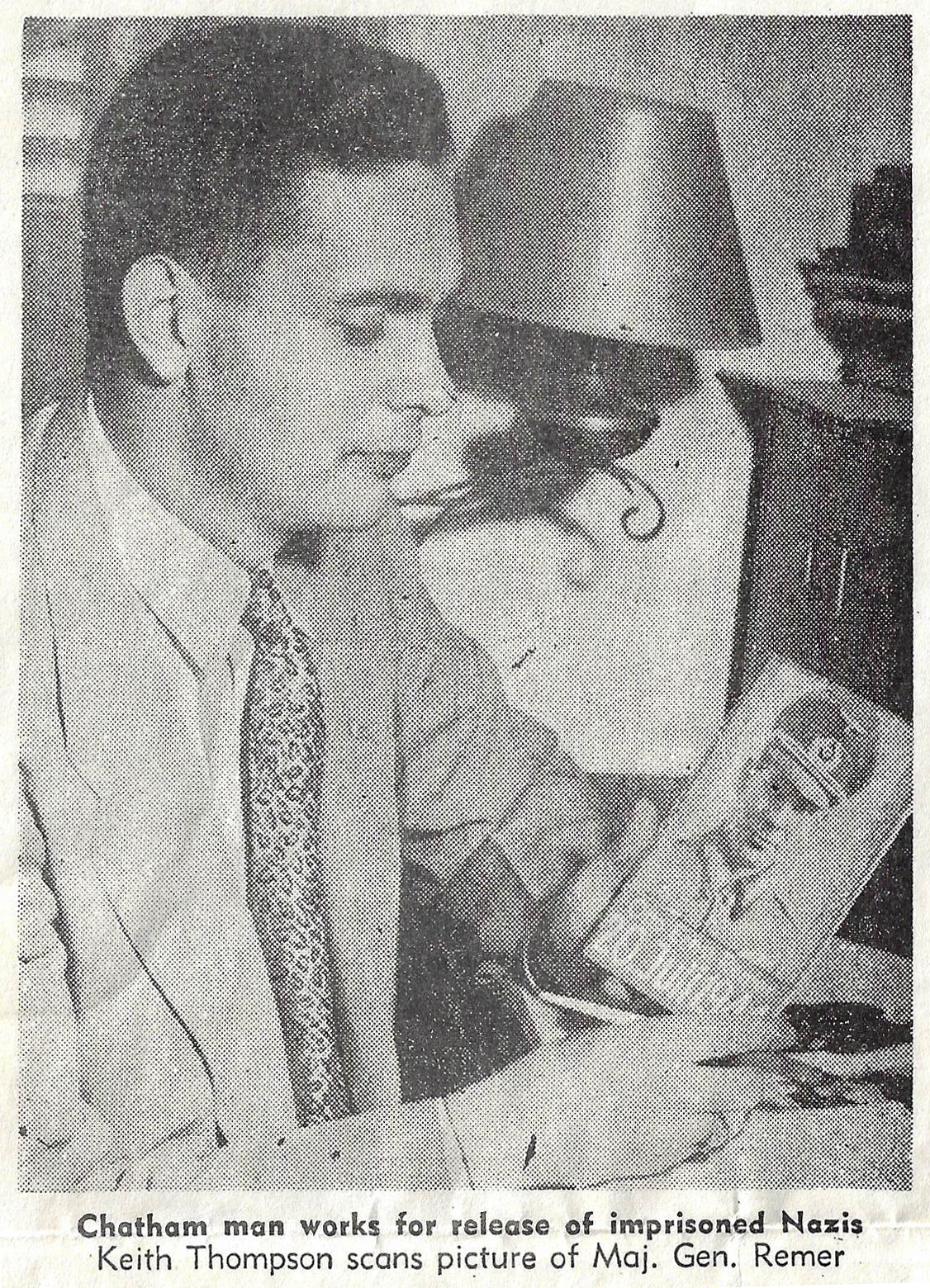
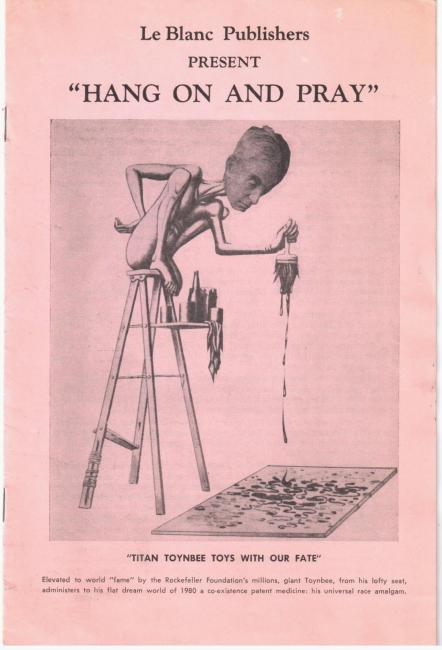
In author’s blurbs and other capsule biographies, the late H. Keith Thompson Jr. is usually listed as something like, “NYC corporate executive,” or sometimes, “public relations executive.” But what sort of corporate executive is never explained, let alone the name of the corporation. It is known that he sometimes worked for his father’s small printing firm in the Financial District, yet that can hardly be what he meant when describing his past as a corporate executive. (more…)
Tag: H. Keith Thompson
-
Taylor Caldwell
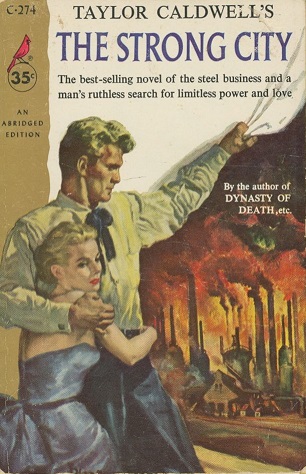
The Strong City
Originally published in 1942; republished by Open Road Integrated Media, Inc. (New York: 2018)This has taken me much longer to write than originally planned. I blame annoying love stories for the delay.
The way I find new books to read is sometimes convoluted. This time, it was via Doenitz at Nuremberg: A Re-Appraisal (1983), a collection of statements by high-ranking officers, politicians, diplomats, and other public persons on the 1946 trial that condemned Grand Admiral Karl Dönitz, the Reich’s last head of state, to ten years in prison. (more…)
-
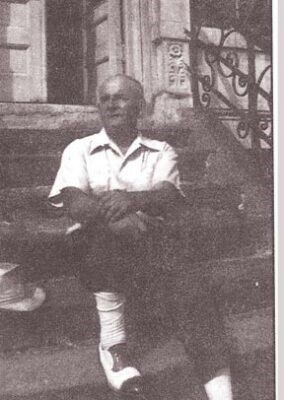
Frederick Charles Ferdinand Weiss is one of the more elusive figures of the mid-twentieth-century American Right. The smudgy late-1940s snapshot I’ve scanned here — Fred on a Yorkville doorstep — and then duotoned in an attempt to make it presentable seems to be the only portrait available. That may be symbolic.
60 or more years ago, Fred sometimes popped up in Drew Pearson’s political-gossip columns, usually named alongside H. Keith Thompson and “Ulick Varange” (alias Francis Yockey or Frank Healy), in a purported triumvirate of intellectuals and activists affiliated with the new Socialist Reich Party (SRP) in West Germany in the early 1950s. (more…)
-
1,017 words
Charles Harold Keith Thompson Jr. (September 17, 1922 – March 3, 2002), more familiarly known as Keith Thompson, was Francis Parker Yockey’s primary US colleague. He was born in Orange, New Jersey of English, German, and Scottish descent. Dr. Hans Thomsen, Keith’s cousin, was the last German chargé d’affaires in Washington DC prior to World War II, and they worked closely together to keep the USA out of the war. At Drew College and Yale, Thompson expressed his opposition to the USA’s having fought in World War I and becoming involved in another war against Germany. (more…)
-
1,263 words
My theory on Feds is that they’re like mushrooms: Feed ’em shit and keep ’em in the dark.
–Mark Wahlberg’s character in Martin Scorsese’s The Departed)The gracious and courtly Harald Keith Thompson — he told me to call him H. K., as we had too many Keiths around — would never put it that crudely. But when it came to disseminating (mis)information, H. K. and Marky-Mark were very much on the same page.
The wonder is that some investigators would gladly repeat his stories as gospel truth even when they knew Thompson liked to tease and deceive. (more…)
-
987 words
Charles Harold Keith Thompson Jr. (September 17, 1922 – March 3, 2002), more familiarly known as Keith Thompson, was Francis Parker Yockey’s primary US colleague. He was born in Orange, New Jersey of English, German, and Scottish descent. Dr. Hans Thomsen, Keith’s cousin, was the last German chargé d’affaires in Washington DC prior to World War II, and they worked closely together to keep the USA out of the war. At Drew College and Yale, Thompson expressed his opposition to the USA’s having fought in World War I and becoming involved in another war against Germany. (more…)
-
988 words
Charles Harold Keith Thompson Jr. (September 17, 1922 – March 3, 2002), more familiarly known as Keith Thompson, was Francis Parker Yockey’s primary US colleague. He was born in Orange, New Jersey of English, German, and Scottish descent. Dr. Hans Thomsen, Keith’s cousin, was the last German chargé d’affaires in Washington DC prior to World War II, and they worked closely together to keep the USA out of the war. At Drew College and Yale, Thompson expressed his opposition to the USA’s having fought in World War I and becoming involved in another war against Germany. (more…)
-
Frederick Charles Ferdinand Weiss (July 31, 1885 to March 1, 1968) was along with H. Keith Thompson, Yockey’s primary US collaborator. Yockey, Thompson and Weiss engaged in joint literary projects, with numerous pamphlets published by Weiss and written with the common designation X.Y.Z. (more…)
-
Part 2 of 2
An Unexpected Party
The Fortean Society was founded on January 26, 1931, with a great fanfare of sounding brasses, tinkling cymbals, after-dinner speeches, and press releases. Thereafter the Society did practically nothing for six years.
-
2,062 words
Part 1 of 2
An unlikely linchpin of Postwar America’s Far Right was a slick-haired, grinning ad copywriter and ex-actor with the mad moniker of Tiffany Thayer (1902-1959). Thayer earned a handsome pile as scribe of radio jingles (Pall Mall cigarettes) and “meretricious bestsellers” (Time, May 26, 1956)—quite enough for an apartment on swank Sutton Place and a summer house on not-yet-swank Nantucket—but his most enduring legacy was likely his Fortean Society, (more…)
-
10,255 words
Editor’s Note:
The following interview with H. Keith Thompson is based upon a typewritten transcription of the the original taped interview. Unless otherwise noted, additions in square brackets are in the typescript as well. There are also a number of hand-written corrections and additions on the typescript. Since the typescript was seen by Thompson, I am assuming that either he made these corrections himself or at least approved of them, so I have incorporated them where legible. For more on Thompson’s life and work, see Kerry Bolton’s excellent essay “H. Keith Thompson, Jr.“
-
4,169 words
Translations: German, Portuguese
“Eventually responsible leadership for a restive mass of some 180,000,000 Latin Americans will evolve. Already the seeds of revolt against Jewish-American economic domination have been sown. Witness Cuba.” — Francis Parker Yockey, 1961.[1]
-
Part 3 of 3
Soviet Anti-Zionism, a Jewish-Communist Ploy?
Neither Madole nor Common Sense seems to have left a discernible legacy on the extreme Right with the demise of both in the late 1970s. However, with the 1967 Arab-Israeli war there was a new impetus for Soviet anti-Zionism. (more…)