If you’ve had anything to eat in the last few years, surely you’ve experienced sticker shock. I knew there was something up when I couldn’t do a modest grocery run without my pocketbook being lightened by over two hundred bucks. As for restaurant food, even proletarian chow like burgers and fried chicken is starting to become rare indulgences for anyone without a comfortably bougie income. What’s up with that? (more…)

Tag: Adam Smith
-
-
One of the most beautiful theories in modern thought is the “Invisible Guiding Hand,” credited to 18th century Scottish philosopher Adam Smith. It describes how, through a random, organic process composed of an uncountable number of independent decisions, free markets achieve the most efficient use of resources. (more…)
-
3,251 words
Libertarianism can elicit strong reactions from dissidents these days, largely because it has been such a common gateway drug for the Right. Many white identitarians today came of age as libertarians, and so have intimate knowledge not only of that marvelously balanced and consistent belief system, but of all the reasons why they ultimately abandoned it. Libertarianism, despite its virtues, has nevertheless proven inadequate as a political ideology, and is therefore a recipe for defeat for those who wish to stem or reverse the rising tide of the Left. This does not mean, however, that libertarianism should be abandoned completely. (more…)
-
August 3, 2023 Alain de Benoist
Against Liberalism:
Society Is Not a Market,
Chapter I, Part 3: What Is Liberalism?
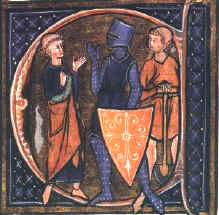
The holistic society of the Middle Ages, as embodied in the “Three Orders of Mankind,” began to be broken down by the coming to prominence of the marketplace with the rise of nation-states.
4,142 words
Part 3 of 3 (Introduction Part 1 here, Chapter I Part 2 here)
Translated by F. Roger Devlin
This strictly economic representation of society has considerable consequences. Finishing off the process of secularization and “disenchantment” of the world that is characteristic of modernity, it results in the dissolution of peoples and the systematic erosion of their particularities. At the sociological level, the adoption of economic exchange leads the society to be divided into producers, owners, and sterile classes (such as the former aristocracy) at the end of an altogether revolutionary process. (more…)
-

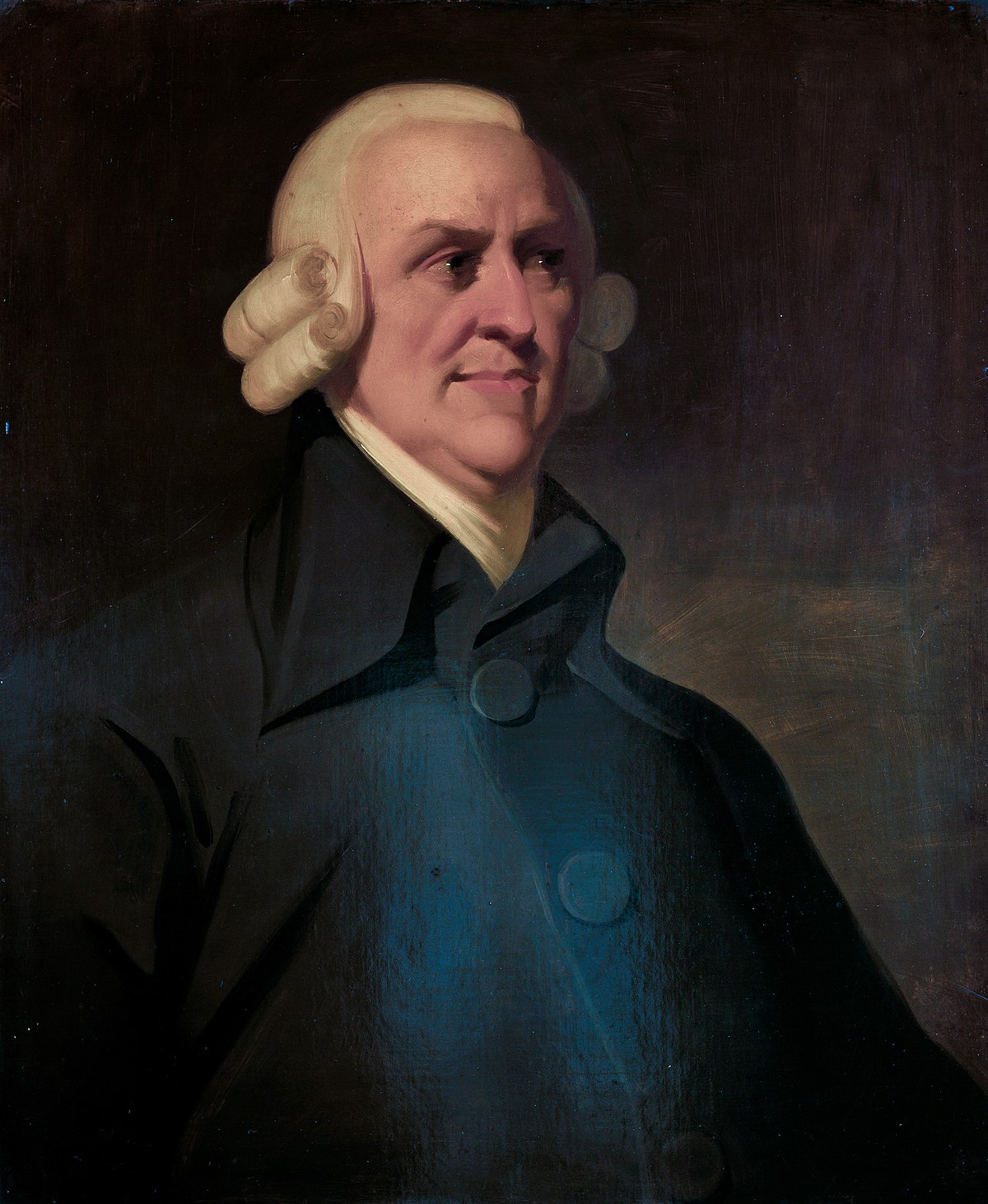
The Scottish economist Adam Smith, who understood the ways in which the market would transform human relations already at the dawn of liberalism.
3,287 words
Part 1 of 3 (Introduction Part 1 here, Chapter I Part 1 here, Chapter I Part 3 here)
Translated by F. Roger Devlin
Liberalism must, however, recognize the fact of society. But instead of asking why the social realm exists, liberals are mainly preoccupied with understanding how society is able to establish itself, maintain itself, and function. Society, as we have seen, is for them nothing but the sum of its members (the whole is nothing but the sum of its parts). It is nothing but the contingent product of individual wills, a mere assemblage of individuals all seeking to defend and satisfy their particular interests. (more…)
-
Correlli Barnett
The Collapse of British Power
Frome & London: Butler & Tanner Ltd., 1972Correlli Barnett is one of the rare British historians who views the Second World War as a disaster rather than in the usual flummery proclaiming that it was Britain’s “finest hour.” Barnett frames the scale of the calamity by illustrating Britain’s situation thusly: (more…)
-
Alex Preda
Framing Finance: The Boundaries of Markets and Modern Capitalism
Chicago: University of Chicago Press, 2009How is it that formerly socially unacceptable activities become acceptable? One can point to numerous examples throughout history of seemingly sudden reversals or alterations of social norms. Some of these, of course, work in favor of the greater good (however defined), others clearly do not. (more…)
-
August 13, 2013 Derek Hawthorne
D. H. Lawrence’s Critique of Idealism
3,603 words
“We are now in the last stages of idealism,” Lawrence writes in Psychoanalysis and the Unconscious, and he goes on to claim that psychoanalysis is conducting us through those last stages.[1] Furthermore, he also tells us that idealism is “the one besetting sin of the human race.”[2] What does Lawrence mean by idealism, and why is he so opposed to it?
-
8,580 words
Translated by Greg Johnson
Translator’s Note:
In “Critique of Liberal Ideology,” Alain de Benoist uses the term “liberalism” in the broad European sense of the term that applies not just to American liberalism but also to American libertarianism and mainstream conservatism, insofar as all three share a common history and common premises. (more…)
-
2,224 words
The French Age of Enlightenment witnessed and celebrated an economic revolution: the rapid growth of speculation and a money economy, and a corresponding diminution in the importance of landed wealth. Bonald believed that the change had been brought about by the practice of usury. (more…)