Counter-Currents
  • Advertise
  • Private Events
  • T&C
  • About
  • Contact
  • RSS
    • Main feed
    • Podcast feed
    • Videos feed
    • Comments feed
  • Welcome
  • Webzine
  • Books
  • Merch
  • Podcasts
  • Videos
  • Donate
  • Patrons
  • Subscribe
  • Crypto

LEVEL2

Donate Now Mailing list

Writer of June

(4 votes) David M. Zsutty

Article of June

Why White Advocates Should Avoid “Based Blacks” by Dani Vypont 4 votes
  • Welcome
  • Webzine
  • Books
  • Merch
  • Podcasts
  • Videos
  • Donate
  • Patrons
  • Subscribe
  • Crypto
    • Replacement Migration & Hypergamy

      F. Roger Devlin

      26

    • Kurds of a Feather Flock Together:
      Europe’s “Racist” Parakeet Tweet-Storm

      Steven Tucker

      1

    • Elevator Pitch to a Billionaire
      Money, Money, Money

      Ondrej Mann

      1

    • All Hail Rhodesia

      Spencer J. Quinn

      3

    • Nationalism This Week
      Disenfranchisement

      Greg Johnson

      29

    • The Murder of Ann Widdecombe

      Lipton Matthews

      9

    • Disclosure Day
      Please, Keep It Undisclosed

      Francisco Albanese

      12

    • Remembering Carl Schmitt
      July 11, 1888–April 7, 1985

      Greg Johnson

      1

    • Editor’s Update
      Fundraiser Update & New Books

      Greg Johnson

      1

    • Third Homeland Institute Poll on the Great Replacement

      David M. Zsutty

      12

    • The Bitter End of Western Metaphysics:
      Heidegger on Nietzsche, Part Five (Conclusion)

      Collin Cleary

      9

    • Fraudulent Black British History

      Mark Gullick

      7

    • A White Nationalist Response to Scott Greer

      Dave Chambers

      25

    • The Miami Mall Incident:
      Black Youths or Black Extraterrestrials?

      Dominic Fox

      6

    • The Theology of Three Populisms

      Morris van de Camp

      2

    • The Dangers of Skilled Immigration

      Lipton Matthews

      25

    • The Brotherhood of the Bell

      Beau Albrecht

      16

    • Endeavor: What Rome Means to Me

      Endeavour

    • When the Family Becomes Predation

      Jayant Bhandari

      5

    • RICU: The Gentle Art of Persuasion

      Mark Gullick

      7

    • Mind of Darkness:
      A Review of Lipton Matthews’s Busting African Delusions

      Derek Stark

      12

    • Remembering Revilo Oliver
      July 7, 1908–August 20, 1994

      Greg Johnson

      2

    • Some Advantages of Irish Nationalism

      Greg Johnson

      31

    • America at 250 from the National Cathedral

      Gabriel Anderson

      18

    • Why Not Stop All the Clocks?
      Modern Conservatism’s Flagging Commitment Towards Turning Back Time

      Steven Tucker

      3

    • Remembering Jean Raspail
      July 5, 1925–June 13, 2020

      Greg Johnson

      2

    • Editor’s Update
      Fundraiser Update & New Books

      Greg Johnson

    • The Ethnic Reality of FIFA 2026

      Samuel Valleus

      13

    • Nationalism This Week
      Tucker’s New Party

      Greg Johnson

      30

    • Ethiopia Against Italy
      How the Italo-Ethiopian Wars were part of the conflict between Eastern & Western Christiandom

      Morris van de Camp

    • Please Vote in Our Writer & Article of the Month Poll

      Greg Johnson

    • Available for Pre-Order!
      F. Roger Devlin’s Not Hooking Up

      F. Roger Devlin

    • Kolberg: The Last Nazi (or Prussian?) Film

      Steven Clark

      2

    • America 250 & The Fate of Empires

      Richard Houck

      20

    • Available for Pre-Order!
      Greg Johnson’s The Battle of the Books

      Greg Johnson

    • Why All the Silence About Blacks Being Kicked Out of South Africa?
      Because It’s Other Blacks That Are Doing It.

      Steven Tucker

      10

    • Zelensky, the Jewish Conspiracy Narrative, & the Demographic Replacement of Ukraine:
      A Critical Analysis of a Disinformation Discourse within the European Identitarian Right

      Luís Graça

      30

    • The Original Congressional Debate on Birthright Citizenship

      Alex Graham

      13

    • America at 250
      Unmanifested Destiny  

      David M. Zsutty

      32

    • The Normies are Waking Up:
      The Alliance for Responsible Citizenship Conference, London 2026

      Lipton Matthews

      2

    • Ethnic Vigilantism: The Movie

      Mark Gullick

      15

    • Lothrop Stoddard’s The Revolt against Civilization

      Kevin MacDonald

      2

    • David Zsutty on Political Organizing

      David M. Zsutty

    • PC-Incompatible Gaming:
      Plantation Simulator and the “Problem” of Racist Video Games

      Steven Tucker

      3

    • Remembering Lothrop Stoddard
      June 29, 1883–May 1, 1950

      Greg Johnson

      1

    • Editor’s Update
      Fundraiser Update & Upcoming Projects

      Greg Johnson

    • Nationalism This Week
      Metapolitics Wins:
      Scott Greer’s Whitepill

      Greg Johnson

      8

    • Remembering Colin Wilson
      June 26, 1931–December 5, 2013

      Greg Johnson

      3

    • Kevin Deanna on Political Organizing

      Kevin Deanna

      1

    • The Bitter End of Western Metaphysics:
      Heidegger on Nietzsche, Part Four

      Collin Cleary

      6

    • Peter Quint

      Replacement Migration & Hypergamy

      the proportion who mix is higher than marriage stats would lead people to believe. That’s the actual...

    • Scott

      Some Advantages of Irish Nationalism

      Well, one of caveats against Kennedy's "A Nation of Immigrants" hubris (and that is what it was) is...

    • Dani Vypont

      Replacement Migration & Hypergamy

      One case from American history has always especially impressed me. Pretty much all the sources agree...

    • Dani Vypont

      Replacement Migration & Hypergamy

      You constantly post the most controversial and self-defeating thing possible under articles. This...

    • Peter Quint

      Replacement Migration & Hypergamy

      White women are the most racially disloyal women of all races. I always assume any White female I...

    • Scott

      Disclosure Day
      Please, Keep It Undisclosed

      Dennis Weaver seemed miscast to me. I liked his shtick as McCloud, the New Mexico cowboy marshal,...

    • Connor McDowell

      Replacement Migration & Hypergamy

      I’ve seen this OKCupid miscegenation argument before, and while much of my evidence is anecdotal, I...

    • Dominic Fox

      Nationalism This Week
      Disenfranchisement

      Even a real community will consist mostly of people who are only somewhat similar in character/...

    • Dani Vypont

      Replacement Migration & Hypergamy

      @JamesSunderland With regard to one of your earlier posts, I did some research, and it is ...

    • Dani Vypont

      Replacement Migration & Hypergamy

      What parts of the United States would you say have the most and least interracial relationships?It...

    • Dave Chambers

      All Hail Rhodesia

      Rhodesia is an inspiration to all of us whose families have had to flee the neighborhoods and...

    • CC reader

      Disclosure Day
      Please, Keep It Undisclosed

      Duel was a very good movie, and it was made for tv. Good suspense, camera work, musical score, and...

    • WU

      Replacement Migration & Hypergamy

      I visited Norway 3 years ago, and the experience was so strange it is worth relating. In Bergen,...

    • Dave Chambers

      Replacement Migration & Hypergamy

      What parts of the United States would you say have the most and least interracial relationships?

    • CC reader

      Third Homeland Institute Poll on the Great Replacement

      If a white ethnostate is carved out, the 67% who voted against returning to 60% white or higher...

    • Zarathustra

      Replacement Migration & Hypergamy

      MTV and Hollywood are partly to blame for this.

    • Dani Vypont

      Replacement Migration & Hypergamy

      I once had a Norwegian nationalist ask me to tell him the degree of mixing between White women &...

    • James Sunderland

      Replacement Migration & Hypergamy

      With regard to one of your earlier posts, I did some research, and it is possible to determine the...

    • Glide Ratio 0:1

      Replacement Migration & Hypergamy

      Maybe the NSDAP were correct about Persians (you could be Arab?) being Aryan. You seem to suffer...

    • Fionn McCool

      Replacement Migration & Hypergamy

      Dani, for what it’s worth, your 92% figure refers to biracial children born to black fathers and...

    • Earth Day Special

      John Morgan

      12

    • A Robertson Roundup
      Remembering Wilmot Robertson
      (April 16, 1915 – July 8, 2005)

      Margot Metroland

      13

    • The Paranoid Style in White Nationalism

      Greg Johnson

      30

    • Join the Dance!

      Andrew Hamilton

      1

    • We Can’t Save the Earth Without Reducing African Birth Rates

      James Dunphy

      36

    • “I’m Not a Conspiracy Theorist, but . . .”:
      Jeffrey Epstein’s Death Gives New Life to “Conspiracy Theories”

      Greg Johnson

      22

    • Sylvia Plath: Stasis in Darkness

      Vic Olvir

      17

    • Vanguardism, Vantardism, & Mainstreaming

      Greg Johnson

      80

    • Aviation, Geography, & Race

      Charles Lindbergh

      3

    • Some Thoughts on Yule

      Collin Cleary

      4

    • Living in Truth:
      A Yuletide Homily

      Jef Costello

      7

    • John Kennedy Toole’s A Confederacy of Dunces

      Greg Johnson

      20

    • On Aleksandr Solzhenitsyn’s Warning to the West

      Spencer J. Quinn

      7

    • Elitism, British Modernism, & Wyndham Lewis

      Jonathan Bowden

      6

    • Philip K. Dick’s Do Androids Dream of Electric Sheep? as Anti-Semitic/Christian-Gnostic Allegory

      Greg Johnson

      20

    • “Conspiracy Theory” or Conspiracy?

      Andrew Hamilton

      21

    • Remembering H. P. Lovecraft
      (August 20, 1890–March 15, 1937)

      Greg Johnson

      3

    • Who Are We?
      Nordics, Aryans, & Whites

      Greg Johnson

      71

    • Remembering William Gayley Simpson
      (July 23, 1892–December 31, 1990)
      A Pleasant Afternoon with Harriet & Bill Simpson

      Margot Metroland

      18

    • Here are the Young Men
      Remembering Ian Curtis
      (July 15, 1956–May 18, 1980)

      Mark Gullick

      18

    • Percy Grainger
      Artist of the Right

      Alex Graham

      7

    • Remembering Revilo Oliver
      (July 7, 1908–August 20, 1994)

      Greg Johnson

      18

    • The Meaning of July 4th for the White Man

      Gregory Hood

      13

    • The Front National’s Evolution

      Bruno Mégret

    • Merwin K. Hart
      Forgotten American Hero & Man of the Right

      Morris van de Camp

      10

    • George Orwell’s Nineteen Eighty-Four

      Jonathan Bowden

      8

    • Carleton S. Coon
      Scientist & Reluctant White Advocate

      Morris van de Camp

      4

    • The Kwanzaa Absurdity Will Be Dwarfed by Juneteenth

      Robert Hampton

      12

    • Stravinsky

      Alex Graham

      7

    • Like the Roman:
      Remembering Enoch Powell (1912-1998)

      Mark Gullick

      23

    • Exclusive Interview with Karel Veliky:
      The Final Chapter in the Film Series! Part II

      Ondrej Mann

      2

    • Exclusive Interview with Karel Veliky:
      The Final Chapter in the Film Series! Part I

      Ondrej Mann

      2

    • Nietzsche & Race

      Mark Gullick

    • The Crisis of Chinese Technology Thieves

      Morris van de Camp

      1

    • The Zodiac Killer

      Mark Gullick

      12

    • José Pedro Zúquete’s The Identitarians

      Greg Johnson

      3

    • Berlin: City of Stones

      Spencer J. Quinn

      6

    • Headbanging Lite

      Mark Gullick

      5

    • The Russians are Coming/The Russians are Coming

      Steven Clark

      2

    • The Cruelty of Kindness

      Morris van de Camp

      11

    • Jonathan Bowden’s Deliverance
      Part 7

      Jonathan Bowden

    • Lothrop Stoddard’s The Revolt Against Civilization

      Spencer J. Quinn

      15

    • About Film “From the Right”

      Karel Veliky

    • The 1970s: The Golden Age of Hijacking

      Morris van de Camp

      21

    • Jonathan Bowden’s Deliverance
      Part 6

      Jonathan Bowden

    • Do You Want to Play a Game?

      Mark Gullick

      1

    • Sexually Incontinent on the Indian Subcontinent:
      Who Rapes More Animals, Indians or Pakistanis? The Battle Continues!

      Steven Tucker

      3

    • Neo-Fascism in Film
      Part 5

      Karel Veliky

      15

    • The Game of Tarot

      Mark Gullick

      2

    • Institutions Cannot Be Transplanted

      Jayant Bhandari

      5

    • Jonathan Bowden’s Deliverance
      Part 5

      Jonathan Bowden

    • Crosstown Traffic:
      Jimi Hendrix & The Post-War Rock ‘N’ Roll Revolution

      Mark Gullick

      1

    • Slaves from the North:
      Finns & Karelians in the East European Slave Trade, 900–1600

      Lipton Matthews

      14

    • Neo-Fascism in Film
      Part 4

      Karel Veliky

      2

    • David Lean’s A Passage to India

      Spencer J. Quinn

      1

    • Elites are Essential to Development

      Lipton Matthews

      7

    • Jonathan Bowden’s Deliverance
      Part 4

      Jonathan Bowden

    • Neo-Fascism in Film
      Part 3

      Karel Veliky

      6

    • E. M. Forster’s A Passage to India & the Indian Mentality

      Spencer J. Quinn

      25

    • Jonathan Bowden’s Deliverance
      Part 3

      Jonathan Bowden

    • András László
    • Derek Hawthorne
    • Beau Albrecht
    • Alain de Benoist
    • Kerry Bolton
    • Jonathan Bowden
    • Collin Cleary
    • Jef Costello
    • Savitri Devi
    • Julius Evola
    • Jim Goad
    • Gregory Hood
    • Juleigh Howard-Hobson
    • Greg Johnson
    • Charles Krafft
    • Anthony M. Ludovici
    • Trevor Lynch
    • H. L. Mencken
    • J. A. Nicholl
    • James J. O’Meara
    • Christopher Pankhurst
    • Tito Perdue
    • Michael Polignano
    • Spencer J. Quinn
    • Fenek Solère
    • Irmin Vinson
    • Leo Yankevich
    • Francis Parker Yockey
    • Multiple authors
  • Editor-in-Chief

    • Greg Johnson, Ph.D.

    Featured Writers

    • Beau Albrecht
    • Gunnar Alfredsson
    • Collin Cleary, Ph.D.
    • Jef Costello
    • Morris V. de Camp
    • F. Roger Devlin, Ph.D.
    • Stephen Paul Foster, Ph.D.
    • Jim Goad
    • Alex Graham
    • Mark Gullick, Ph.D.
    • Greg Johnson, Ph.D.
    • Travis LeBlanc
    • Trevor Lynch
    • Margot Metroland
    • James J. O’Meara
    • Angelo Plume
    • Spencer J. Quinn
    • Fred Reed
    • Clarissa Schnabel
    • Michael Walker
    • David M. Zsutty

    Frequent Writers

    • Asier Abadroa
    • Aquilonius
    • Alain de Benoist
    • Kerry Bolton, Ph.D.
    • Dave Chambers
    • Steven Clark
    • James Dunphy
    • Endeavour
    • Richard Houck
    • Jason Kessler
    • Titus Livius
    • Ondrej Mann
    • Lipton Matthews
    • Mark Mazari
    • John Morgan
    • Jaroslav Ostrogniew
    • Kathryn S.
    • Christian Secor
    • Anne Wilson Smith
    • Thomas Steuben
    • William De Vere
    • Kenneth Vinther
    • Max West

    Classic Authors

    • Maurice Bardèche
    • Jonathan Bowden
    • Julius Evola
    • Guillaume Faye
    • Ernst Jünger
    • Kevin MacDonald, Ph.D.
    • D. H. Lawrence
    • Charles Lindbergh
    • Jack London
    • H. P. Lovecraft
    • Anthony M. Ludovici
    • Sir Oswald Mosley
    • National Vanguard
    • Friedrich Nietzsche
    • Revilo Oliver
    • William Pierce
    • Ezra Pound
    • Saint-Loup
    • Savitri Devi
    • Carl Schmitt
    • Miguel Serrano
    • Oswald Spengler
    • P. R. Stephensen
    • Jean Thiriart
    • John Tyndall
    • Dominique Venner
    • Leo Yankevich
    • Francis Parker Yockey

    Other Authors

    • Howe Abbott-Hiss
    • Michael Bell
    • Giles Corey
    • Jack Donovan
    • Richardo Duchesne, Ph.D.
    • Emile Durand
    • Guillaume Durocher
    • Mark Dyal
    • Tom Goodroch
    • Andrew Hamilton
    • Robert Hampton
    • Huntley Haverstock
    • Derek Hawthorne
    • Gregory Hood
    • Juleigh Howard-Hobson
    • Alexander Jacob
    • Ruuben Kaalep
    • Tobias Langdon
    • Julian Langness
    • Patrick Le Brun
    • G A Malvicini
    • John Michael McCloughlin
    • Millennial Woes
    • Michael O’Meara
    • Christopher Pankhurst
    • Michael Polignano
    • J. J. Przybylski
    • Quintilian
    • Edouard Rix
    • C. B. Robertson
    • C. F. Robinson
    • Herve Ryssen
    • Alan Smithee
    • Fenek Solere
    • Ann Sterzinger
    • Robert Steuckers
    • Tomislav Sunic
    • Donald Thoresen
    • Marian Van Court
    • Irmin Vinson
    • Book Reviews
    • Movie Reviews
    • TV Reviews
    • Music Reviews
    • Art Criticism
    • Graphic Novels & Comics
    • Video Game Reviews
    • Fiction
    • Poems
    • Interviews
    • Videos
    • English Translations
    • Other Languages
      • Arabic
      • Bulgarian
      • Croatian
      • Czech
      • Danish
      • Dutch
      • Estonian
      • Finnish
      • French
      • German
      • Greek
      • Hungarian
      • Italian
      • Lithuanian
      • Norwegian
      • Polish
      • Portuguese
      • Romanian
      • Russian
      • Slovak
      • Spanish
      • Swedish
      • Ukrainian
    • Commemorations
    • Why We Write
  • Archives
  • Top 100 Commenters
  • The Looney Bin
  • Advertise
  • Private Events
  • T&C
  • About
  • Contact
  • RSS
    • Main feed
    • Podcast feed
    • Videos feed
    • Comments feed
Sponsored Links
Europa.com Above Time Coffee Antelope Hill Publishing Paul Waggener IHR-Store Spencer J. Quinn American Renaissance Jim Goad The Occidental Observer
Print March 15, 2019 2 comments

Converting Falsehoods into Truth:
Notes on Science, History, & Postmodern Strategies of Control, Part II

Eumaios

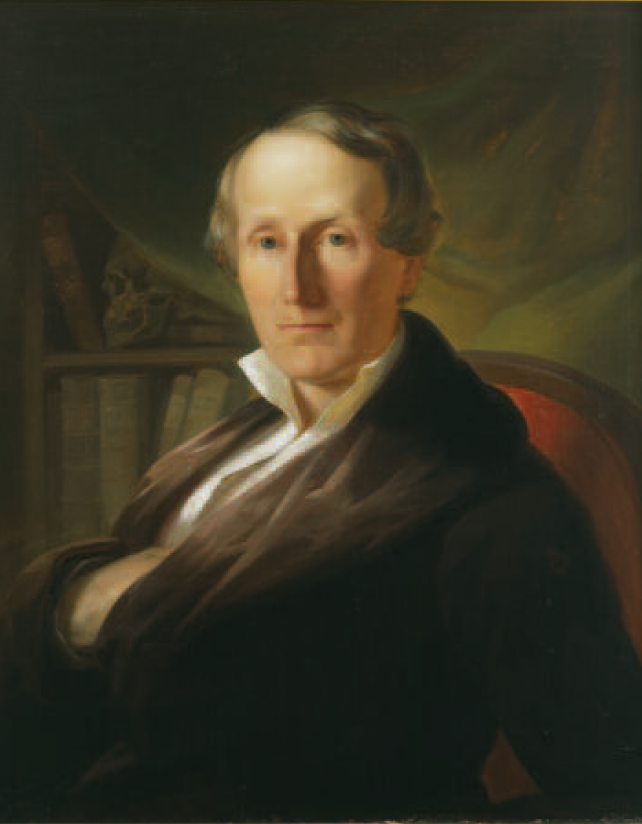
Samuel Morton, who established the brain sizes of the various races

5,371 words

Part II of III (Part I here, Part III here)

The unavoidability of “presentism” and the foil of “triumphalism”

Despite Chesterton’s war with the evils of his day, the modern cult of the present is sustained by a particular condition, whose nature is a mutating subject with internal logics to which the Dissident Right should keep itself attentive. To this end, it is worth considering how modern academics understand their impulse to give disproportionate causal agency to the present. The modern iteration of this impulse is known by some of its adherents as “presentism.”[1] Like most instruments of Leftist control, it was shaped by a particular image of the Second World War, and it both presumes and strategically conceals its own unquestionable moral framework.

I found the concept of “presentism,” as a historiographic device, most effectively defined and defended in a seminar led by a historian whose interest in the history of science attracted her to objects whose movement through time are more difficult to describe with standard historical methods. For her purposes, she defined “presentism” as the act of describing the past in the terms of the present. This was contrasted with situating the target of one’s history in its “context.” She noted that the practice of “presentism” is traditionally viewed as the complete opposite of what a historian should be doing, and is thus considered to be one of the most rudimentary mistakes a historian can make in “traditional” historical work. Indeed, it is the presumption that “presentism” constitutes bad history which ascribes any meaning to the term “anachronism.” To call something an anachronism presupposes the inappropriateness of imposing something on the past that was not there before you looked at it. She noted that the charge of “anachronism” is often levied against “whiggism,” whose adherents believe in the existence of a disembodied force in all historical situations called “progress.” “Progress” is present in all whiggish accounts of all historical events and periods, either as an object directing history or as an object repressed by regressive or reactionary forces. They define “progress” as that universal principle which is necessary, inevitable, moral, and independent of context.

Rather than arguing that attacks on presentism and whiggism were “wrong,” the speaker contended that they simply made historical work impossible by presuming a normative alternative that was both unattainable and undesirable. She noted that historians have traditionally trained their students to believe that avoiding “presentism” is a necessary task of proper historical work, and that it is accomplished by “contextualizing” one’s historical agents. Contextualization avoids retrospectively applying causal explanations which might apply to conditions in the present, but not to those in the past, and thus avoids presentism. She then argued that this standard is indefensible, because successful “contextualization” would require that one view historical events in situ. However, if one could enter the past to observe its causal operations from that vantage point, and without one’s modern causal explanations, one’s account would have no explanatory frame to account for the future that this contextualized state of the past resulted in, which can only be viewed from the present.

She argued that this was a problem because causal descriptions linking events in the past to later events are a necessary function of history. Without them, there can be no causal accounts of a “history” unfolding through time, but simply isolated accounts of different “presents” that may as well be achronological. What is “Chinese history,” if not the causal chain of those events that led to “China” as it now is, and which may be traced back to “China” as it was? There is no “Chinese” history, or “Western” history, or indeed any kind of “history” without an account of a particular causal chain moving between discrete events.

She finished off her argument by reasserting that any truly “contextualized” account of a subject or state of history could only emerge from a historian who found some way to shed the present and enter a state of the past in every meaningful way. To accomplish this would not only necessitate a time machine, but a way to wipe the time-traveler’s consciousness of the present, which would make the account of any such historian cease to serve the function of history. That is because it would simply amount to an account of the present coming from the past, the likes of which a modern historian would have to treat as a primary source. This source would still need to be assessed from the perspective of the present in order to be conveyed to those in the present who wish to understand the continually unfolding trajectory of the past. Presentism, then, is unavoidable, since its only alternative is not only impossible, as we cannot truly enter the past, but would prove incapable of fulfilling the functions of historical work, even if it were possible.

She then made a concession to those of us shaking our heads at this seemingly obscurantist postmodern wordplay. She told us that, despite presentism being impossible to remove entirely, its worst form can and should be removed. This “worst form” of presentism was called “triumphalism.” She contended that triumphalism is the act of imposing one’s view of how history should have unfolded on how history did unfold. In some sense, “triumphalism” is presentism and anachronism on deontic steroids, and simply amounts to writing a history in defense of a winner, regardless of who they are or why they won. Scientists, she argued, are mostly guilty of “triumphalism,” because the historical stories of their own disciplines so often presume that the only historical forces that directed their science to where it currently is were those of logical necessity.

Most practicing scientists who describe a past state of their science believe that its current state has a superior grasp of “truth” than its antecedent states. After all, if science is that type of knowledge defined by being the best path to universal objective truth at any point in time, then surely the history of science is contingent only on its movement toward that truth? She claimed that this assumption invariably leads historical accounts of key changes in scientific practice to imply, or explicitly state, that historical events of change in science happened because they should have happened. What should have happened gets defined as whatever led science to be what it is now, and thus by whatever science is now. This contrasts with simply observing that one’s historical target did change, and then exploring reasons as to why, which could have various equally plausible explanations apart from whatever one in the present believes should have occurred. Furthermore, if events which changed the history of science are not entirely explained by historical context, those changes are caused by something apart from local historical circumstance. If the cause that acts on science, which determines its changes in history, is not the historical context local to the change, what is that cause? Any cause that does not emerge from a particular historical context did not come to be at any particular time in any particular place, and is thus ahistorical and eternal.

Have ahistorical and eternal things existed in the history of human society that acted as causes on human history? Such a thing is difficult to imagine in a universe purported to be physical. The speaker ventured that it was by considering this question that one may observe the historical commitments of many scientists to be fundamentally religious, magical, or mythological in nature. How else can one describe a belief in an eternal force outside time that acts on human history and which is used to explain why historical events occurred?

As a final stake in the heart of “triumphalism,” the speaker asked, “If the Nazis had won, would it be right to just tell history from their perspective? Would the fact that they were triumphant have made it true?” It is frustrating, but unsurprising, that she was incapable of recognizing the more meaningful implications of her own reasoning. If the “Nazis” were objectively wrong, but the self-serving triumphalist history they would have normalized would have framed them as being “right,” what does this say about the camp that was actually triumphant? What does this say about the worldview that the victorious camp universalized, and how open one should be to critiquing it? She might say that this is different, because the facts of history reveal to us now that the Nazis were the “wrong” side who simply deceived their population, and that the “right” side was victorious. Yet, it was she who had just argued that it would be impossible to know if triumphalist Nazi propaganda was “true” history, or just propaganda, unless historians refused to unquestioningly accept the triumphalist account and instead allowed each other to view history through different lenses; some of which would need to entertain the possibility that the prevailing narrative, and the “facts” that it conveyed, are false. This logical paradox being stated, I take it no further, and have no interest in its historical implications.

The historical necessity of whiggism and other evils

The core thrust of my colleague’s argument was that “presentism” is impossible to escape, and thus it should not be the objective of historians to do so. However, she portrayed triumphalism as borderline “irrational,” because it imposed causal objects on the past that were outside time and defined historical truth based on whatever the winner’s perspective happened to be. Examples included the eternal causes that scientists believe can explain events of change in the history of science. However, not only was triumphalism depicted as an absurdity, but her example from counterfactuals pertaining to the Second World War portrayed it as potentially immoral. If a historical account can be immoral, and it is impossible to provide a historical account that is free of the present, and thus “objective,” what does this tell us about the role of the historian?

If there is no objective truth to be found in history, then there are no truthful lessons to be taken from history except what those in the present want those lessons to be. If such is the case, then it would be foolish for historians to concern themselves with such a task. Furthermore, if there is no objective truth about the nature of the past that caused the present – if that past is dead, and we can never know what it was – then history can only affect the present by way of how those in the present view their past. Thus, rather than trying to curate an “objective” view of the past, which could only ever amount to imposing a dominant narrative, perhaps historians should instead focus on the effects of the dominant narrative they impose?

If they can’t do history in a way that reveals what is objectively “true” about the past, they can still do history in a way that improves the here and now. Perhaps your role as a historian could be to write the narratives, and thus reveal the “truths” that have been “marginalized” or “excluded” by “dominant narratives”? Doing so couldn’t come at the expense of objective truth, and it would be an effective way to prevent history from collapsing into “triumphalism.” However, adopting this historical approach would also serve other constructive tasks for those who wish to “improve” the world. Furthermore, if present narratives determine historical truth, then the past is contingent on the present. If the past determines the future, and the past is contingent on the present, then the future is contingent on how historical narratives in the present cause the future to view the past. Then, surely, historians are morally obliged to write historical accounts to make the future more like one would want it to be? Perhaps that is how historians’ training and “power” can contribute meaningfully to the world?

It is through reasoning like this that the prevailing conventions in Western history departments could shift the way they did. They moved from presuming it to be the task of historians to record what happened in the past as reliably as possible, so that we might learn from it in the present and preserve it for the future, to believing that the task of historians is to change existing accounts of history to achieve moral ends in the present in order to cleanse the future of the injustices that are baked into the history and historical narratives of the present and of the past. This belief is indistinguishable from that held by Orwell’s fictional state of Oceania, which asserted that history has no objective foundation, and thus that “who controls the past controls the future: who controls the present controls the past.”[2] Presentism justifies reaching into the past and extinguishing any historical object with which one finds moral exception in the present, ranging from “white people,” to “Germans” or “Englishmen,” to “Western civilization.”

A final point pertains to whiggism. Western history departments believe presentism to be inescapable, and triumphalism is believed to be dangerous. Consequently, presentism can be accepted where it allows for historians to be aware of their moral objective to produce historical accounts to prevent “triumphalism,” which they associate with the closed-minded “Right wing.” Because most Western historians don’t believe in objective historical truth, they don’t believe the “Right wing” could have any genuine interest in it. Thus, they believe “Right wing” history, which purports the existence of objective historical categories like discrete “peoples,” “nations,” and “cultures,” could only actually be constructing “imaginary” narratives of things to preserve in order to accrue the power to exclude and persecute the vulnerable and powerless. To prevent such “Right wing” accounts of history becoming dominant and unstoppable requires historians to recognize the inescapability of “presentism,” and thus not waste time pursuing unattainable historical truth and to instead consider what is moral for the present and future and organize historical facts into narratives that support such moral objectives. To use a moral framework to inform how the present and the future view history is to apply a notion of “progress” to how history unfolds. This essentially defines whiggism. Whiggism, then, is simply a more enlightened triumphalism, and is necessary to shape history in order to prevent the propagation of triumphalism.

Terrifyingly, this deflated “presentism” simultaneously salvages enough monistic whiggism to serve the progressive ends of the Left, while salvaging enough relativism to impose an epistemic barrier that can rhetorically delegitimize the claims of Western peoples to know their own pasts. Self-identified peoples of European descent thus have their own views of their own history delegitimized by the academy’s claim that objective historical accounts are impossible. However, the Western academy also takes this fact to imply a moral imperative of asserting narrative control on behalf those whom they designate as oppressed. Thus, despite having their own history deconstructed on the ground that “objective” history doesn’t exist, whites are simultaneously forced to unquestioningly accept as objective fact the narrative of their own history that comes from those who denigrate it or claim to have been oppressed by it. What a truly evil thing to behold. Yet, more terrifyingly, “presentism” has created narrative effects that have proved powerful enough to exert control over science.

The morality of presentism asserting control over evolutionary science

In 1972, Stephen Jay Gould published The Structure of Evolutionary Theory, which promulgated what was ostensibly a theory of evolution known as “punctuated equilibrium.” His book-length defense of the theory includes a blurb which describes Gould’s central idea as something he “fiercely promoted” and “tirelessly defended.”[3] This is strange, but informative, language. It is usually only in rhetorical flourishes exchanged by “activists” who describe each other as having “tirelessly defended persecuted minorities,” or having “fiercely promoted human rights,” that adjectives like “fierce” and “tireless” emerge in conjunction with verbs like “promote” and “defend.” One is immediately inclined to wonder what it is about Gould’s purportedly “scientific” theory that makes descriptions of it drip with language that tends only to accompany the glorious march of social justice?

The most immediately apparent aspect that Gould’s “tireless” and “fierce” scientific work shares in common with most campaigns for “human rights” is the quality of the data and evidence upon which it is based. In this respect, it is useful to recall Gould’s revisionist hit-job on the nineteenth-century American scientist Samuel Morton. Gould attempted to portray the taxonomic models that Morton drew from human skull samples as nothing more than an act of “racism” that Morton tried to shore up with false or “misleading” statistical data. This proposition was a fundamental piece of evidence presented in defense of the larger historical narrative of science that Gould perpetuated in The Mismeasure of Man. Morton’s skulls were valuable to Gould because, in his own words, “I could analyze the data with some statistical expertise and attention to detail – and I do love to study the historical origin of great themes that still surround us.”[4] History relates that “attention to detail” took a back seat to the “great themes” in this particular case.

In defense of the “great theme” which he believed he had found, Gould claimed that Morton’s measurements of the cranial capacity in the skulls of different races involved “finagling of data” in aid of “hidden motives” that could only have been inspired by “scientific racism.”[5] Remarkably, despite Gould’s ability to access the “hidden” ratio of Morton’s motives, they proved to be but a species to the man himself. Indeed, we learn that Morton was not even aware of his own pernicious motivations, which were not “conscious,” but merely determined by “a priori convictions.”[6] This approach to Morton typifies the mangled Lucretian narrative genre that defines virtually all the histories of science published since the turn of the twenty-first century.

The idea here is that Morton did not step into the world, find data sets, and shape skull arrangements around them. Rather, he acted from his own preexisting image of the world to choose both what to study about the skulls, and then how to arrange his taxonomy. Not only that, but we are expected to believe that only Gould’s methodology grants him access to this hidden truth – this ratio – which works to determine the species of Morton’s scientific work. In this vein, we are told after Morton’s apparent “motivations” have been uncovered that they had been the true cause of the statistical data upon which Morton’s theories were based. We are expected to simply accept the presumption that, since Morton’s motivations were judged to be morally wrong by Gould, this increases the likelihood that his scientific findings are false. Would his findings have been more likely to be accurate if Gould judged Morton’s motivations to be morally laudable?

Indeed, it is quite remarkable that the problem of unscientific bias in scientific practice seems to only obtain of those scientists whose findings are viewed to be inconvenient or morally objectionable by enlightened thinkers like Gould. Even more remarkably, wherever morphological, and now genetic, studies of human remains propose theories that support a Leftist worldview, such “theories” become “findings” and science again becomes perfectly objective and ideologically uninhibited, while any accusations of ideological motivations in scientific practice become “conspiracy theories.”[7] For instance, consider the recent theory based on the “Cheddar Man” remains. The theory purports that some early inhabitants of the British Isles possibly had brownish skin, despite the legitimacy of using those genetic markers to infer skin color remaining hotly disputed.[8] By the standards that Leftist critique has established for deconstructing “Right wing” science, one could plausibly argue that it was a choice to do tests for skin color, that it was a choice to frame the “facts” and “theories” emerging from those tests as “settled science” despite the existence of different interpretations from other scientific communities, and that these choices must have occurred for a reason.

Scientists, and particularly those whose work bears on human history, often claim in public that they have the responsibility to improve the world, which includes preventing their research from lending itself to Right-wing or “racist” narratives. Some go so far as to assert that decisions internal to the research itself should be determined by that responsibility.[9] Presumably, then, their image of what an “improved world” free of “Right wing narratives” looks like should be explored as a causal factor in shaping what these fields choose to look at, what categories they choose to draw around the quantitative data they collect, and when they decide to suppress internal dissent to project a theory as “settled.” Remarkably, revealing how much influence non-scientific values have over modern scientific work, this tends to go completely unchallenged, and is even admitted by the scientific communities in question, when those values are framed in a way that aligns with the modern Western moral dispensation. The scientists involved in the Cheddar Man research would probably take pride in being told that the tests they did, the theory they chose to defend, and how they framed both for public dissemination, were all done in aid of delegitimizing “Right-wing thinking” and “racism” while supporting “diversity” and “inclusion.”

However, in the context of the Cheddar Man work, such motivations could be meaningfully described as efforts to alter the British peoples’ sense of themselves (delegitimizing “Right wing” thinking) to make it impossible to justify opposition to mass immigration from peoples with visibly distinct histories outside Britain (fostering “diversity,” “inclusion,” and counteracting “racism”). At the very least, one could demonstrate that the Cheddar Man “findings” had effects which can be framed in these terms. However, any effort to present such motivations as an explanation for the tests done on the Cheddar Man fossils, for the theory of “brown-skinned Britons” being applied to those findings, and for the theory being portrayed as fact despite being disputed, will always be written off as a case of anti-science Right-wing bigotry.

The Left has generated a carefully crafted trope of “irrational Right Wingers denying science.”[10] It provides an intuitive and widely distributed context for lending credence to the defensive memes-in-waiting that would be used to attack accurate accounts of the left’s manipulation of scientific authority to achieve their unscientific leftist ends. This memetic context makes it widely intuitive in the West that only a “racist, anti-science right-winger” could believe that such an objective scientific “finding” as Cheddar Man’s brown skin is the effect of a well-funded effort to prevent people(s) of European descent from reasserting their own narrative control of their own histories. It would further follow from such a meme that it is indicative of a paranoid Right Wing mind to note that that delegitimizing European peoples’ own historical narratives of themselves prevents them from recognizing themselves as discrete peoples which would in turn prevents them from opposing active efforts to ethnically dissolve European people(s) out of meaningful and recognizable existence. Yet, we are simultaneously expected to believe that an undisclosed burning hatred amongst scientists for anyone not of European descent – even apparently among scientists who are not white themselves – remains an entirely plausible justification for potentially delegitimizing all scientific data, models, and theories, both past and present.[11]

The stubborn power of this unbelievably harmful set of double standards emerges directly from the rhetorical work of figures like Gould. This work brilliantly situated morally depraved and entirely unscientific Leftist dogmas between both the intuitions of scientific communities and the wider Western public, such that the intuitions of both could be neatly manipulated toward Leftist ends while delegitimizing all other worldviews that try to do the same by behaving as the Left does. Nearly sixty years of scientific “critique” from what have become established disciplines like “Science and Technology Studies” has been produced only out of a far-Left ideological frame. This sustained assault has shaped scientific institutions, particularly in areas like biology, to indoctrinate scientists to subordinate what they study, how they study it, and how they analyze the data from their study to the ever-present “responsibility” to ensure that their scientific findings do not threaten the moral imperatives of “diversity” and “social justice.” In this way, the Left not only controls the critique of ideological work in scientific practice, but also the dominant ideology that is actually at work in modern scientific practice.

It is this masterfully orchestrated ideological environment that has created a situation in which even simple data might potentially lead to censorship and deplatforming on the grounds of being a hate-fact, where huge conceptual overreach surrounding issues like “Cheddar Man” can do their ideological work with all the authority of objective “truth” that much of the Western public has assumed of scientific institutions since the nineteenth century.[12] To point out the ideological work surrounding Cheddar Man is viewed by the mainstream as a clear sign not only of “racism,” but of the “unscientific” nature of Right-wing views, whereas the regular Leftist harassment of established scientists like Dr. Charles Murray and Professor Richard Herrnstein, to young scientists like Dr. Noah Carl, becomes a respectable act of “critique” that “speaks truth to power.[13][14] “scientific” worldview, while simultaneously attacking the authority of scientific practice when it proves inconvenient for the Left’s own entirely unscientific ideological objectives.

The remarkable power, attained through controlling the unscientific moral intuitions of scientific institutions, becomes even clearer when the factual accuracy of the evidence used to support Gould’s “great theme” is considered. A paper published in 2011 and entitled “The Mismeasure of Science” was written by four scientists working in areas cognate to statistics and biology. These scientists measured the skulls in question, only to find that “Morton’s data are reliable,” and that this “weakens the argument of Gould and others that biased results are endemic in science.”[15] They nevertheless felt obliged to recognize that Morton himself was indeed animated by a cruel “bias,” but that this was filtered away through methods built on the scientific method – methods which ensure that all scientists provide objective truth, despite their cruel preexisting “biases.”

To the extent that Gould’s argument rested on Morton’s data being false, his reasoning has collapsed. However, two pernicious pieces of residue remain. Gould’s narrative not only depicted Merton’s data as inaccurate, but argued that:

  1. Morton’s taxonomy was motivated by something apart from the data
  2. This motivation was “racism”
  3. The prior two facts both render Morton morally reprehensible and his science illegitimate

The remaining three propositions could remain true regardless of whether or not the data was false, which is why the time-consuming work of the scientists who disproved Gould’s statistical findings proved entirely ineffective at stemming the Leftist narratives. That was because the criticism of Gould only discussed objective facts. Were he alive, Gould could likely have easily defended his historical rhetoric by invoking postmodern hyperrealism to argue that, even if his analysis of Morton’s data was inaccurate, it revealed a “deeper truth.” By Gould’s reckoning, it needn’t be seen as particularly relevant whether Merton’s data was “false” or inaccurate. The more important issue was that Morton’s work was hopelessly mired in a bias fueled only by his burning hatred for those of his fellow men who he placed in different racial/population categories for scientific study, simply because he “despised” them.[16] This prompts a question. How could Gould have known what he claimed about Morton’s mind, and, even if he could know such a thing, what was logically or morally “wrong” about what Gould claimed to find there?

By way of a simple, but well targeted, question, we see that, with strategic use of what was ostensibly a history of science, Gould smuggled in two undefended truth statements within his depiction of Morton, which no one has called out in any serious way. The first was that Morton was motivated by “racism,” and the second was that those things which Gould purports to have existed in Morton’s mind, which he calls “racism,” are immoral, despite the lack of clarity concerning what “racism” means. These notions have in turn become safely authoritiative historical facts that can be invoked at any time as evidence that any scientific findings which the Left finds inconvenient for whatever reason can be legitimately assumed to be “racist.”

To explore the effects of this problem, it is worth returning to the article which revealed the falsity and deception of Gould’s argument that Morton’s measurements and statistical records were inaccurate. The argument that the authors critical of Gould drew from their study was that Morton may have been “biased,” but his “results” were not. Based on this position, they argued that Gould was incorrect in contending that most scientific truth claims are formed within, and shaped to serve ideological, rhetorical, and political ends. Ironically, immediately after this argument, they felt obliged to make the concession that “we find other things to admire in Gould’s body of work, particularly his staunch opposition to racism.”[17] Presumably, the claim that Gould’s science was driven by this unscientific, but laudable, moral duty means that his theoretical work should not be considered suspect, despite the revelation of his deceptive and patently false handling of statistical data. After all, any motivation to discredit Gould’s broader strokes could only work in the interests of “racism” and “hate.”

Clearly, the authors of the paper knew that they were dealing with a hot potato, and that anything less than this concession was liable to either cost them funding or alienate them from the “scientific community” and its particular interpretation of “Enlightenment values.” This reveals the true nature of the “hidden motivations” and unscientific “biases” that direct scientific truth claims in the twenty-first century, the existence of which, ironically, the authors of the paper denied. Indeed, despite all their studious scientific effort toward “debunking” Gould’s inaccurate facts, these scientists proved entirely unable to make even the slightest bit of headway in diminishing the far more powerful and meaningful assertions initially introduced by those “facts,” but which came to transcend their veracity entirely à la hyperrealism.

More specifically, these authors’ honest efforts in pursuit of “truth” proved to be impotent energy sinks unable to do anything actually meaningful, such as extricating Gould’s meme about the imperative of actively working to suppress the unyielding specter of racist “bias” in scientific research from the guiding gestalt of those who direct institutional science. Disturbingly, they also failed to notice that Gould’s successful memetic warfare embedded his own unscientific bias as a directing agent within modern scientific research. The authors even proved too autistic to realize that they were actually dictated to by this particular bias in writing their paper. If the wily rhetorical work embedded in Gould’s Mismeasure of Man proved capable of so utterly bamboozling trained scientists that it was actually able to control them, what, then, could Gould have smuggled in through his theory of “punctuated equilibrium”?

Notes

[1] David Tomar, “Historical Narratives Offer a Skewed View of the Past That Presentism Can Fix,” in Sabine Cherenfant (ed.), Presentism: Reexamining Historical Figures through Today’s Lens (New York: Greenhaven Publishing, 2019), p. 76.

[2] George Orwell, 1984 (New York: Penguin: 2008), p. 37.

[3] Stephen Gould, Punctuated Equilibrium (Cambridge, Ma.: Harvard University Press, 2007).

[4] Stephen Gould, The Mismeasure of Man (New York: W. W. Norton & Company: 2006), p. 106.

[5] Ibid., p. 74.

[6] Ibid., p. 86.

[7] Bruno Latour, “Why has critique run out of steam? From matters of fact to matters of concern,” Critical Inquiry 30, no. 2, p. 230.

[8] Selina Brace et al., “Population Replacement in Early Neolothic Britain: New Results,” bioRxiv: The Preprint Server for Biology.

[9] Race Ethnicity and Genetics Working Group, “Review Article: The use of racial, ethnic, and ancestral categories in human genetics research,” The American Journal of Human Genetics 30, no. 4, p. 527.

[10] Chris Mooney, Republican Brain: The Science of Why They Deny Science and Reality (Hoboken, N.J.: Wiley & Sons, 2012).

[11] “Chinese scientists raise ethical questions with first gene-edited babies,” Science News, November 27, 2018.

[12] “First modern Britons had ‘dark to black’ skin, Cheddar Man DNA analysis reveals,” The Guardian, February 7 2018.

[13] Jack Montgomery, “‘Smart Racism’: The Bell Curve and Public Deliberation,” Patterns of Prejudice 30, no. 1 (1996): pp. 43-60.

[14] “Open Letter: No to Racist Pseudoscience at Cambridge,” December 18, 2018.

[15] Jason Lewis, David DeGusta, Marc Meyer, Janet Monge, Alan Mann, Ralph Holloway, “The Mismeasure of Science: Stephen Jay Gould versus Samuel George Morton on Skulls and Bias,” PLOS Biology 9, no. 7 (2011), p. 6.

[16] Stephen Gould, The Mismeasure of Man, p. 63.

[17] “The Mismeasure of Science: Stephen Jay Gould versus Samuel George Morton on Skulls and Bias,” p. 5.

Converting Falsehoods into Truth: Notes on Science, History, & Postmodern Strategies of Control, Part II

Converting%20Falsehoods%20into%20Truth%3A%20Notes%20on%20Science%2C%20History%2C%20and%23038%3B%20Postmodern%20Strategies%20of%20Control%2C%20Part%20II

Share

  • Gab
  • Notes on Science, History, Postmodern Strategies of Control, Part II
    &body=%0D%0A%0D%0A%0D%0A%0D%0A%0D%0A%0D%0Ahttps://counter-currents.com/2019/03/converting-falsehoods-into-truth-part-ii/%0D%0A%0D%0A%0D%0A%0D%0A">

Enjoyed this article?

Be the first to leave a tip in the jar!

Instant Echeck GreenPay™

Related

  • The Original Congressional Debate on Birthright Citizenship

  • China’s Threat to American Security

  • The Cruelty of Kindness

  • Do You Want to Play a Game?

  • The Game of Tarot

  • 500 Years of British Art (Part 1 of 2)

  • Do You Want a Biography or a Hagiography?

  • Remembering Robert Brasillach

Tags

academiaacademic discourseanti-white rhetoriccultural MarxismEumaioshistorypostmodernismscience

2 comments

  1. rhondda says:
    March 18, 2019 at 11:13 am

    Thanks for this. Even though it is very disconcerting, it is good to know. Learning to recognize double talk and even double double talk is very hard especially when ‘I am a scientist and know better than you’ is thrown at you to end questions of clarification. How can we even get to questions of morality or ethics, if we can’t establish the scientific facts without moralizing them first?
    One of the problems I see is that science will march on in secret then with a cover of morality and powerful people will use what is found, just because they can.

    0
    0

Comments are closed.

If you have a Subscriber access,
simply login first to see your comment auto-approved.

Note on comments privacy & moderation

Your email is never published nor shared.

Comments are moderated. If you don't see your comment, please be patient. If approved, it will appear here soon. Do not post your comment a second time.

Writer of June

(4 votes) David M. Zsutty

Article of June

Why White Advocates Should Avoid “Based Blacks” by Dani Vypont 4 votes
    • Replacement Migration & Hypergamy

      F. Roger Devlin

      26

    • Kurds of a Feather Flock Together:
      Europe’s “Racist” Parakeet Tweet-Storm

      Steven Tucker

      1

    • Elevator Pitch to a Billionaire
      Money, Money, Money

      Ondrej Mann

      1

    • All Hail Rhodesia

      Spencer J. Quinn

      3

    • Nationalism This Week
      Disenfranchisement

      Greg Johnson

      29

    • The Murder of Ann Widdecombe

      Lipton Matthews

      9

    • Disclosure Day
      Please, Keep It Undisclosed

      Francisco Albanese

      12

    • Remembering Carl Schmitt
      July 11, 1888–April 7, 1985

      Greg Johnson

      1

    • Editor’s Update
      Fundraiser Update & New Books

      Greg Johnson

      1

    • Third Homeland Institute Poll on the Great Replacement

      David M. Zsutty

      12

    • The Bitter End of Western Metaphysics:
      Heidegger on Nietzsche, Part Five (Conclusion)

      Collin Cleary

      9

    • Fraudulent Black British History

      Mark Gullick

      7

    • A White Nationalist Response to Scott Greer

      Dave Chambers

      25

    • The Miami Mall Incident:
      Black Youths or Black Extraterrestrials?

      Dominic Fox

      6

    • The Theology of Three Populisms

      Morris van de Camp

      2

    • The Dangers of Skilled Immigration

      Lipton Matthews

      25

    • The Brotherhood of the Bell

      Beau Albrecht

      16

    • Endeavor: What Rome Means to Me

      Endeavour

    • When the Family Becomes Predation

      Jayant Bhandari

      5

    • RICU: The Gentle Art of Persuasion

      Mark Gullick

      7

    • Mind of Darkness:
      A Review of Lipton Matthews’s Busting African Delusions

      Derek Stark

      12

    • Remembering Revilo Oliver
      July 7, 1908–August 20, 1994

      Greg Johnson

      2

    • Some Advantages of Irish Nationalism

      Greg Johnson

      31

    • America at 250 from the National Cathedral

      Gabriel Anderson

      18

    • Why Not Stop All the Clocks?
      Modern Conservatism’s Flagging Commitment Towards Turning Back Time

      Steven Tucker

      3

    • Remembering Jean Raspail
      July 5, 1925–June 13, 2020

      Greg Johnson

      2

    • Editor’s Update
      Fundraiser Update & New Books

      Greg Johnson

    • The Ethnic Reality of FIFA 2026

      Samuel Valleus

      13

    • Nationalism This Week
      Tucker’s New Party

      Greg Johnson

      30

    • Ethiopia Against Italy
      How the Italo-Ethiopian Wars were part of the conflict between Eastern & Western Christiandom

      Morris van de Camp

    • Please Vote in Our Writer & Article of the Month Poll

      Greg Johnson

    • Available for Pre-Order!
      F. Roger Devlin’s Not Hooking Up

      F. Roger Devlin

    • Kolberg: The Last Nazi (or Prussian?) Film

      Steven Clark

      2

    • America 250 & The Fate of Empires

      Richard Houck

      20

    • Available for Pre-Order!
      Greg Johnson’s The Battle of the Books

      Greg Johnson

    • Why All the Silence About Blacks Being Kicked Out of South Africa?
      Because It’s Other Blacks That Are Doing It.

      Steven Tucker

      10

    • Zelensky, the Jewish Conspiracy Narrative, & the Demographic Replacement of Ukraine:
      A Critical Analysis of a Disinformation Discourse within the European Identitarian Right

      Luís Graça

      30

    • The Original Congressional Debate on Birthright Citizenship

      Alex Graham

      13

    • America at 250
      Unmanifested Destiny  

      David M. Zsutty

      32

    • The Normies are Waking Up:
      The Alliance for Responsible Citizenship Conference, London 2026

      Lipton Matthews

      2

    • Ethnic Vigilantism: The Movie

      Mark Gullick

      15

    • Lothrop Stoddard’s The Revolt against Civilization

      Kevin MacDonald

      2

    • David Zsutty on Political Organizing

      David M. Zsutty

    • PC-Incompatible Gaming:
      Plantation Simulator and the “Problem” of Racist Video Games

      Steven Tucker

      3

    • Remembering Lothrop Stoddard
      June 29, 1883–May 1, 1950

      Greg Johnson

      1

    • Editor’s Update
      Fundraiser Update & Upcoming Projects

      Greg Johnson

    • Nationalism This Week
      Metapolitics Wins:
      Scott Greer’s Whitepill

      Greg Johnson

      8

    • Remembering Colin Wilson
      June 26, 1931–December 5, 2013

      Greg Johnson

      3

    • Kevin Deanna on Political Organizing

      Kevin Deanna

      1

    • The Bitter End of Western Metaphysics:
      Heidegger on Nietzsche, Part Four

      Collin Cleary

      6

    • Peter Quint

      Replacement Migration & Hypergamy

      the proportion who mix is higher than marriage stats would lead people to believe. That’s the actual...

    • Scott

      Some Advantages of Irish Nationalism

      Well, one of caveats against Kennedy's "A Nation of Immigrants" hubris (and that is what it was) is...

    • Dani Vypont

      Replacement Migration & Hypergamy

      One case from American history has always especially impressed me. Pretty much all the sources agree...

    • Dani Vypont

      Replacement Migration & Hypergamy

      You constantly post the most controversial and self-defeating thing possible under articles. This...

    • Peter Quint

      Replacement Migration & Hypergamy

      White women are the most racially disloyal women of all races. I always assume any White female I...

    • Scott

      Disclosure Day
      Please, Keep It Undisclosed

      Dennis Weaver seemed miscast to me. I liked his shtick as McCloud, the New Mexico cowboy marshal,...

    • Connor McDowell

      Replacement Migration & Hypergamy

      I’ve seen this OKCupid miscegenation argument before, and while much of my evidence is anecdotal, I...

    • Dominic Fox

      Nationalism This Week
      Disenfranchisement

      Even a real community will consist mostly of people who are only somewhat similar in character/...

    • Dani Vypont

      Replacement Migration & Hypergamy

      @JamesSunderland With regard to one of your earlier posts, I did some research, and it is ...

    • Dani Vypont

      Replacement Migration & Hypergamy

      What parts of the United States would you say have the most and least interracial relationships?It...

    • Dave Chambers

      All Hail Rhodesia

      Rhodesia is an inspiration to all of us whose families have had to flee the neighborhoods and...

    • CC reader

      Disclosure Day
      Please, Keep It Undisclosed

      Duel was a very good movie, and it was made for tv. Good suspense, camera work, musical score, and...

    • WU

      Replacement Migration & Hypergamy

      I visited Norway 3 years ago, and the experience was so strange it is worth relating. In Bergen,...

    • Dave Chambers

      Replacement Migration & Hypergamy

      What parts of the United States would you say have the most and least interracial relationships?

    • CC reader

      Third Homeland Institute Poll on the Great Replacement

      If a white ethnostate is carved out, the 67% who voted against returning to 60% white or higher...

    • Zarathustra

      Replacement Migration & Hypergamy

      MTV and Hollywood are partly to blame for this.

    • Dani Vypont

      Replacement Migration & Hypergamy

      I once had a Norwegian nationalist ask me to tell him the degree of mixing between White women &...

    • James Sunderland

      Replacement Migration & Hypergamy

      With regard to one of your earlier posts, I did some research, and it is possible to determine the...

    • Glide Ratio 0:1

      Replacement Migration & Hypergamy

      Maybe the NSDAP were correct about Persians (you could be Arab?) being Aryan. You seem to suffer...

    • Fionn McCool

      Replacement Migration & Hypergamy

      Dani, for what it’s worth, your 92% figure refers to biracial children born to black fathers and...

    • Earth Day Special

      John Morgan

      12

    • A Robertson Roundup
      Remembering Wilmot Robertson
      (April 16, 1915 – July 8, 2005)

      Margot Metroland

      13

    • The Paranoid Style in White Nationalism

      Greg Johnson

      30

    • Join the Dance!

      Andrew Hamilton

      1

    • We Can’t Save the Earth Without Reducing African Birth Rates

      James Dunphy

      36

    • “I’m Not a Conspiracy Theorist, but . . .”:
      Jeffrey Epstein’s Death Gives New Life to “Conspiracy Theories”

      Greg Johnson

      22

    • Sylvia Plath: Stasis in Darkness

      Vic Olvir

      17

    • Vanguardism, Vantardism, & Mainstreaming

      Greg Johnson

      80

    • Aviation, Geography, & Race

      Charles Lindbergh

      3

    • Some Thoughts on Yule

      Collin Cleary

      4

    • Living in Truth:
      A Yuletide Homily

      Jef Costello

      7

    • John Kennedy Toole’s A Confederacy of Dunces

      Greg Johnson

      20

    • On Aleksandr Solzhenitsyn’s Warning to the West

      Spencer J. Quinn

      7

    • Elitism, British Modernism, & Wyndham Lewis

      Jonathan Bowden

      6

    • Philip K. Dick’s Do Androids Dream of Electric Sheep? as Anti-Semitic/Christian-Gnostic Allegory

      Greg Johnson

      20

    • “Conspiracy Theory” or Conspiracy?

      Andrew Hamilton

      21

    • Remembering H. P. Lovecraft
      (August 20, 1890–March 15, 1937)

      Greg Johnson

      3

    • Who Are We?
      Nordics, Aryans, & Whites

      Greg Johnson

      71

    • Remembering William Gayley Simpson
      (July 23, 1892–December 31, 1990)
      A Pleasant Afternoon with Harriet & Bill Simpson

      Margot Metroland

      18

    • Here are the Young Men
      Remembering Ian Curtis
      (July 15, 1956–May 18, 1980)

      Mark Gullick

      18

    • Percy Grainger
      Artist of the Right

      Alex Graham

      7

    • Remembering Revilo Oliver
      (July 7, 1908–August 20, 1994)

      Greg Johnson

      18

    • The Meaning of July 4th for the White Man

      Gregory Hood

      13

    • The Front National’s Evolution

      Bruno Mégret

    • Merwin K. Hart
      Forgotten American Hero & Man of the Right

      Morris van de Camp

      10

    • George Orwell’s Nineteen Eighty-Four

      Jonathan Bowden

      8

    • Carleton S. Coon
      Scientist & Reluctant White Advocate

      Morris van de Camp

      4

    • The Kwanzaa Absurdity Will Be Dwarfed by Juneteenth

      Robert Hampton

      12

    • Stravinsky

      Alex Graham

      7

    • Like the Roman:
      Remembering Enoch Powell (1912-1998)

      Mark Gullick

      23

    • Exclusive Interview with Karel Veliky:
      The Final Chapter in the Film Series! Part II

      Ondrej Mann

      2

    • Exclusive Interview with Karel Veliky:
      The Final Chapter in the Film Series! Part I

      Ondrej Mann

      2

    • Nietzsche & Race

      Mark Gullick

    • The Crisis of Chinese Technology Thieves

      Morris van de Camp

      1

    • The Zodiac Killer

      Mark Gullick

      12

    • José Pedro Zúquete’s The Identitarians

      Greg Johnson

      3

    • Berlin: City of Stones

      Spencer J. Quinn

      6

    • Headbanging Lite

      Mark Gullick

      5

    • The Russians are Coming/The Russians are Coming

      Steven Clark

      2

    • The Cruelty of Kindness

      Morris van de Camp

      11

    • Jonathan Bowden’s Deliverance
      Part 7

      Jonathan Bowden

    • Lothrop Stoddard’s The Revolt Against Civilization

      Spencer J. Quinn

      15

    • About Film “From the Right”

      Karel Veliky

    • The 1970s: The Golden Age of Hijacking

      Morris van de Camp

      21

    • Jonathan Bowden’s Deliverance
      Part 6

      Jonathan Bowden

    • Do You Want to Play a Game?

      Mark Gullick

      1

    • Sexually Incontinent on the Indian Subcontinent:
      Who Rapes More Animals, Indians or Pakistanis? The Battle Continues!

      Steven Tucker

      3

    • Neo-Fascism in Film
      Part 5

      Karel Veliky

      15

    • The Game of Tarot

      Mark Gullick

      2

    • Institutions Cannot Be Transplanted

      Jayant Bhandari

      5

    • Jonathan Bowden’s Deliverance
      Part 5

      Jonathan Bowden

    • Crosstown Traffic:
      Jimi Hendrix & The Post-War Rock ‘N’ Roll Revolution

      Mark Gullick

      1

    • Slaves from the North:
      Finns & Karelians in the East European Slave Trade, 900–1600

      Lipton Matthews

      14

    • Neo-Fascism in Film
      Part 4

      Karel Veliky

      2

    • David Lean’s A Passage to India

      Spencer J. Quinn

      1

    • Elites are Essential to Development

      Lipton Matthews

      7

    • Jonathan Bowden’s Deliverance
      Part 4

      Jonathan Bowden

    • Neo-Fascism in Film
      Part 3

      Karel Veliky

      6

    • E. M. Forster’s A Passage to India & the Indian Mentality

      Spencer J. Quinn

      25

    • Jonathan Bowden’s Deliverance
      Part 3

      Jonathan Bowden

    • András László
    • Derek Hawthorne
    • Beau Albrecht
    • Alain de Benoist
    • Kerry Bolton
    • Jonathan Bowden
    • Collin Cleary
    • Jef Costello
    • Savitri Devi
    • Julius Evola
    • Jim Goad
    • Gregory Hood
    • Juleigh Howard-Hobson
    • Greg Johnson
    • Charles Krafft
    • Anthony M. Ludovici
    • Trevor Lynch
    • H. L. Mencken
    • J. A. Nicholl
    • James J. O’Meara
    • Christopher Pankhurst
    • Tito Perdue
    • Michael Polignano
    • Spencer J. Quinn
    • Fenek Solère
    • Irmin Vinson
    • Leo Yankevich
    • Francis Parker Yockey
    • Multiple authors
  • Editor-in-Chief

    • Greg Johnson, Ph.D.

    Featured Writers

    • Beau Albrecht
    • Gunnar Alfredsson
    • Collin Cleary, Ph.D.
    • Jef Costello
    • Morris V. de Camp
    • F. Roger Devlin, Ph.D.
    • Stephen Paul Foster, Ph.D.
    • Jim Goad
    • Alex Graham
    • Mark Gullick, Ph.D.
    • Greg Johnson, Ph.D.
    • Travis LeBlanc
    • Trevor Lynch
    • Margot Metroland
    • James J. O’Meara
    • Angelo Plume
    • Spencer J. Quinn
    • Fred Reed
    • Clarissa Schnabel
    • Michael Walker
    • David M. Zsutty

    Frequent Writers

    • Asier Abadroa
    • Aquilonius
    • Alain de Benoist
    • Kerry Bolton, Ph.D.
    • Dave Chambers
    • Steven Clark
    • James Dunphy
    • Endeavour
    • Richard Houck
    • Jason Kessler
    • Titus Livius
    • Ondrej Mann
    • Lipton Matthews
    • Mark Mazari
    • John Morgan
    • Jaroslav Ostrogniew
    • Kathryn S.
    • Christian Secor
    • Anne Wilson Smith
    • Thomas Steuben
    • William De Vere
    • Kenneth Vinther
    • Max West

    Classic Authors

    • Maurice Bardèche
    • Jonathan Bowden
    • Julius Evola
    • Guillaume Faye
    • Ernst Jünger
    • Kevin MacDonald, Ph.D.
    • D. H. Lawrence
    • Charles Lindbergh
    • Jack London
    • H. P. Lovecraft
    • Anthony M. Ludovici
    • Sir Oswald Mosley
    • National Vanguard
    • Friedrich Nietzsche
    • Revilo Oliver
    • William Pierce
    • Ezra Pound
    • Saint-Loup
    • Savitri Devi
    • Carl Schmitt
    • Miguel Serrano
    • Oswald Spengler
    • P. R. Stephensen
    • Jean Thiriart
    • John Tyndall
    • Dominique Venner
    • Leo Yankevich
    • Francis Parker Yockey

    Other Authors

    • Howe Abbott-Hiss
    • Michael Bell
    • Giles Corey
    • Jack Donovan
    • Richardo Duchesne, Ph.D.
    • Emile Durand
    • Guillaume Durocher
    • Mark Dyal
    • Tom Goodroch
    • Andrew Hamilton
    • Robert Hampton
    • Huntley Haverstock
    • Derek Hawthorne
    • Gregory Hood
    • Juleigh Howard-Hobson
    • Alexander Jacob
    • Ruuben Kaalep
    • Tobias Langdon
    • Julian Langness
    • Patrick Le Brun
    • G A Malvicini
    • John Michael McCloughlin
    • Millennial Woes
    • Michael O’Meara
    • Christopher Pankhurst
    • Michael Polignano
    • J. J. Przybylski
    • Quintilian
    • Edouard Rix
    • C. B. Robertson
    • C. F. Robinson
    • Herve Ryssen
    • Alan Smithee
    • Fenek Solere
    • Ann Sterzinger
    • Robert Steuckers
    • Tomislav Sunic
    • Donald Thoresen
    • Marian Van Court
    • Irmin Vinson
    • Book Reviews
    • Movie Reviews
    • TV Reviews
    • Music Reviews
    • Art Criticism
    • Graphic Novels & Comics
    • Video Game Reviews
    • Fiction
    • Poems
    • Interviews
    • Videos
    • English Translations
    • Other Languages
      • Arabic
      • Bulgarian
      • Croatian
      • Czech
      • Danish
      • Dutch
      • Estonian
      • Finnish
      • French
      • German
      • Greek
      • Hungarian
      • Italian
      • Lithuanian
      • Norwegian
      • Polish
      • Portuguese
      • Romanian
      • Russian
      • Slovak
      • Spanish
      • Swedish
      • Ukrainian
    • Commemorations
    • Why We Write
  • Archives
  • Top 100 Commenters
  • The Looney Bin
Sponsored Links
Europa.com Above Time Coffee Antelope Hill Publishing Paul Waggener IHR-Store Spencer J. Quinn American Renaissance Jim Goad The Occidental Observer
Donate Now Mailing list
Books for sale
  • Not Hooking Up
  • The Battle of the Books
  • The Philosopher Is In
  • Sexual Utopia in Power (Expanded Edition)
  • In Defense of Prejudice
  • Loving Our Own
  • Tyranny & Wisdom
  • To all books
Copyright © 2026 Counter-Currents Publishing, Ltd.

Paywall Access


Please enter your email address.

Lost your password?

Edit your comment

Writer & Article of the Month June 2026

Voting for this month has concluded. Here are the final results!

Top Writers

  • #1 David M. Zsutty 4 votes
  • #2 Mark Gullick 3 votes
  • #3 Morris van de Camp 2 votes
  • #4 Ondrej Mann 2 votes
  • #5 Dani Vypont 2 votes
  • #6 Greg Johnson 2 votes
  • #7 Collin Cleary 1 vote
  • #8 Millennial Woes 1 vote
  • #9 Beau Albrecht 1 vote
  • #10 Dave Chambers 1 vote
  • #11 Steven Tucker 1 vote
  • #12 Jayant Bhandari 1 vote

Top Articles

  • #1 Why White Advocates Should Avoid “Based Blacks” 4 votes
  • #2 Zsutty’s Maximum 3 votes
  • #3 The Murder of Henry Nowak 2 votes
  • #4 Uncivil War 1 vote
  • #5 Liar, Liar, Pants on Fire! 1 vote
  • #6 Small Is Beautiful: The Napoleon of Notting Hill 1 vote
  • #7 Interview with Gerhard Hallstatt of Allerseelen 1 vote
  • #8 Monkeys and Typewriters 1 vote
  • #9 The Remigration Movement Solidifies  1 vote
  • #10 I’m Glad He Failed 1 vote
  • #11 The Killing of Henry Nowak 1 vote
  • #12 Alex Jones’ Endgame: Blueprint for Global Enslavement, Part 4 1 vote
  • #13 China’s Threat to American Security 1 vote
  • #14 Ethnic Vigilantism: The Movie 1 vote
  • #15 The Inferiority Behind Immigrant Superiority 1 vote

Total votes cast: 21