Counter-Currents
  • Advertise
  • Private Events
  • T&C
  • About
  • Contact
  • RSS
    • Main feed
    • Podcast feed
    • Videos feed
    • Comments feed
  • Welcome
  • Webzine
  • Books
  • Merch
  • Podcasts
  • Videos
  • Donate
  • Patrons
  • Subscribe
  • Crypto

LEVEL2

Donate Now Mailing list

Writer of June

(4 votes) David M. Zsutty

Article of June

Why White Advocates Should Avoid “Based Blacks” by Dani Vypont 4 votes
  • Welcome
  • Webzine
  • Books
  • Merch
  • Podcasts
  • Videos
  • Donate
  • Patrons
  • Subscribe
  • Crypto
    • Replacement Migration & Hypergamy

      F. Roger Devlin

      12

    • Kurds of a Feather Flock Together:
      Europe’s “Racist” Parakeet Tweet-Storm

      Steven Tucker

      1

    • Elevator Pitch to a Billionaire
      Money, Money, Money

      Ondrej Mann

      1

    • All Hail Rhodesia

      Spencer J. Quinn

      2

    • Nationalism This Week
      Disenfranchisement

      Greg Johnson

      28

    • The Murder of Ann Widdecombe

      Lipton Matthews

      9

    • Disclosure Day
      Please, Keep It Undisclosed

      Francisco Albanese

      10

    • Remembering Carl Schmitt
      July 11, 1888–April 7, 1985

      Greg Johnson

      1

    • Editor’s Update
      Fundraiser Update & New Books

      Greg Johnson

      1

    • Third Homeland Institute Poll on the Great Replacement

      David M. Zsutty

      11

    • The Bitter End of Western Metaphysics:
      Heidegger on Nietzsche, Part Five (Conclusion)

      Collin Cleary

      9

    • Fraudulent Black British History

      Mark Gullick

      7

    • A White Nationalist Response to Scott Greer

      Dave Chambers

      25

    • The Miami Mall Incident:
      Black Youths or Black Extraterrestrials?

      Dominic Fox

      6

    • The Theology of Three Populisms

      Morris van de Camp

      2

    • The Dangers of Skilled Immigration

      Lipton Matthews

      25

    • The Brotherhood of the Bell

      Beau Albrecht

      16

    • Endeavor: What Rome Means to Me

      Endeavour

    • When the Family Becomes Predation

      Jayant Bhandari

      5

    • RICU: The Gentle Art of Persuasion

      Mark Gullick

      7

    • Mind of Darkness:
      A Review of Lipton Matthews’s Busting African Delusions

      Derek Stark

      12

    • Remembering Revilo Oliver
      July 7, 1908–August 20, 1994

      Greg Johnson

      2

    • Some Advantages of Irish Nationalism

      Greg Johnson

      30

    • America at 250 from the National Cathedral

      Gabriel Anderson

      18

    • Why Not Stop All the Clocks?
      Modern Conservatism’s Flagging Commitment Towards Turning Back Time

      Steven Tucker

      3

    • Remembering Jean Raspail
      July 5, 1925–June 13, 2020

      Greg Johnson

      2

    • Editor’s Update
      Fundraiser Update & New Books

      Greg Johnson

    • The Ethnic Reality of FIFA 2026

      Samuel Valleus

      13

    • Nationalism This Week
      Tucker’s New Party

      Greg Johnson

      30

    • Ethiopia Against Italy
      How the Italo-Ethiopian Wars were part of the conflict between Eastern & Western Christiandom

      Morris van de Camp

    • Please Vote in Our Writer & Article of the Month Poll

      Greg Johnson

    • Available for Pre-Order!
      F. Roger Devlin’s Not Hooking Up

      F. Roger Devlin

    • Kolberg: The Last Nazi (or Prussian?) Film

      Steven Clark

      2

    • America 250 & The Fate of Empires

      Richard Houck

      20

    • Available for Pre-Order!
      Greg Johnson’s The Battle of the Books

      Greg Johnson

    • Why All the Silence About Blacks Being Kicked Out of South Africa?
      Because It’s Other Blacks That Are Doing It.

      Steven Tucker

      10

    • Zelensky, the Jewish Conspiracy Narrative, & the Demographic Replacement of Ukraine:
      A Critical Analysis of a Disinformation Discourse within the European Identitarian Right

      Luís Graça

      30

    • The Original Congressional Debate on Birthright Citizenship

      Alex Graham

      13

    • America at 250
      Unmanifested Destiny  

      David M. Zsutty

      32

    • The Normies are Waking Up:
      The Alliance for Responsible Citizenship Conference, London 2026

      Lipton Matthews

      2

    • Ethnic Vigilantism: The Movie

      Mark Gullick

      15

    • Lothrop Stoddard’s The Revolt against Civilization

      Kevin MacDonald

      2

    • David Zsutty on Political Organizing

      David M. Zsutty

    • PC-Incompatible Gaming:
      Plantation Simulator and the “Problem” of Racist Video Games

      Steven Tucker

      3

    • Remembering Lothrop Stoddard
      June 29, 1883–May 1, 1950

      Greg Johnson

      1

    • Editor’s Update
      Fundraiser Update & Upcoming Projects

      Greg Johnson

    • Nationalism This Week
      Metapolitics Wins:
      Scott Greer’s Whitepill

      Greg Johnson

      8

    • Remembering Colin Wilson
      June 26, 1931–December 5, 2013

      Greg Johnson

      3

    • Kevin Deanna on Political Organizing

      Kevin Deanna

      1

    • The Bitter End of Western Metaphysics:
      Heidegger on Nietzsche, Part Four

      Collin Cleary

      6

    • Dani Vypont

      Replacement Migration and Hypergamy

      I once had a Norwegian nationalist ask me to tell him the degree of mixing between White women &...

    • Dani Vypont

      Replacement Migration and Hypergamy

      Both of those sources rely on marriage data. The first one is titled "Intermarriage in America Post-...

    • James Sunderland

      Replacement Migration and Hypergamy

      Here is analysis conducted using U.S. Census Data. You can't get better than this: https://www....

    • Hairy Iranian Dude

      Replacement Migration and Hypergamy

      I love Norway. It’s a real country (used to be?). I was there for six days in 2018: Oslo and Bergen...

    • Dani Vypont

      Replacement Migration and Hypergamy

      In the U.S., white woman have the lowest rate of miscegenation across all intersections of race and...

    • Glide Ratio 0:1

      Replacement Migration and Hypergamy

      This is one hundred percent my observations moving from England to the USA. White American females...

    • Fionn McCool

      Replacement Migration and Hypergamy

      It would have been good if FRD had offered some statistics to support his claim rather than mere...

    • Greg Johnson

      Disenfranchisement

      People constantly bemoan the fact that old politicians send young men to die in wars. I guess that...

    • Peter Quint

      Replacement Migration and Hypergamy

      Sounds like Norway needs its own Casa Pound. 🦈

    • Peter Quint

      Replacement Migration and Hypergamy

      Maybe, it is because White American women have had to deal with it for a much longer time than the...

    • Glide Ratio 0:1

      Disenfranchisement

      Like Radbod said "I would rather spend eternity in hell with my ancestors than in heaven with...

    • Greg Johnson

      Disenfranchisement

      The first step is to document this in an article. Then we will get it circulating. It will bring...

    • Beau Albrecht

      Replacement Migration and Hypergamy

      I can't even begin to finish reading this.  I'll just say that the orcs need to be sent back to...

    • Beau Albrecht

      Europe’s “Racist” Parakeet Tweet-Storm

      This is for real?  It seems that leftist ideology has become a parody of itself.  The pearl-...

    • Beau Albrecht

      All Hail Rhodesia

      The author is spot-on with this.  Rhodesia did at one time have an offer to join South Africa, but...

    • James Sunderland

      Replacement Migration and Hypergamy

      “Speaking more generally, women are less loyal to the tribe into which they are born than are men...

    • Peter Quint

      All Hail Rhodesia

      Great article! Instead of writing novels about time travelers meeting Enoch Powell, and going back...

    • Gabe

      Replacement Migration and Hypergamy

      “Seeing themselves on the bottom of the local totem pole, some of these Norwegian boys have actually...

    • Mcdringle

      Some Advantages of Irish Nationalism

      'Their progenitors were born into a world that could not feed their flesh other with the almighty...

    • Will Martin

      Disenfranchisement

      Can't even pass the SAVE act, but again, declining Whites are somehow going to disenfranchise...

    • Earth Day Special

      John Morgan

      12

    • A Robertson Roundup
      Remembering Wilmot Robertson
      (April 16, 1915 – July 8, 2005)

      Margot Metroland

      13

    • The Paranoid Style in White Nationalism

      Greg Johnson

      30

    • Join the Dance!

      Andrew Hamilton

      1

    • We Can’t Save the Earth Without Reducing African Birth Rates

      James Dunphy

      36

    • “I’m Not a Conspiracy Theorist, but . . .”:
      Jeffrey Epstein’s Death Gives New Life to “Conspiracy Theories”

      Greg Johnson

      22

    • Sylvia Plath: Stasis in Darkness

      Vic Olvir

      17

    • Vanguardism, Vantardism, & Mainstreaming

      Greg Johnson

      80

    • Aviation, Geography, & Race

      Charles Lindbergh

      3

    • Some Thoughts on Yule

      Collin Cleary

      4

    • Living in Truth:
      A Yuletide Homily

      Jef Costello

      7

    • John Kennedy Toole’s A Confederacy of Dunces

      Greg Johnson

      20

    • On Aleksandr Solzhenitsyn’s Warning to the West

      Spencer J. Quinn

      7

    • Elitism, British Modernism, & Wyndham Lewis

      Jonathan Bowden

      6

    • Philip K. Dick’s Do Androids Dream of Electric Sheep? as Anti-Semitic/Christian-Gnostic Allegory

      Greg Johnson

      20

    • “Conspiracy Theory” or Conspiracy?

      Andrew Hamilton

      21

    • Remembering H. P. Lovecraft
      (August 20, 1890–March 15, 1937)

      Greg Johnson

      3

    • Who Are We?
      Nordics, Aryans, & Whites

      Greg Johnson

      71

    • Remembering William Gayley Simpson
      (July 23, 1892–December 31, 1990)
      A Pleasant Afternoon with Harriet & Bill Simpson

      Margot Metroland

      18

    • Here are the Young Men
      Remembering Ian Curtis
      (July 15, 1956–May 18, 1980)

      Mark Gullick

      18

    • Percy Grainger
      Artist of the Right

      Alex Graham

      7

    • Remembering Revilo Oliver
      (July 7, 1908–August 20, 1994)

      Greg Johnson

      18

    • The Meaning of July 4th for the White Man

      Gregory Hood

      13

    • The Front National’s Evolution

      Bruno Mégret

    • Merwin K. Hart
      Forgotten American Hero & Man of the Right

      Morris van de Camp

      10

    • George Orwell’s Nineteen Eighty-Four

      Jonathan Bowden

      8

    • Carleton S. Coon
      Scientist & Reluctant White Advocate

      Morris van de Camp

      4

    • The Kwanzaa Absurdity Will Be Dwarfed by Juneteenth

      Robert Hampton

      12

    • Stravinsky

      Alex Graham

      7

    • Like the Roman:
      Remembering Enoch Powell (1912-1998)

      Mark Gullick

      23

    • Exclusive Interview with Karel Veliky:
      The Final Chapter in the Film Series! Part II

      Ondrej Mann

      2

    • Exclusive Interview with Karel Veliky:
      The Final Chapter in the Film Series! Part I

      Ondrej Mann

      2

    • Nietzsche & Race

      Mark Gullick

    • The Crisis of Chinese Technology Thieves

      Morris van de Camp

      1

    • The Zodiac Killer

      Mark Gullick

      12

    • José Pedro Zúquete’s The Identitarians

      Greg Johnson

      3

    • Berlin: City of Stones

      Spencer J. Quinn

      6

    • Headbanging Lite

      Mark Gullick

      5

    • The Russians are Coming/The Russians are Coming

      Steven Clark

      2

    • The Cruelty of Kindness

      Morris van de Camp

      11

    • Jonathan Bowden’s Deliverance
      Part 7

      Jonathan Bowden

    • Lothrop Stoddard’s The Revolt Against Civilization

      Spencer J. Quinn

      15

    • About Film “From the Right”

      Karel Veliky

    • The 1970s: The Golden Age of Hijacking

      Morris van de Camp

      21

    • Jonathan Bowden’s Deliverance
      Part 6

      Jonathan Bowden

    • Do You Want to Play a Game?

      Mark Gullick

      1

    • Sexually Incontinent on the Indian Subcontinent:
      Who Rapes More Animals, Indians or Pakistanis? The Battle Continues!

      Steven Tucker

      3

    • Neo-Fascism in Film
      Part 5

      Karel Veliky

      15

    • The Game of Tarot

      Mark Gullick

      2

    • Institutions Cannot Be Transplanted

      Jayant Bhandari

      5

    • Jonathan Bowden’s Deliverance
      Part 5

      Jonathan Bowden

    • Crosstown Traffic:
      Jimi Hendrix & The Post-War Rock ‘N’ Roll Revolution

      Mark Gullick

      1

    • Slaves from the North:
      Finns & Karelians in the East European Slave Trade, 900–1600

      Lipton Matthews

      14

    • Neo-Fascism in Film
      Part 4

      Karel Veliky

      2

    • David Lean’s A Passage to India

      Spencer J. Quinn

      1

    • Elites are Essential to Development

      Lipton Matthews

      7

    • Jonathan Bowden’s Deliverance
      Part 4

      Jonathan Bowden

    • Neo-Fascism in Film
      Part 3

      Karel Veliky

      6

    • E. M. Forster’s A Passage to India & the Indian Mentality

      Spencer J. Quinn

      25

    • Jonathan Bowden’s Deliverance
      Part 3

      Jonathan Bowden

    • András László
    • Derek Hawthorne
    • Beau Albrecht
    • Alain de Benoist
    • Kerry Bolton
    • Jonathan Bowden
    • Collin Cleary
    • Jef Costello
    • Savitri Devi
    • Julius Evola
    • Jim Goad
    • Gregory Hood
    • Juleigh Howard-Hobson
    • Greg Johnson
    • Charles Krafft
    • Anthony M. Ludovici
    • Trevor Lynch
    • H. L. Mencken
    • J. A. Nicholl
    • James J. O’Meara
    • Christopher Pankhurst
    • Tito Perdue
    • Michael Polignano
    • Spencer J. Quinn
    • Fenek Solère
    • Irmin Vinson
    • Leo Yankevich
    • Francis Parker Yockey
    • Multiple authors
  • Editor-in-Chief

    • Greg Johnson, Ph.D.

    Featured Writers

    • Beau Albrecht
    • Gunnar Alfredsson
    • Collin Cleary, Ph.D.
    • Jef Costello
    • Morris V. de Camp
    • F. Roger Devlin, Ph.D.
    • Stephen Paul Foster, Ph.D.
    • Jim Goad
    • Alex Graham
    • Mark Gullick, Ph.D.
    • Greg Johnson, Ph.D.
    • Travis LeBlanc
    • Trevor Lynch
    • Margot Metroland
    • James J. O’Meara
    • Angelo Plume
    • Spencer J. Quinn
    • Fred Reed
    • Clarissa Schnabel
    • Michael Walker
    • David M. Zsutty

    Frequent Writers

    • Asier Abadroa
    • Aquilonius
    • Alain de Benoist
    • Kerry Bolton, Ph.D.
    • Dave Chambers
    • Steven Clark
    • James Dunphy
    • Endeavour
    • Richard Houck
    • Jason Kessler
    • Titus Livius
    • Ondrej Mann
    • Lipton Matthews
    • Mark Mazari
    • John Morgan
    • Jaroslav Ostrogniew
    • Kathryn S.
    • Christian Secor
    • Anne Wilson Smith
    • Thomas Steuben
    • William De Vere
    • Kenneth Vinther
    • Max West

    Classic Authors

    • Maurice Bardèche
    • Jonathan Bowden
    • Julius Evola
    • Guillaume Faye
    • Ernst Jünger
    • Kevin MacDonald, Ph.D.
    • D. H. Lawrence
    • Charles Lindbergh
    • Jack London
    • H. P. Lovecraft
    • Anthony M. Ludovici
    • Sir Oswald Mosley
    • National Vanguard
    • Friedrich Nietzsche
    • Revilo Oliver
    • William Pierce
    • Ezra Pound
    • Saint-Loup
    • Savitri Devi
    • Carl Schmitt
    • Miguel Serrano
    • Oswald Spengler
    • P. R. Stephensen
    • Jean Thiriart
    • John Tyndall
    • Dominique Venner
    • Leo Yankevich
    • Francis Parker Yockey

    Other Authors

    • Howe Abbott-Hiss
    • Michael Bell
    • Giles Corey
    • Jack Donovan
    • Richardo Duchesne, Ph.D.
    • Emile Durand
    • Guillaume Durocher
    • Mark Dyal
    • Tom Goodroch
    • Andrew Hamilton
    • Robert Hampton
    • Huntley Haverstock
    • Derek Hawthorne
    • Gregory Hood
    • Juleigh Howard-Hobson
    • Alexander Jacob
    • Ruuben Kaalep
    • Tobias Langdon
    • Julian Langness
    • Patrick Le Brun
    • G A Malvicini
    • John Michael McCloughlin
    • Millennial Woes
    • Michael O’Meara
    • Christopher Pankhurst
    • Michael Polignano
    • J. J. Przybylski
    • Quintilian
    • Edouard Rix
    • C. B. Robertson
    • C. F. Robinson
    • Herve Ryssen
    • Alan Smithee
    • Fenek Solere
    • Ann Sterzinger
    • Robert Steuckers
    • Tomislav Sunic
    • Donald Thoresen
    • Marian Van Court
    • Irmin Vinson
    • Book Reviews
    • Movie Reviews
    • TV Reviews
    • Music Reviews
    • Art Criticism
    • Graphic Novels & Comics
    • Video Game Reviews
    • Fiction
    • Poems
    • Interviews
    • Videos
    • English Translations
    • Other Languages
      • Arabic
      • Bulgarian
      • Croatian
      • Czech
      • Danish
      • Dutch
      • Estonian
      • Finnish
      • French
      • German
      • Greek
      • Hungarian
      • Italian
      • Lithuanian
      • Norwegian
      • Polish
      • Portuguese
      • Romanian
      • Russian
      • Slovak
      • Spanish
      • Swedish
      • Ukrainian
    • Commemorations
    • Why We Write
  • Archives
  • Top 100 Commenters
  • The Looney Bin
  • Advertise
  • Private Events
  • T&C
  • About
  • Contact
  • RSS
    • Main feed
    • Podcast feed
    • Videos feed
    • Comments feed
Sponsored Links
Europa.com Above Time Coffee Antelope Hill Publishing Paul Waggener IHR-Store Spencer J. Quinn American Renaissance Jim Goad The Occidental Observer
Print August 16, 2010 1 comment

Cola di Rienzi & the Politics of Proto-Fascism:
Ronald F. Musto’s Apocalypse in Rome

Ted Sallis

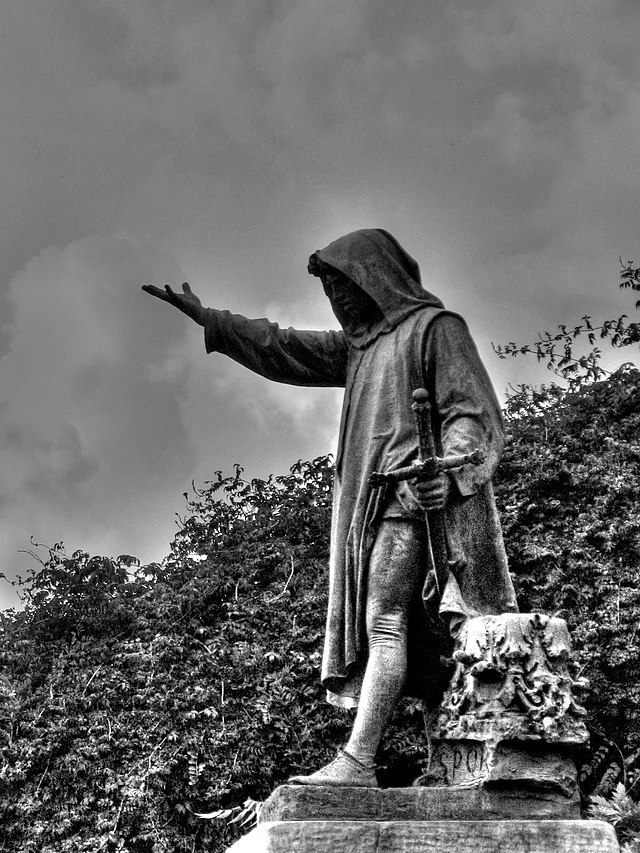
Monument to Cola di Rienzo.

3,172 words

Ronald F. Musto
Apocalypse in Rome:
Cola di Rienzo and the Politics of the New Age

Berkeley: University of California Press, 2003

A young Italian nationalist leads his followers on a march through Rome, seizing power from corrupt elites to establish a palingenetic regime. Declaring himself Tribune, his ultimate aim is to recreate the power and glory of Ancient Rome. However, a conspiracy of his enemies topples him from power, and he is imprisoned.  Eventually, the most powerful man in the West frees him and restores him to power — albeit as leader of a puppet regime. His second attempt at Italian rebirth is cut short; he is captured, killed, and his body desecrated by the howling mob. A man who had attempted to drive his degenerate countrymen to fulfill a higher destiny is cut down by the unthinking masses — a cowardly herd who lacked the ability to comprehend, much less work towards, this leader’s dreams of glory.

Is this the life of Benito Mussolini, Duce of Fascist Italy? Well, perhaps — but even more accurately it is a description of Il Duce’s predecessor, the Roman notary Cola di Rienzi. In the mid-fourteenth century, 900 years after the Fall of Rome, di Rienzi engaged in a romantic and ill-fated attempt to restore the Roman Republic and, perhaps, the Empire itself.  Musto’s book tells us what happened. To those familiar with the life of Mussolini, di Rienzi’s tale is shocking in its similarities — shocking and depressing.

The life of Cola di Rienzi — referred to by Musto as Cola di Rienzo — is well known to historians of the Middle Ages, and was, at one time, well known to Italians in general. But in the twentieth century he was eclipsed by Mussolini, who still symbolizes Roman and Italian renewal in many minds. The self-hating Italian Luigi Barzini did di Rienzi no favors in his book The Italians. Thus, Musto’s sympathetic and well-written biography of di Rienzi is long overdo, and is an excellent addition to the library of any individual interested in European history. Of interest for this essay is the relationship of di Rienzi to fascism and the role played by the church and selfish elites in the downfall of di Rienzi and in the humiliating history of modern Italy.

Roger Griffin (Fascism, Oxford University Press, 1995) famously described fascism as “palingenetic populist ultra-nationalism” — making the elements of renewal, rebirth, and regeneration central to all permutations of this ideology. That Cola di Rienzi was a proto-fascist is quite clear. He was a populist leader, appealing to the middle class against established elites, intent on the regeneration and rebirth of Rome, Italy, and, by example, the world.

That he couched this agenda in highly religious Christian terms is to be expected for the time and place — in fourteenth century Italy he could not do otherwise — and in no way detracts from the fascistic palingenetic tone of his rhetoric and actions. After all, perhaps the “most fascist” of all the twentieth-century fascisms — Romania’s Legionary movement — was devoutly Christian and made spiritual/moral regeneration the palingenetic focus of their ideology. Thus, there is no obvious reason not to see “Rienzism” as a sort of fourteenth century fascism.

Indeed, as Musto describes di Rienzi’s march through Rome (sound familiar?) to establish his buono stato (good state), we read the following : “. . . the people of Rome restored to their proper place, mingling among friends, neighbors, and strangers, all sharing the same sense of rebirth and renewal” (emphasis added). That sounds reasonably palingenetic to me; Cola di Rienzi as Tribune of Rome or Benito Mussolini as Duce of Italy — the similarities outweigh the differences.

That Cola di Rienzi is viewed by many as a generally positive figure who — for all his flaws — sincerely wanted the best for the people suggests that perhaps proto-fascism (or fascism, for that matter) is not the unalloyed evil that some make it out to be.

Musto states that di Rienzi was more of an artist than a politician in his actions and propaganda, which is completely consistent with the aesthetic nature of fascist movements (uniforms, ceremonies, rituals, art, etc.) of the twentieth century. Cola di Rienzi’s friend and admirer was the famed Petrarch, who recognized in the young Tribune the hope of Italy and the possibility of a new age, an age of rebirth and promise. Thus, a primary icon of fourteenth century Western culture was attracted to the sociopolitical and aesthetic characteristics of the Rienzian phenomenon.

Musto notes that di Rienzi spoke not only for the people of Rome but for all the people of “sacred Italy” to whom he wished to extend Roman citizenship. Musto describes in detail how, after spending time with Pope Clement VI — his eventual bitter enemy — di Rienzi returned to Rome to overthrow the feudal rule of the baronial families. These barons had turned the eternal city into a depopulated, anarchical, bloody, and violent mess, with the Roman people groaning under the self-interested misrule of the baronial elite.

Cola spent many months laying the groundwork for his revolution, engaging in various form of propaganda, including art as well as speech, until the day came when he and followers marched to seize power. Cola declared himself Tribune, ousted the barons, and began the formation of the so-called buono stato — a name which implies as much moral/spiritual renewal as much as it does plain good governance.

And di Rienzi did bring good governance; to use twentieth-century language he made the “trains run on time.”  Establishing ties with other Italian cities, reaching out to the West as a whole, and supported by Petrarch, di Rienzi captured the attention not only of Europe but also instilled fear into the Islamic world, which saw the possibility of a resurgent Rome as the center of Western resistance to Asiatic expansion.

However, the Pope was not at all pleased with the rise of a secular power base in Rome to challenge the Church. As long as he perceived that di Rienzi would act as an effective mouthpiece to enforce Papal prerogatives against the barons, Clement supported the Tribune. But as soon as it became apparent that di Rienzi was his own man, with his own agenda, and that this agenda included a destiny for Rome and Italy that went beyond slavish subservience to the church, Clement decided that di Rienzi had to go.

Therefore, after months of intriguing against di Rienzi — even to the point of attempting to orchestrate food shortages to turn the Roman people against the Tribune — the Pope (the papacy at this time being self-exiled in France to protect themselves from their secular enemies) dropped the bombshell: on Dec. 3, 1347, Cola di Rienzi was condemned and excommunicated, and all who would support the Tribune were threatened with the same fate.

Indeed, if Rome still rallied behind di Rienzi, the entire city would have been under the Papal interdict; the entire city would have become a pariah in the Western, Christian world. In the fourteenth century, particularly fourteenth century Italy, excommunication was the worst sociopolitical fate for any leader, far worse than merely being labeled a “traitor” (which they called di Rienzi as well).

A whole list of crimes were put forth against the Tribune (including, absurdly, necromancy), and the Pope began to actively collaborate with the barons for the “final act” against the Rienzian regime. By this time, di Rienzi and the Roman people had decisively defeated the barons in the battle of Porta San Lorenzo. But it did not matter. In the year 1347, the Church, and the spiritual power of the Pope, was far more powerful than any army, any military victory. So, with the aid of the Pope, the barons rebelled and deposed di Rienzi, who was forced into exile.

Even then the Pope was not satisfied, remaining “fixated” on di Rienzi, scheming to have him captured and “annihilated.” Such was the hatred of this “Christian man of God” for the Tribune who wished to create regeneration for Romans and Italians. Could di Rienzi, in the fourteenth century, have said “Basta!” and defied the Church? Consider that Mussolini in the twentieth century could not do so, to his detriment. The secular power and ambitions of the Church was and remains a shackle on the aspirations of the Italian people.

Cola di Rienzi attempted to find sanctuary in Prague with the emperor Charles IV who eventually bowed to the overwhelming power of the papacy and turned di Rienzi over to the Inquisition for trial for “heresy.” Part of di Rienzi’s defense was his assertion — somewhat “outrageous” for the fourteenth century — that the church should have no secular power, since the founding basis for Christianity was “poverty and humility.” One can only imagine Pope Clements’s reaction to that.

Eventually brought before Pope Clement, di Rienzi was a shell of his former self, and the symbolism of this meeting cannot be dismissed. The populist and secular (yet devoutly religious) hope of Italy was brought as a humiliated prisoner before the man representing the memetic virus that has infected the West and enslaved the Italian people for centuries.

The banishment of Rienzi, as depicted in Wagner's opera "Rienzi"The worm turned after the death of Clement VI and the ascension of Pope Innocent VI, a less “worldly and extravagant” man than his predecessor. Innocent had, not surprisingly, secular aspirations in Rome and was therefore distressed by the violence and anarchy prevailing after the fall of di Rienzi and the rise, once again, of the baronial families. Therefore, Cola was “rehabilitated” and sent to Rome as a Papal puppet to restore his “good state” — but this time, as Innocent writes, without the “fantastic innovations” of the first Rienzian regime.

Of course, those “fantastic innovations” were merely the assertion of the Roman peoples’ right to rule themselves in a secular state independent of papal micromanagement, and that Rome and Italy were in dire need of regeneration and renewal. This was not exactly what the church wanted, or wants today. And so, a chastened Cola di Rienzi was put forward as Pope Innocent’s tool with the hope that the repeat of the Rienzian regime would not degenerate into farce. Rome not being what she once was, that hope was misplaced.

The ex-tribune (now “senator” and Papal rector) was painfully aware that the real leader of Rome was the Pope, not the Emperor, not any self-proclaimed Tribune. This is something that he had dedicated years to opposing. From the beginning of his second tenure of power — power only at the sufferance of the Pope — the established elites, particularly the barons, opposed and plotted against di Rienzi. The plots became complicated and di Rienzi, after years of imprisonment and hardship, and possibly suffering from epilepsy, was not the same man. Errors of judgment, executions of venerable Roman citizens, and the imposition of required taxes began to fray the support of the fickle Roman masses.

When the end came, at the instigation of the barons and their supporters, it came fast. The howling mob stormed di Rienzi’s residence and drowned out his attempts to reason with them. Cola di Rienzi was caught trying to flee the mob in disguise (like Mussolini); he was stabbed to death (like Caesar); his body was desecrated (like Mussolini again) then burnt to ashes (like Hitler). The ashes were thrown into the Tiber; all physical traces of the Tribune were gone.

The eerily similar lives and political careers of di Rienzi and Mussolini should give one pause. Both men were Italians living in a time of crisis for their people. Both men rose up to lead populist revolts against the established order. Both men established regimes which were initially successful and lauded by many, but then these regimes went sour and were overthrown by the forces of reaction. Both men were imprisoned thereafter. Both men then returned to power through the help of another, more powerful person — in the case of di Rienzi it was the Pope, in the case of Mussolini, Hitler. Both men then attempted to reestablish their regime, eventually failed, were killed by their enemies, and their bodies were desecrated by the mob. Both men attempted to lift the Italian people to greatness, but the special interests were too powerful and the lure of insipid, hedonistic stagnation too great.

The similarities are too many to be a coincidence. This then seems to be a distinctly Italian phenomenon. Who was at fault? Was it the fault of the two leaders themselves? Were they fatally flawed men? No doubt both men, particularly di Rienzi, had their flaws, and these flaws contributed to their failure and demise. But all great men have flaws. This easy explanation does not suffice.

From a production of Wagner’s “Rienzi” in Nancy, France, July 2003

No, the Italian people also have to share the blame, and I say this as a pan-European racial nationalist who is very supportive of the Italian people. Nevertheless, twice in Italy’s modern history dynamic leaders came to the fore to lead Italians to greatness, and twice did the Italian people turn on them. (In defense of the Italians, one has to ask if any other European societies have done better. One might say that it is better to have tried and failed a Rienzi or a Mussolini than never to have tried at all, which is the case of most European societies.)

I cannot forget reading Léon Degrelle’s book on his experiences on the eastern front (translated as Campaign in Russia), fighting for Europe as part of the Wallonian division of the Waffen SS. The Italian soldiers he met were uninterested in fighting. They had no sense of the seriousness of the crusade against Bolshevism and for Europe. Instead, they cared only about “wine, women, and fun in the sun.” Nietzsche’s “last men” to be sure! (The rest of Europe has surely caught up with the Italians since then.) No wonder Italian military performance in WW II was a farce. No wonder that Italians have so long been the anvil of history, not the hammer, a fact lamented by great Italians from the middle ages to Machiavelli to Julius Evola to the present day.

But we cannot solely blame the Italians or focus on the personal flaws of di Rienzi and Mussolini. No, the 800 pound gorilla in the room is the Vatican.

An analysis of the career of di Rienzi clearly shows the pernicious influence of Pope Clement VI. Musto’s book makes it clear that Clement VI was little more than a self-interested feudal lord, more concerned with maintaining petty Papal power and privilege than in the national regeneration promised by di Rienzi. For example, on page 190 we read of the Pope’s real attitude toward di Rienzi’s new regime: “. . . the pope began carefully, delicately plotting Cola’s downfall and seeking his personal humiliation, as well as his public infamita as a traitor and a heretic.” In short, the church plotted to crush the political aspirations of the Italian people to keep them in secular servitude to the Vatican.

There is a long history of such behavior. Cola di Rienzi was not the first man to attempt Italian/Roman regeneration only to fall victim to the Vatican. As Musto tells us, in 1143, the people of Rome rose up against Pope Innocent II, drove the papacy into exile, re-established the Roman Senate, and even started minting coins in the name of “SPQR” — “The Senate and the People of Rome.” Arnold of Brescia, a monk and political philosopher, rose to lead the new republic and offered an intellectual rationale for the church’s renunciation of secular power. But in 1155, at the instigation of the papacy, the German Emperor Frederick I led an army against Rome to crush the republic and reinstall the pope. Arnold of Brescia was burned at the stake as a heretic and his ashes dumped into the Tiber. Yes, to preserve its power, the church turned to foreigners to suppress the political aspirations of the Romans.

The secular power of the church caused a “dual loyalty” problem that remains to this day. Is an Italian’s highest loyalty to Italy or to the Vatican? To di Rienzi and Mussolini or to the Pope? (Or, in Il Duce’s Italy, to the Pope as well as the secular figurehead, the King?) It is interested to contemplate how history might have been changed if the papacy had remained in Avignon, if the church had been disestablished and the papacy denied sovereign status once and for all after the reunification of Italy, or if Mussolini had not signed the Lateran Treaty of 1929, rescuing papal sovereignty from the legal limbo in which it had languished since 1861.

The other major party opposed to Cola di Rienzi were the barons of medieval Rome. As a self-interested elite, enriching themselves at the cost of the people’s well being, they are perfectly analogous to the white globalist elites of today, who routinely betray their race’s interests in their hedonistic pursuit of money, power, and pleasure.

The barons of di Rienzi’s time are also analogous to the established elites (King, nobility, military, and business) of Mussolini’s Italy. These elites opposed a full and radical fascistization of the Italian people and instead valued the well-being of their own caste over that of society as a whole. European-derived peoples, with their greater individualism, tend to produce elites willing to betray their race (and their own ethnic genetic interests) for selfish class/caste/individual interests.

What are the lessons of the story of Cola di Rienzi?

Culturally and politically, the Italians are one of the healthiest people in Europe today. Their tradition of palingenetic populist nationalism has deep roots, nourished and hallowed by the blood of martyrs like Arnold of Brescia, Cola di Rienzi, and Benito Mussolini. They failed because they could not overcome the resistance of the “barons” and the church — those whose petty secular interests are threatened by genuine national renewal. The next time — if there is a next time — things need to be done right.

For the West as a whole, the story of di Rienzi demonstrates that self-interested established elites always oppose palingenesis. It is time for a new elite, one that understands that their own interests and those of their people are one and the same, and who will work first towards  survival, and second towards fulfilling a higher destiny, the Destiny of the West.

Will “the people” be up to the challenge? We shall see. One thing is for sure — we cannot afford to waste the likes of a di Rienzi or a Mussolini. Such leaders need to be treasured, not to have their torn bodies hanged upside down for the amusement of the small-brained, milling mob.

It is time for a clean sweep. Reform is the enemy. Only complete rebirth can save us now.

Cola di Rienzi & the Politics of Proto-Fascism: Ronald F. Musto’s Apocalypse in Rome

Cola%20di%20Rienzi%20and%23038%3B%20the%20Politics%20of%20Proto-Fascism%3A%20Ronald%20F.%20Mustoand%238217%3Bs%20Apocalypse%20in%20Rome

Share

  • Gab
  • Ronald F. Musto#8217;s Apocalypse in Rome &body=%0D%0A%0D%0A%0D%0A%0D%0A%0D%0A%0D%0Ahttps://counter-currents.com/2010/08/cola-di-rienzi/%0D%0A%0D%0A%0D%0A%0D%0A">

Enjoyed this article?

Be the first to leave a tip in the jar!

Instant Echeck GreenPay™

Related

  • Tucker’s New Party

  • Ethiopia Against Italy

  • Why All the Silence About Blacks Being Kicked Out of South Africa?

  • Easy As Pi

  • AI Will Destroy Capitalism, Not Save It

  • Small Is Beautiful: The Napoleon of Notting Hill

  • Could Fascism Work?

  • Barbara Will’s Unlikely Collaboration

Tags

Benito Mussolinibook reviewsCatholicismelitesfascismItalynationalismTed Sallis

1 comment

  1. Justin Huber says:
    August 17, 2010 at 7:55 pm

    Nice article. I enjoyed reading it. I don’t know much about Italian history, so I had never heard about this Rienzo guy. For that matter, I don’t know too much about Mussolini. I hope you post more stuff in the future.

    0
    0

Comments are closed.

If you have a Subscriber access,
simply login first to see your comment auto-approved.

Note on comments privacy & moderation

Your email is never published nor shared.

Comments are moderated. If you don't see your comment, please be patient. If approved, it will appear here soon. Do not post your comment a second time.

Writer of June

(4 votes) David M. Zsutty

Article of June

Why White Advocates Should Avoid “Based Blacks” by Dani Vypont 4 votes
    • Replacement Migration & Hypergamy

      F. Roger Devlin

      12

    • Kurds of a Feather Flock Together:
      Europe’s “Racist” Parakeet Tweet-Storm

      Steven Tucker

      1

    • Elevator Pitch to a Billionaire
      Money, Money, Money

      Ondrej Mann

      1

    • All Hail Rhodesia

      Spencer J. Quinn

      2

    • Nationalism This Week
      Disenfranchisement

      Greg Johnson

      28

    • The Murder of Ann Widdecombe

      Lipton Matthews

      9

    • Disclosure Day
      Please, Keep It Undisclosed

      Francisco Albanese

      10

    • Remembering Carl Schmitt
      July 11, 1888–April 7, 1985

      Greg Johnson

      1

    • Editor’s Update
      Fundraiser Update & New Books

      Greg Johnson

      1

    • Third Homeland Institute Poll on the Great Replacement

      David M. Zsutty

      11

    • The Bitter End of Western Metaphysics:
      Heidegger on Nietzsche, Part Five (Conclusion)

      Collin Cleary

      9

    • Fraudulent Black British History

      Mark Gullick

      7

    • A White Nationalist Response to Scott Greer

      Dave Chambers

      25

    • The Miami Mall Incident:
      Black Youths or Black Extraterrestrials?

      Dominic Fox

      6

    • The Theology of Three Populisms

      Morris van de Camp

      2

    • The Dangers of Skilled Immigration

      Lipton Matthews

      25

    • The Brotherhood of the Bell

      Beau Albrecht

      16

    • Endeavor: What Rome Means to Me

      Endeavour

    • When the Family Becomes Predation

      Jayant Bhandari

      5

    • RICU: The Gentle Art of Persuasion

      Mark Gullick

      7

    • Mind of Darkness:
      A Review of Lipton Matthews’s Busting African Delusions

      Derek Stark

      12

    • Remembering Revilo Oliver
      July 7, 1908–August 20, 1994

      Greg Johnson

      2

    • Some Advantages of Irish Nationalism

      Greg Johnson

      30

    • America at 250 from the National Cathedral

      Gabriel Anderson

      18

    • Why Not Stop All the Clocks?
      Modern Conservatism’s Flagging Commitment Towards Turning Back Time

      Steven Tucker

      3

    • Remembering Jean Raspail
      July 5, 1925–June 13, 2020

      Greg Johnson

      2

    • Editor’s Update
      Fundraiser Update & New Books

      Greg Johnson

    • The Ethnic Reality of FIFA 2026

      Samuel Valleus

      13

    • Nationalism This Week
      Tucker’s New Party

      Greg Johnson

      30

    • Ethiopia Against Italy
      How the Italo-Ethiopian Wars were part of the conflict between Eastern & Western Christiandom

      Morris van de Camp

    • Please Vote in Our Writer & Article of the Month Poll

      Greg Johnson

    • Available for Pre-Order!
      F. Roger Devlin’s Not Hooking Up

      F. Roger Devlin

    • Kolberg: The Last Nazi (or Prussian?) Film

      Steven Clark

      2

    • America 250 & The Fate of Empires

      Richard Houck

      20

    • Available for Pre-Order!
      Greg Johnson’s The Battle of the Books

      Greg Johnson

    • Why All the Silence About Blacks Being Kicked Out of South Africa?
      Because It’s Other Blacks That Are Doing It.

      Steven Tucker

      10

    • Zelensky, the Jewish Conspiracy Narrative, & the Demographic Replacement of Ukraine:
      A Critical Analysis of a Disinformation Discourse within the European Identitarian Right

      Luís Graça

      30

    • The Original Congressional Debate on Birthright Citizenship

      Alex Graham

      13

    • America at 250
      Unmanifested Destiny  

      David M. Zsutty

      32

    • The Normies are Waking Up:
      The Alliance for Responsible Citizenship Conference, London 2026

      Lipton Matthews

      2

    • Ethnic Vigilantism: The Movie

      Mark Gullick

      15

    • Lothrop Stoddard’s The Revolt against Civilization

      Kevin MacDonald

      2

    • David Zsutty on Political Organizing

      David M. Zsutty

    • PC-Incompatible Gaming:
      Plantation Simulator and the “Problem” of Racist Video Games

      Steven Tucker

      3

    • Remembering Lothrop Stoddard
      June 29, 1883–May 1, 1950

      Greg Johnson

      1

    • Editor’s Update
      Fundraiser Update & Upcoming Projects

      Greg Johnson

    • Nationalism This Week
      Metapolitics Wins:
      Scott Greer’s Whitepill

      Greg Johnson

      8

    • Remembering Colin Wilson
      June 26, 1931–December 5, 2013

      Greg Johnson

      3

    • Kevin Deanna on Political Organizing

      Kevin Deanna

      1

    • The Bitter End of Western Metaphysics:
      Heidegger on Nietzsche, Part Four

      Collin Cleary

      6

    • Dani Vypont

      Replacement Migration and Hypergamy

      I once had a Norwegian nationalist ask me to tell him the degree of mixing between White women &...

    • Dani Vypont

      Replacement Migration and Hypergamy

      Both of those sources rely on marriage data. The first one is titled "Intermarriage in America Post-...

    • James Sunderland

      Replacement Migration and Hypergamy

      Here is analysis conducted using U.S. Census Data. You can't get better than this: https://www....

    • Hairy Iranian Dude

      Replacement Migration and Hypergamy

      I love Norway. It’s a real country (used to be?). I was there for six days in 2018: Oslo and Bergen...

    • Dani Vypont

      Replacement Migration and Hypergamy

      In the U.S., white woman have the lowest rate of miscegenation across all intersections of race and...

    • Glide Ratio 0:1

      Replacement Migration and Hypergamy

      This is one hundred percent my observations moving from England to the USA. White American females...

    • Fionn McCool

      Replacement Migration and Hypergamy

      It would have been good if FRD had offered some statistics to support his claim rather than mere...

    • Greg Johnson

      Disenfranchisement

      People constantly bemoan the fact that old politicians send young men to die in wars. I guess that...

    • Peter Quint

      Replacement Migration and Hypergamy

      Sounds like Norway needs its own Casa Pound. 🦈

    • Peter Quint

      Replacement Migration and Hypergamy

      Maybe, it is because White American women have had to deal with it for a much longer time than the...

    • Glide Ratio 0:1

      Disenfranchisement

      Like Radbod said "I would rather spend eternity in hell with my ancestors than in heaven with...

    • Greg Johnson

      Disenfranchisement

      The first step is to document this in an article. Then we will get it circulating. It will bring...

    • Beau Albrecht

      Replacement Migration and Hypergamy

      I can't even begin to finish reading this.  I'll just say that the orcs need to be sent back to...

    • Beau Albrecht

      Europe’s “Racist” Parakeet Tweet-Storm

      This is for real?  It seems that leftist ideology has become a parody of itself.  The pearl-...

    • Beau Albrecht

      All Hail Rhodesia

      The author is spot-on with this.  Rhodesia did at one time have an offer to join South Africa, but...

    • James Sunderland

      Replacement Migration and Hypergamy

      “Speaking more generally, women are less loyal to the tribe into which they are born than are men...

    • Peter Quint

      All Hail Rhodesia

      Great article! Instead of writing novels about time travelers meeting Enoch Powell, and going back...

    • Gabe

      Replacement Migration and Hypergamy

      “Seeing themselves on the bottom of the local totem pole, some of these Norwegian boys have actually...

    • Mcdringle

      Some Advantages of Irish Nationalism

      'Their progenitors were born into a world that could not feed their flesh other with the almighty...

    • Will Martin

      Disenfranchisement

      Can't even pass the SAVE act, but again, declining Whites are somehow going to disenfranchise...

    • Earth Day Special

      John Morgan

      12

    • A Robertson Roundup
      Remembering Wilmot Robertson
      (April 16, 1915 – July 8, 2005)

      Margot Metroland

      13

    • The Paranoid Style in White Nationalism

      Greg Johnson

      30

    • Join the Dance!

      Andrew Hamilton

      1

    • We Can’t Save the Earth Without Reducing African Birth Rates

      James Dunphy

      36

    • “I’m Not a Conspiracy Theorist, but . . .”:
      Jeffrey Epstein’s Death Gives New Life to “Conspiracy Theories”

      Greg Johnson

      22

    • Sylvia Plath: Stasis in Darkness

      Vic Olvir

      17

    • Vanguardism, Vantardism, & Mainstreaming

      Greg Johnson

      80

    • Aviation, Geography, & Race

      Charles Lindbergh

      3

    • Some Thoughts on Yule

      Collin Cleary

      4

    • Living in Truth:
      A Yuletide Homily

      Jef Costello

      7

    • John Kennedy Toole’s A Confederacy of Dunces

      Greg Johnson

      20

    • On Aleksandr Solzhenitsyn’s Warning to the West

      Spencer J. Quinn

      7

    • Elitism, British Modernism, & Wyndham Lewis

      Jonathan Bowden

      6

    • Philip K. Dick’s Do Androids Dream of Electric Sheep? as Anti-Semitic/Christian-Gnostic Allegory

      Greg Johnson

      20

    • “Conspiracy Theory” or Conspiracy?

      Andrew Hamilton

      21

    • Remembering H. P. Lovecraft
      (August 20, 1890–March 15, 1937)

      Greg Johnson

      3

    • Who Are We?
      Nordics, Aryans, & Whites

      Greg Johnson

      71

    • Remembering William Gayley Simpson
      (July 23, 1892–December 31, 1990)
      A Pleasant Afternoon with Harriet & Bill Simpson

      Margot Metroland

      18

    • Here are the Young Men
      Remembering Ian Curtis
      (July 15, 1956–May 18, 1980)

      Mark Gullick

      18

    • Percy Grainger
      Artist of the Right

      Alex Graham

      7

    • Remembering Revilo Oliver
      (July 7, 1908–August 20, 1994)

      Greg Johnson

      18

    • The Meaning of July 4th for the White Man

      Gregory Hood

      13

    • The Front National’s Evolution

      Bruno Mégret

    • Merwin K. Hart
      Forgotten American Hero & Man of the Right

      Morris van de Camp

      10

    • George Orwell’s Nineteen Eighty-Four

      Jonathan Bowden

      8

    • Carleton S. Coon
      Scientist & Reluctant White Advocate

      Morris van de Camp

      4

    • The Kwanzaa Absurdity Will Be Dwarfed by Juneteenth

      Robert Hampton

      12

    • Stravinsky

      Alex Graham

      7

    • Like the Roman:
      Remembering Enoch Powell (1912-1998)

      Mark Gullick

      23

    • Exclusive Interview with Karel Veliky:
      The Final Chapter in the Film Series! Part II

      Ondrej Mann

      2

    • Exclusive Interview with Karel Veliky:
      The Final Chapter in the Film Series! Part I

      Ondrej Mann

      2

    • Nietzsche & Race

      Mark Gullick

    • The Crisis of Chinese Technology Thieves

      Morris van de Camp

      1

    • The Zodiac Killer

      Mark Gullick

      12

    • José Pedro Zúquete’s The Identitarians

      Greg Johnson

      3

    • Berlin: City of Stones

      Spencer J. Quinn

      6

    • Headbanging Lite

      Mark Gullick

      5

    • The Russians are Coming/The Russians are Coming

      Steven Clark

      2

    • The Cruelty of Kindness

      Morris van de Camp

      11

    • Jonathan Bowden’s Deliverance
      Part 7

      Jonathan Bowden

    • Lothrop Stoddard’s The Revolt Against Civilization

      Spencer J. Quinn

      15

    • About Film “From the Right”

      Karel Veliky

    • The 1970s: The Golden Age of Hijacking

      Morris van de Camp

      21

    • Jonathan Bowden’s Deliverance
      Part 6

      Jonathan Bowden

    • Do You Want to Play a Game?

      Mark Gullick

      1

    • Sexually Incontinent on the Indian Subcontinent:
      Who Rapes More Animals, Indians or Pakistanis? The Battle Continues!

      Steven Tucker

      3

    • Neo-Fascism in Film
      Part 5

      Karel Veliky

      15

    • The Game of Tarot

      Mark Gullick

      2

    • Institutions Cannot Be Transplanted

      Jayant Bhandari

      5

    • Jonathan Bowden’s Deliverance
      Part 5

      Jonathan Bowden

    • Crosstown Traffic:
      Jimi Hendrix & The Post-War Rock ‘N’ Roll Revolution

      Mark Gullick

      1

    • Slaves from the North:
      Finns & Karelians in the East European Slave Trade, 900–1600

      Lipton Matthews

      14

    • Neo-Fascism in Film
      Part 4

      Karel Veliky

      2

    • David Lean’s A Passage to India

      Spencer J. Quinn

      1

    • Elites are Essential to Development

      Lipton Matthews

      7

    • Jonathan Bowden’s Deliverance
      Part 4

      Jonathan Bowden

    • Neo-Fascism in Film
      Part 3

      Karel Veliky

      6

    • E. M. Forster’s A Passage to India & the Indian Mentality

      Spencer J. Quinn

      25

    • Jonathan Bowden’s Deliverance
      Part 3

      Jonathan Bowden

    • András László
    • Derek Hawthorne
    • Beau Albrecht
    • Alain de Benoist
    • Kerry Bolton
    • Jonathan Bowden
    • Collin Cleary
    • Jef Costello
    • Savitri Devi
    • Julius Evola
    • Jim Goad
    • Gregory Hood
    • Juleigh Howard-Hobson
    • Greg Johnson
    • Charles Krafft
    • Anthony M. Ludovici
    • Trevor Lynch
    • H. L. Mencken
    • J. A. Nicholl
    • James J. O’Meara
    • Christopher Pankhurst
    • Tito Perdue
    • Michael Polignano
    • Spencer J. Quinn
    • Fenek Solère
    • Irmin Vinson
    • Leo Yankevich
    • Francis Parker Yockey
    • Multiple authors
  • Editor-in-Chief

    • Greg Johnson, Ph.D.

    Featured Writers

    • Beau Albrecht
    • Gunnar Alfredsson
    • Collin Cleary, Ph.D.
    • Jef Costello
    • Morris V. de Camp
    • F. Roger Devlin, Ph.D.
    • Stephen Paul Foster, Ph.D.
    • Jim Goad
    • Alex Graham
    • Mark Gullick, Ph.D.
    • Greg Johnson, Ph.D.
    • Travis LeBlanc
    • Trevor Lynch
    • Margot Metroland
    • James J. O’Meara
    • Angelo Plume
    • Spencer J. Quinn
    • Fred Reed
    • Clarissa Schnabel
    • Michael Walker
    • David M. Zsutty

    Frequent Writers

    • Asier Abadroa
    • Aquilonius
    • Alain de Benoist
    • Kerry Bolton, Ph.D.
    • Dave Chambers
    • Steven Clark
    • James Dunphy
    • Endeavour
    • Richard Houck
    • Jason Kessler
    • Titus Livius
    • Ondrej Mann
    • Lipton Matthews
    • Mark Mazari
    • John Morgan
    • Jaroslav Ostrogniew
    • Kathryn S.
    • Christian Secor
    • Anne Wilson Smith
    • Thomas Steuben
    • William De Vere
    • Kenneth Vinther
    • Max West

    Classic Authors

    • Maurice Bardèche
    • Jonathan Bowden
    • Julius Evola
    • Guillaume Faye
    • Ernst Jünger
    • Kevin MacDonald, Ph.D.
    • D. H. Lawrence
    • Charles Lindbergh
    • Jack London
    • H. P. Lovecraft
    • Anthony M. Ludovici
    • Sir Oswald Mosley
    • National Vanguard
    • Friedrich Nietzsche
    • Revilo Oliver
    • William Pierce
    • Ezra Pound
    • Saint-Loup
    • Savitri Devi
    • Carl Schmitt
    • Miguel Serrano
    • Oswald Spengler
    • P. R. Stephensen
    • Jean Thiriart
    • John Tyndall
    • Dominique Venner
    • Leo Yankevich
    • Francis Parker Yockey

    Other Authors

    • Howe Abbott-Hiss
    • Michael Bell
    • Giles Corey
    • Jack Donovan
    • Richardo Duchesne, Ph.D.
    • Emile Durand
    • Guillaume Durocher
    • Mark Dyal
    • Tom Goodroch
    • Andrew Hamilton
    • Robert Hampton
    • Huntley Haverstock
    • Derek Hawthorne
    • Gregory Hood
    • Juleigh Howard-Hobson
    • Alexander Jacob
    • Ruuben Kaalep
    • Tobias Langdon
    • Julian Langness
    • Patrick Le Brun
    • G A Malvicini
    • John Michael McCloughlin
    • Millennial Woes
    • Michael O’Meara
    • Christopher Pankhurst
    • Michael Polignano
    • J. J. Przybylski
    • Quintilian
    • Edouard Rix
    • C. B. Robertson
    • C. F. Robinson
    • Herve Ryssen
    • Alan Smithee
    • Fenek Solere
    • Ann Sterzinger
    • Robert Steuckers
    • Tomislav Sunic
    • Donald Thoresen
    • Marian Van Court
    • Irmin Vinson
    • Book Reviews
    • Movie Reviews
    • TV Reviews
    • Music Reviews
    • Art Criticism
    • Graphic Novels & Comics
    • Video Game Reviews
    • Fiction
    • Poems
    • Interviews
    • Videos
    • English Translations
    • Other Languages
      • Arabic
      • Bulgarian
      • Croatian
      • Czech
      • Danish
      • Dutch
      • Estonian
      • Finnish
      • French
      • German
      • Greek
      • Hungarian
      • Italian
      • Lithuanian
      • Norwegian
      • Polish
      • Portuguese
      • Romanian
      • Russian
      • Slovak
      • Spanish
      • Swedish
      • Ukrainian
    • Commemorations
    • Why We Write
  • Archives
  • Top 100 Commenters
  • The Looney Bin
Sponsored Links
Europa.com Above Time Coffee Antelope Hill Publishing Paul Waggener IHR-Store Spencer J. Quinn American Renaissance Jim Goad The Occidental Observer
Donate Now Mailing list
Books for sale
  • Not Hooking Up
  • The Battle of the Books
  • The Philosopher Is In
  • Sexual Utopia in Power (Expanded Edition)
  • In Defense of Prejudice
  • Loving Our Own
  • Tyranny & Wisdom
  • To all books
Copyright © 2026 Counter-Currents Publishing, Ltd.

Paywall Access


Please enter your email address.

Lost your password?

Edit your comment

Writer & Article of the Month June 2026

Voting for this month has concluded. Here are the final results!

Top Writers

  • #1 David M. Zsutty 4 votes
  • #2 Mark Gullick 3 votes
  • #3 Morris van de Camp 2 votes
  • #4 Ondrej Mann 2 votes
  • #5 Dani Vypont 2 votes
  • #6 Greg Johnson 2 votes
  • #7 Collin Cleary 1 vote
  • #8 Millennial Woes 1 vote
  • #9 Beau Albrecht 1 vote
  • #10 Dave Chambers 1 vote
  • #11 Steven Tucker 1 vote
  • #12 Jayant Bhandari 1 vote

Top Articles

  • #1 Why White Advocates Should Avoid “Based Blacks” 4 votes
  • #2 Zsutty’s Maximum 3 votes
  • #3 The Murder of Henry Nowak 2 votes
  • #4 China’s Threat to American Security 1 vote
  • #5 Ethnic Vigilantism: The Movie 1 vote
  • #6 The Inferiority Behind Immigrant Superiority 1 vote
  • #7 Uncivil War 1 vote
  • #8 Liar, Liar, Pants on Fire! 1 vote
  • #9 Small Is Beautiful: The Napoleon of Notting Hill 1 vote
  • #10 Interview with Gerhard Hallstatt of Allerseelen 1 vote
  • #11 Monkeys and Typewriters 1 vote
  • #12 The Remigration Movement Solidifies  1 vote
  • #13 I’m Glad He Failed 1 vote
  • #14 The Killing of Henry Nowak 1 vote
  • #15 Alex Jones’ Endgame: Blueprint for Global Enslavement, Part 4 1 vote

Total votes cast: 21