2,963 words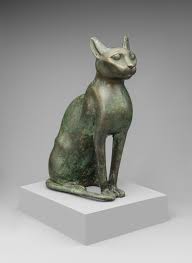
The cat is a beautiful devil.
—Charles Bukowski
Everybody wants to be a cat.
—Walt Disney’s The Aristocats
***
That strange week between Christmas and New Year always used to have a sense of unlicensed freedom about it in England. It was a sort of existential no-man’s land in which no one seemed quite sure what to do, and often ended up enjoying themselves by mistake (the English do that a lot). When I was a nipper, from Christmas Eve to the first Monday in January, school was out. This meant more time to play outdoors, as all kids did then, and the possibility of snow in which to do so. University was the same, with a long Christmas break. After my first term at the University of Sussex in 1984, while most undergraduates returned home and reunited with their boyfriends or girlfriends (having robustly cheated on them throughout their first term), I stayed on campus and got ahead on my studies, like the swot I was, or had become. I was very aware that I had wasted my time, and that of the teachers, at my secondary school, and I had some catching up to do. I was more interested in acting the fool than paying attention in class, and schoolmates such as Keir Starmer and Quentin Cook (aka Fatboy Slim) went on to greater things than I after Reigate Grammar School.
At Sussex that Christmas, I trudged through the Breughel-like, winter wonderland to the student store, bought food and drink for a snowed-in week, and proceeded to spend seven days reading Milton, Russell, Yeats, Plato, and whatever else was on the syllabus. I had no phone, and I didn’t see a soul for the entire time. It was probably that week which first made me realize a lesson I never forgot: that I much prefer my own company to that of others.
Once a person is all grown up and thrust into the adult world of work, that magical week that buries another year was at hazard. It all depended on what type of job you had. We got the week off in publishing because I worked on weeklies, and there was always a double-issue at Christmas. But that was publishing, the laziest industry in which I have ever worked. Nurses, on the other hand, didn’t suddenly kick back and enjoy the fireworks and mince pies for 10 days, nor did any other first-line responders. But, even if you had to work, there was still a sense of levity in the last week of the year before the riot of New Year’s Eve. Even when I was a barman, and we had to work, the week between Christmas and New Year was a time of graveyard shifts, potential customers generally having eaten, drunk, and spent too much money over Yuletide and now resting between revels. This allowed my fellow barmen and I to catch up with one another, compare Christmas adventures, and drink in peace. No one did much actual work over the festive season.
Now, with no contractual employer, I don’t technically have the week off. But I want an equivalent, and thought a radical change of subject might give me a break reminiscent of the old days. Politics in the UK has been dispiriting this year, even from 5,000 miles away. I wanted to give it a rest over the festive season. Such a normally lazy s’ennight shouldn’t be ruined by despair over the continuing slow death of one’s own country. I’m also giving philosophy and literature a miss for a few days. I’ve just grappled with two long and complex books which I’m unsure about: Thomas Pynchon’s Gravity’s Rainbow and Douglas Hofstadter’s cult classic, Gödel, Escher, Bach. I’m not convinced by either book, and they were both heavy going. Neither, in my view, is worth a full review.
So, tranquilo, as they say in my neck of the woods. Take it easy, tread softly. I read The Lion, the Witch, and the Wardrobe on Christmas Day, as always, then settled down for the week with a biography of Jack London. (I’ll be reviewing it here for London’s birthday next week, when normal service will be resumed). But, in this final week of a troubled year, I wished to forget the world and look closer to home. I wanted to write about something—or someone—which brings a great deal of pleasure to me and, I suspect, a number of you. I speak, of course, of our friend Felis catus, or the common cat.
Like all histories, that of cats is conflicted, but it is far more complete than that of dogs, a more variegated species. Domestic dogs predated house-cats by many millennia, and were originally descended from wolves. The clue is in the Latin name, Canis lupus familiaris. But it was a long time before cats and men teamed up, and one thing is clear: dogs were domesticated by man whereas cats chose to be domesticated, if you can describe them as that. I am sure cat owners are aware of a famous old saying concerning our feline chums: Dogs have owners. Cats have staff.
Mesopotamia, Egypt, and Cyprus always figure in feline history. A cat buried in Cyprus around 10,000 BC was, for a long time, believed to show the supposed origin of the species in Europe. But subsequent discoveries found Egypt to have been the home of the cat, although evidence of cats in Mesopotamia (now Syria and bits of Iraq and Turkey) pre-dates that. The North African cat, more akin to what we know as a lynx, prowled the plains from around 70,000 BC. So, at least something pleasant and useful came out of Africa. Huge cat cemeteries were found in and around Egypt which questioned one assumption about the Egyptian cat. It is assumed that they were buried and mummified to accompany pharaohs and other courtiers to the afterlife, but many of these mass graves show cats who were elderly and crippled. These were, in the main, affectionate mercy killings.
Cats played a vital role in one of history’s most important periods, the Neolithic era. Man stopped being a hunter-gatherer relatively suddenly, around 12,000 BC, and began to band together in settlements. Rudimentary agricultural techniques led to the raising of crops, and eating was no longer hand-to-mouth, with enough food for a family for a day being the limit of the hunter-gatherer’s ambition. With the arrival of early arable farming, food surpluses were seen for the first time. Grain was produced in such volume it was stored against the future, with inevitable results in terms of attracting vermin. For the local rats and mice, the arrival of grain storage was the equivalent of the biggest drive-through, fast-food joint in history.
Rattus norvegicus—and his extended global family—is phenomenally destructive, even today. A study on Pakistani street markets (where presumably there is plenty of research material) found that 40 rats can consume 185kg of rice in a year, spoiling three times what they don’t eat, and breeding all the time because they are well-fed and healthy. Rats and mice can devastate a crop, once harvested and stored, just as locusts can destroy a crop in the field. Consume or otherwise spoil the stored grain of an early Neolithic settlement which doesn’t yet know how to defend its stocks, and you have ethnic cleansing by rodent. In Asia today, rats and mice destroy rice sufficient to feed 200 million people a year, and it doesn’t help that if the Chinese see a cat, they are more likely to cook it than cuddle it.
So, the European domestication of the cat was somewhat different from that of other animals in that the reason for domestication was for the protection of food rather than to end up on the plate themselves. Cows, pigs, and sheep were domesticated for food, mostly, but also for labour, with plough-oxen and so on. Dogs were first domesticated for hunting, but later used for physical defense as well. Cavemen presumably slept a lot better once they had guard-dogs around the cave, and the dogs themselves were doubtless in favor of cooked meat once fire was discovered. But the cat’s usefulness was protection of the most important commodity of all: long-term food.
Back in Egypt, the cat was also about to become the first migrant. About 5,000 BC, the establishment of spice and grain maritime trading routes demanded more ship-building, and this led to the inevitable invasion of rats and mice, hungry for the grain (but possibly foregoing the spice). Cats began to show off their area of expertise in catching very small, very fast vermin. Felis catus was the animal for the job.
So, humans attracted dogs, with the promise of warmth and meat. Cats chose to forge an alliance with humans largely because humans had somehow managed to invent these huge bags of stuff which attracted their favorite food, which is vermin. Talk about a virtuous circle. If it was the army, dogs were conscripted while cats were commissioned officers, but it was a win-win for both man and cat. Humans got to eat their grain unspoiled, while cats got an all-you-can-eat banquet of Rattus norvegicus and Mus musculus. This was no plea for comfort or offer of protection in exchange for food. Even domesticated cats don’t need humans to provide food. They can catch their own, as anyone with a moggy will probably confirm once they have received their first “gift” of some butchered, headless bird or mouse left lovingly for you to clear up—the feline equivalent of tribute paid to a mafia boss.
Cats have been demonized over the centuries as well as deified. They were slaughtered in their millions in Europe during the Black Death in the 14th century, as it was mistakenly believed that they were the plague carriers, rather than the fleas living on rats and other rodents which actually led to the decimation of a third of Europe’s population. As cats were exterminated in a sort of pussycat pogrom, rodent populations increased concomitantly, and the plague worsened.
Cats were also linked with witchcraft. During the famous Salem witch-trials in the US, hundreds of cats (mostly black) were burnt at the stake along with the women accused of witchcraft, and a woman living alone who owned a cat was immediately under suspicion. A little ungrateful of the Americans, I feel, given that there is evidence that cats travelled with the pilgrims on the Mayflower, presumably to guard their meager provisions. Cats have always been considered lucky in the maritime world, a tradition that harks back to the first Egyptian mousers who travelled the known world. That is so typical of a cat. Go crazy for 20 minutes killing mice, then sleep for 18 hours, wake up in Malaysia, and you’re famous. But the working cat is a thing long gone, leading to Felis domesticus, our chums and companions. If you expected a cat to work today, it would look at you and shake its head, appreciative of your sense of humor. We all know the gag. What does a cat do on its day off? Well, it doesn’t sleep. That’s its job.
I have had a few cats, almost all of them with absurdly pretentious literary names. Nastasya was named for Nastasya Filipnovna, anti-heroine of Dostoevsky’s The Idiot. Djinn was so called after the title of a novel by Alain Robbe-Grillet. Hawkins was stone deaf and lived with me on a canal boat, and so was named after Jim Hawkins, from Stevenson’s Treasure Island. Then came Sunny and Missy in Costa Rica, the first named because my girlfriend noted that he always came to see us when it was sunny—agreeably pagan, as reasons go—and I just started calling his daughter Missy, and it stuck. The rain-forest killed Sunny. He was bitten by something, most likely a deadly fer de lance, one of the world’s most poisonous serpents. He died in minutes. If a human is bitten by this snake, and they are not in a hospital within an hour, then they will end up at the hospital anyway, but in the morgue. And that’s an adult fer de lance, who inject a certain, controlled amount of venom. A young fer de lance has no such control, and a victim gets a full measure. Forget making it to the hospital, you wouldn’t even make it to your phone.
Missy stayed on, finally coming to live with me when my girlfriend (by then an ex, although we are still on very friendly terms) returned to Virginia. Now, Missy really was a killer. I saw her take birds who were foolish enough to alight in my yard and snap their necks like bread-sticks. I lost Missy, which upset me greatly, but I did everything I could to keep hold of her. I had to do a moonlight flight from a house I shared with a psychopathic Nicaraguan guitarist who tried to kill me with a machete on more than one occasion, and Missy was nowhere to be found when I left. I am sure she has found another home, and I had eight very pleasant years with her.
In the new apartment, I wanted a new cat, and one duly arrived. There was a knock on the door one day, and I opened it to find one of the little girls from the house opposite holding a bedraggled little ball of fluff with a Sid Vicious haircut.
“Señor! Señor! Necesita un gatito?”
Yes, as it happens, I did need a kitten.
If it had been a little boy, I would have called him Claudius. I was reading Suetonius at the time, and the Robert Graves novel, I, Claudius, which was made into a famous BBC TV series in the 1970s. But he was a she, and so became Claudia. When her little daughter turned up, I called her Livia, after Augustus Caesar’s wife. Claudia actually had three kittens, two boys and Livia. The boys ended up with neighbors who wanted cats for their little girls, and I thought it best to let them decide on names, having already named them Drusillus and Germanicus, themselves brothers.
Claudia is a mackerel tabby, for those of you who know your feline livery, and has those wonderful Egyptian markings around the eyes often associated with Cleopatra, as strikingly portrayed by Elizabeth Taylor in Antony and Cleopatra. Livia is also a mackerel tabby, but silvery-gray and white, rather than her mother’s more familiar two-tone brown. I had never seen a silver tabby before, and they are both very attractive cats (although I bet everyone thinks their cat is the prettiest ever). Claudia and Livia can be seen looking decorous and typically lazy here.
After the litter, I got Claudia vetted, and Livia too when she was old enough. I got a reduced rate at the local animal sanctuary because I had worked for them voluntarily for a couple of years. It cost around 15 bucks per kitty to have them neutered. There are plenty of cats here for them to romp around with and chase. Some are feral, some not. The biggest menace is my landlady’s dog, a cross between a Great Dane and some kind of pitbull terrier. Although she is a wonderful dog with a lovely personality, she does tend to think that my cats are toys to be chased, and occasionally there are cartoonish fight sequences.
Being amusing creatures to begin with, cats are rightly celebrated in American cartoons: Tom & Jerry, Top Cat, Sylvester & Tweety-Pie (note the Latin name for one branch of the cat family, Felis sylvestris libica), and my personal favorite, Felix the Cat (again, from Felis catus), the wonderful cat who reaches into his back of tricks whenever he wants to frustrate the Professor.
My favorite movie cat (apart from the black cat that makes Neo realize that all is not as it seems in The Matrix) is not a cat at all, but Michelle Pfeiffer as Catwoman in 1992’s Batman Returns. This is the best of the franchise, for me, and a movie which Pfeiffer, Walken, and DeVito carry. Pfeiffer is a fine actress, and she has the same good looks (and an almost identical Cupid’s Bow) as Debbie Harry, with cheekbones to match. Pfeiffer has, or had then, a sexy voice that suits the character closer than her home-made latex catsuit. She seems to sum up the twin opposites of chaos and tranquility which come naturally to cats when she cartwheels up to Batman and the Penguin. She freezes, like she is dancing the Watusi, and smiles. Just before everything behind her (Max Shreck’s bar) blows up in a sheet of flame, she says: “Miaow.” Great entrance.
Cats have had other brushes with the famous. Andy Warhol had 40 or 50 cats, all called Sam. Gustav Klimt would not allow people in his studio while he was painting, but local cats were welcome. Rock singer Alex Harvey owned a cat whose name was Hey! You! Churchill took time out from addressing a ship’s crew during World War 2 to talk to the ship’s cat. Larry the cat is probably the UK’s most famous feline, having lived at 10 Downing Street for 14 years and referred to even by the media as “Chief Mouser to the Cabinet.” Well, he was. Apparently, he has recently gone missing. Perhaps Starmer is just too much of a rodent to deal with.
Always be nice to cats. It may be an investment for the future. Although they don’t rule us now, we can never be sure that they are not playing the long game. As the late sci-fi writer Terry Pratchett noted: “Cats used to be worshipped as gods. They have not forgotten this.”
10 comments
The cat is nature’s “grifter.”😺
Oh, bollocks to you, Pete! Cats are great!
Thanks for the great article, Mark. We have three cats. I’m glad that CC covers unusual topics such as cats.
It’s Ancient Egypt every day at my place. I’ve had cats for over 30 years (one at a time, though) and my latest cat, ‘Gustav’ just slaughtered a pesky rodent a couple of hours ago and is now having a snooze on the table, right next to me. Speaking of Terry Pratchet’s quote at the end of the article; there’s a meme of an Ancient Egyptian cat and a modern domestic, Ancient Egyptian cat asks, “Do they still worship us, child?”, modern cat replies, “I shit in a box and they clean it up”, Egyptian cat replies, “Good, Good”.
Life just wouldn’t be the same without them.
Cats are plotting against us! 😾
If you want to read on cats, go to Miles Mathis website. He’s an avid cat lover and has a lot of good advice on them.
There is also Baudelaire in The Cats:
“Lovers most passionate, scholars austere
Both love, when their autumnal season falls,
Strong, gentle cats, majestic, beautiful;
They too, sit still, and feel the cold night air.
The friends of learning and of ecstasy,
They seek the silence of forbidding shades;
Hell would have chosen them as somber steeds
If they were not too proud for slavery.”
A new big wave of the Asian Frost is coming into Europe from the East, so please feed feral cats. They will be grateful for this, even if they do not show it.
I sincerely believe they are grateful. I’ve been feeding ferals for the past 5 years, in the northern region of a Midwest state in the United States. Some cats, I see nearly every day; and some, I see only occasionally. I learned from experience that they never forget someone who feeds them.
That’s right. There were feral cats, which I fed for 10 or more years. They were like my own pets for me (I had two own cats, one has dies in last year, 18,5 years old) and they saw in me their “master”. When some of them died, old enough, ten and more years, I whined.
Comments are closed.
If you have a Subscriber access,
simply login first to see your comment auto-approved.
Note on comments privacy & moderation
Your email is never published nor shared.
Comments are moderated. If you don't see your comment, please be patient. If approved, it will appear here soon. Do not post your comment a second time.