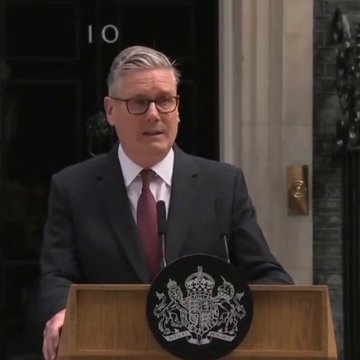
Britain is about to get her sixth Prime Minister in seven years. Sir Keir Starmer announced his resignation from the highest political office in the United Kingdom from outside the famous black front door of Number 10, Downing Street on Monday, and will apparently leave in September. This is a fast-moving story, and as I write there is talk about Starmer leaving office in July if there is no leadership contest. (more…)
Tag: technocracy
-

You can buy Greg Johnson’s The Trial of Socrates here.

You can buy Greg Johnson’s The Trial of Socrates here.
3,821 words
“Knowledge is not wisdom.”
—Frank Zappa
Plato’s Lovers is one of his shortest dialogues, but it deals with one of his weightiest topics: the nature of philosophy.
The setting is the school of Dionysus the grammarian. Socrates encounters two attractive young men from good families along with their two older male lovers. None of these characters are named.
The lovers are described as “rival” lovers, but ambiguously so. Was one of them also interested in the other’s lad? Or do they represent rival loves, i.e., rival ways of life? (more…)
-
Stefano Vaj
Biopolitics: A Transhumanist Paradigm
La Carmelina Edizioni, 2014Biopolitica. Il nuovo paradigma, originally written in Italian and first published in its “final” form in 2005 (Società Editrice Barbarossa), later circulated online through the biopolitica.it platform and has been continuously revised and expanded over the years (including an appendix drawn from Guillaume Faye’s La colonisation de l’Europe). (more…)
-
The word “technocracy” has recently become firmly established in Western political and media discourse. It’s tempting to define it as “rule by technology”, but that begs the question. The Ancient Greek word technē is the root of both modern words, “technology” and “technocracy”, and it means “to make or do, fashion or create.” (more…)
-
The Struggle Against the System
On this point in particular, I refer to the respective articles in the selected texts of the Nouvelle Droite. However, in order to expand upon the reflections contained there, I will summarize the essential lines of Guillaume Faye’s book Le Système à tuer les peuples. (more…)
-
June 17, 2024 Greg Johnson
Notes on Plato’s Gorgias, Part 4
The Master Art1,878 words
Part 4 of 14 (Part 1 here, Part 2 here, Part 3 here, Part 5 here)
Ethics as an Afterthought (456d–457c)
Is Socrates right that sophistry is essentially amoral and technocratic? After all, the sophists were widely seen as not just teachers of rhetoric but also as teachers of morals. However, as we shall see, both Polus and Callicles strongly embrace the amoral and technocratic idea of sophistry. Moreover, in the Meno—which is set in 402 BCE, after the Peloponnesian War and the latest possible date of the Gorgias—Meno tells Socrates: “I admire this most in Gorgias, Socrates, that you would never hear him promising this [to teach virtue]. Indeed, he ridicules the others [other sophists] when he hears them making this claim. He thinks one [the sophists] should [only] make people better speakers” (95c).[1] (more…)
-
3,592 words
Part 3 of 14 (Part 1 here, Part 2 here, Part 4 here)
Gorgias’ Art (449a–c)
When Socrates finally speaks directly to Gorgias, he asks a simple, straightforward question: “What should we call you based on the art (techne) that you know?”[1] To which Gorgias gives a simple, straightforward answer: he knows “rhetoric” (rhetorike). Socrates continues: “Then is it best to call you a rhetorician [rhetor]?” Gorgias agrees and amplifies: “Yes, Socrates, and a good one too, if you want to call me what, as Homer puts it, ‘I boast myself to be.’” (more…)
-
2,142 words
Christ, you know it ain’t easy
So, the union of Great Britain and Northern Ireland staggers through another year of our Lord, although that’s not a much-used phrase just at the moment. (more…)
-
July 6, 2023 Counter-Currents Radio
Counter-Currents Radio Podcast No. 539
Greg Johnson on Plato’s Gorgias,
Lecture 2Greg Johnson is teaching a five-week course on Plato’s Gorgias on Counter-Currents Radio, which will continue on three Saturdays later this month (July 15, 22, and 29). The second lecture, which dealt with Socrates’ discussion with Polus from 461b to 481b, can be heard below. A visual aid that accompanies the lecture is here.
The theme of the course is “Might vs. Right.” Dr. Johnson is using Donald J. Zeyl’s translation of the Gorgias published by Hackett as both a separate book and as part of their Plato Complete Works volume. (more…)
-
In Greece in the fourth and fifth centuries BCE, the sophists were highly-prized teachers of the art or craft (techne) of rhetoric. (The Greek word techne is the root of our words technique and technology.)
Socrates was widely seen as a sophist, for instance in Aristophanes’ Clouds. To a naïve bystander, Socrates certainly looked like a sophist. Like the sophists, Socrates spent a great deal of time arguing about ideas. Moreover, Socrates was seen arguing with known sophists, including the greatest sophists of them all, Gorgias and Protagoras, as depicted in the Platonic dialogues which bear their names. But if one looks at Socrates’ actual arguments with sophists, it becomes clear that he was fundamentally opposed to sophistry. (more…)
-

Karl Popper, one of the intellectuals who gave rise to the anti-populist conception of democracy that has prevailed in the West since the Second World War.
3,535 words
Part 5 of 9 (Chapter 1 here, Chapter 4 Part 1 here, Chapter 5 Part 1 here)
Whereas liberal elites had always harbored a cynical and technocratic rejection of the fundamental premises of popular government, after the Second World War “the highly educated [also began] to deplore working-class movements for their bigotry, their refusal of modernity,” and their apparent instinctual tendency towards nationalism and authoritarian leaders. They became openly and dogmatically hostile towards all forms of “collectivism” and solidaristic political movements because they identified popular social organization as fundamentally incompatible with liberalism’s hallowed individual rights and liberties. Post-war elites embraced anti-fascism and anti-populism as two necessary tenets of contemporary liberalism. (more…)
-
Adam Curtis has been compiling and documenting the nature of power in the world for over two decades now for the BBC. Those of us who reside in the UK and are required by law to pay a yearly sum of £157.50 ($218.35) for a television license, and for many native British people, paying this sum has been increasingly feeling like a spit in the face. Adam Curtis’ documentaries have been the one reprieve from the stream of abuse and guilt-tripping amongst the state-sponsored news media and junk celebrity TV. (more…)