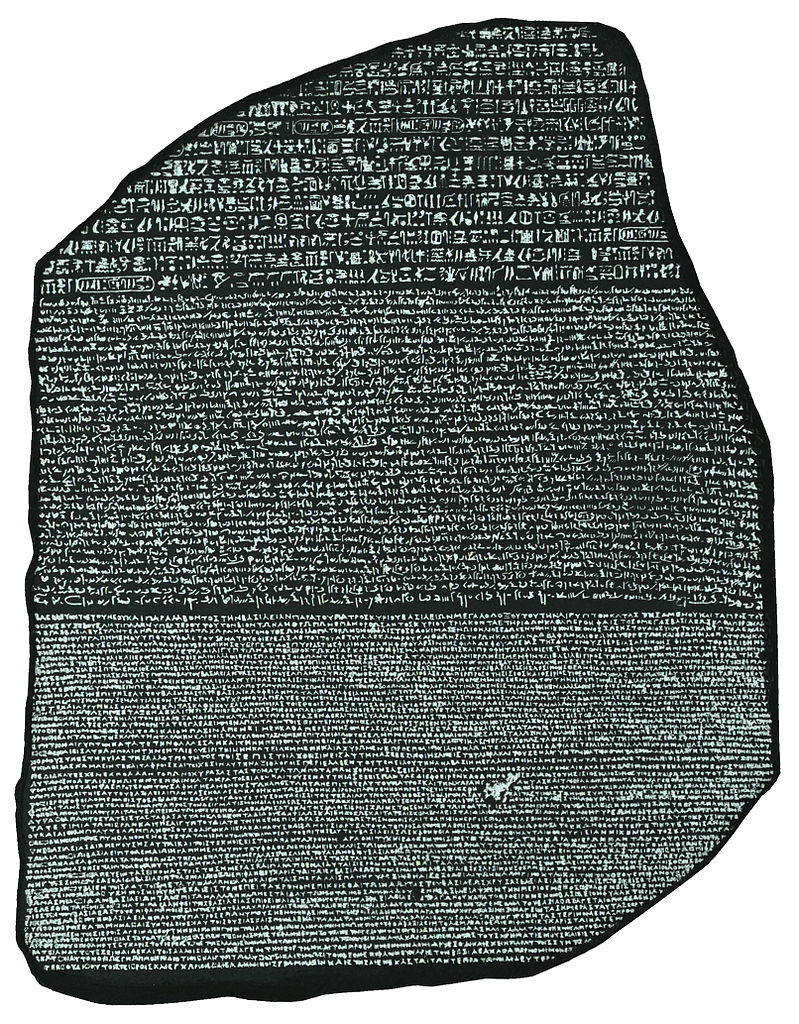
The movement to “decolonize the curriculum” has become something of an orthodoxy in Western universities. Its proponents argue that the academy has been shaped by Eurocentric assumptions, and that non-Western knowledge traditions deserve greater prominence. Yet the movement’s loudest advocates display a curious blind spot: they appear wholly impervious to the remarkable, and largely unthanked, role that Western scholars played in recovering, preserving, and transmitting much of the very non-Western knowledge they now wish to celebrate. (more…)
Tag: philology
-
3,876 words
1. Introduction: Wisdom Speaking
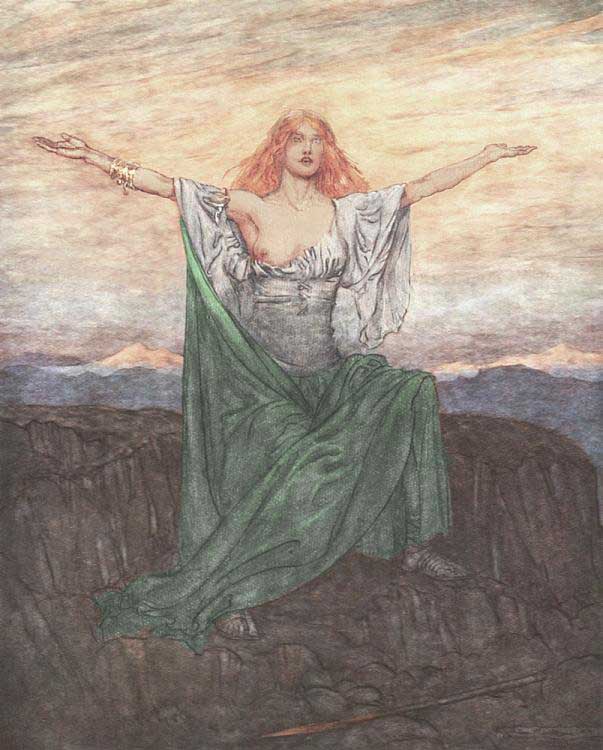
In our last installment, we discussed Sigurd’s meeting with the Valkyrie Brynhild, and how their encounter recapitulates, on a higher level, the dualities found in the story of the dragon slaying. When Sigurd rides through the fire to meet the Valkyrie he is going within his own solar, masculine being to reach the lunar feminine. (more…)
-
Part 3 of 3
Trans. G. A. Malvicini from L’Arco e la Clava [The Bow and the Club] (Milan: Scheiwiller, 1968)
We will end these observations by examining the original content of three ancient Roman notions, those of fatum, felicitas, and fortuna.
15. Fatum. According to the most common modern usage, “fate” is a blind power that hangs over men, (more…)
-
Part 2 of 3
Trans. G. A. Malvicini from L’Arco e la Clava [The Bow and the Club] (Milan: Scheiwiller, 1968)
10. Labor. Regarding changes in the value attached to words, changes that clearly indicate a radical change in world view, the most typical case is perhaps that of the term labor. In Latin, this word had a mainly negative meaning. (more…)
-
Part 1 of 3
Trans. G. A. Malvicini from L’Arco e la Clava [The Bow and the Club] (Milan: Scheiwiller, 1968)
One of the signs of the fact that the course of history has, outside of the purely material plane, been anything but one of progress, is the poverty of modern languages compared to many ancient languages. (more…)


