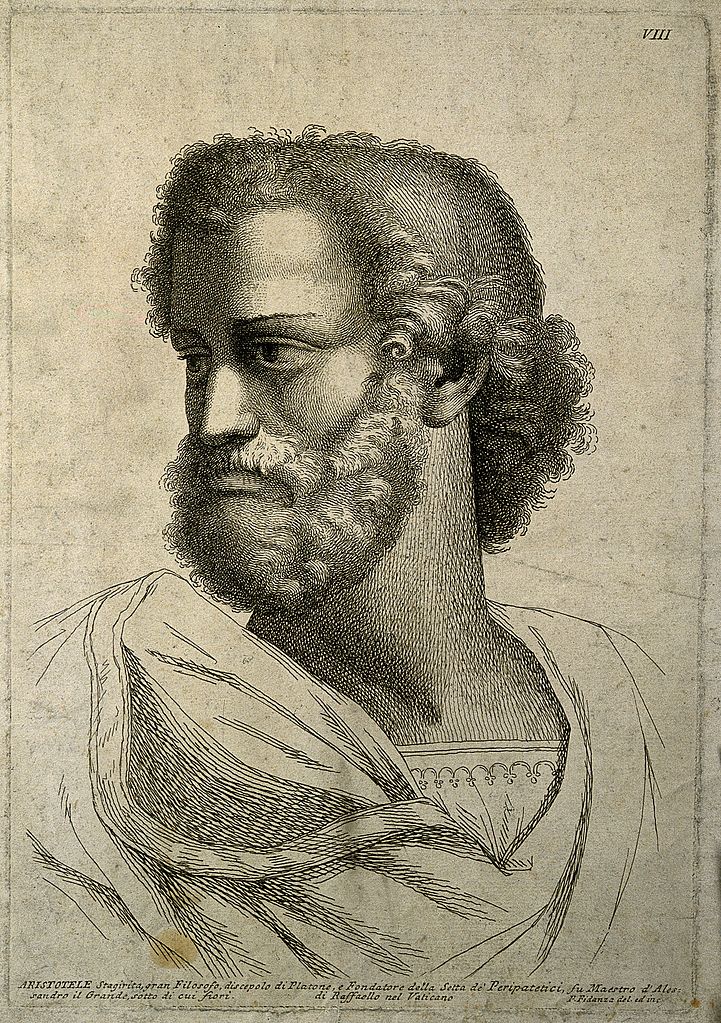
Raphael’s Aristotle from The School of Athens, fresco, 1510-1511, Apostolic Palace, Vatican
Raphael’s Aristotle from The School of Athens, fresco, 1510-1511, Apostolic Palace, Vatican
2,729 words
Part 2 of 2, Part 1 here
Aristotle’s Defense of the Theoretical Life
Some people study mathematics, astronomy, etc. as ends in themselves, purely out of wonder or curiosity. One cannot defend such theoretical work by pointing out that it may still be useful for other aims, even if only by accident. This is to defend theory by claiming that it is really practical. To be a means to an end—even a remote, indirect, and accidental means to an end—is to be practical. This sort of defense still implies that one cannot justify theoretical pursuits that never lead, even accidentally, to practical applications. Thus, one can only justify theory as pure theory: the pursuit of knowledge (1) as an end in itself, and (2) regardless of practical consequences. To defend theory, one must defend it as “useless.” (more…)