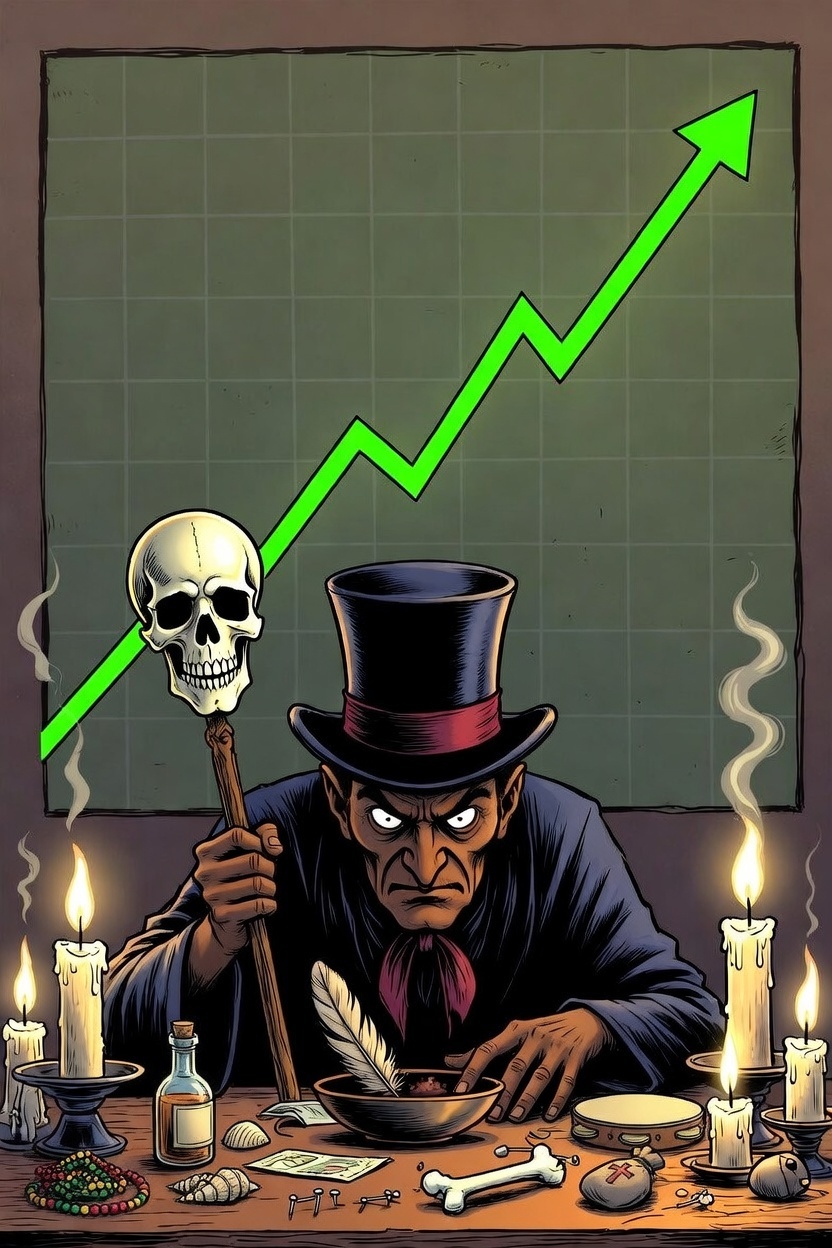
Communism’s hallmark, a command economy, is a failed system. Centrally planning pencil production over five years is ludicrous—even with AI. But the command economy has one use: as a reference point, or thought experiment, for other economic systems. Assuming we had a one-party state ruling the nation as conceived as one factory, one farm, and one office, how would we run things? (more…)
Tag: economics
-
No matter what happens with AI, it’s going to be an economic catastrophe. If AI is just a giant bubble, obviously that bubble is going to burst, and it will bring down the whole economy. Indeed, the American economy is mostly stagnant. All the growth right now is in AI.
If AI actually works, however, a whole lot of people will lose their jobs, and that will be an economic catastrophe as well. Moreover, neither the Left nor the Right can fix this problem.
Let’s say that you have a hotdog stand. (more…)
-
Last week on X, boomers again struggled in public to understand inflation. This time, they told young people to eat highly processed bread and meat for lunch, or some other form of slop, so that in ten years they could afford a down payment on a house. I’m calling it the Lunch Wars. (more…)
-

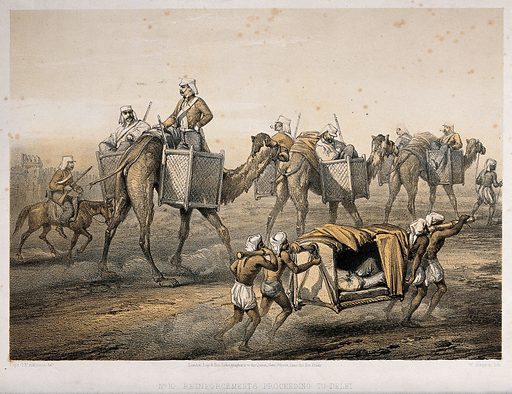
Lithograph by W. Simpson from 1859 depicting British officers travelling in panniers on the backs of camels as well as in sedan chairs carried by Indian men.
2,554 words
A statistic has been circulating widely online, and is invoked with great confidence in political speeches, social media debates, and nationalist discourse. It goes something like this: India accounted for roughly 32 percent of world’s gross domestic product in 1 CE and as much as 24.4 percent in 1700, yet by 1947, when British rule ended, that share had collapsed to just 4 percent. (more…)
-
If you’ve had anything to eat in the last few years, surely you’ve experienced sticker shock. I knew there was something up when I couldn’t do a modest grocery run without my pocketbook being lightened by over two hundred bucks. As for restaurant food, even proletarian chow like burgers and fried chicken is starting to become rare indulgences for anyone without a comfortably bougie income. What’s up with that? (more…) -
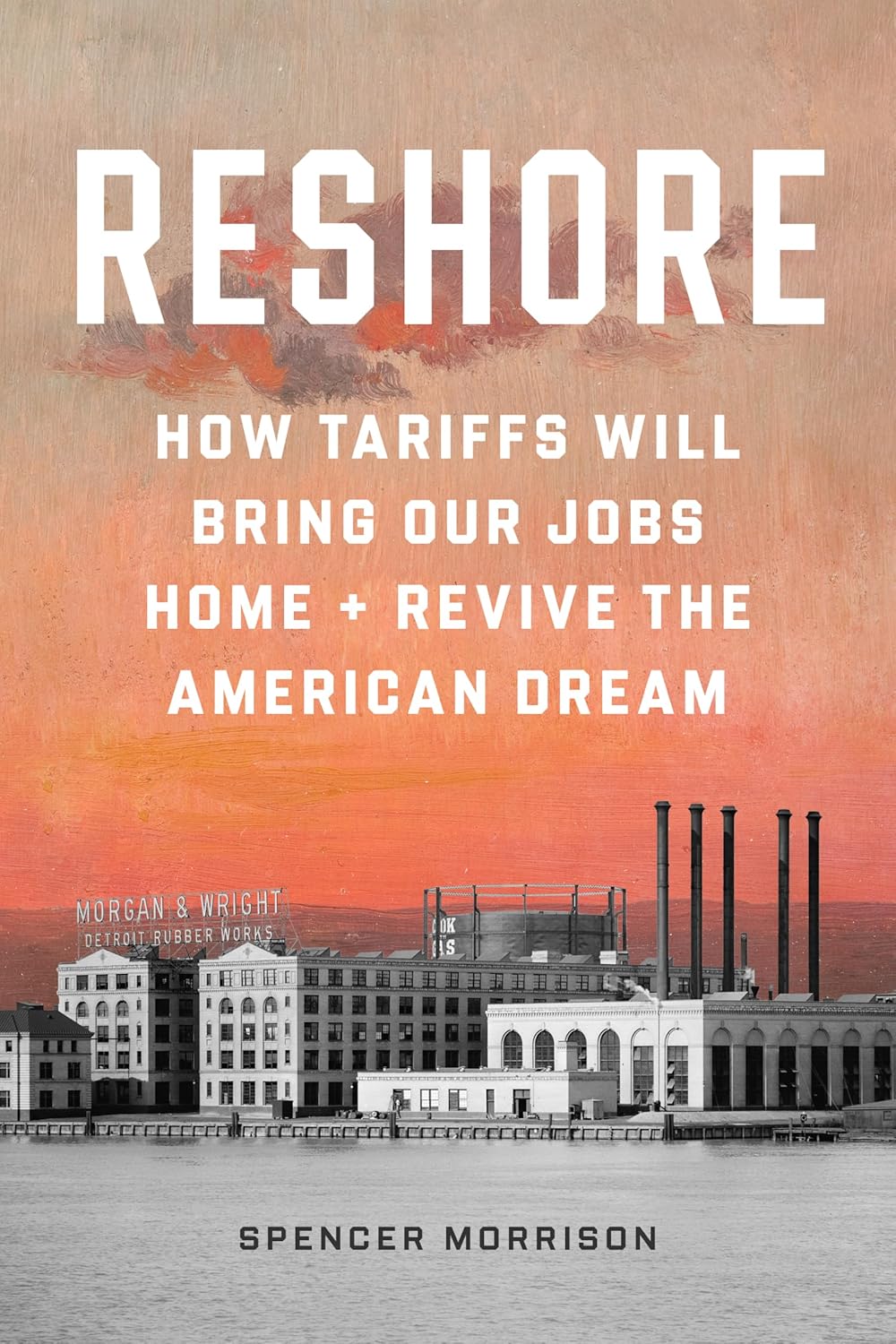
Spencer Morrison
How Tariffs Will Bring Our Jobs Home & Revive the American Dream
Washington, D.C.: Calamo Press, 2025“In 1721 Prime Minister Robert Walpole instituted a coherent trade policy which was explicitly designed to turn England into the world’s factory. This was based on Walpole’s observation – the same observation made by King Edward III or Queen Elizabeth I before him – that it was far more profitable to sell refined goods than raw goods. It was better to sell cloth than wool, ships than lumber, and swords than iron ingots.”
–Spencer Morrison (more…)
-
923 words
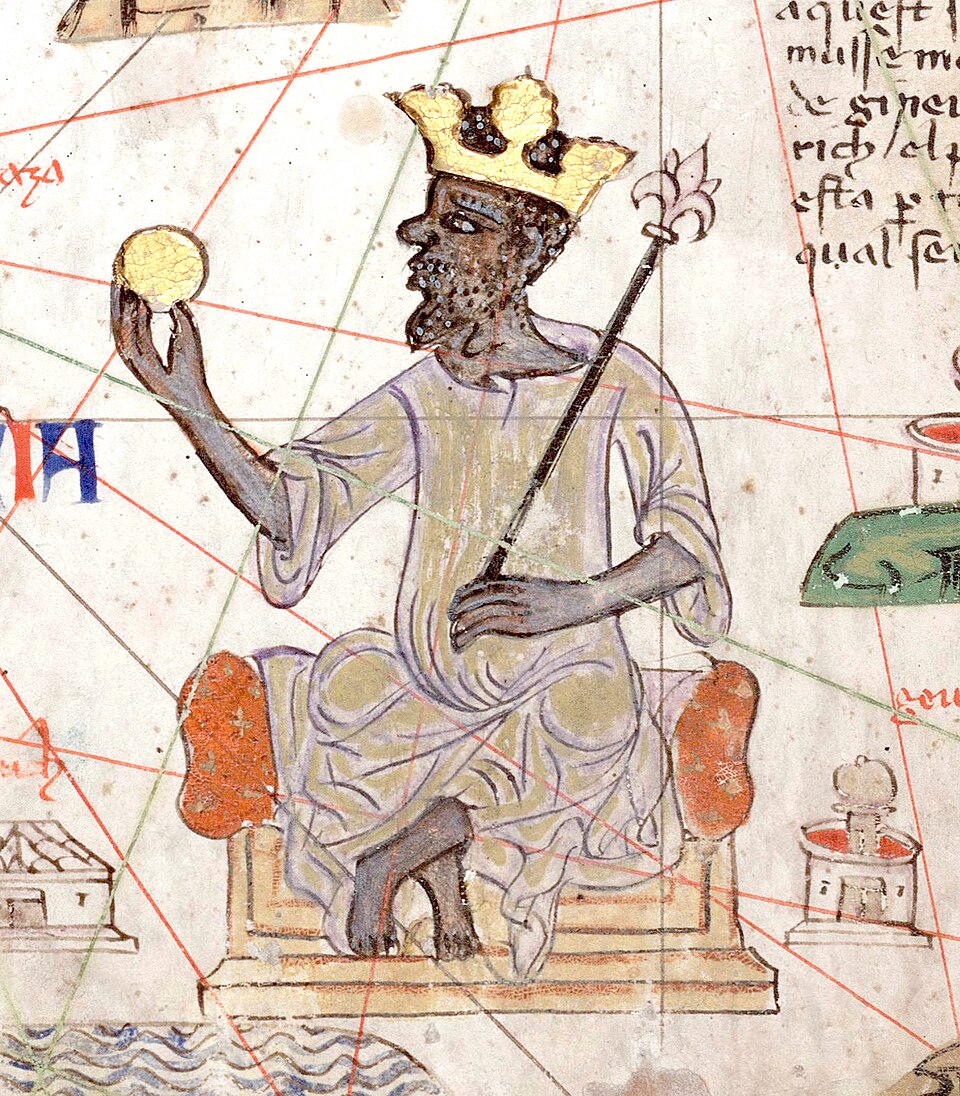
Mansa Musa is often described as the richest man in history, a figure whose legendary wealth has become almost mythical in global historical memory. His fame rests primarily on his famous pilgrimage to Mecca between 1324 and 1325, an event that transformed him from a powerful regional ruler into an internationally recognized symbol of wealth. Contemporary accounts describe an enormous caravan consisting of thousands of attendants, soldiers, servants, and enslaved people, along with camels carrying vast quantities of gold. (more…)
-
5,808 words
BRICS—named for the first five nations which entered the pact, Brazil, Russia, India, China, and South Africa, is a serious danger to America. The BRICS hazard comprises three separate threats. The first is an alternative banking and financial system which is opposed to the US dollar. The second consists of military threats which include aggressive Russian forces in Eastern Europe and the Arctic as well as Chinese military pressure in the Indo-Pacific. The BRICS bloc has already militarily cooperated. (more…)
-
3,239 words
I once wrote a book about terrible economic ideas. Ironically, it made no money.
Called False Economies, if I was writing it today, I would have definitely included a chapter on a former long-term adviser to the Bank of England (BoE) called Helen McCaw, who enjoys something of a sideline as a UFO enthusiast. Well, so do I. The difference is that, merging her two fields of expertise into one overarching whole, McCaw has just released some rather strange policy proposals advising the BoE to comprehensively remodel its entire economic model to be able to cope should aliens ever land in London, thereby badly devaluing the value of the British pound. (more…)
-
For many years, Western governments promoted immigration as the key to solving their economic malaise. Leaders in countries such as the United Kingdom and Canada insisted that a steady influx of foreign workers would stimulate demand, raise productivity, and offset the demographic pressures of aging societies. (more…)
-
Sovereign wealth funds (SWFs) have emerged as some of the most powerful financial entities of the modern world. With assets surpassing $12 trillion, they represent both a promise and a peril: a promise of stability, savings, and development, but also a peril of misuse, corruption, and political entanglement. While some countries have managed their SWFs with discipline, others have fallen victim to abuse, leaving behind cautionary tales. (more…)
-
Two of the white identitarian movement’s most trusted sources for news and analysis are Kevin MacDonald’s The Occidental Quarterly, and Ron Unz’sThe Unz Review. These gentlemen have, within the past year, each published an essay on the proper economic organization for a prospective ethnostate. (more…)
-
One of the most beautiful theories in modern thought is the “Invisible Guiding Hand,” credited to 18th century Scottish philosopher Adam Smith. It describes how, through a random, organic process composed of an uncountable number of independent decisions, free markets achieve the most efficient use of resources. (more…)