Counter-Currents
  • Advertise
  • Private Events
  • T&C
  • About
  • Contact
  • RSS
    • Main feed
    • Podcast feed
    • Videos feed
    • Comments feed
  • Welcome
  • Webzine
  • Books
  • Merch
  • Podcasts
  • Videos
  • Donate
  • Patrons
  • Subscribe
  • Crypto

LEVEL2

Donate Now Mailing list
Upcoming podcasts
  • Rob Rundo on Counter-Currents Radio

    Rob Rundo on Counter-Currents Radio

    Counter-Currents Radio

    06/06/2026 — 3 pm EST / 9 pm CET
  • Daniel Tyrie on Counter-Currents Radio

    Daniel Tyrie on Counter-Currents Radio

    Counter-Currents Radio

    06/20/2026 — 3 pm EST / 9 pm CET

Writers of May

(2 votes) Morris van de Camp David M. Zsutty Derek Stark Jayant Bhandari Greg Johnson

Articles of May

The Lunch Wars by David M. Zsutty Heidegger on Nietzsche, Part One by Collin Cleary 2 votes
  • Welcome
  • Webzine
  • Books
  • Merch
  • Podcasts
  • Videos
  • Donate
  • Patrons
  • Subscribe
  • Crypto
    • Editor’s Update
      Fundraiser Update, a New $20,000 Matching Grant, & Rob Rundo Returns to Counter-Currents Radio

      Greg Johnson

    • The Counter-Currents 2026 Fundraiser
      Lifetime Subscriber Welcome Packages Extended

      Greg Johnson

    • Nationalism This Week
      Who’s Looking Back?

      Greg Johnson

      10

    • China’s Threat to American Security:
      Food, Farmland, Foreign Control, & Energy Policy

      Lipton Matthews

      1

    • The Bitter End of Western Metaphysics:
      Heidegger on Nietzsche, Part Two

      Collin Cleary

      4

    • The Killing of Henry Nowak

      Mark Gullick

      24

    • The Crisis of Chinese Technology Thieves

      Morris van de Camp

      1

    • The Strange World of Gender Bender Fiction:
      & What This Genre Tells Us About Autosexuality

      Dani Vypont

      3

    • Watching the Watchers:
      The Dark Triad Question

      David M. Zsutty

      14

    • The Remigration Movement Solidifies

      F. Roger Devlin

      1

    • Casting Aspersions:
      The Fatal Consequences of Race-Swapped Casting, From Helen of Troy to Henry of Southampton

      Steven Tucker

      19

    • The Murder of Henry Nowak

      Millennial Woes

      23

    • Don’t Forget to Vote in Our Writer & Article of the Month Poll

      Greg Johnson

    • The Robot Hotdog Stand

      Greg Johnson

      34

    • Laughing Our Way to Victory

      Dave Chambers

      4

    • The Zodiac Killer

      Mark Gullick

      11

    • Jared Taylor: What Rome Means to Me

      Jared Taylor

      1

    • An Interview with Endeavour:
      My Way of Life Is an Adventure!

      Ondrej Mann

      6

    • José Pedro Zúquete’s The Identitarians

      Greg Johnson

      3

    • Editor’s Update
      Fundraiser Update & How to Watch the Remigration Summit

      Greg Johnson

      5

    • The Bitter End of Western Metaphysics:
      Heidegger on Nietzsche, Part One

      Collin Cleary

      11

    • Berlin: City of Stones

      Spencer J. Quinn

      6

    • True Folk-Horror Is Horror of Your Own Folk:
      Mark Gatiss vs the Brexit Blind Dead  

      Steven Tucker

      4

    • Counter-Currents Radio Podcast No. 689
      Thomas Massie, the America 2050 Bust, the Need for Whites to Divest from America, the AI Economic Apocalypse, & Pro-White Project Pitches to Billionaires

      Counter-Currents Radio

      7

    • Nationalism This Week
      Remigration is Inevitable, Part 3

      Greg Johnson

      27

    • Why Billionaires Should Fund White Identity Politics

      Lipton Matthews

      8

    • How Cold War Two Came About

      Morris van de Camp

      5

    • Now Available for Pre-Order at a Special Price!
      Greg Johnson’s The Philosopher Is In

      Greg Johnson

    • David Zsutty’s Elevator Pitch to a Billionaire

      David M. Zsutty

      1

    • Headbanging Lite

      Mark Gullick

      5

    • White Advocacy Past and Present

      Peter Bradley

      13

    • The Lunch Wars

      David M. Zsutty

      47

    • The Russians are Coming/The Russians are Coming

      Steven Clark

      1

    • Peak Fatigue in Fort Wayne

      Gabriel Anderson

      24

    • Keith Woods’ Elevator Pitch to a Billionaire

      Keith Woods

    • The Cruelty of Kindness

      Morris van de Camp

      9

    • Predation Wearing the Mask of Civilization

      Jayant Bhandari

      13

    • The Mandalorian & Grogu

      Trevor Lynch

      24

    • Editor’s Update
      Fundraiser Update & a New $20,000 Matching Grant
      Greg Johnson & David Zsutty Discuss Thomas Massie on Counter-Currents Radio

      Greg Johnson

      2

    • How the Jews Defeated Thomas Massie—& Themselves

      David M. Zsutty

      24

    • Jared Taylor’s Elevator Pitch to a Billionaire

      Jared Taylor

      15

    • Nationalism This Week
      Remigration Is Inevitable, Part 2

      Greg Johnson

      8

    • Could Fascism Work?

      Mark Gullick

      40

    • Jonathan Bowden’s Deliverance
      Part 7

      Jonathan Bowden

    • China’s Quiet Hand:
      Influence, Infiltration, & the Western Blind Spot

      Lipton Matthews

      9

    • Counter-Currents Radio Podcast No. 688
      Tyler Dykes on Running for US Congress in South Carolina

      Counter-Currents Radio

      3

    • Lothrop Stoddard’s The Revolt Against Civilization

      Spencer J. Quinn

      14

    • Lewis Strauss Did Nothing Wrong:
      How the politics of the Atom Bomb during the early Cold War Apply to Artificial Intelligence Today

      Morris van de Camp

      14

    • The Ghost of the Confederacy

      Dave Chambers

      12

    • America’s Century of Humiliation has Begun

      Greg Johnson

      27

    • Will Williams

      Remigration is Inevitable Part 3

      Will Williams: June 4, 2026  I mention [“Christ is King” Bryan Dawson] here in this piece that...

    • Collin Cleary

      Heidegger on Nietzsche, Part Two

      It will likely presence itself next Friday. Thanks for reading!! Please take a look at the many...

    • Collin Cleary

      Heidegger on Nietzsche, Part Two

      You’re looking at the wrong website. Counter-Currents is not political propaganda. My essay is not...

    • Mark Gullick

      The Killing of Henry Nowak

      Look up the British BIT. I forget what it stands for, but it is known as the "nudge unit". I bet a...

    • Stronza

      The Killing of Henry Nowak

      Here's the entire sentencing statement by the judge. https://www.judiciary.uk/wp-content/uploads/...

    • Will Williams

      Crosstown Traffic

      ...His girlfriend of the time was undergoing serious investigation by another biographer of Hendrix’...

    • YT

      Who’s Looking Back?

      Also, we’re not speaking about “true AI”, are we? True AI - HAL from Kubrick’s 2001 - suggests real...

    • Will Williams

      America Has Already Lost the Iran War

      US Warships Flee Oman Sea after Iranian Navy’s Missile WarningJune, 05, 2026 – Politics...

    • Hi-Ya!

      Who’s Looking Back?

      17.68 It will appear a handsome deed To have made, of yourself, a party of one.

    • YT

      Who’s Looking Back?

      I’m not even 60, and this is the second CC article read today which I really don’t understand. The...

    • Peter Quint

      Casting Aspersions

      Maybe he is one of those reptilians we have been hearing about. 🙃

    • Peter Quint

      The Killing of Henry Nowak

      Unfortunately, you are correct; there’s not enough racial loyalty out there to kill a piss-ant...

    • Tye

      Heidegger on Nietzsche, Part Two

      Fascinating series I have followed since the beginning. This bird’s eye view piece has been...

    • Vagrant Rightist

      Who’s Looking Back?

      Yes. No one knows where this data is going. I’ve never used an AI for anything personal and never...

    • Connor McDowell

      The Killing of Henry Nowak

      Apparently, Nowak’s father has come out with a statement of “please let’s not make this about race...

    • Sigurd

      The Murder of Henry Nowak

      I'm really having a hard time trying to figure out if those police officers who made the arrest are...

    • DarkPlato

      Who’s Looking Back?

      What math problems do you use ai for?  It’s ever so wonderful.  It can solve them better...

    • kolokol

      Who’s Looking Back?

      Never sign up for AI. You're asking for trouble, if you do. I only use Google AI-mode, because it...

    • kolokol

      China’s Threat to American Security

      This is a disturbing article. I respect China, but I don't fear them. They are strong and...

    • Peter Quint

      Who’s Looking Back?

      Someone please break this tie for “writer of the month,” or it is going to be a long citation...

    • Earth Day Special

      John Morgan

      12

    • A Robertson Roundup
      Remembering Wilmot Robertson
      (April 16, 1915 – July 8, 2005)

      Margot Metroland

      13

    • The Paranoid Style in White Nationalism

      Greg Johnson

      30

    • Join the Dance!

      Andrew Hamilton

      1

    • We Can’t Save the Earth Without Reducing African Birth Rates

      James Dunphy

      36

    • “I’m Not a Conspiracy Theorist, but . . .”:
      Jeffrey Epstein’s Death Gives New Life to “Conspiracy Theories”

      Greg Johnson

      22

    • Sylvia Plath: Stasis in Darkness

      Vic Olvir

      17

    • Vanguardism, Vantardism, & Mainstreaming

      Greg Johnson

      80

    • Aviation, Geography, & Race

      Charles Lindbergh

      3

    • Some Thoughts on Yule

      Collin Cleary

      4

    • Living in Truth:
      A Yuletide Homily

      Jef Costello

      7

    • John Kennedy Toole’s A Confederacy of Dunces

      Greg Johnson

      20

    • On Aleksandr Solzhenitsyn’s Warning to the West

      Spencer J. Quinn

      7

    • Elitism, British Modernism, & Wyndham Lewis

      Jonathan Bowden

      6

    • Philip K. Dick’s Do Androids Dream of Electric Sheep? as Anti-Semitic/Christian-Gnostic Allegory

      Greg Johnson

      20

    • “Conspiracy Theory” or Conspiracy?

      Andrew Hamilton

      21

    • Remembering H. P. Lovecraft
      (August 20, 1890–March 15, 1937)

      Greg Johnson

      3

    • Who Are We?
      Nordics, Aryans, & Whites

      Greg Johnson

      71

    • Remembering William Gayley Simpson
      (July 23, 1892–December 31, 1990)
      A Pleasant Afternoon with Harriet & Bill Simpson

      Margot Metroland

      18

    • Here are the Young Men
      Remembering Ian Curtis
      (July 15, 1956–May 18, 1980)

      Mark Gullick

      18

    • Percy Grainger
      Artist of the Right

      Alex Graham

      7

    • Remembering Revilo Oliver
      (July 7, 1908–August 20, 1994)

      Greg Johnson

      18

    • The Meaning of July 4th for the White Man

      Gregory Hood

      13

    • The Front National’s Evolution

      Bruno Mégret

    • Merwin K. Hart
      Forgotten American Hero & Man of the Right

      Morris van de Camp

      10

    • George Orwell’s Nineteen Eighty-Four

      Jonathan Bowden

      8

    • Carleton S. Coon
      Scientist & Reluctant White Advocate

      Morris van de Camp

      3

    • The Kwanzaa Absurdity Will Be Dwarfed by Juneteenth

      Robert Hampton

      10

    • Stravinsky

      Alex Graham

      7

    • Like the Roman:
      Remembering Enoch Powell (1912-1998)

      Mark Gullick

      23

    • Institutions Cannot Be Transplanted

      Jayant Bhandari

      5

    • Jonathan Bowden’s Deliverance
      Part 5

      Jonathan Bowden

    • Crosstown Traffic:
      Jimi Hendrix & The Post-War Rock ‘N’ Roll Revolution

      Mark Gullick

      1

    • Slaves from the North:
      Finns & Karelians in the East European Slave Trade, 900–1600

      Lipton Matthews

      14

    • Neo-Fascism in Film
      Part 4

      Karel Veliky

      2

    • David Lean’s A Passage to India

      Spencer J. Quinn

      1

    • Elites are Essential to Development

      Lipton Matthews

      7

    • Jonathan Bowden’s Deliverance
      Part 4

      Jonathan Bowden

    • Neo-Fascism in Film
      Part 3

      Karel Veliky

      6

    • E. M. Forster’s A Passage to India & the Indian Mentality

      Spencer J. Quinn

      25

    • Jonathan Bowden’s Deliverance
      Part 3

      Jonathan Bowden

    • The Rest Is Silence
      Heidegger’s Quietism

      Mark Gullick

      2

    • Dispelling the Historical Fallacy of Indian Nationalism

      Lipton Matthews

      8

    • Neo-Fascism in Film
      Part 2

      Karel Veliky

      8

    • Jonathan Bowden’s Deliverance
      Part 2

      Jonathan Bowden

    • Life of a Klansman

      Mark Gullick

      8

    • Jonathan Bowden’s Deliverance, Part 1

      Jonathan Bowden

    • Decolonial Ideas are Holding Back Developing Countries

      Lipton Matthews

      8

    • Neo-fascism in Film, Part 1

      Karel Veliky

      21

    • Jonathan Bowden’s Onslaught, Part 8
      Divigations on Decadence

      Jonathan Bowden

    • Jonathan Bowden’s Onslaught, Part 7
      Intrigues in the National Front

      Jonathan Bowden

      1

    • Rotten to the Core

      Mark Gullick

      8

    • Strauss on Husserl’s “Philosophy as Rigorous Science”

      Greg Johnson

    • Jonathan Bowden’s Onslaught, Part 6
      Francis Bacon & Right-Wing Nihilism

      Jonathan Bowden

    • London After (& Before) Midnight:
      Aleister Crowley, The Landlord’s Worst Nightmare

      James J. O'Meara

      2

    • Jonathan Bowden’s Onslaught, Part 5
      The Post-War British Far Right

      Jonathan Bowden

    • No Rules: Rollerball

      Mark Gullick

      4

    • Jonathan Bowden’s Onslaught, Part 3
      Brett Easton Ellis’ American Psycho

      Jonathan Bowden

    • An Alternate History of the Harris Presidency

      Beau Albrecht

      5

    • The Origins of Mass Education:
      Augustina S. Paglayan’s Raised to Obey

      Francis Rockwell

      4

    • András László
    • Derek Hawthorne
    • Beau Albrecht
    • Alain de Benoist
    • Kerry Bolton
    • Jonathan Bowden
    • Collin Cleary
    • Jef Costello
    • Savitri Devi
    • Julius Evola
    • Jim Goad
    • Gregory Hood
    • Juleigh Howard-Hobson
    • Greg Johnson
    • Charles Krafft
    • Anthony M. Ludovici
    • Trevor Lynch
    • H. L. Mencken
    • J. A. Nicholl
    • James J. O’Meara
    • Christopher Pankhurst
    • Tito Perdue
    • Michael Polignano
    • Spencer J. Quinn
    • Fenek Solère
    • Irmin Vinson
    • Leo Yankevich
    • Francis Parker Yockey
    • Multiple authors
  • Editor-in-Chief

    • Greg Johnson, Ph.D.

    Featured Writers

    • Beau Albrecht
    • Gunnar Alfredsson
    • Collin Cleary, Ph.D.
    • Jef Costello
    • Morris V. de Camp
    • F. Roger Devlin, Ph.D.
    • Stephen Paul Foster, Ph.D.
    • Jim Goad
    • Alex Graham
    • Mark Gullick, Ph.D.
    • Greg Johnson, Ph.D.
    • Travis LeBlanc
    • Trevor Lynch
    • Margot Metroland
    • James J. O’Meara
    • Angelo Plume
    • Spencer J. Quinn
    • Fred Reed
    • Clarissa Schnabel
    • Michael Walker
    • David M. Zsutty

    Frequent Writers

    • Asier Abadroa
    • Aquilonius
    • Alain de Benoist
    • Kerry Bolton, Ph.D.
    • Dave Chambers
    • Steven Clark
    • James Dunphy
    • Endeavour
    • Richard Houck
    • Jason Kessler
    • Titus Livius
    • Ondrej Mann
    • Lipton Matthews
    • Mark Mazari
    • John Morgan
    • Jaroslav Ostrogniew
    • Kathryn S.
    • Christian Secor
    • Anne Wilson Smith
    • Thomas Steuben
    • William De Vere
    • Kenneth Vinther
    • Max West

    Classic Authors

    • Maurice Bardèche
    • Jonathan Bowden
    • Julius Evola
    • Guillaume Faye
    • Ernst Jünger
    • Kevin MacDonald, Ph.D.
    • D. H. Lawrence
    • Charles Lindbergh
    • Jack London
    • H. P. Lovecraft
    • Anthony M. Ludovici
    • Sir Oswald Mosley
    • National Vanguard
    • Friedrich Nietzsche
    • Revilo Oliver
    • William Pierce
    • Ezra Pound
    • Saint-Loup
    • Savitri Devi
    • Carl Schmitt
    • Miguel Serrano
    • Oswald Spengler
    • P. R. Stephensen
    • Jean Thiriart
    • John Tyndall
    • Dominique Venner
    • Leo Yankevich
    • Francis Parker Yockey

    Other Authors

    • Howe Abbott-Hiss
    • Michael Bell
    • Giles Corey
    • Jack Donovan
    • Richardo Duchesne, Ph.D.
    • Emile Durand
    • Guillaume Durocher
    • Mark Dyal
    • Tom Goodroch
    • Andrew Hamilton
    • Robert Hampton
    • Huntley Haverstock
    • Derek Hawthorne
    • Gregory Hood
    • Juleigh Howard-Hobson
    • Alexander Jacob
    • Ruuben Kaalep
    • Tobias Langdon
    • Julian Langness
    • Patrick Le Brun
    • G A Malvicini
    • John Michael McCloughlin
    • Millennial Woes
    • Michael O’Meara
    • Christopher Pankhurst
    • Michael Polignano
    • J. J. Przybylski
    • Quintilian
    • Edouard Rix
    • C. B. Robertson
    • C. F. Robinson
    • Herve Ryssen
    • Alan Smithee
    • Fenek Solere
    • Ann Sterzinger
    • Robert Steuckers
    • Tomislav Sunic
    • Donald Thoresen
    • Marian Van Court
    • Irmin Vinson
    • Book Reviews
    • Movie Reviews
    • TV Reviews
    • Music Reviews
    • Art Criticism
    • Graphic Novels & Comics
    • Video Game Reviews
    • Fiction
    • Poems
    • Interviews
    • Videos
    • English Translations
    • Other Languages
      • Arabic
      • Bulgarian
      • Croatian
      • Czech
      • Danish
      • Dutch
      • Estonian
      • Finnish
      • French
      • German
      • Greek
      • Hungarian
      • Italian
      • Lithuanian
      • Norwegian
      • Polish
      • Portuguese
      • Romanian
      • Russian
      • Slovak
      • Spanish
      • Swedish
      • Ukrainian
    • Commemorations
    • Why We Write
  • Archives
  • Top 100 Commenters
  • The Looney Bin
  • Advertise
  • Private Events
  • T&C
  • About
  • Contact
  • RSS
    • Main feed
    • Podcast feed
    • Videos feed
    • Comments feed
Sponsored Links
Europa.com Above Time Coffee Antelope Hill Publishing Paul Waggener IHR-Store Spencer J. Quinn American Renaissance Jim Goad The Occidental Observer
Print July 14, 2025 6 comments

They Can Live in the Desert but Nowhere Else
Part 1

Spencer J. Quinn

2,411 words

Ronald Grigor Suny
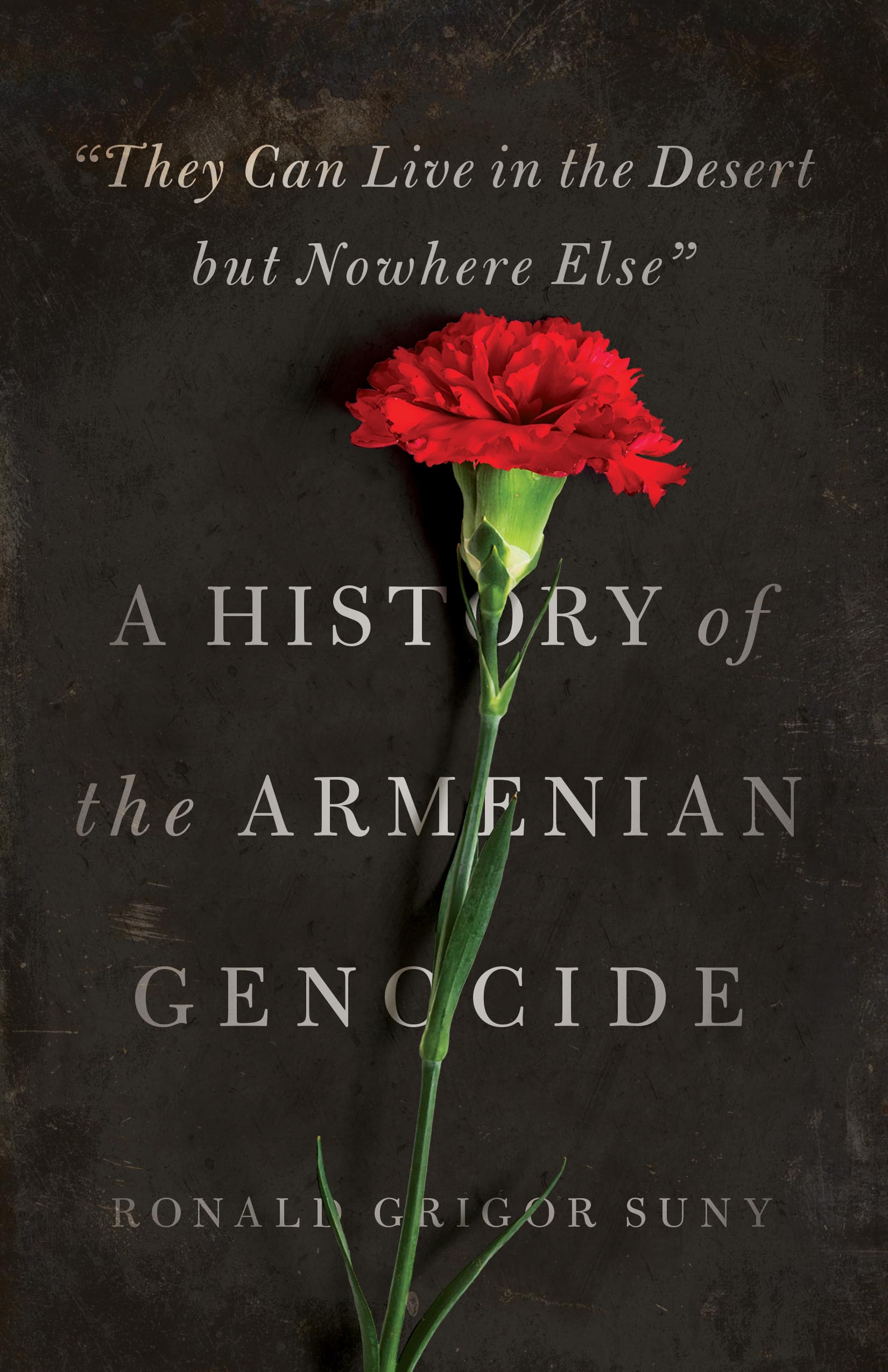
They Can Live in the Desert but Nowhere Else: A History of the Armenian Genocide
Princeton University Press, 2015

The tragically overlooked subject of the Armenian Genocide of 1915 and 1916 needs reassessment among racial identitarians everywhere. There are too many lessons in it—and too much slaughter and destruction—to justify relegating it to oblivion. It is a massive topic, one that demands no end of pondering and re-pondering for the sake of all distinct peoples aspiring to self-determination. I was drawn to this topic after reading Franz Werfel’s apocalyptic novel The Forty Days of Musa Dagh, which depicted how 5,000 Armenian villagers defended a mountain fortress against the might of the Ottoman Empire during the First World War. This was based on a true story, and turned out to be an minor—yet thrilling—episode in a vast catastrophe which took the lives of 1 to 1.5 million Ottoman Armenians. I wanted to know how such an unspeakable thing could have happened, and why.

Ronald Suny’s They Can Live in the Desert but Nowhere Else: A History of the Armenian Genocide, was published in 2015 and commemorates the centennial of what was effectively the eradication of the Armenian diaspora from a region which they had inhabited for millennia. What follows won’t be so much a review of this excellent work but a summary of its most important or dramatic points, as well as an organization of my thoughts about them. Hopefully, this will help provide a foundational understanding of the events as they relate to identitarian and dissident metapolitics moving forward.

From my reading of Suny, there were several primary causes of the genocide, but none more primary than the innate differences in intellect and temperament between Armenians and Turks, which are wholly distinct ethnic groups. The former are a Eurasian Caucasian people speaking an Indo-European language, while the latter make up their own ethnic group and originated in East-Central Asia. Such disparate evolutionary lineages led to great differences between the two populations. Their relatively small numbers and centuries of diaspora status leading up to the 20th century caused the Armenians to be resourceful, talented, linguistically tenacious, and obstinately identitarian, yet passive, obscurantist, and disorganized. While most Armenians by 1915 still lived in a pre-modern state within the six eastern Anatolian vilayets (or provinces) which made up their ancient homeland, urban Armenians became noticeably successful and wealthy as merchants and traders.

Meanwhile, the Turks, after having enjoyed centuries of military success and cultural hegemony as the leading element of the multiethnic Ottoman Empire, saw their empire rapidly stripped away from them. This happened first as a result of their wars with Russia in the 1850s and 1870s, and later in the Balkan Wars of 1912-1913. This was a psychological blow from which the inherently proud, cruel, and overbearing Turk could not easily recover. That their enemies were Christians had much to do with their suspicion and ultimate hatred of Armenians, who were the largest Christian subgroup in Anatolia, the empire’s heartland.

But there were other non-Turkish ethnic groups in the Ottoman Empire. Why were the Armenians singled out? Because they had two disadvantages which made them unique. One, they were a diaspora without a country. A “dispersed people,” as Suny describes them. From the 1870s until the First World War, the Ottoman Armenians, known as the Ermeni millet (In Turkish, Armenian people) had no political representation beyond that of Sultan Abdulhamid II, and after him, the Young Turks, who seized control of the Empire in 1908. They were also split across three empires—the Ottoman, the Russian, and the Persian. So they were nowhere near their full strength in Anatolia when the Turks decided to move against them. They also had nowhere to which they could easily emigrate. The Ottoman Greeks on the other hand had Greece, and therefore possessed an escape hatch and political backing that the Armenians did not. Suny reports that on the eve of the First World War 150,000 Greeks were deported more or less safely to their homeland. During the war, another 163,000 fled back to Greece under duress, while nearly 100,000 were forcibly removed to other parts of the empire. Suny flatly claims that the Young Turks made no effort to commit genocide against the Greeks, largely because the Greek government had threatened them with war if they did. The Armenians had no such external protection.

The second disadvantage was the Armenian’s stubborn adherence to Christianity. The Ottoman leadership in the 19th and 20th Centuries saw Islam as the glue which held together their ethnically diverse Muslim subpopulations, which mainly included Arabs, Circassians, and Kurds. Whenever there was strife between Armenians and one of these groups—most often it was the Kurds—the authorities almost always sided against the Armenians regardless of who was in the right. This helped render the Armenians powerless and made it all the more tempting for the semi-nomadic, semi-civilized Kurds to take advantage of them, which happened quite often. Despite its cosmopolitan pretenses, the Ottoman Empire remained a Muslim supremacist entity—especially so in the late 19th and early 20th Centuries when hundreds of thousands of Muslim refugees from wars in the Balkans (known to Turks as Rumelia) were now competing with the Armenians for land and resources. Muslims at this time in history were not in the mood to be generous, and so adjudicating on behalf of the Infidel too often could incite the violent wrath of the people.

Another primary cause of the genocide points to Armenian reactions to what they justly felt were the fast erosion of their civil rights. Of course, their patriarchs and catholicos appealed repeatedly to the Sublime Porte, but this had little effect. So did any attempts at negotiating or caucusing with the Young Turks or other political parties. But what did bear fruit however was appealing to the European powers as fellow Christians. Moved by tales of horrific oppression by Saracen despots, leaders of England, France, Germany, and Russia insisted upon inserting themselves into Ottoman affairs and inspecting things for themselves. And because the Ottoman Empire was so manifestly weak, it could do nothing to stop them. This galled the Turks, from the leadership on down. They began to suspect that the Armenians, who had once been considered their loyal millet, were now provoking their Muslim neighbors and exaggerating their suffering in order to persuade the Europeans to partition the Empire. After the string of defeats they had suffered by the eve of World War One, partition was not an unreasonable fear for the Ottomans to have.

The final primary cause of the genocide can be laid at the feet of the Young Turks themselves, namely, Talat Bey, Enver Bey, and Cemal Bey. Their personal failings, quirks, and limitations had perhaps the most to do with how the genocide played out as a methodical and ruthless government operation.

Suny outlines the antagonists of his drama early on, pointing to how they couldn’t have been more different:

Like other great empires, the Ottoman Empire was a composite state in which the ruling center was distinct from those it ruled. The realm was governed by the imperial dynasty, the Family of Osman (Al I Osman), which based its right to rule on the view that its superiority was natural, divinely ordained, and therefore justified. The imperial paradigm was a system in which the Ottoman sultan, by right of conquest and divine sanction, ruled over subjects of various religions and ethnicities in a structure of inequality and subordination that maintained, reinforced, and even produced difference.

By the mid-19th century this put the Ottomans at odds with the republican, liberal, and Enlightened Europe which was striving towards equality, tolerance, and universalism. It also put the Ottomans at odds with notions of ethnonationalism, which were also percolating in Europe at the time. Non-Muslims had dhimmi status in the Ottoman millet system, which meant that distinct ethnic and religious communities paid for official recognition and tolerance through taxes and loss of political rights. The system worked well until the Tanzimat period starting in 1839. Intrigued by Western ideas, Ottoman elites instilled reforms which brought non-Muslims closer to equality with Muslims under the law. One of the many impacts of Tanzimat was allowing non-Muslim minorities such as the Armenians to flourish economically. This quickly led to their cultural dominance in many urban centers of the Empire, causing great envy and resentment from ordinary Turks who had recently enjoyed state-sanctioned superiority over people they still viewed as outsiders and infidels.

Trouble began with an 1862 revolt in the mountainous town of Zeytun in the southeast corner of Anatolia. This had been considered Armenian territory for centuries, and under the millet system, Ottoman authorities never challenged this. With the equality brought about by Tanzimat, however, the Ottomans settled 30,000 Circassian refugees from the recently concluded Crimean War. When the Armenians resisted, the Ottoman military attacked Armenian towns. Such strife continued until the 1878 conclusion of the Russo-Turkish War, in which the Ottomans lost a good deal of territory in the Balkans. The increased presence of Muslim refugees in Anatolia gave the new sultan Abdulhamid II reason to end the Tanzimat period, and initiate a period of reaction during which the Turkish elite attempted to integrate the antithetical of goals of ethnocentrism and empire, all while nursing a seething distrust of Christians, especially Armenians, which expressed itself with increasing violence and oppression.

The Sultan took more subtle measures as well, such as eliminating all Armenians from the state bureaucracy and shifting provincial borders to safeguard Muslim majorities in every vilayet. I found this passage in particular to be most chilling—chilling for its relevance to identitarian struggles today:

In the last years of the empire, on the eve of World War I, an important British Diplomat, Gerald Henry Fitzmaurice, chief dragoman and first secretary at the British embassy in Istanbul, summed up the sustained process of alienation of Armenian lands. He discerned a long-term Ottoman policy of deracinating the Armenians of the empire by systematically usurping their land. “The Turkish Government,” he wrote, “after the Treaty of Berlin [1878], realizing that a sense of nationality cannot easily live without a peasantry, and if it succeeded in uprooting the Armenian peasantry from the soil and driving them into the towns or out of the country, it would in great part rid itself of the Armenians and the Armenian question, condoned and encouraged Kurdish usurpation of Armenian lands.”

Making matters even more dangerous during the late 19th century was the awakening of an Armenian identity beyond that of religion—and this is remarkable given how intensely religious the Armenians had been throughout the centuries. Armenians began to see themselves instead as an ethnos and resultingly enjoyed a revival of tradition and culture. In the forefront was a renaissance of the Armenian language which kicked off a great deal of literary activity by poets, journalists, scholars, and novelists, many of whom were in thrall of the modernizing ideas flowing out of Europe at that time. Central to this awakening was the rejection of empire and a return to ethnonationalism, as exemplified by the leading Armenian novelist Raffi, whose 1880 novel Khent (The Fool) depicts an Armenian inciting a rebellion against the Ottoman Empire.

Suny states:

The revolutionary nationalists rejected one of the most common and unquestioned views of Armenian history: that the church was the institution that held the Armenians together through their long and troubled passage. In the late 1870s Raffi deployed the newly coined Armenian word azgutyn (nationality) and proclaimed, “The idea of nationality is established not by religion but rather by racial characteristics, among which language occupies the first place, which is and always remains the base for the preservation of the nation.” To the church’s exclusionary idea of Armenianness, Raffi opened the door to fellow ethnics of different religious persuasions: “Whether he is a Catholic, a Protestant or an Apostolic, the Armenian always remains an Armenian on account of the fact that he or she shares the same racial characteristics, speaks with the same language, belongs to the same dohm [clan].”

Such developments appeared in Russia as well, where imperial forces were far less oppressive of Armenians. This was the primary reason why the Armenians of Russia fought so enthusiastically against the Ottomans, and why some Ottoman Armenians looked to the Russians as potential saviors. So when the Turks accused the Armenians of disloyalty, there was some truth in it, despite how only a micro-minority of Ottoman Armenians actually felt this way. This explained why their extremist and revolutionary organizations such as the Hnchacks gave way to the more moderate and socialistic Dashnak party, which was the primary political voice of the Armenian until the genocide. Suny notes however that for most Dashnaks, “socialism remained a rhetorical cover behind which the national struggle was fought.”

Thefts, rapes, and murders of Armenians in their vilayets—mostly by Kurds with tacit support from Istanbul—came to what people thought was a head with the Hamidian Massacres of 1894 and 1896. After having shed much of its territory since its defeat to the Russians in 1878, the Empire was exceedingly insecure and unstable. It had to contend with hundreds of thousands of refugees as well as revolutionary groups from many ethnicities, not just Armenians. According to Suny, “[w]hen ordinary subjects of the sultan refused to give in to exactions by powerful local lords and resisted kidnappings, forced conversions, or seizures of land, these acts were seen as insurrection in the eyes of the state.”

This led to “indiscriminate massacres of largely defenseless people,” which was justified as “prophylactic violence to maintain order and serve as an example to others to forgo rebellion.” Suny gives us plenty of detail and eye-witness accounts regarding the grotesque slaughter which followed. Up to 300,000 Armenians and tens of thousands of other Christians lost their lives in these massacres. This occurred as a direct result of increasingly ethnocentric peoples sharing the same land and resources and adopting what Suny calls “the logic of war,” which interprets any act of aggression by individuals or small groups as reflecting the intentions of an entire people. Suny makes pains to remind his readers that, despite its sickening nature, the Hamidian Massacres did not amount to genocide; rather it was an attempt to restore the second-class citizenship of infidels who quite rightly found the Sublime Porte’s brutal and ham-fisted response to its own decline intolerable. At the time, however, no one could tell the difference, especially the Europeans, who made it their business to save the Armenians. For all their good intentions, however, they may have made everything worse in the end.

They Can Live in the Desert but Nowhere Else Part 1

They%20Can%20Live%20in%20the%20Desert%20but%20Nowhere%20Else%0APart%201%0A

Share

  • Gab

Enjoyed this article?

Be the first to leave a tip in the jar!

Instant Echeck GreenPay™

Related

  • Berlin: City of Stones

  • Lothrop Stoddard’s The Revolt Against Civilization

  • Trump vs. Transgenderism

  • Slaves from the North:

  • An Interview with Glen Allen, Free Speech Advocate

  • Elites are Essential to Development

  • A Novel Approach: Roberto Bolaño’s 2666

  • Restoring American Deterrence through Innovation and Industry

Tags

Armenian genocidebook reviewsethnic cleansingFirst World WarOttoman EmpireSpencer J. Quinnthe Young TurksTurks

Previous

« Shaun Maguire’s Cultural Comment May Be Controversial—But It’s Not Wrong

Next

» Editor’s Update

6 comments

  1. BB says:
    July 14, 2025 at 2:23 pm

    Armenians and Turks, which are wholly distinct ethnic groups. The former are a Eurasian Caucasian people speaking an Indo-European language, while the latter make up their own ethnic group and originated in East-Central Asia.


    Are most Turks not just Greeks who converted to Islam? At least the majority of Turks. That is what I have seen Christians from this region saying.

    0
    0
    1. Spencer Quinn says:
      July 14, 2025 at 9:27 pm

      Not sure. After 500 years I am sure there has been a lot of cross breeding. Also ethnic lines were probably clearer 110 years ago than they are now.

      0
      0
  2. Dominic Fox says:
    July 14, 2025 at 6:05 pm

    That was an interesting read, looking forward to part 2. I have two questions and then four comments:

    i) did the Armenians engage in exploitative economic practices against the Turkish majority?

    ii) is there evidence that the Armenians were smarter than the Turks (at least in that time frame)? IIRC, IQ test data puts both groups at around 90

    iii) regarding genetic ancestry, modern Turks are about 15% descended from Central Asian Turkic tribes, though that % may be twice as large in the northwest of Anatolia. Apart from that, the two groups seem relatively similar genetically (though Turks have more European, Armenians more Saudi Arabian-like ancestry)

    iv) this history really makes the Kurds seem dislikeable, and the current “problem” the Turks have with Kurds in Eastern Anatolia sort of their own fault

    v) had those >1 million people lived, the Armenian nation would now probably have 5 million more souls today due to population growth ie they would be a considerably more important factor in that region

    vi) the history of Christian ethnies in the Middle East is a sad one, for it seems like the odds are always stacked against them and they are only losing more and more ground to the Muslim majority surrounding them

    2
    2
    • Spencer Quinn
    • kolokol
    1. Spencer Quinn says:
      July 14, 2025 at 9:48 pm

      i) No. According to Suny few if anyone back then accused the Armenians of exploitation the way so many Russians did with the Jews in the 19th C. I discuss this issue in part 3.

      ii) According to my reading of Suny, the Armenians were smarter, more talented, more cultured, and resourceful than the Turks per capita. One possible explanation for the relatively similar IQs today is that the Turks murdered so many of them that the Armenian elite population has not yet and may never recover.

      iii) quite a few Armenians, maybe hundreds of thousands, saved themselves during the genocide by converting. This happened a lot with children when ordinary Turks took pity on their Armenian neighbors and protected their children. This may help explain what you are seeing.

      iv) Yes, Suny spares little love for the Kurds.

      v & vi) Yes and Yes. They will do it in the West too if we let them.

      0
      0
  3. Peter Quint says:
    July 14, 2025 at 9:41 pm

    Armenians began to see themselves instead as an ethnos and resultingly enjoyed a revival of tradition and culture. 

    Good article! Maybe white peoples will experience such a renaissance someday—nah,  white peoples are too stupid. 🙃

    0
    0
  4. CC reader says:
    July 16, 2025 at 10:59 pm

    Armenians are great entrepreneurs. They can be the Jews of the Christian world, but they are honest merchants, and not as nepotistic and ethnocentric when it comes to business.

    Several Armenians became emperors in Byzantium, and many surely had high ranks in the Ottoman bureaucracy.

    The drum and cymbal manufacturer Zildjian is an 800-year-old concern, founded by an Armenian who made goods for the Ottoman army.

    1
    1
    • Uncle Semantic

Comments are closed.

If you have a Subscriber access,
simply login first to see your comment auto-approved.

Note on comments privacy & moderation

Your email is never published nor shared.

Comments are moderated. If you don't see your comment, please be patient. If approved, it will appear here soon. Do not post your comment a second time.

Upcoming podcasts
  • Rob Rundo on Counter-Currents Radio

    Rob Rundo on Counter-Currents Radio

    Counter-Currents Radio

    Sat, Jun 6th — 3 pm EST / 9 pm CET
  • Daniel Tyrie on Counter-Currents Radio

    Daniel Tyrie on Counter-Currents Radio

    Counter-Currents Radio

    Sat, Jun 20th — 3 pm EST / 9 pm CET

Writers of May

(2 votes) Morris van de Camp David M. Zsutty Derek Stark Jayant Bhandari Greg Johnson

Articles of May

The Lunch Wars by David M. Zsutty Heidegger on Nietzsche, Part One by Collin Cleary 2 votes
    • Editor’s Update
      Fundraiser Update, a New $20,000 Matching Grant, & Rob Rundo Returns to Counter-Currents Radio

      Greg Johnson

    • The Counter-Currents 2026 Fundraiser
      Lifetime Subscriber Welcome Packages Extended

      Greg Johnson

    • Nationalism This Week
      Who’s Looking Back?

      Greg Johnson

      10

    • China’s Threat to American Security:
      Food, Farmland, Foreign Control, & Energy Policy

      Lipton Matthews

      1

    • The Bitter End of Western Metaphysics:
      Heidegger on Nietzsche, Part Two

      Collin Cleary

      4

    • The Killing of Henry Nowak

      Mark Gullick

      24

    • The Crisis of Chinese Technology Thieves

      Morris van de Camp

      1

    • The Strange World of Gender Bender Fiction:
      & What This Genre Tells Us About Autosexuality

      Dani Vypont

      3

    • Watching the Watchers:
      The Dark Triad Question

      David M. Zsutty

      14

    • The Remigration Movement Solidifies

      F. Roger Devlin

      1

    • Casting Aspersions:
      The Fatal Consequences of Race-Swapped Casting, From Helen of Troy to Henry of Southampton

      Steven Tucker

      19

    • The Murder of Henry Nowak

      Millennial Woes

      23

    • Don’t Forget to Vote in Our Writer & Article of the Month Poll

      Greg Johnson

    • The Robot Hotdog Stand

      Greg Johnson

      34

    • Laughing Our Way to Victory

      Dave Chambers

      4

    • The Zodiac Killer

      Mark Gullick

      11

    • Jared Taylor: What Rome Means to Me

      Jared Taylor

      1

    • An Interview with Endeavour:
      My Way of Life Is an Adventure!

      Ondrej Mann

      6

    • José Pedro Zúquete’s The Identitarians

      Greg Johnson

      3

    • Editor’s Update
      Fundraiser Update & How to Watch the Remigration Summit

      Greg Johnson

      5

    • The Bitter End of Western Metaphysics:
      Heidegger on Nietzsche, Part One

      Collin Cleary

      11

    • Berlin: City of Stones

      Spencer J. Quinn

      6

    • True Folk-Horror Is Horror of Your Own Folk:
      Mark Gatiss vs the Brexit Blind Dead  

      Steven Tucker

      4

    • Counter-Currents Radio Podcast No. 689
      Thomas Massie, the America 2050 Bust, the Need for Whites to Divest from America, the AI Economic Apocalypse, & Pro-White Project Pitches to Billionaires

      Counter-Currents Radio

      7

    • Nationalism This Week
      Remigration is Inevitable, Part 3

      Greg Johnson

      27

    • Why Billionaires Should Fund White Identity Politics

      Lipton Matthews

      8

    • How Cold War Two Came About

      Morris van de Camp

      5

    • Now Available for Pre-Order at a Special Price!
      Greg Johnson’s The Philosopher Is In

      Greg Johnson

    • David Zsutty’s Elevator Pitch to a Billionaire

      David M. Zsutty

      1

    • Headbanging Lite

      Mark Gullick

      5

    • White Advocacy Past and Present

      Peter Bradley

      13

    • The Lunch Wars

      David M. Zsutty

      47

    • The Russians are Coming/The Russians are Coming

      Steven Clark

      1

    • Peak Fatigue in Fort Wayne

      Gabriel Anderson

      24

    • Keith Woods’ Elevator Pitch to a Billionaire

      Keith Woods

    • The Cruelty of Kindness

      Morris van de Camp

      9

    • Predation Wearing the Mask of Civilization

      Jayant Bhandari

      13

    • The Mandalorian & Grogu

      Trevor Lynch

      24

    • Editor’s Update
      Fundraiser Update & a New $20,000 Matching Grant
      Greg Johnson & David Zsutty Discuss Thomas Massie on Counter-Currents Radio

      Greg Johnson

      2

    • How the Jews Defeated Thomas Massie—& Themselves

      David M. Zsutty

      24

    • Jared Taylor’s Elevator Pitch to a Billionaire

      Jared Taylor

      15

    • Nationalism This Week
      Remigration Is Inevitable, Part 2

      Greg Johnson

      8

    • Could Fascism Work?

      Mark Gullick

      40

    • Jonathan Bowden’s Deliverance
      Part 7

      Jonathan Bowden

    • China’s Quiet Hand:
      Influence, Infiltration, & the Western Blind Spot

      Lipton Matthews

      9

    • Counter-Currents Radio Podcast No. 688
      Tyler Dykes on Running for US Congress in South Carolina

      Counter-Currents Radio

      3

    • Lothrop Stoddard’s The Revolt Against Civilization

      Spencer J. Quinn

      14

    • Lewis Strauss Did Nothing Wrong:
      How the politics of the Atom Bomb during the early Cold War Apply to Artificial Intelligence Today

      Morris van de Camp

      14

    • The Ghost of the Confederacy

      Dave Chambers

      12

    • America’s Century of Humiliation has Begun

      Greg Johnson

      27

    • Will Williams

      Remigration is Inevitable Part 3

      Will Williams: June 4, 2026  I mention [“Christ is King” Bryan Dawson] here in this piece that...

    • Collin Cleary

      Heidegger on Nietzsche, Part Two

      It will likely presence itself next Friday. Thanks for reading!! Please take a look at the many...

    • Collin Cleary

      Heidegger on Nietzsche, Part Two

      You’re looking at the wrong website. Counter-Currents is not political propaganda. My essay is not...

    • Mark Gullick

      The Killing of Henry Nowak

      Look up the British BIT. I forget what it stands for, but it is known as the "nudge unit". I bet a...

    • Stronza

      The Killing of Henry Nowak

      Here's the entire sentencing statement by the judge. https://www.judiciary.uk/wp-content/uploads/...

    • Will Williams

      Crosstown Traffic

      ...His girlfriend of the time was undergoing serious investigation by another biographer of Hendrix’...

    • YT

      Who’s Looking Back?

      Also, we’re not speaking about “true AI”, are we? True AI - HAL from Kubrick’s 2001 - suggests real...

    • Will Williams

      America Has Already Lost the Iran War

      US Warships Flee Oman Sea after Iranian Navy’s Missile WarningJune, 05, 2026 – Politics...

    • Hi-Ya!

      Who’s Looking Back?

      17.68 It will appear a handsome deed To have made, of yourself, a party of one.

    • YT

      Who’s Looking Back?

      I’m not even 60, and this is the second CC article read today which I really don’t understand. The...

    • Peter Quint

      Casting Aspersions

      Maybe he is one of those reptilians we have been hearing about. 🙃

    • Peter Quint

      The Killing of Henry Nowak

      Unfortunately, you are correct; there’s not enough racial loyalty out there to kill a piss-ant...

    • Tye

      Heidegger on Nietzsche, Part Two

      Fascinating series I have followed since the beginning. This bird’s eye view piece has been...

    • Vagrant Rightist

      Who’s Looking Back?

      Yes. No one knows where this data is going. I’ve never used an AI for anything personal and never...

    • Connor McDowell

      The Killing of Henry Nowak

      Apparently, Nowak’s father has come out with a statement of “please let’s not make this about race...

    • Sigurd

      The Murder of Henry Nowak

      I'm really having a hard time trying to figure out if those police officers who made the arrest are...

    • DarkPlato

      Who’s Looking Back?

      What math problems do you use ai for?  It’s ever so wonderful.  It can solve them better...

    • kolokol

      Who’s Looking Back?

      Never sign up for AI. You're asking for trouble, if you do. I only use Google AI-mode, because it...

    • kolokol

      China’s Threat to American Security

      This is a disturbing article. I respect China, but I don't fear them. They are strong and...

    • Peter Quint

      Who’s Looking Back?

      Someone please break this tie for “writer of the month,” or it is going to be a long citation...

    • Earth Day Special

      John Morgan

      12

    • A Robertson Roundup
      Remembering Wilmot Robertson
      (April 16, 1915 – July 8, 2005)

      Margot Metroland

      13

    • The Paranoid Style in White Nationalism

      Greg Johnson

      30

    • Join the Dance!

      Andrew Hamilton

      1

    • We Can’t Save the Earth Without Reducing African Birth Rates

      James Dunphy

      36

    • “I’m Not a Conspiracy Theorist, but . . .”:
      Jeffrey Epstein’s Death Gives New Life to “Conspiracy Theories”

      Greg Johnson

      22

    • Sylvia Plath: Stasis in Darkness

      Vic Olvir

      17

    • Vanguardism, Vantardism, & Mainstreaming

      Greg Johnson

      80

    • Aviation, Geography, & Race

      Charles Lindbergh

      3

    • Some Thoughts on Yule

      Collin Cleary

      4

    • Living in Truth:
      A Yuletide Homily

      Jef Costello

      7

    • John Kennedy Toole’s A Confederacy of Dunces

      Greg Johnson

      20

    • On Aleksandr Solzhenitsyn’s Warning to the West

      Spencer J. Quinn

      7

    • Elitism, British Modernism, & Wyndham Lewis

      Jonathan Bowden

      6

    • Philip K. Dick’s Do Androids Dream of Electric Sheep? as Anti-Semitic/Christian-Gnostic Allegory

      Greg Johnson

      20

    • “Conspiracy Theory” or Conspiracy?

      Andrew Hamilton

      21

    • Remembering H. P. Lovecraft
      (August 20, 1890–March 15, 1937)

      Greg Johnson

      3

    • Who Are We?
      Nordics, Aryans, & Whites

      Greg Johnson

      71

    • Remembering William Gayley Simpson
      (July 23, 1892–December 31, 1990)
      A Pleasant Afternoon with Harriet & Bill Simpson

      Margot Metroland

      18

    • Here are the Young Men
      Remembering Ian Curtis
      (July 15, 1956–May 18, 1980)

      Mark Gullick

      18

    • Percy Grainger
      Artist of the Right

      Alex Graham

      7

    • Remembering Revilo Oliver
      (July 7, 1908–August 20, 1994)

      Greg Johnson

      18

    • The Meaning of July 4th for the White Man

      Gregory Hood

      13

    • The Front National’s Evolution

      Bruno Mégret

    • Merwin K. Hart
      Forgotten American Hero & Man of the Right

      Morris van de Camp

      10

    • George Orwell’s Nineteen Eighty-Four

      Jonathan Bowden

      8

    • Carleton S. Coon
      Scientist & Reluctant White Advocate

      Morris van de Camp

      3

    • The Kwanzaa Absurdity Will Be Dwarfed by Juneteenth

      Robert Hampton

      10

    • Stravinsky

      Alex Graham

      7

    • Like the Roman:
      Remembering Enoch Powell (1912-1998)

      Mark Gullick

      23

    • Institutions Cannot Be Transplanted

      Jayant Bhandari

      5

    • Jonathan Bowden’s Deliverance
      Part 5

      Jonathan Bowden

    • Crosstown Traffic:
      Jimi Hendrix & The Post-War Rock ‘N’ Roll Revolution

      Mark Gullick

      1

    • Slaves from the North:
      Finns & Karelians in the East European Slave Trade, 900–1600

      Lipton Matthews

      14

    • Neo-Fascism in Film
      Part 4

      Karel Veliky

      2

    • David Lean’s A Passage to India

      Spencer J. Quinn

      1

    • Elites are Essential to Development

      Lipton Matthews

      7

    • Jonathan Bowden’s Deliverance
      Part 4

      Jonathan Bowden

    • Neo-Fascism in Film
      Part 3

      Karel Veliky

      6

    • E. M. Forster’s A Passage to India & the Indian Mentality

      Spencer J. Quinn

      25

    • Jonathan Bowden’s Deliverance
      Part 3

      Jonathan Bowden

    • The Rest Is Silence
      Heidegger’s Quietism

      Mark Gullick

      2

    • Dispelling the Historical Fallacy of Indian Nationalism

      Lipton Matthews

      8

    • Neo-Fascism in Film
      Part 2

      Karel Veliky

      8

    • Jonathan Bowden’s Deliverance
      Part 2

      Jonathan Bowden

    • Life of a Klansman

      Mark Gullick

      8

    • Jonathan Bowden’s Deliverance, Part 1

      Jonathan Bowden

    • Decolonial Ideas are Holding Back Developing Countries

      Lipton Matthews

      8

    • Neo-fascism in Film, Part 1

      Karel Veliky

      21

    • Jonathan Bowden’s Onslaught, Part 8
      Divigations on Decadence

      Jonathan Bowden

    • Jonathan Bowden’s Onslaught, Part 7
      Intrigues in the National Front

      Jonathan Bowden

      1

    • Rotten to the Core

      Mark Gullick

      8

    • Strauss on Husserl’s “Philosophy as Rigorous Science”

      Greg Johnson

    • Jonathan Bowden’s Onslaught, Part 6
      Francis Bacon & Right-Wing Nihilism

      Jonathan Bowden

    • London After (& Before) Midnight:
      Aleister Crowley, The Landlord’s Worst Nightmare

      James J. O'Meara

      2

    • Jonathan Bowden’s Onslaught, Part 5
      The Post-War British Far Right

      Jonathan Bowden

    • No Rules: Rollerball

      Mark Gullick

      4

    • Jonathan Bowden’s Onslaught, Part 3
      Brett Easton Ellis’ American Psycho

      Jonathan Bowden

    • An Alternate History of the Harris Presidency

      Beau Albrecht

      5

    • The Origins of Mass Education:
      Augustina S. Paglayan’s Raised to Obey

      Francis Rockwell

      4

    • András László
    • Derek Hawthorne
    • Beau Albrecht
    • Alain de Benoist
    • Kerry Bolton
    • Jonathan Bowden
    • Collin Cleary
    • Jef Costello
    • Savitri Devi
    • Julius Evola
    • Jim Goad
    • Gregory Hood
    • Juleigh Howard-Hobson
    • Greg Johnson
    • Charles Krafft
    • Anthony M. Ludovici
    • Trevor Lynch
    • H. L. Mencken
    • J. A. Nicholl
    • James J. O’Meara
    • Christopher Pankhurst
    • Tito Perdue
    • Michael Polignano
    • Spencer J. Quinn
    • Fenek Solère
    • Irmin Vinson
    • Leo Yankevich
    • Francis Parker Yockey
    • Multiple authors
  • Editor-in-Chief

    • Greg Johnson, Ph.D.

    Featured Writers

    • Beau Albrecht
    • Gunnar Alfredsson
    • Collin Cleary, Ph.D.
    • Jef Costello
    • Morris V. de Camp
    • F. Roger Devlin, Ph.D.
    • Stephen Paul Foster, Ph.D.
    • Jim Goad
    • Alex Graham
    • Mark Gullick, Ph.D.
    • Greg Johnson, Ph.D.
    • Travis LeBlanc
    • Trevor Lynch
    • Margot Metroland
    • James J. O’Meara
    • Angelo Plume
    • Spencer J. Quinn
    • Fred Reed
    • Clarissa Schnabel
    • Michael Walker
    • David M. Zsutty

    Frequent Writers

    • Asier Abadroa
    • Aquilonius
    • Alain de Benoist
    • Kerry Bolton, Ph.D.
    • Dave Chambers
    • Steven Clark
    • James Dunphy
    • Endeavour
    • Richard Houck
    • Jason Kessler
    • Titus Livius
    • Ondrej Mann
    • Lipton Matthews
    • Mark Mazari
    • John Morgan
    • Jaroslav Ostrogniew
    • Kathryn S.
    • Christian Secor
    • Anne Wilson Smith
    • Thomas Steuben
    • William De Vere
    • Kenneth Vinther
    • Max West

    Classic Authors

    • Maurice Bardèche
    • Jonathan Bowden
    • Julius Evola
    • Guillaume Faye
    • Ernst Jünger
    • Kevin MacDonald, Ph.D.
    • D. H. Lawrence
    • Charles Lindbergh
    • Jack London
    • H. P. Lovecraft
    • Anthony M. Ludovici
    • Sir Oswald Mosley
    • National Vanguard
    • Friedrich Nietzsche
    • Revilo Oliver
    • William Pierce
    • Ezra Pound
    • Saint-Loup
    • Savitri Devi
    • Carl Schmitt
    • Miguel Serrano
    • Oswald Spengler
    • P. R. Stephensen
    • Jean Thiriart
    • John Tyndall
    • Dominique Venner
    • Leo Yankevich
    • Francis Parker Yockey

    Other Authors

    • Howe Abbott-Hiss
    • Michael Bell
    • Giles Corey
    • Jack Donovan
    • Richardo Duchesne, Ph.D.
    • Emile Durand
    • Guillaume Durocher
    • Mark Dyal
    • Tom Goodroch
    • Andrew Hamilton
    • Robert Hampton
    • Huntley Haverstock
    • Derek Hawthorne
    • Gregory Hood
    • Juleigh Howard-Hobson
    • Alexander Jacob
    • Ruuben Kaalep
    • Tobias Langdon
    • Julian Langness
    • Patrick Le Brun
    • G A Malvicini
    • John Michael McCloughlin
    • Millennial Woes
    • Michael O’Meara
    • Christopher Pankhurst
    • Michael Polignano
    • J. J. Przybylski
    • Quintilian
    • Edouard Rix
    • C. B. Robertson
    • C. F. Robinson
    • Herve Ryssen
    • Alan Smithee
    • Fenek Solere
    • Ann Sterzinger
    • Robert Steuckers
    • Tomislav Sunic
    • Donald Thoresen
    • Marian Van Court
    • Irmin Vinson
    • Book Reviews
    • Movie Reviews
    • TV Reviews
    • Music Reviews
    • Art Criticism
    • Graphic Novels & Comics
    • Video Game Reviews
    • Fiction
    • Poems
    • Interviews
    • Videos
    • English Translations
    • Other Languages
      • Arabic
      • Bulgarian
      • Croatian
      • Czech
      • Danish
      • Dutch
      • Estonian
      • Finnish
      • French
      • German
      • Greek
      • Hungarian
      • Italian
      • Lithuanian
      • Norwegian
      • Polish
      • Portuguese
      • Romanian
      • Russian
      • Slovak
      • Spanish
      • Swedish
      • Ukrainian
    • Commemorations
    • Why We Write
  • Archives
  • Top 100 Commenters
  • The Looney Bin
Sponsored Links
Europa.com Above Time Coffee Antelope Hill Publishing Paul Waggener IHR-Store Spencer J. Quinn American Renaissance Jim Goad The Occidental Observer
Donate Now Mailing list
Books for sale
  • The Philosopher Is In
  • Sexual Utopia in Power (Expanded Edition)
  • In Defense of Prejudice
  • Loving Our Own
  • Tyranny & Wisdom
  • The Populist Moment
  • Is America Doomed?
  • To all books
Copyright © 2026 Counter-Currents Publishing, Ltd.

Paywall Access


Please enter your email address.

Lost your password?

Edit your comment

Writer & Article of the Month May 2026

Voting for this month has concluded. Here are the final results!

Top Writers

  • #1 Morris van de Camp 2 votes
  • #2 David M. Zsutty 2 votes
  • #3 Derek Stark 2 votes
  • #4 Jayant Bhandari 2 votes
  • #5 Greg Johnson 2 votes
  • #6 Jared Taylor 1 vote
  • #7 Collin Cleary 1 vote
  • #8 Spencer J. Quinn 1 vote
  • #9 Mark Gullick 1 vote
  • #10 Lipton Matthews 1 vote
  • #11 Keith Woods 1 vote
  • #12 Steven Tucker 1 vote

Top Articles

  • #1 The Lunch Wars 2 votes
  • #2 Heidegger on Nietzsche, Part One 2 votes
  • #3 Could Fascism Work? 1 vote
  • #4 Jared Taylor's Elevator Pitch to a Billionaire 1 vote
  • #5 Predation Wearing the Mask of Civilization 1 vote
  • #6 Peak Fatigue in Fort Wayne 1 vote
  • #7 Keith Wood's Elevator Pitch to a Billionaire 1 vote
  • #8 Do You Want to Play a Game? 1 vote
  • #9 Why Billionaires Should Fund White Identity Politics 1 vote
  • #10 The 1970s: The Golden Age of Hijacking 1 vote
  • #11 True Folk-Horror Is Horror of Your Own Folk 1 vote
  • #12 Finding Atlantis Part 4 1 vote
  • #13 Berlin: City of Stones 1 vote
  • #14 The Ghost of the Confederacy 1 vote
  • #15 Lothrop Stoddard’s The Revolt Against Civilization 1 vote

Total votes cast: 17