Counter-Currents
  • Advertise
  • Private Events
  • T&C
  • About
  • Contact
  • RSS
    • Main feed
    • Podcast feed
    • Videos feed
    • Comments feed
  • Welcome
  • Webzine
  • Books
  • Merch
  • Podcasts
  • Videos
  • Donate
  • Patrons
  • Subscribe
  • Crypto

LEVEL2

Donate Now Mailing list
Upcoming podcasts
  • Rob Rundo on Counter-Currents Radio

    Rob Rundo on Counter-Currents Radio

    Counter-Currents Radio

    06/13/2026 — 3 pm EST / 9 pm CET
  • Daniel Tyrie on Counter-Currents Radio

    Daniel Tyrie on Counter-Currents Radio

    Counter-Currents Radio

    06/20/2026 — 3 pm EST / 9 pm CET

Writers of May

(2 votes) Morris van de Camp David M. Zsutty Derek Stark Jayant Bhandari Greg Johnson

Articles of May

The Lunch Wars by David M. Zsutty Heidegger on Nietzsche, Part One by Collin Cleary 2 votes
  • Welcome
  • Webzine
  • Books
  • Merch
  • Podcasts
  • Videos
  • Donate
  • Patrons
  • Subscribe
  • Crypto
    • Editor’s Update
      Rob Rundo Rescheduled to Next Week on Counter-Currents Radio;
      Tonight Greg Johnson & David Zsutty Answer Your Questions;
      Fundraiser Update & a New $20,000 Matching Grant

      Greg Johnson

    • The Counter-Currents 2026 Fundraiser
      Lifetime Subscriber Welcome Packages Extended

      Greg Johnson

    • Nationalism This Week
      Who’s Looking Back?

      Greg Johnson

      13

    • China’s Threat to American Security:
      Food, Farmland, Foreign Control, & Energy Policy

      Lipton Matthews

      1

    • The Bitter End of Western Metaphysics:
      Heidegger on Nietzsche, Part Two

      Collin Cleary

      7

    • The Killing of Henry Nowak

      Mark Gullick

      28

    • The Crisis of Chinese Technology Thieves

      Morris van de Camp

      1

    • The Strange World of Gender Bender Fiction:
      & What This Genre Tells Us About Autosexuality

      Dani Vypont

      3

    • Watching the Watchers:
      The Dark Triad Question

      David M. Zsutty

      14

    • The Remigration Movement Solidifies

      F. Roger Devlin

      1

    • Casting Aspersions:
      The Fatal Consequences of Race-Swapped Casting, From Helen of Troy to Henry of Southampton

      Steven Tucker

      20

    • The Murder of Henry Nowak

      Millennial Woes

      23

    • Don’t Forget to Vote in Our Writer & Article of the Month Poll

      Greg Johnson

    • The Robot Hotdog Stand

      Greg Johnson

      35

    • Laughing Our Way to Victory

      Dave Chambers

      7

    • The Zodiac Killer

      Mark Gullick

      11

    • Jared Taylor: What Rome Means to Me

      Jared Taylor

      1

    • An Interview with Endeavour:
      My Way of Life Is an Adventure!

      Ondrej Mann

      6

    • José Pedro Zúquete’s The Identitarians

      Greg Johnson

      3

    • Editor’s Update
      Fundraiser Update & How to Watch the Remigration Summit

      Greg Johnson

      5

    • The Bitter End of Western Metaphysics:
      Heidegger on Nietzsche, Part One

      Collin Cleary

      11

    • Berlin: City of Stones

      Spencer J. Quinn

      6

    • True Folk-Horror Is Horror of Your Own Folk:
      Mark Gatiss vs the Brexit Blind Dead  

      Steven Tucker

      4

    • Counter-Currents Radio Podcast No. 689
      Thomas Massie, the America 2050 Bust, the Need for Whites to Divest from America, the AI Economic Apocalypse, & Pro-White Project Pitches to Billionaires

      Counter-Currents Radio

      7

    • Nationalism This Week
      Remigration is Inevitable, Part 3

      Greg Johnson

      27

    • Why Billionaires Should Fund White Identity Politics

      Lipton Matthews

      8

    • How Cold War Two Came About

      Morris van de Camp

      5

    • Now Available for Pre-Order at a Special Price!
      Greg Johnson’s The Philosopher Is In

      Greg Johnson

    • David Zsutty’s Elevator Pitch to a Billionaire

      David M. Zsutty

      1

    • Headbanging Lite

      Mark Gullick

      5

    • White Advocacy Past and Present

      Peter Bradley

      13

    • The Lunch Wars

      David M. Zsutty

      47

    • The Russians are Coming/The Russians are Coming

      Steven Clark

      1

    • Peak Fatigue in Fort Wayne

      Gabriel Anderson

      24

    • Keith Woods’ Elevator Pitch to a Billionaire

      Keith Woods

    • The Cruelty of Kindness

      Morris van de Camp

      9

    • Predation Wearing the Mask of Civilization

      Jayant Bhandari

      13

    • The Mandalorian & Grogu

      Trevor Lynch

      24

    • Editor’s Update
      Fundraiser Update & a New $20,000 Matching Grant
      Greg Johnson & David Zsutty Discuss Thomas Massie on Counter-Currents Radio

      Greg Johnson

      2

    • How the Jews Defeated Thomas Massie—& Themselves

      David M. Zsutty

      25

    • Jared Taylor’s Elevator Pitch to a Billionaire

      Jared Taylor

      15

    • Nationalism This Week
      Remigration Is Inevitable, Part 2

      Greg Johnson

      8

    • Could Fascism Work?

      Mark Gullick

      40

    • Jonathan Bowden’s Deliverance
      Part 7

      Jonathan Bowden

    • China’s Quiet Hand:
      Influence, Infiltration, & the Western Blind Spot

      Lipton Matthews

      9

    • Counter-Currents Radio Podcast No. 688
      Tyler Dykes on Running for US Congress in South Carolina

      Counter-Currents Radio

      3

    • Lothrop Stoddard’s The Revolt Against Civilization

      Spencer J. Quinn

      14

    • Lewis Strauss Did Nothing Wrong:
      How the politics of the Atom Bomb during the early Cold War Apply to Artificial Intelligence Today

      Morris van de Camp

      14

    • The Ghost of the Confederacy

      Dave Chambers

      12

    • America’s Century of Humiliation has Begun

      Greg Johnson

      27

    • Joe Gould

      The Killing of Henry Nowak

      This is a good article. The only thing I want to add is, above all we must guard ourselves against...

    • Greg Johnson

      Who’s Looking Back?

      Thank you I also wonder if these AI bots are being used to gather intelligence on influential...

    • E_Perez

      Heidegger on Nietzsche, Part Two

      "Philosophy helps Western man understand how we got to where we are, and where things went wrong...

    • Chud

      Who’s Looking Back?

      I'll try to give a rundown. AI is a language learning model (LLM) that uses floating point...

    • Will Williams

      How the Jews Defeated Thomas Massie—And Themselves

      Massie to Honor USS Liberty Crew on House Floor [email protected]  June 6, 2026  thomas...

    • JBP

      Editor’s Update

      Sorry but... Wrong, wrong wrong and wrong. The current momentum of history will not change with a...

    • Will Williams

      The SPLC Indictment

      The indictment of the Southern Poverty Law Center by the Department of Justice on 21 April is...

    • Zarathustra

      Heidegger on Nietzsche, Part Two

      I rather liked this song by Puscifer.

    • Will Williams

      The Killing of Henry Nowak

      Pray in one hand, shit in the other, and see which hand fills up first.Connor McDowell: June 6...

    • Julius Strange

      Who’s Looking Back?

      It is always possible to run AI models locally to prevent data being collected. The bigger and more...

    • tempus

      Casting Aspersions

      There is a measure of beauty. It is the “Helen.” One Helen equals that quantity of beauty that...

    • tempus

      The Robot Hotdog Stand

      Since AI is a heavy energy consumer, the surest and quickest way for an AI to prevent another AI...

    • Tye

      Heidegger on Nietzsche, Part Two

      I remember his excellent pieces about The Birds. Thanks for the reminder, I’m going thru his essays...

    • SteveH

      The Killing of Henry Nowak

      'who" not "whom"

    • DenisetheCelt

      Laughing Our Way to Victory

      The Black Lies Splatter scam was run by jews. Period. Floyd was worthless drug-addicted criminal...

    • DenisetheCelt

      Laughing Our Way to Victory

      I agree. I think it's a lie. I don't think senile old Trump whispered a word of dissent to his...

    • DenisetheCelt

      Laughing Our Way to Victory

      Yes! Dean Martin was my mother's FAVORITE singer. (Tom Jones was #2). I heard a "rat pack" broadcast...

    • Stronza

      The Killing of Henry Nowak

      Re parents of murdered children scurrying away (or not) from claims of antiWhite-ism we have the...

    • Will Williams

      Remigration is Inevitable Part 3

      Will Williams: June 4, 2026  I mention [“Christ is King” Bryan Dawson] here in this piece that...

    • Collin Cleary

      Heidegger on Nietzsche, Part Two

      It will likely presence itself next Friday. Thanks for reading!! Please take a look at the many...

    • Earth Day Special

      John Morgan

      12

    • A Robertson Roundup
      Remembering Wilmot Robertson
      (April 16, 1915 – July 8, 2005)

      Margot Metroland

      13

    • The Paranoid Style in White Nationalism

      Greg Johnson

      30

    • Join the Dance!

      Andrew Hamilton

      1

    • We Can’t Save the Earth Without Reducing African Birth Rates

      James Dunphy

      36

    • “I’m Not a Conspiracy Theorist, but . . .”:
      Jeffrey Epstein’s Death Gives New Life to “Conspiracy Theories”

      Greg Johnson

      22

    • Sylvia Plath: Stasis in Darkness

      Vic Olvir

      17

    • Vanguardism, Vantardism, & Mainstreaming

      Greg Johnson

      80

    • Aviation, Geography, & Race

      Charles Lindbergh

      3

    • Some Thoughts on Yule

      Collin Cleary

      4

    • Living in Truth:
      A Yuletide Homily

      Jef Costello

      7

    • John Kennedy Toole’s A Confederacy of Dunces

      Greg Johnson

      20

    • On Aleksandr Solzhenitsyn’s Warning to the West

      Spencer J. Quinn

      7

    • Elitism, British Modernism, & Wyndham Lewis

      Jonathan Bowden

      6

    • Philip K. Dick’s Do Androids Dream of Electric Sheep? as Anti-Semitic/Christian-Gnostic Allegory

      Greg Johnson

      20

    • “Conspiracy Theory” or Conspiracy?

      Andrew Hamilton

      21

    • Remembering H. P. Lovecraft
      (August 20, 1890–March 15, 1937)

      Greg Johnson

      3

    • Who Are We?
      Nordics, Aryans, & Whites

      Greg Johnson

      71

    • Remembering William Gayley Simpson
      (July 23, 1892–December 31, 1990)
      A Pleasant Afternoon with Harriet & Bill Simpson

      Margot Metroland

      18

    • Here are the Young Men
      Remembering Ian Curtis
      (July 15, 1956–May 18, 1980)

      Mark Gullick

      18

    • Percy Grainger
      Artist of the Right

      Alex Graham

      7

    • Remembering Revilo Oliver
      (July 7, 1908–August 20, 1994)

      Greg Johnson

      18

    • The Meaning of July 4th for the White Man

      Gregory Hood

      13

    • The Front National’s Evolution

      Bruno Mégret

    • Merwin K. Hart
      Forgotten American Hero & Man of the Right

      Morris van de Camp

      10

    • George Orwell’s Nineteen Eighty-Four

      Jonathan Bowden

      8

    • Carleton S. Coon
      Scientist & Reluctant White Advocate

      Morris van de Camp

      3

    • The Kwanzaa Absurdity Will Be Dwarfed by Juneteenth

      Robert Hampton

      10

    • Stravinsky

      Alex Graham

      7

    • Like the Roman:
      Remembering Enoch Powell (1912-1998)

      Mark Gullick

      23

    • The Game of Tarot

      Mark Gullick

      1

    • Institutions Cannot Be Transplanted

      Jayant Bhandari

      5

    • Jonathan Bowden’s Deliverance
      Part 5

      Jonathan Bowden

    • Crosstown Traffic:
      Jimi Hendrix & The Post-War Rock ‘N’ Roll Revolution

      Mark Gullick

      1

    • Slaves from the North:
      Finns & Karelians in the East European Slave Trade, 900–1600

      Lipton Matthews

      14

    • Neo-Fascism in Film
      Part 4

      Karel Veliky

      2

    • David Lean’s A Passage to India

      Spencer J. Quinn

      1

    • Elites are Essential to Development

      Lipton Matthews

      7

    • Jonathan Bowden’s Deliverance
      Part 4

      Jonathan Bowden

    • Neo-Fascism in Film
      Part 3

      Karel Veliky

      6

    • E. M. Forster’s A Passage to India & the Indian Mentality

      Spencer J. Quinn

      25

    • Jonathan Bowden’s Deliverance
      Part 3

      Jonathan Bowden

    • The Rest Is Silence
      Heidegger’s Quietism

      Mark Gullick

      2

    • Dispelling the Historical Fallacy of Indian Nationalism

      Lipton Matthews

      8

    • Neo-Fascism in Film
      Part 2

      Karel Veliky

      8

    • Jonathan Bowden’s Deliverance
      Part 2

      Jonathan Bowden

    • Life of a Klansman

      Mark Gullick

      8

    • Jonathan Bowden’s Deliverance, Part 1

      Jonathan Bowden

    • Decolonial Ideas are Holding Back Developing Countries

      Lipton Matthews

      8

    • Neo-fascism in Film, Part 1

      Karel Veliky

      21

    • Jonathan Bowden’s Onslaught, Part 8
      Divigations on Decadence

      Jonathan Bowden

    • Jonathan Bowden’s Onslaught, Part 7
      Intrigues in the National Front

      Jonathan Bowden

      1

    • Rotten to the Core

      Mark Gullick

      8

    • Strauss on Husserl’s “Philosophy as Rigorous Science”

      Greg Johnson

    • Jonathan Bowden’s Onslaught, Part 6
      Francis Bacon & Right-Wing Nihilism

      Jonathan Bowden

    • London After (& Before) Midnight:
      Aleister Crowley, The Landlord’s Worst Nightmare

      James J. O'Meara

      2

    • Jonathan Bowden’s Onslaught, Part 5
      The Post-War British Far Right

      Jonathan Bowden

    • No Rules: Rollerball

      Mark Gullick

      4

    • Jonathan Bowden’s Onslaught, Part 3
      Brett Easton Ellis’ American Psycho

      Jonathan Bowden

    • An Alternate History of the Harris Presidency

      Beau Albrecht

      5

    • András László
    • Derek Hawthorne
    • Beau Albrecht
    • Alain de Benoist
    • Kerry Bolton
    • Jonathan Bowden
    • Collin Cleary
    • Jef Costello
    • Savitri Devi
    • Julius Evola
    • Jim Goad
    • Gregory Hood
    • Juleigh Howard-Hobson
    • Greg Johnson
    • Charles Krafft
    • Anthony M. Ludovici
    • Trevor Lynch
    • H. L. Mencken
    • J. A. Nicholl
    • James J. O’Meara
    • Christopher Pankhurst
    • Tito Perdue
    • Michael Polignano
    • Spencer J. Quinn
    • Fenek Solère
    • Irmin Vinson
    • Leo Yankevich
    • Francis Parker Yockey
    • Multiple authors
  • Editor-in-Chief

    • Greg Johnson, Ph.D.

    Featured Writers

    • Beau Albrecht
    • Gunnar Alfredsson
    • Collin Cleary, Ph.D.
    • Jef Costello
    • Morris V. de Camp
    • F. Roger Devlin, Ph.D.
    • Stephen Paul Foster, Ph.D.
    • Jim Goad
    • Alex Graham
    • Mark Gullick, Ph.D.
    • Greg Johnson, Ph.D.
    • Travis LeBlanc
    • Trevor Lynch
    • Margot Metroland
    • James J. O’Meara
    • Angelo Plume
    • Spencer J. Quinn
    • Fred Reed
    • Clarissa Schnabel
    • Michael Walker
    • David M. Zsutty

    Frequent Writers

    • Asier Abadroa
    • Aquilonius
    • Alain de Benoist
    • Kerry Bolton, Ph.D.
    • Dave Chambers
    • Steven Clark
    • James Dunphy
    • Endeavour
    • Richard Houck
    • Jason Kessler
    • Titus Livius
    • Ondrej Mann
    • Lipton Matthews
    • Mark Mazari
    • John Morgan
    • Jaroslav Ostrogniew
    • Kathryn S.
    • Christian Secor
    • Anne Wilson Smith
    • Thomas Steuben
    • William De Vere
    • Kenneth Vinther
    • Max West

    Classic Authors

    • Maurice Bardèche
    • Jonathan Bowden
    • Julius Evola
    • Guillaume Faye
    • Ernst Jünger
    • Kevin MacDonald, Ph.D.
    • D. H. Lawrence
    • Charles Lindbergh
    • Jack London
    • H. P. Lovecraft
    • Anthony M. Ludovici
    • Sir Oswald Mosley
    • National Vanguard
    • Friedrich Nietzsche
    • Revilo Oliver
    • William Pierce
    • Ezra Pound
    • Saint-Loup
    • Savitri Devi
    • Carl Schmitt
    • Miguel Serrano
    • Oswald Spengler
    • P. R. Stephensen
    • Jean Thiriart
    • John Tyndall
    • Dominique Venner
    • Leo Yankevich
    • Francis Parker Yockey

    Other Authors

    • Howe Abbott-Hiss
    • Michael Bell
    • Giles Corey
    • Jack Donovan
    • Richardo Duchesne, Ph.D.
    • Emile Durand
    • Guillaume Durocher
    • Mark Dyal
    • Tom Goodroch
    • Andrew Hamilton
    • Robert Hampton
    • Huntley Haverstock
    • Derek Hawthorne
    • Gregory Hood
    • Juleigh Howard-Hobson
    • Alexander Jacob
    • Ruuben Kaalep
    • Tobias Langdon
    • Julian Langness
    • Patrick Le Brun
    • G A Malvicini
    • John Michael McCloughlin
    • Millennial Woes
    • Michael O’Meara
    • Christopher Pankhurst
    • Michael Polignano
    • J. J. Przybylski
    • Quintilian
    • Edouard Rix
    • C. B. Robertson
    • C. F. Robinson
    • Herve Ryssen
    • Alan Smithee
    • Fenek Solere
    • Ann Sterzinger
    • Robert Steuckers
    • Tomislav Sunic
    • Donald Thoresen
    • Marian Van Court
    • Irmin Vinson
    • Book Reviews
    • Movie Reviews
    • TV Reviews
    • Music Reviews
    • Art Criticism
    • Graphic Novels & Comics
    • Video Game Reviews
    • Fiction
    • Poems
    • Interviews
    • Videos
    • English Translations
    • Other Languages
      • Arabic
      • Bulgarian
      • Croatian
      • Czech
      • Danish
      • Dutch
      • Estonian
      • Finnish
      • French
      • German
      • Greek
      • Hungarian
      • Italian
      • Lithuanian
      • Norwegian
      • Polish
      • Portuguese
      • Romanian
      • Russian
      • Slovak
      • Spanish
      • Swedish
      • Ukrainian
    • Commemorations
    • Why We Write
  • Archives
  • Top 100 Commenters
  • The Looney Bin
  • Advertise
  • Private Events
  • T&C
  • About
  • Contact
  • RSS
    • Main feed
    • Podcast feed
    • Videos feed
    • Comments feed
Sponsored Links
Europa.com Above Time Coffee Antelope Hill Publishing Paul Waggener IHR-Store Spencer J. Quinn American Renaissance Jim Goad The Occidental Observer
Print July 30, 2025 16 comments

Purifying American History
Part 1

Dave Chambers

3,123 words

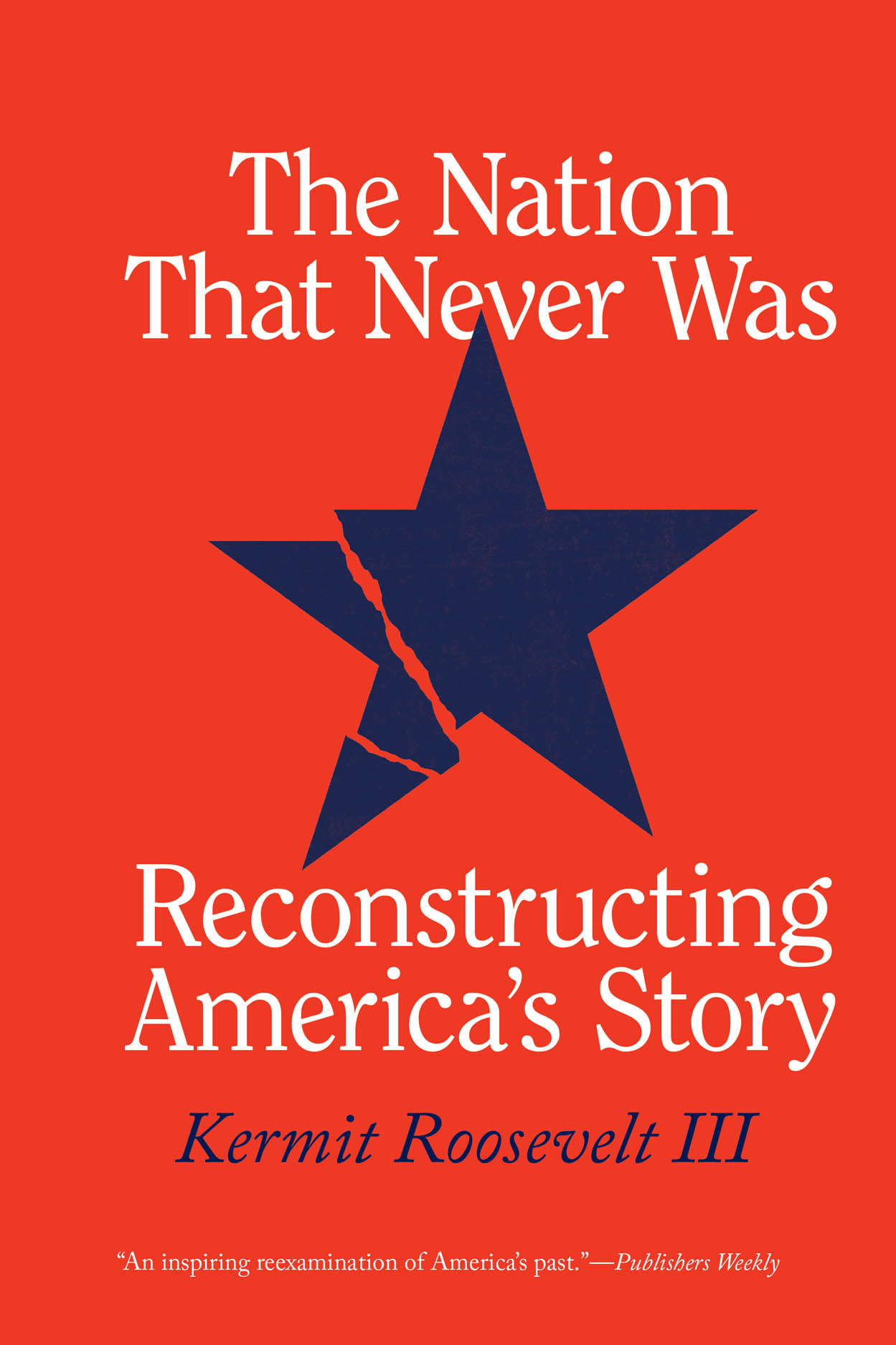
Kermit Roosevelt III
The Nation That Never Was: Reconstructing America’s Story
University of Chicago Press, 2022

On the first night of September of 2022, President Joe Biden delivered a speech in Philadelphia, Pennsylvania, outside of Independence Hall, the building where the Declaration of Independence was signed in 1776 and where the Constitutional Convention was held in 1787. In this address, Biden implored voters to “defend Democracy” by rejecting “MAGA Republican” candidates running for office in that year’s midterm elections. He opened by offering his perspective on the meaning of the Declaration and the Constitution:

This is where America made its Declaration of Independence to the world more than two centuries ago with an idea, unique among nations, that in America, we’re all created equal. This is where the United States Constitution was written and debated. This is where we set in motion the most extraordinary experiment of self-government the world has ever known with three simple words: “We, the People.” “We, the People.”

These two documents and the ideas they embody — equality and democracy — are the rock upon which this nation is built. They are how we became the greatest nation on Earth. They are why, for more than two centuries, America has been a beacon to the world.

So, for Biden, America is founded upon the twin pillars of “equality and democracy”, and proof of this can be found in the Declaration and the Constitution, respectively. Moreover, according to Biden’s argument, America was not founded as the homeland of a particular biological group, i.e., the historic American Nation. It is instead a “proposition nation”, with those propositions being a Democratic form of government and the idea that “all men are created equal.”

A Proposition Nation?

Of course, Biden’s narrative about the country being founded as a “proposition nation” is inconsistent with historical reality. Thomas Jefferson, the author of the Declaration of Independence, was a race realist who wanted to resettle enslaved Africans elsewhere in order to preserve the American Republic for the white race alone. James Madison, known to history as the “Father of the Constitution”, would later serve as president of the American Colonization Society, an organization dedicated to that same purpose.

In his 1998 essay “Race and the American Identity”, Sam Francis observed that prominent figures on both the right and the left had embraced the idea that America was a “universal nation” open to all who adhere to its propositions, and that the demographic decline of its white majority ought to be of no real concern. However, Francis recognized that this attitude is the precise opposite of the actual beliefs of the founders themselves, as well those of subsequent generations of leaders, writing that “the most casual acquaintance with the realities of American history shows that the idea that America is or has been a universal nation, that it defines itself through the proposition that ‘all men are created equal,’ is a myth.”

Francis calls on sincere adherents to the “universal nation” conception of American identity to condemn historical figures like Jefferson, and to cease pretending to be the rightful heirs of the racially exclusive state that they created:

You cannot have it both ways: either you define the American nation as the product of its past and learn to live with the reality of race and the reality of the racial particularism and racial nationalism that in part defines our national history, or you reject race as meaningful and important, as anything more than skin color and gross morphology, and demand that anyone, past or present, who believes or believed that race means anything more than that be demonized and excluded from any positive status in our history or the formation of our identity. If you reject race, then you reject America as it has really existed throughout its history, and whatever you mean by “America” has to come from something other than its real past.

In his essay “What the Founders Really Thought About Race”, which should lay to rest any doubts that America’s founders were open and unapologetic racialists, Jared Taylor aptly described “today’s egalitarians”, a category that would include President Biden, as “radical dissenters from traditional American thinking.” “A conception of America as a nation of people with common values, culture and heritage” he concludes “is far more faithful to the vision of the founders.”

The same year that Biden came to Philadelphia and erroneously purported to be following in Jefferson’s footsteps, a leftist academic who teaches in Philadelphia wrote a book that put forth an alternative narrative of American history completely at odds with the one presented by Biden. This bold man, a law professor at the University of Pennsylvania, is aware of the racialism of the founders and appears to concur with Francis that, if egalitarians are to be intellectually honest, figures like Jefferson and Madison should be “excluded from any positive status in our history or the formation of our identity.” The book in question is The Nation That Never Was: Reconstructing America’s Story, and the author’s name is Kermit Roosevelt III.

Roosevelt? Yes, Roosevelt. He is the great-great- grandson of Theodore, and a relative of Franklin as well. Ironically, Theodore Roosevelt is quoted twice in the aforementioned article by Jared Taylor, once for calling the existence of blacks in North America “a terrible problem” and again for opining that “nine out of ten” Amerindians are better off dead. Our twenty-sixth president also appears on Francis’s list of erstwhile American heroes who must be condemned by sincere egalitarians.

One thing that becomes immediately clear is that, politically, this younger Roosevelt has little in common with his famous ancestor. Kermit is far from the staunch nationalist that Theodore was; on the contrary, he is a true believer in racial egalitarianism. Actually, it might be more accurate to label him as a preacher in the church of racial egalitarianism. The Nation That Never Was is not a conventional work of academic history; it is a declaration of holy war against the way that American history is popularly understood, by students and political leaders alike.

Roosevelt vs the ‘Standard Story’

Roosevelt’s objective is to present a “story of America” for public consumption that justifies and advances his own political ideology. He feels, and I agree, that the historical narratives that a nation’s citizenry believes are of paramount importance:

Stories about a nation’s history give individuals a sense of national identity- of what it means to be a citizen of that nation, of what the nation itself stands for. They tell us what our values and collective identity are. They are stories not just about the past, but about the future: they give us a purpose, a mission, even a sense of destiny.

According to Roosevelt, if Americans seek to be a virtuous nation, they should embrace what he calls “inclusive equality” which he defines as the belief that:

Our political community is open. Those who are now outsiders are fundamentally similar to us and may become insiders. Political outcomes are legitimate if they are the product of an open and fair democratic process. Government can and should act to promote equality.

The opposite of “inclusive equality” which he calls “exclusive individualism” is defined this way:

Our political community is closed. Outsiders are different and dangerous. Political outcomes are legitimate if they protect the rights and interests of insiders. Government has no business promoting equality and should not redistribute, especially not to outsiders.

These are not mere policy preferences, but moral beliefs. Throughout The Nation That Never Was, Roosevelt repeatedly judges whether a historical figure or document is worthy of admiration based on how consistent it is with his own concept of “inclusive equality.” Not unexpectedly, the Declaration of Independence and the Constitution fare quite poorly when weighed by this standard.

Roosevelt summarizes what he calls the “standard story” of American history in this way (italics his):

The history of America as a nation starts with the Declaration of Independence. Back in 1776, our great Founders wrote down some wonderful principles. They called them self-evident truths. All men are created equal. They are endowed by their creator with inalienable rights, including life, liberty, and the pursuit of happiness. Our Founders fought a war for those principles, and they built a society around them. They codified those principles in the Constitution.

The Constitution sets out our fundamental values: liberty and equality—the keys to what it means to be an American. It tells us who we are. For more than two hundred years, our Constitution has served us well, because of the wisdom of the Founders. Our task as Americans is to be true to those principles.

We haven’t always done that. We had slavery, of course, which is in direct conflict with the Declaration’s principles of liberty and equality. But we fought a second war for those principles—the Civil War was fought in the name of the principles of the Declaration. Abraham Lincoln said so in the Gettysburg Address in 1863, when he looked back fourscore and seven years to 1776 and said the nation was conceived in liberty and dedicated to the proposition that all men are created equal. So the Civil War was a test of a nation so conceived and dedicated—but it was also an opportunity for Americans to move forward, to realize the promise of the Declaration more fully.

Even after the Civil War, that promise wasn’t fully realized. Racism and discrimination persisted. Eventually, the civil rights movement rose up to challenge them, marching on Washington in the name of the Declaration. In 1963, from the steps of the Lincoln Memorial, Martin Luther King talked about the Founders, the “architects of our Republic,” the people “who wrote the magnificent words of the Constitution and the Declaration of Independence.” They promised, he said, that all men, Black as well as white, “would be guaranteed the unalienable rights of life, liberty, and the pursuit of happiness.” He pointed to segregation, to race-based denial of the right to vote, as breaches of the promise made by the Declaration, and he dreamed of a day when we would “rise up and live out the true meaning” of “all men are created equal.”

Maybe that day still hasn’t come, but it’s getting closer. The story of America is a story of living up to the ideals of our Founders, the ideals that started us on this journey. We move forward, but we’re guided by the past, by the spirit of 1776. We remember, as President John F. Kennedy said, that we are the heirs of that first Revolution, and we still carry that banner—the flag of freedom, of equality. We march in the name of the Declaration of Independence.

I accept Roosevelt’s summary of the standard story as an essentially accurate restatement of the narrative of American history that is promoted in public schools, popular media, and in the rhetoric of most politicians. This is the narrative that Joe Biden appealed to in his Philadelphia speech.

Roosevelt makes two assumptions about his readership. First, he assumes that his readers agree that “inclusive equality” is a goal worth pursuing. He is not writing for those who prefer a more “closed” political community, or those who perceive some foreigners as “dangerous” and incapable of assimilation. White Nationalists, of course, are not a part of the intended audience for The Nation That Never Was, but neither are civic nationalists or Christian Nationalists. A nation based on Roosevelt’s ideal is one dedicated purely to abstractions, not on protecting the interests of actual people or groups of people. Often throughout the course of the book, Roosevelt uses the words “we” and “us.” He is speaking to those who are already initiated into the “faith” of egalitarianism. He takes it for granted that his readers are more or less “on his side.”

His second assumption is that his readers are adherents to the standard story. Therefore, he is trying to convert believers in the standard story into followers of his alternative. It may be helpful to think of Roosevelt as a preacher in the “church” of the standard story who believes he has discovered a terrible flaw in church doctrine. After making this terrible discovery has taken it upon himself to depart from the mother church and found his own, attracting disciples along the way. The Puritans of New England sought to “purify” the Church of England by purging it of any residual Roman Catholicism. Likewise, Roosevelt is seeking to “purify” the standard story of “exclusive individualism.” He desires a national narrative that even more universalist egalitarian and democratic, and to achieve that, certain aspects of the standard story must be discarded.

Just as Francis did a quarter-century earlier, Roosevelt finds it significant that both Republicans and Democrats are eager to embrace a universalist narrative of American history. At first glance, one might think that a proponent of “inclusive equality” would be pleased with this state of affairs. After all, the standard story recognizes “equality” as a foundational principle, and celebrates the introduction of blacks, once considered “outsiders”, into the national community. It also features the enslavement of Africans as the primary example of America “falling short” of its stated ideals, with segregation coming in next on the list. Moreover, through its celebration of the Union cause and the passage of civil rights legislation, it endorses government action on behalf of “outsiders.” But for Roosevelt, it’s not good enough. First, Roosevelt recognizes that it’s characterization of the founders is inaccurate. Second, Roosevelt believes that he can present an alternative that is more conducive to the promotion of his ideology. As he puts it:

I do argue that the standard account of American history isn’t accurate- not because it leaves out unpleasant truths- although of course it does. It’s because it tells us a fundamentally false story about where our values come from, and about who the heroes and villains of our national story are. Once we see that, we will also see something else: There is another story that hasn’t been told. There is a different, better way to understand America. It is more true. It is more inspiring, and it is more useful. It can bring us together in a way that the original story promised to.

Later, Roosevelt states that “Ultimately, my argument is that the consequences of the standard story are bad. In its triumphalist versions, it encourages complacency. And in all versions, it brings along things we do not want in our national story. There are troubling elements to it that we cannot eliminate, no matter how we shade the past.”

Roosevelt on the Declaration

For Roosevelt, foremost among these “troubling elements” are the Declaration of Independence and the Constitution. He recaps the popular interpretation of the Declaration, writing that “(t)he standard story tells us that the Declaration is fundamentally about human rights and that its central meaning is that all people are entitled to some kind of equal rights or equal treatment by the government. However, he rightly points out that the title of the document itself offers the first clue that something is amiss:

As the title tells us, it’s not about rights at all; it is about independence. It was written at a specific moment and for a specific purpose, designed to do two things: to announce that the American colonists were throwing off allegiance to the British crown and to justify the act.

Roosevelt calls attention to the fact that slavery had been abolished prior to 1776 in England proper but not in the American colonies, so justifying independence based on a vague notion of “equality” would have been counterproductive. “Is it likely” asks Roosevelt, “that Jefferson started the declaration with a novel, useless, radical claim that, in fact, offered better grounds for condemning the slaveholding colonists than the King?” Obviously not.

Some might involve the Declaration to condemn slavery, but Roosevelt argues that “the contemporaneous understanding of the Declaration was pretty clearly that it was about national independence, not individual liberty, and certainly not the liberty of political outsiders.” He flatly asserts that the document “does not contain our modern values of liberty and equality. “The heart of the Declaration” writes Roosevelt “is not a moral principle like liberty or equality. It is the political theory that people form governments to protect certain rights and that if, in their judgment, the government threatens those rights, people can rebel.”

Roosevelt on the Constitution

Roosevelt’s appraisal of the Constitution is also unfavorable. He makes the important point that although the Declaration and the Constitution are closely connected in the public mind, thanks in no small part to the proliferation of the standard story, they were written for totally different purposes and there is, in fact, “very little connection between the two.” Having already established that the Declaration was intended to rationalize the colonies’ separation from Britain, Roosevelt proceeds to summarize the purpose of the Constitution:

The main goal of the Constitution, then, was the first goal listed in the preamble: to form a more perfect union, to meld the separate states into one nation. It sought to do this primarily for reasons of interstate and international relations. A single nation on the American landmass would resist dismemberment by the European powers in war. It would be able to negotiate more effectively in peace. A single nation would not require a standing army, which the Framers saw as a dangerous tool for would-be tyrants. And a single economic union would benefit the states via free internal trade.

Once again, equality between individuals or races is nowhere to be found. The documents may have been written for entirely different purposes, but the lack of any of the tenets of Roosevelt’s ideal of “inclusive equality” is something that both share:

In all of this, we can see a parallel to the Declaration’s theory of government. However, the entities whose rights and existence are being protected and harmonized are the states, not individuals. The rights of states to free commerce are being protected. They are promised protection from invasion and domestic violence, and they are guaranteed a republican form of government. They are protected from each other, as well: domestic tranquility means a lack of interstate conflict. The states are even guaranteed some kinds of equality—equal suffrage in the Senate, for instance. Yet the Founders’ Constitution has almost nothing to say about the liberty and equality of individuals.

Roosevelt, unsatisfied with the continuing glorification of this pair of documents that he (correctly) identifies as incompatible with his own moral standards, seeks to dismantle the “standard story” of American history and replace it with an alternative story. To find a suitable alternative, he looks to the period of Reconstruction in the South following the War Between the States.

Purifying American History Part 1

Purifying%20American%20History%0APart%201%0A

Share

  • Gab

Enjoyed this article?

Be the first to leave a tip in the jar!

Instant Echeck GreenPay™

Related

  • The Remigration Movement Solidifies 

  • Laughing Our Way to Victory

  • Jared Taylor: What Rome Means to Me

  • Why Billionaires Should Fund White Identity Politics

  • White Advocacy Past and Present

  • Jared Taylor’s Elevator Pitch to a Billionaire

  • The Ghost of the Confederacy

  • Counter-Currents in Rome

Tags

America's founding mythsbook reviewsDave ChambersFranklin Delano RooseveltJared TaylorSam Francis

Previous

« Counter-Currents Radio Podcast No. 647 Josh Neal Returns

Next

» Decline and Fall: The ‘Anti-Fascist’ English Aristocrat Whose Life Reads Like a Novel by Evelyn Waugh

16 comments

  1. Douglas Mercer says:
    July 30, 2025 at 4:26 pm

    Great essay, Dave, well researched and well written.

    Lincoln pulled some sleight of hand when he said that America was dedicated to the proposition that all men are created equal.  It was never so dedicated, it was dedicated to the proposition that this was to be a White nation (free and White were to be the citizens).  The left has always been more honest about the founding principle of White Supremacism, it’s just that they think that is a bad thing, whereas we and the founders just consider it plain wisdom.  Whether a nation dedicated to equality can “long endure” as Lincoln wondered, well, it can endure, but not in any way the founders would have considered ideal or even good.

    6
    6
    • Peter Quint
    • Scott
    • kolokol
    • Todd Wayne
    • Niels Ebbesen
    • Varangian_Spirit
    1. Dave Chambers says:
      July 30, 2025 at 5:48 pm

      All of your points are spot on.

      Much more will be said about not-so-Honest Abe in Part 2.

      5
      5
      • kolokol
      • Scott
      • Todd Wayne
      • Niels Ebbesen
      • Varangian_Spirit
  2. Beau Albrecht says:
    July 30, 2025 at 5:30 pm

    This book is looking mighty precious already.

    0
    0
    1. Peter Quint says:
      July 30, 2025 at 10:02 pm

      What’s so precious about it, isn’t it just more liberal trash? 🙃

      1
      1
      • Uncle Semantic
      1. Douglas Mercer says:
        July 30, 2025 at 10:43 pm

        I think Beau may be using the word precious ironically as in “well now, isn’t that precious?”

        1
        1
        • Scott
        1. Beau Albrecht says:
          July 30, 2025 at 11:49 pm

          Indeed, and bless Kermit Roosevelt’s li’l pea-picking heart.

          0
          0
          1. Peter Quint says:
            July 31, 2025 at 12:48 am

            Sarcasm, now that I understand. 🙃

            0
            0
  3. Franz says:
    July 30, 2025 at 9:05 pm

    The Declaration of Independence, in an early draft, did contain what Jimmy Perloff calls an anti-slavery clause. The whole history of the Declaration has kinks in it; writers from the 19th century were convinced it was written by Tom Paine, not Jefferson:

    https://jamesperloff.net/american-revolution-part-2/

    It’s worth noting this for another reason: Paine’s part in the founding of the United States is downplayed in this century. A mistake. Paine was a sullen and angry radical. It is possible that the mission creep of the egalitarianism Paine planted is part of our trouble now.


    3
    3
    • Peter Quint
    • kolokol
    • Todd Wayne
  4. Peter Quint says:
    July 30, 2025 at 9:59 pm

    Great article! Roosevelt is just another degenerate liberal promoting multiculturalism—at least Biden’s brain rot has moved to his prostate! 🙃

    5
    5
    • Scott
    • kolokol
    • Todd Wayne
    • Uncle Semantic
    • Varangian_Spirit
    1. Uncle Semantic says:
      August 1, 2025 at 11:26 pm

      His brain’s wedged so far up it touches the prostate.

      1
      1
      • Peter Quint
  5. Kim says:
    July 31, 2025 at 3:33 am

    I enjoyed this essay, but let’s look at what Kermit Jr. had to say about the Jews.

    c/o Blackpilled’s Kermit to ZOG,  here is a great, must-hear, 1948 closed-door speech by Kermit Jr. which was given to a roomful of war college generals about what Kermit warned was a very serious threat of Jewish power/Zionism.

    The Arab Position on Palestine  starts at ~1 hr into the recording:

    https://rumble.com/v6v4uqx-insomnia-stream-kermit-to-zog.html?e9s=src_v1_cmd%2Csrc_v1_upp_a

    2
    2
    • Peter Quint
    • Todd Wayne
    1. Dave Chambers says:
      July 31, 2025 at 3:58 am

      That is very interesting. It appears that the Roosevelts get progressively less based with each generation.

      I believe Morris van de Camp wrote an article a few years ago about Archibald Roosevelt, who would have been Kermit Jr’s Uncle.

      It’s a shame that the latest Kermit has embraced the talking points of the Jewish Left. Someone ought to let him know what his grandfather said about them.

      5
      5
      • Kim
      • Peter Quint
      • Bigfoot
      • Todd Wayne
      • Uncle Semantic
    2. Antipodean says:
      August 3, 2025 at 12:30 pm

      Are these Roosevelts, part of a tiny elite clique, consciously aware of reforming their once White nation into a pastiche and hoping thereby to weaken it just enough to cement their posterity’s place at the apex (perhaps in competition with the Jews)? Or do they actually really believe their own hype? I don’t know which possibility I prefer.

      0
      0
      1. Beau Albrecht says:
        August 3, 2025 at 5:24 pm

        My opinion is that most of the gauche caviar WASP Establishment types are smoking their own stash.  (It’s not enough to make them want Section 8 housing next to the Hamptons, of course, but yanno…)  To them, mushy liberalism is what high-minded people believe.  They’re insulated by their wealth from the harsher realities the rest of us must endure.  Unfortunately, these same types have been kissing up to the Zionists for the last century, whose motives aren’t so “noble”.  Rather, they’re motivated by paranoia, resentment, and the desire to claim their “rightful” place as rulers.  Among both sides, add to that the screwiness so often endemic to people with too much money.

        0
        0
  6. Uncle Semantic says:
    August 1, 2025 at 11:30 pm

    Kermit likes inclusive equality. I’m sure the dumbest Roosevelt wants an equality spread of muhammeds, rayraytayveious, gupreets, chang wang lo, cornbreeshas, and pablos in his neighborhood causing a ruckus all hours of the night to test his theory of the ‘right’ amerika.

    1
    1
    • Peter Quint
    1. Douglas Mercer says:
      August 1, 2025 at 11:57 pm

      Well said—the worst is the Mexican Ranchera music, which is like Chinese Water Torture sung by a grinning fool—arriba!—not to mention the Mestizo woman with the Tamale Cart ringing her bell incessantly thereby disturbing the peace.

      1
      1
      • Peter Quint

Comments are closed.

If you have a Subscriber access,
simply login first to see your comment auto-approved.

Note on comments privacy & moderation

Your email is never published nor shared.

Comments are moderated. If you don't see your comment, please be patient. If approved, it will appear here soon. Do not post your comment a second time.

Upcoming podcasts
  • Rob Rundo on Counter-Currents Radio

    Rob Rundo on Counter-Currents Radio

    Counter-Currents Radio

    Sat, Jun 13th — 3 pm EST / 9 pm CET
  • Daniel Tyrie on Counter-Currents Radio

    Daniel Tyrie on Counter-Currents Radio

    Counter-Currents Radio

    Sat, Jun 20th — 3 pm EST / 9 pm CET

Writers of May

(2 votes) Morris van de Camp David M. Zsutty Derek Stark Jayant Bhandari Greg Johnson

Articles of May

The Lunch Wars by David M. Zsutty Heidegger on Nietzsche, Part One by Collin Cleary 2 votes
    • Editor’s Update
      Rob Rundo Rescheduled to Next Week on Counter-Currents Radio;
      Tonight Greg Johnson & David Zsutty Answer Your Questions;
      Fundraiser Update & a New $20,000 Matching Grant

      Greg Johnson

    • The Counter-Currents 2026 Fundraiser
      Lifetime Subscriber Welcome Packages Extended

      Greg Johnson

    • Nationalism This Week
      Who’s Looking Back?

      Greg Johnson

      13

    • China’s Threat to American Security:
      Food, Farmland, Foreign Control, & Energy Policy

      Lipton Matthews

      1

    • The Bitter End of Western Metaphysics:
      Heidegger on Nietzsche, Part Two

      Collin Cleary

      7

    • The Killing of Henry Nowak

      Mark Gullick

      28

    • The Crisis of Chinese Technology Thieves

      Morris van de Camp

      1

    • The Strange World of Gender Bender Fiction:
      & What This Genre Tells Us About Autosexuality

      Dani Vypont

      3

    • Watching the Watchers:
      The Dark Triad Question

      David M. Zsutty

      14

    • The Remigration Movement Solidifies

      F. Roger Devlin

      1

    • Casting Aspersions:
      The Fatal Consequences of Race-Swapped Casting, From Helen of Troy to Henry of Southampton

      Steven Tucker

      20

    • The Murder of Henry Nowak

      Millennial Woes

      23

    • Don’t Forget to Vote in Our Writer & Article of the Month Poll

      Greg Johnson

    • The Robot Hotdog Stand

      Greg Johnson

      35

    • Laughing Our Way to Victory

      Dave Chambers

      7

    • The Zodiac Killer

      Mark Gullick

      11

    • Jared Taylor: What Rome Means to Me

      Jared Taylor

      1

    • An Interview with Endeavour:
      My Way of Life Is an Adventure!

      Ondrej Mann

      6

    • José Pedro Zúquete’s The Identitarians

      Greg Johnson

      3

    • Editor’s Update
      Fundraiser Update & How to Watch the Remigration Summit

      Greg Johnson

      5

    • The Bitter End of Western Metaphysics:
      Heidegger on Nietzsche, Part One

      Collin Cleary

      11

    • Berlin: City of Stones

      Spencer J. Quinn

      6

    • True Folk-Horror Is Horror of Your Own Folk:
      Mark Gatiss vs the Brexit Blind Dead  

      Steven Tucker

      4

    • Counter-Currents Radio Podcast No. 689
      Thomas Massie, the America 2050 Bust, the Need for Whites to Divest from America, the AI Economic Apocalypse, & Pro-White Project Pitches to Billionaires

      Counter-Currents Radio

      7

    • Nationalism This Week
      Remigration is Inevitable, Part 3

      Greg Johnson

      27

    • Why Billionaires Should Fund White Identity Politics

      Lipton Matthews

      8

    • How Cold War Two Came About

      Morris van de Camp

      5

    • Now Available for Pre-Order at a Special Price!
      Greg Johnson’s The Philosopher Is In

      Greg Johnson

    • David Zsutty’s Elevator Pitch to a Billionaire

      David M. Zsutty

      1

    • Headbanging Lite

      Mark Gullick

      5

    • White Advocacy Past and Present

      Peter Bradley

      13

    • The Lunch Wars

      David M. Zsutty

      47

    • The Russians are Coming/The Russians are Coming

      Steven Clark

      1

    • Peak Fatigue in Fort Wayne

      Gabriel Anderson

      24

    • Keith Woods’ Elevator Pitch to a Billionaire

      Keith Woods

    • The Cruelty of Kindness

      Morris van de Camp

      9

    • Predation Wearing the Mask of Civilization

      Jayant Bhandari

      13

    • The Mandalorian & Grogu

      Trevor Lynch

      24

    • Editor’s Update
      Fundraiser Update & a New $20,000 Matching Grant
      Greg Johnson & David Zsutty Discuss Thomas Massie on Counter-Currents Radio

      Greg Johnson

      2

    • How the Jews Defeated Thomas Massie—& Themselves

      David M. Zsutty

      25

    • Jared Taylor’s Elevator Pitch to a Billionaire

      Jared Taylor

      15

    • Nationalism This Week
      Remigration Is Inevitable, Part 2

      Greg Johnson

      8

    • Could Fascism Work?

      Mark Gullick

      40

    • Jonathan Bowden’s Deliverance
      Part 7

      Jonathan Bowden

    • China’s Quiet Hand:
      Influence, Infiltration, & the Western Blind Spot

      Lipton Matthews

      9

    • Counter-Currents Radio Podcast No. 688
      Tyler Dykes on Running for US Congress in South Carolina

      Counter-Currents Radio

      3

    • Lothrop Stoddard’s The Revolt Against Civilization

      Spencer J. Quinn

      14

    • Lewis Strauss Did Nothing Wrong:
      How the politics of the Atom Bomb during the early Cold War Apply to Artificial Intelligence Today

      Morris van de Camp

      14

    • The Ghost of the Confederacy

      Dave Chambers

      12

    • America’s Century of Humiliation has Begun

      Greg Johnson

      27

    • Joe Gould

      The Killing of Henry Nowak

      This is a good article. The only thing I want to add is, above all we must guard ourselves against...

    • Greg Johnson

      Who’s Looking Back?

      Thank you I also wonder if these AI bots are being used to gather intelligence on influential...

    • E_Perez

      Heidegger on Nietzsche, Part Two

      "Philosophy helps Western man understand how we got to where we are, and where things went wrong...

    • Chud

      Who’s Looking Back?

      I'll try to give a rundown. AI is a language learning model (LLM) that uses floating point...

    • Will Williams

      How the Jews Defeated Thomas Massie—And Themselves

      Massie to Honor USS Liberty Crew on House Floor [email protected]  June 6, 2026  thomas...

    • JBP

      Editor’s Update

      Sorry but... Wrong, wrong wrong and wrong. The current momentum of history will not change with a...

    • Will Williams

      The SPLC Indictment

      The indictment of the Southern Poverty Law Center by the Department of Justice on 21 April is...

    • Zarathustra

      Heidegger on Nietzsche, Part Two

      I rather liked this song by Puscifer.

    • Will Williams

      The Killing of Henry Nowak

      Pray in one hand, shit in the other, and see which hand fills up first.Connor McDowell: June 6...

    • Julius Strange

      Who’s Looking Back?

      It is always possible to run AI models locally to prevent data being collected. The bigger and more...

    • tempus

      Casting Aspersions

      There is a measure of beauty. It is the “Helen.” One Helen equals that quantity of beauty that...

    • tempus

      The Robot Hotdog Stand

      Since AI is a heavy energy consumer, the surest and quickest way for an AI to prevent another AI...

    • Tye

      Heidegger on Nietzsche, Part Two

      I remember his excellent pieces about The Birds. Thanks for the reminder, I’m going thru his essays...

    • SteveH

      The Killing of Henry Nowak

      'who" not "whom"

    • DenisetheCelt

      Laughing Our Way to Victory

      The Black Lies Splatter scam was run by jews. Period. Floyd was worthless drug-addicted criminal...

    • DenisetheCelt

      Laughing Our Way to Victory

      I agree. I think it's a lie. I don't think senile old Trump whispered a word of dissent to his...

    • DenisetheCelt

      Laughing Our Way to Victory

      Yes! Dean Martin was my mother's FAVORITE singer. (Tom Jones was #2). I heard a "rat pack" broadcast...

    • Stronza

      The Killing of Henry Nowak

      Re parents of murdered children scurrying away (or not) from claims of antiWhite-ism we have the...

    • Will Williams

      Remigration is Inevitable Part 3

      Will Williams: June 4, 2026  I mention [“Christ is King” Bryan Dawson] here in this piece that...

    • Collin Cleary

      Heidegger on Nietzsche, Part Two

      It will likely presence itself next Friday. Thanks for reading!! Please take a look at the many...

    • Earth Day Special

      John Morgan

      12

    • A Robertson Roundup
      Remembering Wilmot Robertson
      (April 16, 1915 – July 8, 2005)

      Margot Metroland

      13

    • The Paranoid Style in White Nationalism

      Greg Johnson

      30

    • Join the Dance!

      Andrew Hamilton

      1

    • We Can’t Save the Earth Without Reducing African Birth Rates

      James Dunphy

      36

    • “I’m Not a Conspiracy Theorist, but . . .”:
      Jeffrey Epstein’s Death Gives New Life to “Conspiracy Theories”

      Greg Johnson

      22

    • Sylvia Plath: Stasis in Darkness

      Vic Olvir

      17

    • Vanguardism, Vantardism, & Mainstreaming

      Greg Johnson

      80

    • Aviation, Geography, & Race

      Charles Lindbergh

      3

    • Some Thoughts on Yule

      Collin Cleary

      4

    • Living in Truth:
      A Yuletide Homily

      Jef Costello

      7

    • John Kennedy Toole’s A Confederacy of Dunces

      Greg Johnson

      20

    • On Aleksandr Solzhenitsyn’s Warning to the West

      Spencer J. Quinn

      7

    • Elitism, British Modernism, & Wyndham Lewis

      Jonathan Bowden

      6

    • Philip K. Dick’s Do Androids Dream of Electric Sheep? as Anti-Semitic/Christian-Gnostic Allegory

      Greg Johnson

      20

    • “Conspiracy Theory” or Conspiracy?

      Andrew Hamilton

      21

    • Remembering H. P. Lovecraft
      (August 20, 1890–March 15, 1937)

      Greg Johnson

      3

    • Who Are We?
      Nordics, Aryans, & Whites

      Greg Johnson

      71

    • Remembering William Gayley Simpson
      (July 23, 1892–December 31, 1990)
      A Pleasant Afternoon with Harriet & Bill Simpson

      Margot Metroland

      18

    • Here are the Young Men
      Remembering Ian Curtis
      (July 15, 1956–May 18, 1980)

      Mark Gullick

      18

    • Percy Grainger
      Artist of the Right

      Alex Graham

      7

    • Remembering Revilo Oliver
      (July 7, 1908–August 20, 1994)

      Greg Johnson

      18

    • The Meaning of July 4th for the White Man

      Gregory Hood

      13

    • The Front National’s Evolution

      Bruno Mégret

    • Merwin K. Hart
      Forgotten American Hero & Man of the Right

      Morris van de Camp

      10

    • George Orwell’s Nineteen Eighty-Four

      Jonathan Bowden

      8

    • Carleton S. Coon
      Scientist & Reluctant White Advocate

      Morris van de Camp

      3

    • The Kwanzaa Absurdity Will Be Dwarfed by Juneteenth

      Robert Hampton

      10

    • Stravinsky

      Alex Graham

      7

    • Like the Roman:
      Remembering Enoch Powell (1912-1998)

      Mark Gullick

      23

    • The Game of Tarot

      Mark Gullick

      1

    • Institutions Cannot Be Transplanted

      Jayant Bhandari

      5

    • Jonathan Bowden’s Deliverance
      Part 5

      Jonathan Bowden

    • Crosstown Traffic:
      Jimi Hendrix & The Post-War Rock ‘N’ Roll Revolution

      Mark Gullick

      1

    • Slaves from the North:
      Finns & Karelians in the East European Slave Trade, 900–1600

      Lipton Matthews

      14

    • Neo-Fascism in Film
      Part 4

      Karel Veliky

      2

    • David Lean’s A Passage to India

      Spencer J. Quinn

      1

    • Elites are Essential to Development

      Lipton Matthews

      7

    • Jonathan Bowden’s Deliverance
      Part 4

      Jonathan Bowden

    • Neo-Fascism in Film
      Part 3

      Karel Veliky

      6

    • E. M. Forster’s A Passage to India & the Indian Mentality

      Spencer J. Quinn

      25

    • Jonathan Bowden’s Deliverance
      Part 3

      Jonathan Bowden

    • The Rest Is Silence
      Heidegger’s Quietism

      Mark Gullick

      2

    • Dispelling the Historical Fallacy of Indian Nationalism

      Lipton Matthews

      8

    • Neo-Fascism in Film
      Part 2

      Karel Veliky

      8

    • Jonathan Bowden’s Deliverance
      Part 2

      Jonathan Bowden

    • Life of a Klansman

      Mark Gullick

      8

    • Jonathan Bowden’s Deliverance, Part 1

      Jonathan Bowden

    • Decolonial Ideas are Holding Back Developing Countries

      Lipton Matthews

      8

    • Neo-fascism in Film, Part 1

      Karel Veliky

      21

    • Jonathan Bowden’s Onslaught, Part 8
      Divigations on Decadence

      Jonathan Bowden

    • Jonathan Bowden’s Onslaught, Part 7
      Intrigues in the National Front

      Jonathan Bowden

      1

    • Rotten to the Core

      Mark Gullick

      8

    • Strauss on Husserl’s “Philosophy as Rigorous Science”

      Greg Johnson

    • Jonathan Bowden’s Onslaught, Part 6
      Francis Bacon & Right-Wing Nihilism

      Jonathan Bowden

    • London After (& Before) Midnight:
      Aleister Crowley, The Landlord’s Worst Nightmare

      James J. O'Meara

      2

    • Jonathan Bowden’s Onslaught, Part 5
      The Post-War British Far Right

      Jonathan Bowden

    • No Rules: Rollerball

      Mark Gullick

      4

    • Jonathan Bowden’s Onslaught, Part 3
      Brett Easton Ellis’ American Psycho

      Jonathan Bowden

    • An Alternate History of the Harris Presidency

      Beau Albrecht

      5

    • András László
    • Derek Hawthorne
    • Beau Albrecht
    • Alain de Benoist
    • Kerry Bolton
    • Jonathan Bowden
    • Collin Cleary
    • Jef Costello
    • Savitri Devi
    • Julius Evola
    • Jim Goad
    • Gregory Hood
    • Juleigh Howard-Hobson
    • Greg Johnson
    • Charles Krafft
    • Anthony M. Ludovici
    • Trevor Lynch
    • H. L. Mencken
    • J. A. Nicholl
    • James J. O’Meara
    • Christopher Pankhurst
    • Tito Perdue
    • Michael Polignano
    • Spencer J. Quinn
    • Fenek Solère
    • Irmin Vinson
    • Leo Yankevich
    • Francis Parker Yockey
    • Multiple authors
  • Editor-in-Chief

    • Greg Johnson, Ph.D.

    Featured Writers

    • Beau Albrecht
    • Gunnar Alfredsson
    • Collin Cleary, Ph.D.
    • Jef Costello
    • Morris V. de Camp
    • F. Roger Devlin, Ph.D.
    • Stephen Paul Foster, Ph.D.
    • Jim Goad
    • Alex Graham
    • Mark Gullick, Ph.D.
    • Greg Johnson, Ph.D.
    • Travis LeBlanc
    • Trevor Lynch
    • Margot Metroland
    • James J. O’Meara
    • Angelo Plume
    • Spencer J. Quinn
    • Fred Reed
    • Clarissa Schnabel
    • Michael Walker
    • David M. Zsutty

    Frequent Writers

    • Asier Abadroa
    • Aquilonius
    • Alain de Benoist
    • Kerry Bolton, Ph.D.
    • Dave Chambers
    • Steven Clark
    • James Dunphy
    • Endeavour
    • Richard Houck
    • Jason Kessler
    • Titus Livius
    • Ondrej Mann
    • Lipton Matthews
    • Mark Mazari
    • John Morgan
    • Jaroslav Ostrogniew
    • Kathryn S.
    • Christian Secor
    • Anne Wilson Smith
    • Thomas Steuben
    • William De Vere
    • Kenneth Vinther
    • Max West

    Classic Authors

    • Maurice Bardèche
    • Jonathan Bowden
    • Julius Evola
    • Guillaume Faye
    • Ernst Jünger
    • Kevin MacDonald, Ph.D.
    • D. H. Lawrence
    • Charles Lindbergh
    • Jack London
    • H. P. Lovecraft
    • Anthony M. Ludovici
    • Sir Oswald Mosley
    • National Vanguard
    • Friedrich Nietzsche
    • Revilo Oliver
    • William Pierce
    • Ezra Pound
    • Saint-Loup
    • Savitri Devi
    • Carl Schmitt
    • Miguel Serrano
    • Oswald Spengler
    • P. R. Stephensen
    • Jean Thiriart
    • John Tyndall
    • Dominique Venner
    • Leo Yankevich
    • Francis Parker Yockey

    Other Authors

    • Howe Abbott-Hiss
    • Michael Bell
    • Giles Corey
    • Jack Donovan
    • Richardo Duchesne, Ph.D.
    • Emile Durand
    • Guillaume Durocher
    • Mark Dyal
    • Tom Goodroch
    • Andrew Hamilton
    • Robert Hampton
    • Huntley Haverstock
    • Derek Hawthorne
    • Gregory Hood
    • Juleigh Howard-Hobson
    • Alexander Jacob
    • Ruuben Kaalep
    • Tobias Langdon
    • Julian Langness
    • Patrick Le Brun
    • G A Malvicini
    • John Michael McCloughlin
    • Millennial Woes
    • Michael O’Meara
    • Christopher Pankhurst
    • Michael Polignano
    • J. J. Przybylski
    • Quintilian
    • Edouard Rix
    • C. B. Robertson
    • C. F. Robinson
    • Herve Ryssen
    • Alan Smithee
    • Fenek Solere
    • Ann Sterzinger
    • Robert Steuckers
    • Tomislav Sunic
    • Donald Thoresen
    • Marian Van Court
    • Irmin Vinson
    • Book Reviews
    • Movie Reviews
    • TV Reviews
    • Music Reviews
    • Art Criticism
    • Graphic Novels & Comics
    • Video Game Reviews
    • Fiction
    • Poems
    • Interviews
    • Videos
    • English Translations
    • Other Languages
      • Arabic
      • Bulgarian
      • Croatian
      • Czech
      • Danish
      • Dutch
      • Estonian
      • Finnish
      • French
      • German
      • Greek
      • Hungarian
      • Italian
      • Lithuanian
      • Norwegian
      • Polish
      • Portuguese
      • Romanian
      • Russian
      • Slovak
      • Spanish
      • Swedish
      • Ukrainian
    • Commemorations
    • Why We Write
  • Archives
  • Top 100 Commenters
  • The Looney Bin
Sponsored Links
Europa.com Above Time Coffee Antelope Hill Publishing Paul Waggener IHR-Store Spencer J. Quinn American Renaissance Jim Goad The Occidental Observer
Donate Now Mailing list
Books for sale
  • The Philosopher Is In
  • Sexual Utopia in Power (Expanded Edition)
  • In Defense of Prejudice
  • Loving Our Own
  • Tyranny & Wisdom
  • The Populist Moment
  • Is America Doomed?
  • To all books
Copyright © 2026 Counter-Currents Publishing, Ltd.

Paywall Access


Please enter your email address.

Lost your password?

Edit your comment

Writer & Article of the Month May 2026

Voting for this month has concluded. Here are the final results!

Top Writers

  • #1 Morris van de Camp 2 votes
  • #2 David M. Zsutty 2 votes
  • #3 Derek Stark 2 votes
  • #4 Jayant Bhandari 2 votes
  • #5 Greg Johnson 2 votes
  • #6 Jared Taylor 1 vote
  • #7 Collin Cleary 1 vote
  • #8 Spencer J. Quinn 1 vote
  • #9 Mark Gullick 1 vote
  • #10 Lipton Matthews 1 vote
  • #11 Keith Woods 1 vote
  • #12 Steven Tucker 1 vote

Top Articles

  • #1 The Lunch Wars 2 votes
  • #2 Heidegger on Nietzsche, Part One 2 votes
  • #3 Could Fascism Work? 1 vote
  • #4 Jared Taylor's Elevator Pitch to a Billionaire 1 vote
  • #5 Predation Wearing the Mask of Civilization 1 vote
  • #6 Peak Fatigue in Fort Wayne 1 vote
  • #7 Keith Wood's Elevator Pitch to a Billionaire 1 vote
  • #8 Do You Want to Play a Game? 1 vote
  • #9 Why Billionaires Should Fund White Identity Politics 1 vote
  • #10 The 1970s: The Golden Age of Hijacking 1 vote
  • #11 True Folk-Horror Is Horror of Your Own Folk 1 vote
  • #12 Finding Atlantis Part 4 1 vote
  • #13 Berlin: City of Stones 1 vote
  • #14 The Ghost of the Confederacy 1 vote
  • #15 Lothrop Stoddard’s The Revolt Against Civilization 1 vote

Total votes cast: 17