The vinyl library record was ancient and warped – apparently a prior library patron had left it in the sun too long – and every time it reached Desdemona’s line: “Tell me Emelia, where did I leave that handkerchief?” the needle would get locked in the groove and repeat the line over and over. Yet that piece of old warped plastic was to me a crack in the universe through which I, rapt and breathless, could eavesdrop on a nobler world: the world of tragic drama. (more…)
Tag: tragedy
-
November 1, 2021 Alexander Jacob
The Metaphysics of Tragedy
6,157 words
Leopold Ziegler (1881-1958) was a German philosopher who was steeped in the philosophy of the Will of Arthur Schopenhauer (1788-1860) and in the philosophy of the Unconscious of the Schopenhauerian philosopher, Eduard von Hartmann (1842-1906). Already as a secondary school student at the Technische Hochschule in Karlsruhe, Ziegler was introduced to the doctrines of Hartmann by the philosopher Arthur Drews (1865-1935), and in 1910 he wrote a work on his philosophy entitled Das Weltbild Hartmanns: Eine Beurteilung. He obtained his doctorate in 1905 from the University of Jena, but was unable to take up an academic career on account of his poor health. (more…)
-
2,289 words
Recently I had surgery. It went well, nothing serious. However, it was unexpected. I had to ask myself — what if it was serious? What if my body was riddled with stage 4 cancer and I’d better say my prayers, update my will, and buy a grave? (more…)
-
6,744 words
Yet more and greater ills by land remain.
The coast, so long desir’d . . .
Thy troops shall reach, but, having reach’d, repent.
Wars, horrid wars, I view a field of blood,
And Tiber rolling with a purple flood.
— The Æneid [1]
I hope Counter-Currents readers are enjoying the first flush of spring and continue to find moments of happiness despite all the petty Javerts in our midst. (more…)
-
1,440 words
I often find myself rooting for villains.
Villains always seemed more interesting — they discussed certain truths about life that heroes could not accept or admit. Tony “Ludvig Borga” Halme was a wrestler who played one of these villains that got me interested in wrestling in the 90s. Halme lived an exciting but inevitably tragic life — but his memory lives on and continues to inspire those willing to play the role of the outsider, the rebel, and the dissident. (more…)
-
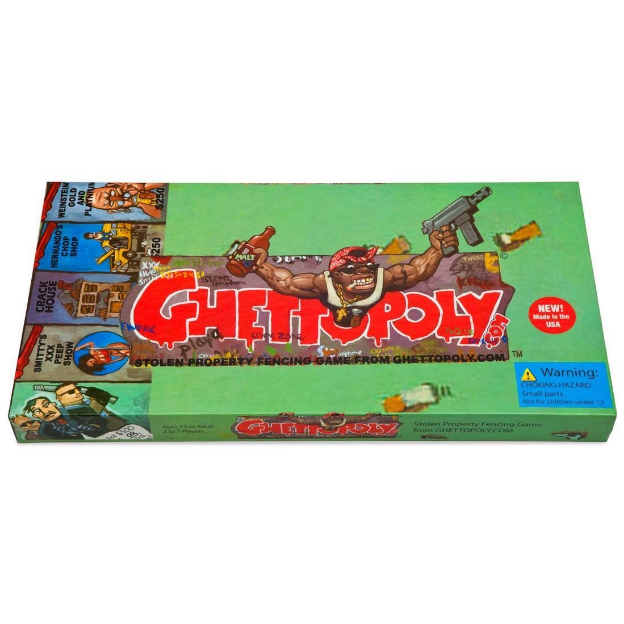
Sometime in the early 2000s, the retail chain Urban Outfitters began selling a board game based on a Hasbro classic, called Ghettopoly. The box cover, made to look like a hoodlum had graffiti-painted its title across an alley wall, also featured a black “gangsta” holding a bottle of ‘shine in one paw and a gun loaded with an extra magazine (more…)
-
Editor’s Note:
One of the aims of the North American New Right is to promote a revival of the Right-wing artistic and literary subculture that gave us such 20th-century giants as D. H. Lawrence, Gabriele D’Annunzio, F. T. Marinetti, Knut Hamsun, W. B. Yeats, Ezra Pound, Wyndham Lewis, Henry Williamson, Roy Campbell, and H. P. Lovecraft (all profiled in Kerry Bolton’s Artists of the Right). (more…)
-
Editor’s Note:
The following text is a transcript by V. S. of part of Jonathan Bowden’s interview at the Union Jack Club in London on Saturday, November 21, 2009, after his famous lecture/performance on Punch and Judy. The title is editorial. (more…)
-
April 3, 2013 Collin Cleary
The Uniqueness of Western Civilization, Part 3
Hegel & the Struggle for Recognition4,986 words
Part 3 of 5
Ricardo Duchesne
The Uniqueness of Western Civilization
Leiden: Brill, 20117. Hegel and the Struggle for Recognition
-
7,478 words / time: 49:12
Audio Version: To listen in a player, click here.
To download the mp3, right-click here and choose “save link as.”
To subscribe to our podcasts, click here.
Editor’s Note:
The following text is Michael Polignano’s transcription of Jonathan Bowden’s lecture “Western Civilization: A Bullet Through Steel,” (more…)