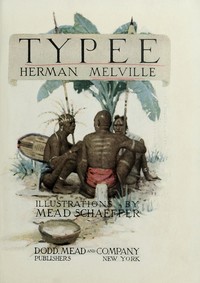
In July of 1842, a young American sailor named Herman Melville deserted a whaling vessel anchored off the island of Nukuheva in the Marquesas Archipelago in the South Pacific. He may not have known it then, but the several weeks he would spend among the Typee, the primitive Polynesian inhabitants of the island, would launch one of the most famous American literary careers of the nineteenth century. Four years later, his account of his time on the island was published as Typee: A Peep at Polynesian Life During a Four Months’ Residence in a Valley of the Marquesas. (more…)
Tag: Herman Melville
-
3,945 words
IT will be seen that this mere painstaking burrower and grub-worm of a poor devil of a Sub-Sub appears to have gone through the long Vaticans and street-stalls of the earth, picking up whatever random allusions to whales he could anyways find in any book whatsoever, sacred or profane. . . . — Herman Melville, “Extracts (SUPPLIED BY A SUB-SUB-LIBRARIAN),” Moby Dick
The intimate revelations of young men, or at least the terms in which they express them, are usually plagiaristic and marred by obvious suppressions. – F. Scott Fitzgerald, The Great Gatsby (more…)
-

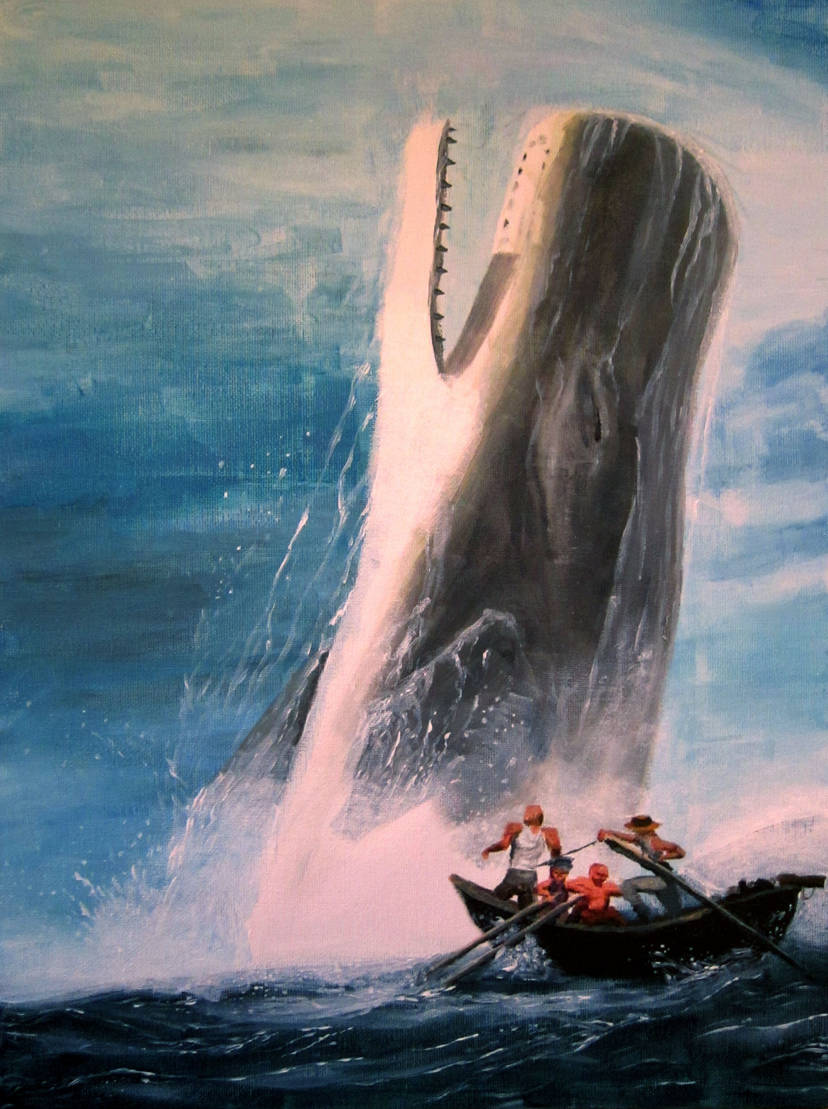
Moby Dick, courtesy of ianbeverdge on Deviantart.

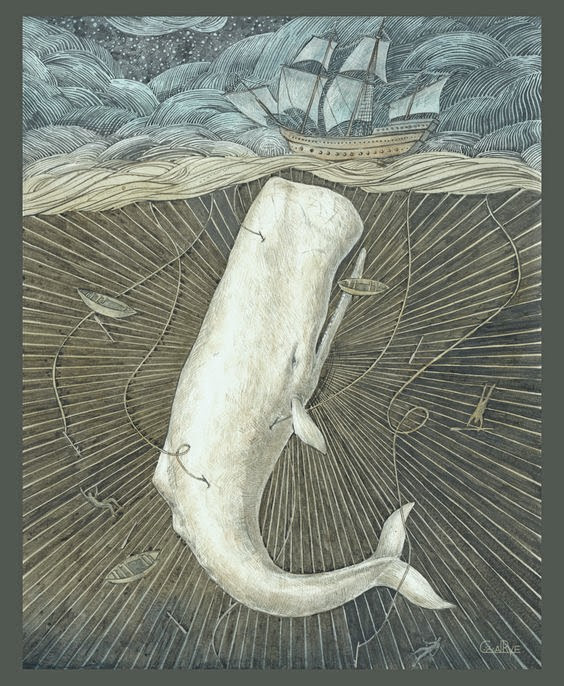
Moby Dick, courtesy of ianbeverdge on Deviantart.
940 words
There’s a meme about the upcoming election in Britain involving the simple slogan “Zero Seats.” The slogan relates to the impending wipeout of the Tory Party. It isn’t being used by British liberals, but by politically engaged people on the Right. Naturally, such a statement and goal immediately invites the counter-proposition: “Labour will be even worse.” Labour could very well be even worse than the Tory government, but the impetus to utterly ruin the Tory Party once and for all remains regardless. Similarly, given that we live under a “uni-party” system, the claim can also be made that it makes no difference which “cheek of the arse” sits in power, to quote George Galloway. (more…)
-
Part 1 of 2 (Part 2 here)
There is a wonderful Ridley Scott film from 1977 called The Duellists, based on a Joseph Conrad short story, “The Duel.” It follows the exploits of two hussars in Napoleon’s Grande Armée as they traveled from 1800 Strasbourg, to 1812 Russia, and back again to France after Napoleon’s final defeat at Waterloo. Were their enemies the Prussians, or the Russians, or the British? No, their true enemies were one another — (more…)
-
1,318 words
We hadn’t thought about Philip Roth in some years, so it was with some delight, and a few misgivings, that we ran into him recently in the pages of The New Yorker (Jan. 30 issue). Actually it was just a Philip Roth e-mail, or portions of e-mails, extracted for a Talk of the Town “casual” by Judith Thurman.
Thurman had sent a note to the 83-year-old Roth because she wanted to pick his brains on the only subject anyone wants to talk about these days, Our New President. (more…)
-
September 26, 2016 James J. O'Meara
Jason Jorjani’s Prometheus & Atlas
Jason Reza Jorjani
Prometheus and Atlas
London: Arktos, 2016“A man is, whatever room he is in.”[1]
Christy Mattling: Tellin’ them innocent kids stories about the dead and their hauntings! That’s the work of the devil. You’ll pay for it. The Devil! That man is the Devil Himself!
Renee Coliveil: Oh shut up, you potentate of righteousness![2] (more…)
-
August 8, 2013 D. H. Lawrence
Whitman
Chapter 12 of Studies in Classic American Literature
POST-MORTEM effects?
But what of Walt Whitman?
The ‘good grey poet’.
Was he a ghost, with all his physicality?
The good grey poet. (more…)
-
March 5, 2011 Carl Schmitt
Carl Schmitt’s Land & Sea, Part 2
-
January 30, 2011 D. H. Lawrence
D. H. Lawrence on Herman Melville’s Typee & Omoo
4,893 words
“We can’t go back. We can’t go back to the savages: not a stride. We can be in sympathy with them. We can take a great curve in their direction, onwards. But we cannot turn the current of our life backwards, back towards their soft warm twilight and uncreate mud. Not for a moment. If we do it for a moment, it makes us sick. -
6,137 words
“What then is Moby Dick? He is the deepest blood-being of the white race; he is our deepest blood-nature.
“And he is hunted, hunted, hunted by the maniacal fanaticism of our white mental consciousness. We want to hunt him down. To subject him to our will. (more…)