In the late 19th century, there was a debate raging in the salons across Europe over what is the proper aim of art. You had the modernists who believed that art should try to reflect reality and then you had the aesthetes who believed that the purest art was art that was entirely the product of the imagination. There are legends about how Vincent van Gogh lost his ear, and one of them is that van Gogh lost his ear after an “Aestheticism versus Realism” debate with another artist escalated into violence. (more…)
Tag: fascist art
-
In this article, I will be listing my ultimate fantasy rock and roll band.
However, this will be different than your usual fantasy rock band list where people create a theoretical supergroup composed of who they think are the best and/or their favorite musicians on each instrument: “I’d have Eddie Van Halen on guitar, John Bonham on drums, Geddy Lee on bass….” For my fantasy rock band, musical talent will not be a criterion I will be using. (more…)
-
Much could be said about Laibach (and has been, here at Counter-Currents). The name is the German form of Ljubljana, Slovenia’s capital city. The language choice references their Austro-Hungarian past, and depending on who you ask, maybe some other era, too. Their sound is one of a kind, as unique as that of Laure LePrunenec. Laibach is best described as an industrial band with heavy martial and totalitarian influences. One notable characteristic of their unique presentation is walking a tightrope between fascist aesthetics and socialist realism. (more…)
-
One of the delights of revisiting old movies after many years is finding out that you completely misread or misremembered certain scenes. Early on in the first part of Leni Riefenstahl’s Olympia, we have the entry parades of the national teams. When the French team come by, they drag their flag in the dust – because, or so I assumed decades ago, these robust athletes were utterly disgusted with the new Popular Front government under the hapless Léon Blum (more…)
-
Fernando Esposito
Fascism, Aviation and Mythical Modernity
Basingstoke: Palgrave Macmillan, 2015The British political theorist Roger Griffin has argued that the defining characteristic of fascist movements is a central myth of national rebirth, or palingenetic ultranationalism. His study of fascism (The Nature of Fascism) sparked controversy upon its publication because it diverged from the consensus at the time that fascist movements were purely reactionary and conservative in character; (more…)
-
6,216 words
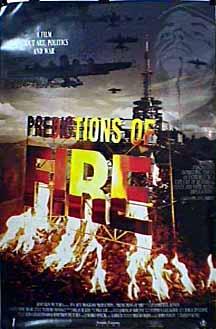
When I’ve tried to describe Laibach to the uninitiated, the best analogy I’ve come up with is, “Laibach is what would emerge if you were to take a group of industrial musicians and a group of political scientists and lock them in a gallery containing nothing but fascist, Communist, and modernist art for a year and then released them.” (more…)