The vinyl library record was ancient and warped – apparently a prior library patron had left it in the sun too long – and every time it reached Desdemona’s line: “Tell me Emelia, where did I leave that handkerchief?” the needle would get locked in the groove and repeat the line over and over. Yet that piece of old warped plastic was to me a crack in the universe through which I, rapt and breathless, could eavesdrop on a nobler world: the world of tragic drama. (more…)
Tag: drama
-
1,949 words
All the world’s a stage. — William Shakespeare, As You Like It
This is not journalism, it’s performance art. — FOX News contributor Kat Timpf on pre-approved questions at a Biden press conference
In the old days of print journalism, the importance of a story was not measured in retweets, trending, uploads, shares, likes, or views, but rather in “column inches.” This is self-explanatory, but is also indicative of the fact that journalistic coverage in the print era was a zero-sum game. That is, the more column inches are devoted to story A, the fewer there are available for story B. (more…)
-
6,912 words
Part 2 of 2 (Part 1 here)
Strepsiades Flunks Out
It hasn’t gone well. First Socrates bursts out of the Thinkery swearing an oath: “By Respiration, by Chaos, by the Air.” The usual places of gods in his oath are occupied by three natural forces. Socrates then rants about a particularly bad student who is “rustic . . . resourceless . . . dull . . . and forgetful.” Then he calls this student to come out. And out comes Strepsiades.
Socrates then quizzes Strepsiades on what he has learned. (more…)
-
-
8,839 words
On April 19, Counter-Currents instituted a paywall for articles and podcasts that will be made freely available 30 days later. This article by Kathryn S. was one of the first items to go behind the paywall, and is now one of the first items to be released to everyone else. More information about how to get behind the paywall can be found below. (more…)
-
8,691 words
This past winter I lost my last grandparent — the most stubborn one, still to the end a strict English schoolteacher after having long since retired from the profession in the 1970s. She suffered through the desegregation years while working at Marshall High and was never dishonest about the experience. She possessed that combination of Southern decorum and irascible (and accurate) bluntness, which gave her the ability to reduce anyone, including 250-pound, six-foot-three black football players, to tears. (more…)
-

The Outsider becomes an inside man.

The Outsider becomes an inside man.
3,486 words
The Hater (2020) is a slow and gritty tale of an outsider working at a troll farm in Warsaw as the city’s political factions are in an upheaval. Liberal politicians are confronted in the streets and on social media as nationalist Poland pushes back against anything akin to the oppressive socialist regime of the twentieth century. (more…)
-

Promotional image from the UK’s Almeida Theatre production of The Duchess of Malfi (performed from November 30, 2019 through January 25, 2020)

Promotional image from the UK’s Almeida Theatre production of The Duchess of Malfi (performed from November 30, 2019 through January 25, 2020)
5,736 words
I. Classical Western Thought on Justice and Revenge
One of the most fascinating discussions to emerge from our collective Western inheritance concerns the definition of justice and the double-sided nature of justice or vengeance (personified memorably in pop culture through the literal “two-faced” character of Harvey Dent and his Janus-faced coin). Aristotle (384-322 BC) determined that “justice” had at least two different meanings: (more…)
-
2,302 words
Stanisław Wyspiański
Acropolis: The Wawel Plays
Translated by Charles S. Kraszewski
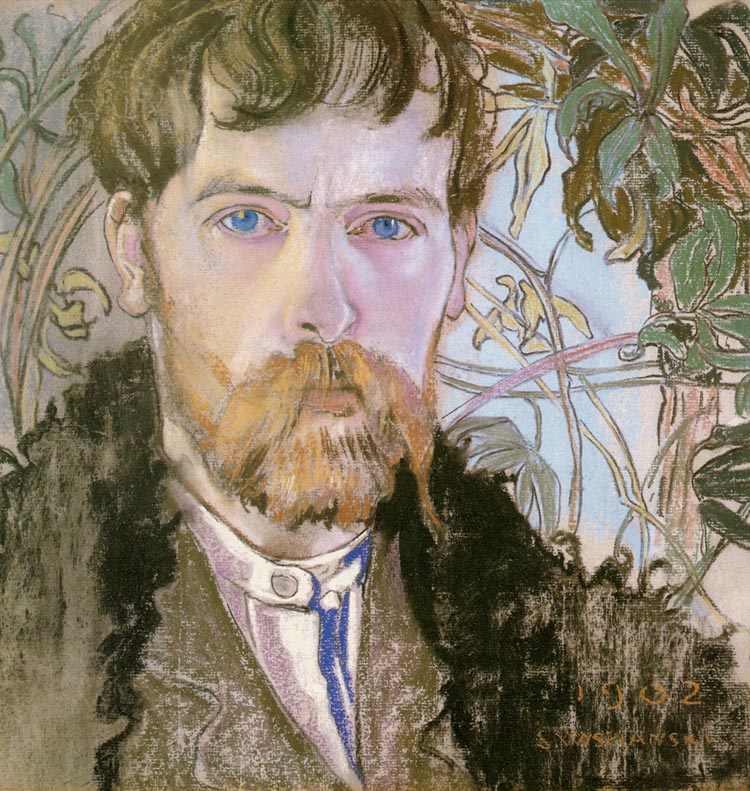
London: Glagoslav Publications, 2017Stanisław Wyspiański was a Polish dramatist, painter, and poet and is widely regarded as the father of modern Polish theatre. He was a central figure in the Young Poland movement. (more…)
-
2,486 words
Peter Shaffer’s 1973 play, Equus, is arguably the most pagan work of art created in the 20th century. Ostensibly an extended dialogue between a mentally ill boy and his psychiatrist, Shaffer’s play goes far beyond the realms of psychoanalysis and begins to stir the surface of an incipient numinous awakening. (more…)
-
-
3,000 words
Edited by Kerry Bolton
Editor’s Note:
With the 1953 notes on “Culture,” Yockey develops a theme that repudiates rationalism, positivism, and other such 19th-century materialistic philosophies, presenting the post-rationalist era of History as the unfolding of a great drama that is beyond rational or scientific interpretation, (more…)
-
6,769 words
A number of years ago I wrote an essay offering an interpretation of the cult TV series The Prisoner (anthologized in Summoning the Gods, published by Counter-Currents).