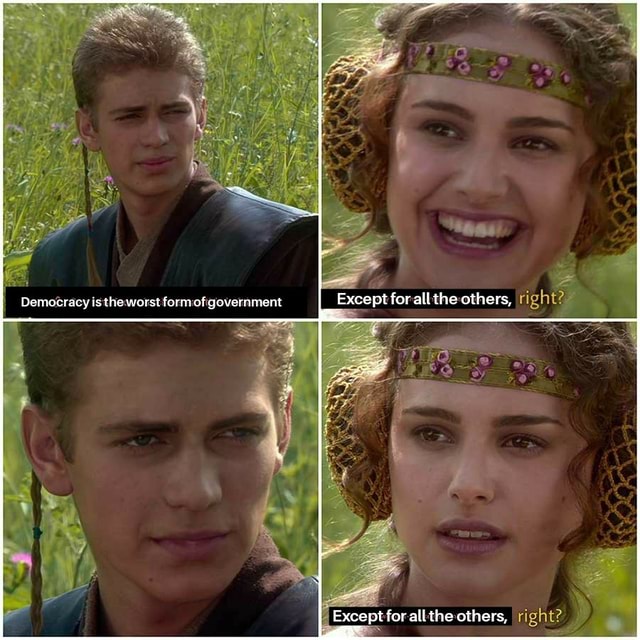
I enjoyed Fred Reed’s April 24 essay “Ignorance, Its Uses and Nurture,” which refers to universal suffrage in anything larger than a small town as a “crackpot” idea. In a mere thousand words, Reed painted the American public as entirely incapable and unqualified to understand United States foreign policy, let alone vote on it. Therefore, he concludes, the entire democratic system is a sham. Yes, the statistics he presents bolster his point admirably. But maybe not as much as epic burns such as this one: (more…)
Tag: David Hoggan
-
Part 2 of 3 (Part 1 here, Part 3 here)
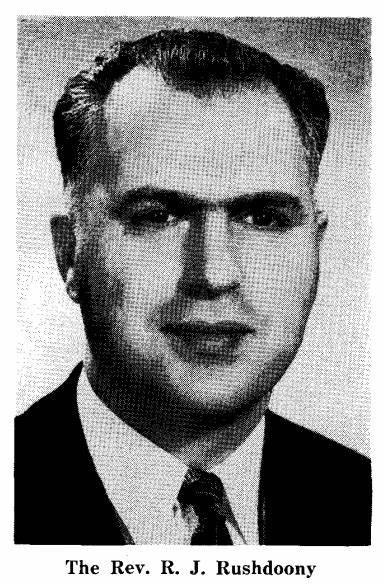
Rousas John Rushdoony didn’t experience the Armenian Genocide in the strictest sense, but he grew up around many Armenians who had, and it undoubtedly shaped his worldview. R. J. was every bit as intelligent as his father, so he focused on getting an education. It was in Detroit that a teacher encouraged him to become a writer. His father returned to California in 1933 to serve as a pastor in San Francisco, and R. J. completed high school in Kingsburg while living at his parents’ farm. (more…)
-
2,746 words
Part 5 of 5 (Part 1 here, Part 4 here)
A German war with Poland was now a certainty, but a new continental war involving Britain and France was not. The most important obstacle to the widening of the conflict was that Britain quietly viewed French participation as an indispensable precondition of her own involvement, and the French had not committed themselves to action against Poland. (more…)
-
1,907 words
Part 4 of 5 (Part 1 here, Part 3 here, Part 5 here)
Hitler’s cancellation of military operations for August 26 left him with only five days before September 1, after which, according to his generals, a military campaign in Poland would no longer be feasible. If war was to be prevented, it had to be done within this time. (more…)
-

Joseph Stalin and Joachim von Ribbentrop during the signing of the German-Soviet Non-Aggression Pact on August 23, 1939.
1,852 words
Part 3 of 5 (Part 1 here, Part 2 here, Part 4 here)
By August 1939, everyone understood that a war between Germany and Poland was extremely probable. The great question was whether it might still be prevented from developing into a general European war. Hitler was under an important time constraint: since October rains transform Poland into a sea of mud, German military leaders warned him it would be unsafe to postpone the launch of hostilities past September 1. (more…)
-
4,041 words
Part 2 of 5 (Part 1 here, Part 3 here)
Given that both the United States and the Soviet Union were far larger and more powerful than Germany, and that the British themselves were still presiding over an enormous empire, one may wonder why Britain’s leadership was in such agreement on the supposedly urgent need to resist a far smaller power’s efforts to consolidate more of the German-speaking population of Central Europe within her borders. (more…)
-
Part 1 of 5 (Part 2 here)
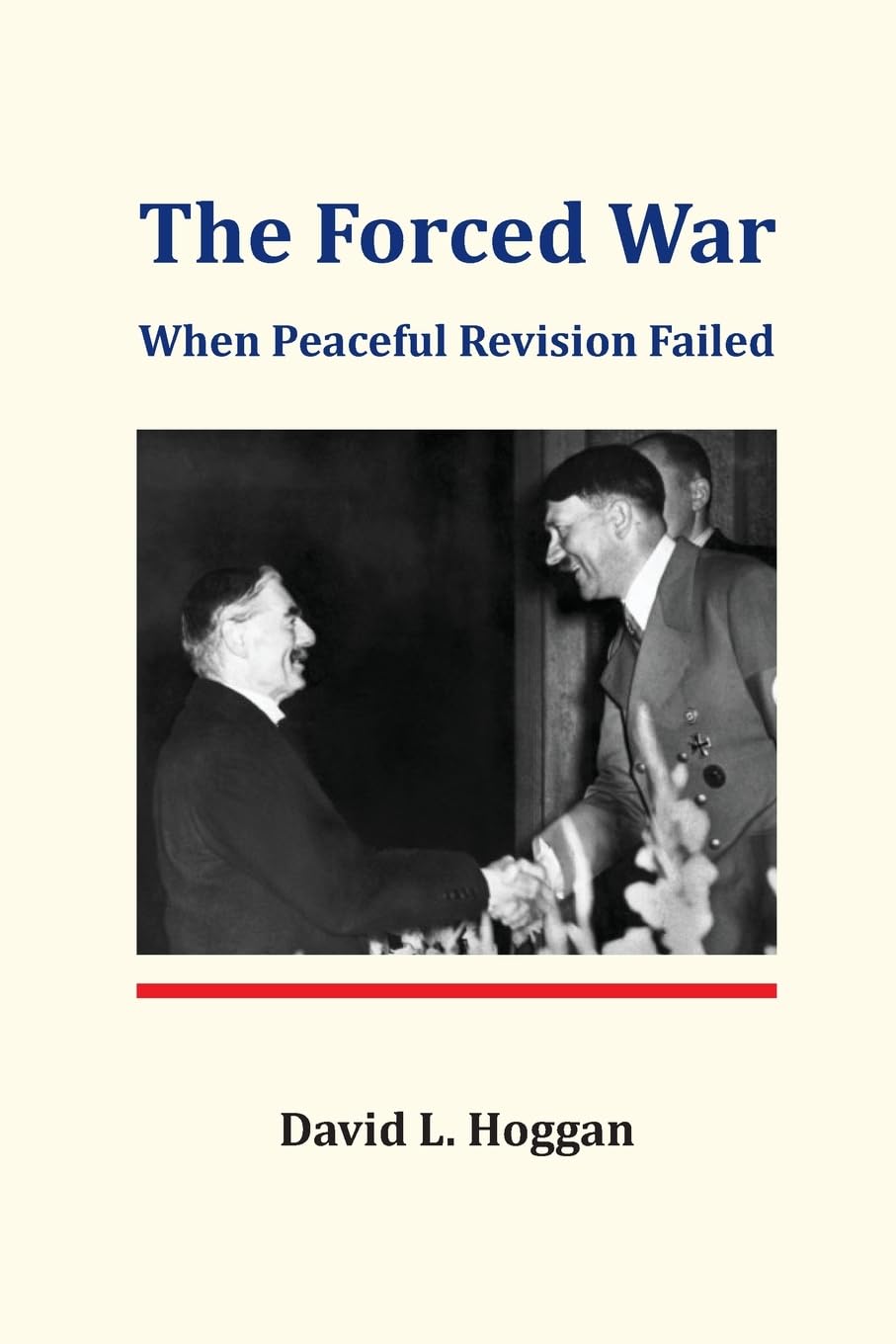
David L. Hoggan
The Forced War: When Peaceful Revision Failed, 2nd ed.
Newport Beach, Calif.: Institute for Historical Review, 2023David Hoggan (1923-1988) was an American historian who received his doctorate from Harvard University in 1948 with a dissertation on The Breakdown of German-Polish Relations in 1939. (more…)