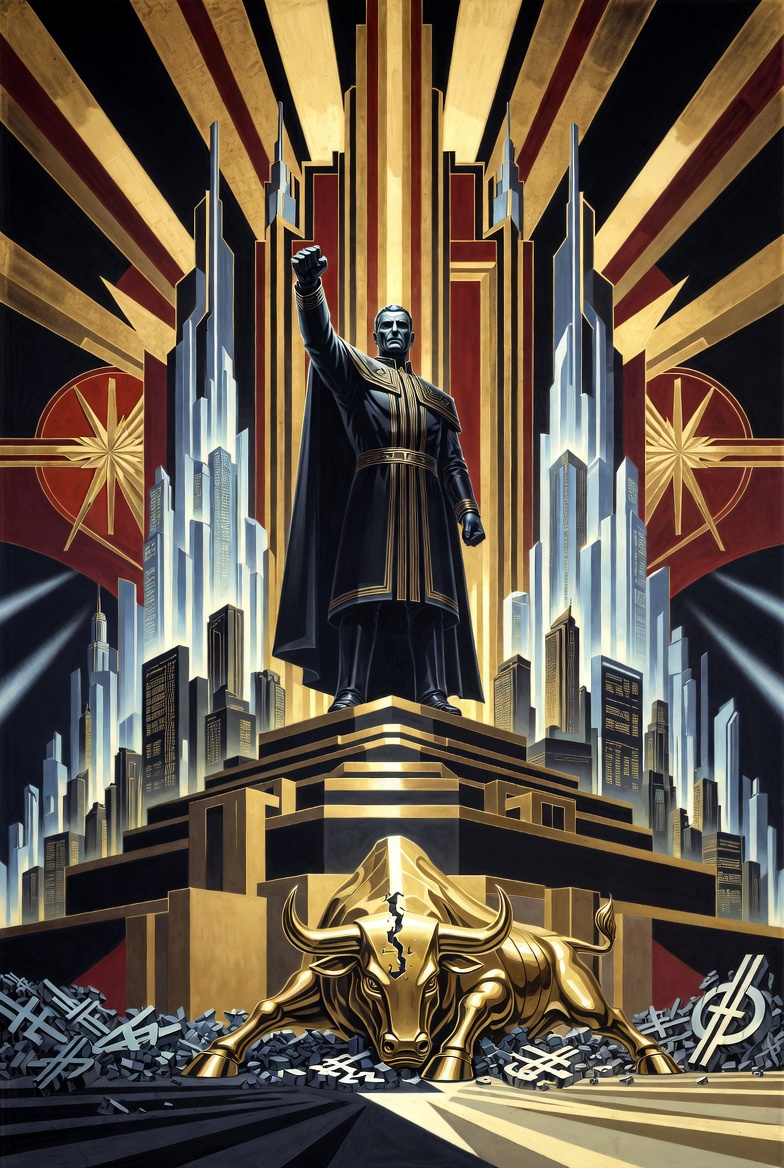
Communism’s hallmark, a command economy, is a failed system. Centrally planning pencil production over five years is ludicrous—even with AI. But the command economy has one use: as a reference point, or thought experiment, for other economic systems. Assuming we had a one-party state ruling the nation as conceived as one factory, one farm, and one office, how would we run things? (more…)
Month: June 2026
-
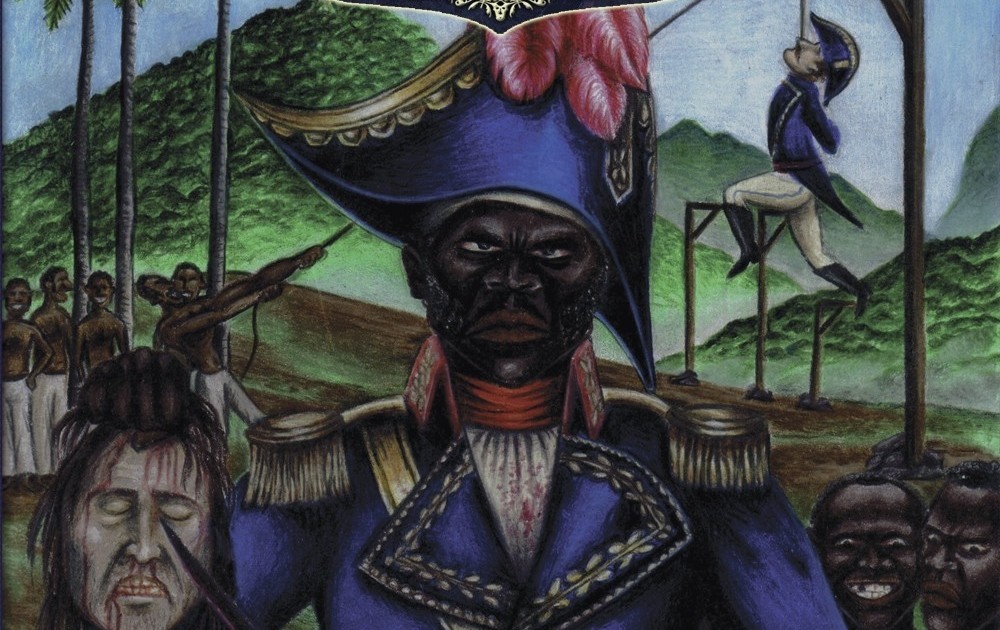
This is a foreword that I wrote for Lothrop Stoddard’s The French Revolution in San Domingo, published in 2011.
Historian Frank Moya Pons, writing in The Cambridge History of Latin America, describes Lothrop Stoddard’s The French Revolution in San Domingo as “a book now out of fashion because of its racism, although retaining some interest.” [1]
Interesting indeed, because it reflects the racial views of an important set of American intellectuals in the early twentieth century. There was a time when evolutionary thinking was widely considered to be the key to racial self-defense.[2] (more…)
-
This generation finally has its Death Wish.
Uwe Boll’s Citizen Vigilante, a film banned in Germany, is catching a lot of attention because it slides the curtain back on the human price which must be paid for third-world immigration. Technically, it’s a revenge fueled action-thriller, the kind which pits one exceptional man against a deep-seated, multifaceted evil. (more…)
-
52 words
Paul Waggener of the Wolves of Vinland discusses community organization, moving from early street activism to structured, real-world tribal communities. He emphasizes physical connection (“FaceTime”), economic self-sufficiency, internal hierarchies, and positive lifestyle modeling to attract and mold the next generation. From the 2026 Counter-Currents Spring Retreat in Rome.
-
1,984 words
Andy Burnham’s main problem is that he just can’t afford to say no. The British Treasury’s main problem may soon be that it just can’t afford him to keep saying yes.
Burnham is the smooth-talking, doe-eyed, Left-wing Labour Party politician strongly tipped to become the UK’s next Prime Minister, once the living corpse currently occupying the Downing Street revolving-door coffin, Sir Keir Starmer, gets a stake thrust through his missing heart for good. (more…)
-
Giovanni Battista Vico was born on this day in 1668 in Naples. Vico was one of the first counter-Enlightenment thinkers and a pioneer of the philosophy of history and culture. Thus Vico is an important inspiration for the New Right. You can learn more about his life, work, and legacy at Counter-Currents.
Works About Vico at Counter-Currents: (more…)
-
Britain is about to get her sixth Prime Minister in seven years. Sir Keir Starmer announced his resignation from the highest political office in the United Kingdom from outside the famous black front door of Number 10, Downing Street on Monday, and will apparently leave in September. This is a fast-moving story, and as I write there is talk about Starmer leaving office in July if there is no leadership contest. (more…)
-
1,623 words
Americans are routinely called upon to reckon with the darkest chapters of their history. The institution of slavery, Jim Crow laws, and the internment of Japanese Americans during World War Two: these are subjects of documentaries, school curricula, museum exhibitions, and public apology. That reckoning, however uncomfortable, is broadly accepted as necessary. Yet there is one group whose treatment at American hands is almost never inserted into this conversation: the Germans. (more…)
-
“Eugenics strengthens the sense of social duty… It promotes a far-sighted philanthropy, the acceptance of parentage as a serious responsibility, and a higher conception of patriotism.”
—Francis GaltonPart 3 available here.
Endgames’ vitriol against eugenics is not entirely homegrown of course. To give but one pertinent example, one of the three main Darwin biographies begins with the sentence “Some people called him an evil genius.” [1]. If a liberal mainstream biographer found she had to preface her work with weasel words, what are we to expect from Leftist activists or professional conspiracy mongers? (more…)
-
1,162 words
When Barack Obama was sworn in as president in January of 2009, the most influential conservative commentator in the United States was talk radio host Rush Limbaugh. Limbaugh was a loyal supporter of all things Republican, and hostile to government intervention in the economy, instead preferring the more hands-off approach typical of his party. But this was not the mood of most of the electorate in the wake of the 2008 financial crisis. When Obama achieved a landslide victory through promises of Left-wing economic reforms, Limbaugh was naturally disappointed, and regarded the Obama presidency with deep suspicion. (more…)
-
According to historians, the Rape of Nanking saw perhaps 20,000 victims. According to Rupert Lowe, the Rape of Britain saw perhaps 250,000. So, that makes the latter over ten times worse. Doesn’t it?
In actual fact, nobody knows precisely how many underage white (and also a minority of non-white) girls were gang-raped by mobs of Pakistani males and others of Muslim immigrant stock across Great Britain over the past few decades, beginning, it would seem, as far back as the 1950s: because it was all covered up. (more…)
-

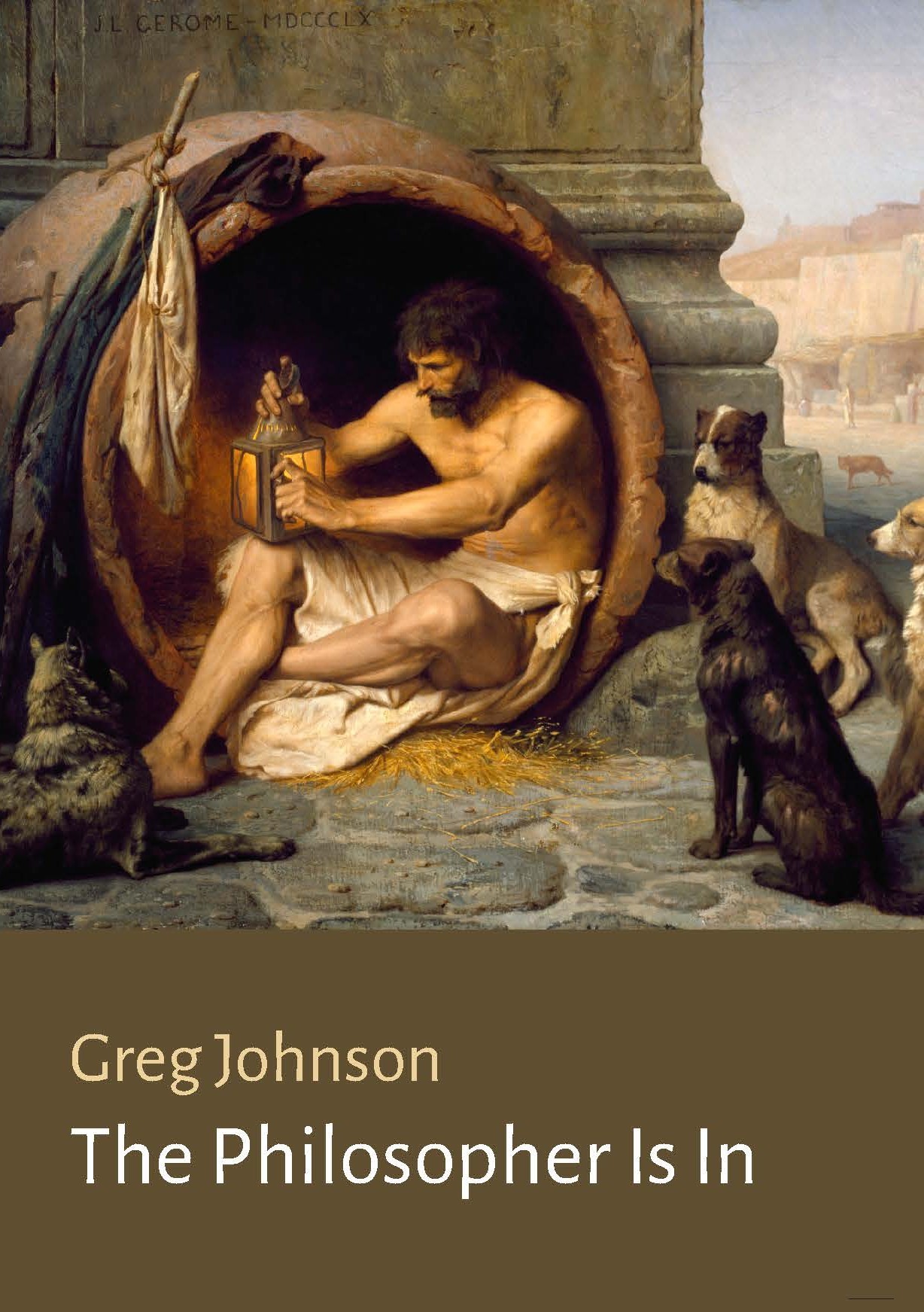
You can buy Greg Johnson’s The Philosopher Is In here.

You can buy Greg Johnson’s The Philosopher Is In here.
346 words
The Philosopher Is In
My new book The Philosopher Is In is now in print and available in all formats. Order by the end of tomorrow, Saturday, June 20, and receive a special discount.
Loving Our Own
Jef Costello has reviewed my recent book Loving Our Own: Nationalism, Populism, & White Identity Politics at American Renaissance. Click here. Loving Our Own has also been reviewed in the most recent issue of the British print journal Heritage and Destiny. (more…)
-
1,504 words
One of the most fundamental distinctions in politics is between leadership and pandering. Failing to understand this distinction can lead to disaster. Leadership and pandering have the same object: the people, or more specifically the politically empowered people, the electorate. Leadership and pandering also have the same goal: to harvest political power from the people, primarily through elections.
How do leadership and pandering differ? (more…)