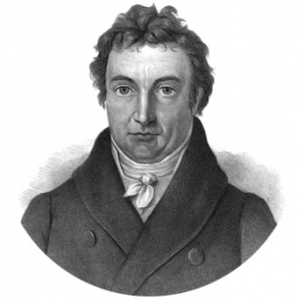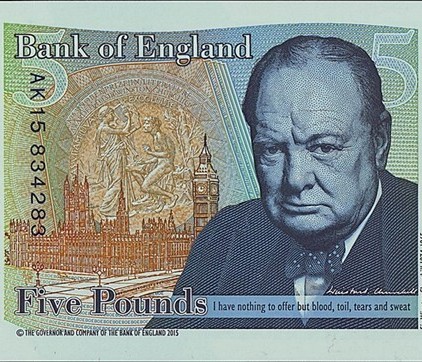
As a child, I was fascinated by the collection of old English coins my grandfather kept in a box to remind him of better monetary times once the nation had turned to decimal coinage in 1971, as a preparatory measure for joining what was later to become the EU. The old £sd tokens were all much nicer-looking, better designed, and more pleasingly chunky and substantial than their decimal successors, but the way their system actually fitted together was utterly incomprehensible to me. (more…)
Tag: Jacobins
-
Omnibus Productions was founded in the sixties because it was felt there was a need for classical films. It made four films with predominantly English casts and production and released on American television. Heidi (1968), David Copperfield (1970), Jane Eyre (1971). Heidi was the most famous because in 1968, as the New York Jets and Oakland Raiders game was still continuing, NBC immediately pre-empted the last quarter to begin Heidi, and the field of gridiron battle switched to a blonde, cheerful Heidi. (more…)
-
2,580 words
In our country we wish to substitute morality for egotism, probity for honour, principles for conventions, duties for etiquette, the empire of reason for the tyranny of customs, contempt for vice for contempt for misfortune, pride for insolence, the love of honour for the love of money… that is to say, all the virtues and miracles of the Republic, for all the vices and snobbishness of the monarchy. — Maximilien Robespierre, “On Virtue and Terror” (1794) (more…)
-
2,012 words
He [Rousseau] had nothing new, but he set everything on fire. — Madame de Staël
Starting from unlimited freedom I arrive at unlimited despotism. — Shigalev, in Dostoevsky’s The Devils
Jean-Jacques Rousseau, not Karl Marx is the real father and inspiration for the theater of the absurd that is today’s Left. Rousseau’s “Man is born free, everywhere he is in chains” is the original formulation of the adolescent anarchist rally-cry, “Rage against the machine!” (more…)
-
3,782 words
Part 2 of 3 (Part 1 here, Part 3 here)
1. Introduction: Transcendental Idealism as Political Radicalism
In part one of this essay, I covered J. G. Fichte’s moral philosophy, as set out in his 1798 work The System of Ethics. In the present installment, which is largely self-contained, I shall cover his social and political philosophy, chiefly as expounded in The Foundations of Natural Right. Here we will find many ways in which Fichte lays the groundwork for contemporary Leftism, including a surprising anticipation of what Gen Z calls “real Communism.” (more…)
-
5,174 words
1. The Greatest Unread Philosopher in History
Chances are you may never even have heard of the German philosopher Johann Gottlieb Fichte (1762-1814). If you have heard of him, you probably have the vague idea that he was a follower of Kant who went off the reservation and tried to defend the bizarre position that all of reality is the creation of something called the “Absolute Ego.” This is how he is often treated in histories of philosophy. But this characterization of Fichte is completely wrong. (more…)