The Assault on White Farmers in South Africa: Violence, Racism, and the Erosion of Property Rights
Posted By Lipton Matthews On In North American New Right | Comments Disabled1,187 words 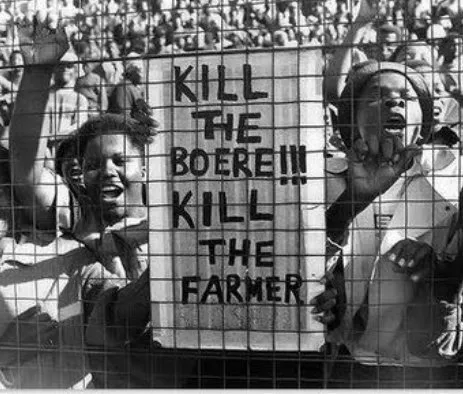 [1]
[1]
In recent decades, white farmers in South Africa have found themselves at the intersection of escalating violence and an increasingly hostile government policy. Far from being relics of a bygone era, these farmers are vital to South Africa’s food security and rural economy. Yet they are being subjected to targeted attacks, threats of expropriation, and political rhetoric that frames their very existence as illegitimate. Beneath the language of transformation and redress lies a more insidious motive: the racial marginalization and economic dispossession of South Africa’s white minority.
This article aims to show that the ongoing campaign against white farmers in South Africa is both a security and human rights crisis. The issue is not merely about land, nor about the rectification of historical injustices. It is about the systematic erosion of property rights under the guise of racial justice, and the deliberate scapegoating of white South Africans in a political theatre where race is the chief instrument of power.
The ongoing wave of farm attacks in South Africa is emblematic of a deeper problem. In 2023 [2]alone, AfriForum recorded 296 farm attacks and 49 murders. These are not random crimes. They often involve torture, mutilation, and overwhelming violence, targeting not only the farmers but their families, including children and the elderly. The brutality of these attacks is frequently downplayed by government officials or dismissed entirely as a law enforcement matter devoid of racial implications.
Yet this denial is telling. President Cyril Ramaphosa, in an effort to pacify international scrutiny [3], once stated abroad that there was “no such thing” as farm murders. Even more egregious is that during his recent meeting with President Trump he seemed quite unaware of the spate of killings sweeping the country. The state’s silence, and at times open hostility to the victims, signals to perpetrators that these crimes are low priority. If white farmers were part of a different demographic, would the response be so lethargic? AfriForum’s reports have highlighted how security failures are compounded by political rhetoric that frames white farmers as “colonizers” and “criminals” simply for owning land. In such a climate, violence against them is tolerated and implicitly legitimized.
South Africa’s contempt for white farmers is best manifested in the political campaign for land expropriation without compensation, initiated formally in 2018, and underpinned by a dangerous ideological narrative. Figures [4]like Julius Malema of the Economic Freedom Fighters (EFF) have openly declared that “white people are land thieves” and that the “time for reconciliation is over”. Such statements, rather than being condemned, have been supported or echoed by members of the ruling African National Congress (ANC). Former deputy President David Mabuza even threatened a “violent takeover” of farms if farmers do not “voluntarily” give up land
The South African government’s policy direction—amending Section [4]25 of the Constitution to enable land seizures without compensation—is not about productive reform. It is driven by racial redistribution, coated in the language of justice. Government statistics reveal that of all the land acquired by the state, a mere 6.3% has been transferred to private ownership [4]. The rest remains under state control. This reveals the true intent: not empowering black citizens through land ownership, but centralizing land control while vilifying white ownership. It is a race-based power grab in which the rights of the white minority are collateral damage.
Unsavoury political figures have been able to justify the expropriation agenda under the dubious premise that all white-owned land was stolen. This historical narrative is both simplistic and false. Land in South Africa came into white possession [4]through a variety of means: some was unoccupied, some was acquired through negotiation and treaty, and some like much of the continent through conquest. Importantly, conquest was not unique to Europeans. The Zulu kingdom under Shaka engaged in brutal military expansion that displaced countless communities. The idea that black tribes had harmonious, static control of land until European arrival is a myth designed to support a political agenda. Even the infamous Jan van Riebeeck landed in an area of sparse population, not a densely occupied nation-state. This distortion of history is a deliberate tactic. By erasing the nuance of the past, the government justifies racialized policies in the present.
Despite government [4]rhetoric, there is little genuine demand among black South Africans for agricultural land. The vast majority of land claims since 1994 have been for urban property, and 93% of claimants opted for financial compensation instead of land ownership. Surveys by the Institute of Race Relations consistently show that land reform ranks low on the list of priorities for black citizens—education, employment, and housing are seen as far more important. Urbanization [4]trends reinforce this reality. From 2000 to 2015, the black population in cities like Johannesburg, Cape Town, and Pretoria surged by over 70% in some areas, while the white population declined or remained stagnant. Meanwhile, less than 3% of university students pursue studies in agriculture, suggesting that younger generations have little interest in farming as a profession.
Why, then, the political obsession with land? The answer lies not in the needs of black South Africans but in the desire of political elites to use land as a racial wedge and a populist distraction from their own governance failures.
Even where land reform has been implemented, the results have been calamitous. Over 90% of farms redistributed to black communities have failed, devolving into subsistence operations or being abandoned entirely [4]. The Land Bank found that only 10% of the 4,000 farms transferred since 1994 remain productive. Despite more than R45 billion spent, the program has produced economic regression rather than progress.
This failure underscores the importance of property rights. When land is taken from experienced owners and given to recipients without support, title, or incentive, productivity collapses. The victims are not just white farmers but the millions of South Africans—black and white—who rely on the agricultural economy.
Property rights are the cornerstone of economic development. Countries that protect them like South Korea or the United States prosper. Those that violate them like Zimbabwe or Venezuela descend into ruin. Weakening property rights in South Africa will not rectify past injustices; it will create new ones. The current trajectory of land reform in South Africa is not a noble quest for justice. It is a racially charged campaign aimed at punishing a minority group for the sins of history. The ANC government has chosen to define land ownership not by legality, productivity, or contribution, but by skin colour.
White South Africans, and white farmers in particular, are being sacrificed at the altar of racial populism. Their property is under threat, their safety is ignored, and their future in the country is increasingly precarious. This is not transformation. It is persecution. South Africa stands at a crossroads. It can choose a future based on equality under the law, secure property rights, and shared prosperity. Or it can continue down a path where racial vengeance is passed off as justice, and where the erosion of one group’s rights foreshadows the collapse of rights for all.
The world must recognize that anti-white racism exists and is no path to peace or progress. The campaign against white farmers is not just an agricultural crisis. It is a moral one.